Feeds:
Posts
Comments

Archive for the ‘Conflict with the Pastor’ Category

True or false:

It is possible for a pastor to oversee the selection of a church’s governing leaders according to biblical qualifications and yet experience conflict with those same leaders later on.

It’s oh so true.

Why?  Because insuring that a church’s governing leaders are spiritual is only half the selection battle.  A pastor … and a church … need to ask themselves one additional question before allowing anyone to join a church board:

How supportive are those prospective leaders of the pastor and his vision for their church?

My first suggestion for selecting governing leaders is to choose people whose lives reflect the biblical qualifications.

My second suggestion is to narrow the focus even more and to choose people who will completely support their pastor and his vision for their church.

This assumes that the church has a direction and that the pastor has communicated it to the congregation consistently.  Hopefully, many people were instrumental in contributing to that vision … but once it’s in place, the pastor cannot in good conscience surrender it or negotiate it away.  He has to stand by it … even if others wish to change it.

Here are some lessons I’ve learned along this line:

First, be willing to ignore the minimum number of governing leaders called for in the church’s governing documents.  For example, if church bylaws state that the board must have a minimum of four leaders … but only two individuals are biblically-qualified and fully support the pastor and his vision … then go with just two board members for a while.

As I can personally attest, putting the wrong people on a board just to hit that minimum number can lead to disaster.

I cannot emphasize this point enough.

Sometimes I hear about churches that have a board of thirty or forty people.  In my view, that’s a recipe for insanity.

How can all those people meet at the same time?  How can everyone have their say in a meeting?

And how can those leaders ever agree on anything?

Remember: Jesus only selected twelve disciples.

It’s far better to have an odd number of governing leaders … like five or seven … so the board can make decisions without getting stuck with tie votes.

Personally, I prefer having five leaders than seven.  The fewer, the better.  You can get more done … and more quickly.

For 21 months, I attended one of America’s top megachurches.  More than 15,000 people attended that church every weekend.

Do you know how many governing leaders they had?

Nine.

You don’t select governing leaders so they can represent all the groups in the church (men, women, youth, singles, children, pioneers, newcomers, and so on).

You select governing leaders to make decisions that advance the pastor’s vision for the church.

Nearly all the problems I’ve had with board members over the years occurred because we clashed on church direction.

Second, secure an agreement from each governing leader that they will share any concerns they have with their pastor directly and swiftly.  If necessary, put such an agreement in writing … and discuss it several times a year.

Many governing leaders lack the courage to speak directly with their pastor when they disagree with him.  So they share their concerns with other governing leaders in hopes of gaining allies.  This is often the point at which church division begins.  The pastor’s detractors then go underground … meeting secretly without him, making decisions behind his back, and then imposing those decisions on him at board meetings … and this kind of decision-making makes governing leaders feel powerful.

However, unless the pastor is guilty of heresy, immorality, criminal behavior, or some other major offense, the governing leaders have violated the trust that should exist between them and their pastor.  When matters get to this point, the leaders feel they have to come up with some charges to justify their clandestine meetings … and this is when all hell breaks loose in a church.

The leaders eventually accuse the pastor of major offenses … but the pastor doesn’t know anything about them because the governing leaders lacked the courage or confidence to share them with the pastor as the “offenses” arose.  The pastor then tries to defend himself, but the leaders have gone too far to back down … and often demand the pastor’s resignation.

And then it’s all hush-hushed … not because the pastor did anything wrong … but so the congregation doesn’t find out how poorly the board handled matters.

1,300 pastors are forcibly terminated from their positions every month in America.  If board members would share their personal or policy concerns directly with their pastor, we could probably cut the number of terminations in half.

I once had the privilege of visiting one of America’s great churches.  While wandering around, I spotted a framed document on the wall.  It was signed by the pastor, staff members, and over 100 church leaders … and it specified the direction the church was going to take in the future.

I was impressed!

And that direction cannot be carried out unless the leaders support their pastor’s leadership.

Finally, identify and wait for premium leaders.

I once heard one of America’s leading pastors say that he had identified a man in his church to become a governing leader.  However, this man’s work took him overseas for many months.

But it didn’t matter to this pastor.  He saved a spot on the board so that when the man returned from the Far East, he immediately became a governing leader.

Rather than put an unqualified rookie on the board and hope that he worked out, this veteran pastor saved a place for a great leader instead.

If you fill up a board with unqualified or non-supportive individuals, there may be no room for qualified, supportive people later on … and the good leaders won’t want to serve with the not-so-good leaders.

I’ve never forgotten this adage I learned years ago:

It’s better to have no one than the wrong person.

Boy, is that ever true!

Marry the wrong person, and it may cost you for the rest of your life.

Ask the wrong person to become a governing leader in a church, and everyone may end up paying for it: the board, the pastor, the staff, lay leaders, and the entire congregation.

The stories I could tell …

Any stories or feedback you’d like to share?


Read Full Post »

A pastor friend recently asked if I would post something about how to select a church’s governing leaders.  Whether they’re called elders, overseers, deacons, the church council, or the board of directors, what’s the best way to choose such leaders?

While I don’t consider myself an expert in this area … like most pastors, I’ve made some mistakes in selecting leaders … let me offer three suggestions (each post this week will cover one suggestion):

First, choose people whose lives reflect the biblical qualifications.  Paul instructed both Timothy (1 Timothy 3:1-13) and Titus (Titus 1:5-9) to look for certain character and behavioral qualities in church leaders.  Some thoughts:

*Scripture isn’t dealing with a person’s history but with their lifestyle.  When Paul lists “not given to drunkenness,” is he saying that if a person got drunk once, that person should never be a church leader?  When he says “not a lover of money,” is Paul referring to someone’s overall life pattern or elimininating someone from consideration because they did love money for a time?

There are obviously some one-time incidents that would eliminate a person from consideration (murder comes to mind), but we must also leave room for the grace of God.

I once knew a man who was divorced early in life.  He was the most well-respected man in our entire church – he preached, did counseling, taught an adult class, shared his faith freely – but some people refused to let him become a governing leader because he was divorced (as a believer) soon after his first marriage.  They believed he violated the qualification of being “the husband of but one wife” (1 Timothy 3:2).  However, he married a fine Christian woman after his divorce and they had an exemplary marriage for several decades.  Did he meet the biblical qualification?  I believe he did.  Others would disagree.

*Scripture encourages us to look for people who can manage their own lives.  Someone once asked about former Yankee baseball manager Billy Martin, “How can he manage a team of 25 men when he can’t manage his own life?”

In looking for spiritual leaders, we need to look for people who can manage their money, their temper, their alcohol, and their tongue.  If they can manage themselves, then we want to know if they can manage their family (1 Timothy 3:4-5).  If they can manage both themselves and their family, they stand the best chance of managing their church.

*Scripture encourages us to look for people whose lives have been consistent over time.  In 1 Timothy 3:10, Paul says of deacons (and the same principle applies to elders/overseers), “They must first be tested; and then if there is nothing against them, let them serve as deacons.”

In general, I only asked someone to serve as a governing leader if I had been able to observe their life for at least two years.  That made their behavior predictable … though not necessarily perfect.  A church’s governing leaders are sometimes under stress … maybe they have to deal with a wayward staff member, or declining offerings, or a case of sexual immorality … and you’d like to know ahead of time how they’re going to handle tough situations.

This is why I wanted all potential governing leaders to serve in a leadership position somewhere in the church before I considered them for the governing board.  If they hadn’t served as a leader first … and then they became a governing leader … how could I predict their behavior on the board?  I couldn’t.

Sadly, some people are exemplary believers in non-leadership positions … but they become tyrants when they become leaders.  The only way I know to minimize this risk is to make sure everyone serves as a non-board leader before they’re ever considered to become a governing leader.

*Scripture encourages us to know something about the spouses of leaders as well.  Bible scholars are divided as to whether 1 Timothy 3:11 refers to deaconesses or deacon’s wives.  Let’s assume for the moment that Paul is discussing the wife of a governing leader (whatever applies to deacons also applies to overseers/elders).

The wives of leaders need to be “worthy of respect, not malicious talkers, but temperate, and trustworthy in everything.”

It is possible for a man to be perfectly suited to become a governing leader … but to be disqualified because of his wife.  The problem?  She can’t keep a secret.

I’ve had governing leaders tell me, “I never tell my wife a thing about what’s going on in the church.”  However, I had one leader tell me, “I tell my wife everything that’s going on in the church” … and I’ve served with leaders whom I suspected told their wives plenty if not everything.

I do not believe that everything discussed by a church board should remain confidential.  That’s ridiculous.  The governing leaders make all kinds of decisions, and most of them can/will be shared openly with the congregation.  I believe that a church with transparency is far healthier than a church full of secrets … especially concerning issues and policies.

But when governing leaders meet, they also discuss people in the church … by name … and those discussions need to be kept confidential.  As a pastor, I was willing to discuss anything and everything at the church except what was going on in the lives of individuals … unless it was already public knowledge.

In other words, we need to be open about the institution of the church but be protective of the individuals in that same church.

Any thoughts about what I’ve written?

Read Full Post »

This article is the second half of the answer to the question, “What happens to clergy killers?”  In other words, when a group attacks and consequently “takes out” a pastor, how do the people of the average church respond to such an attack on their minister?

The answer might surprise you.  Here’s part two from my upcoming book:

In some situations, mature Christians hang around to see if church leaders will correct the instigators. But if nothing happens after a while, these believers may leave the church permanently, especially if they see the perpetrators serving in visible positions. During such conflicts, a church is going to lose somebody. Isn’t it better to lose divisive people than mature believers?  Anderson comments, “The result is that the church keeps the dissenters and loses the happy, healthy people to other churches. Most healthy Christians have a time limit and a tolerance level for unchristian and unhealthy attitudes and behaviors.”[i]

I had a conversation recently with a Christian man.  We were discussing what should be done (if anything) to churchgoers who join forces to push out their pastor.  This man believes that a church should remain passive toward perpetrators because God will eventually punish them.  He told me about an associate pastor who engineered the ouster of his senior pastor.  The associate later contracted cancer and his wife died a horrible death.  Christians don’t need to address the perpetrators, he said, because “God’ll get ‘em.”

It is true that God may get them.  The law of sowing and reaping still applies in this life (Galatians 6:7) and God promises to repay us all according to our deeds in the next life (2 Corinthians 5:10).  There are cases in the New Testament where God executed swift punishment against professing believers like Ananias and Sapphira (Acts 5:1-11) and staunch unbelievers like King Herod (Acts 12:19-23). Most pastors can tell stories about the eventual demise of attendees turned into attackers.  For example, a man who led an attack on one of my pastors died of a heart attack the day he was moving out-of-state.  While God may not “take out” every perpetrator, how are twenty-first century believers to interpret all the biblical admonitions to confront divisive individuals in a local church?  Have God’s words now become irrelevant?

When I was a rookie church staff member, I witnessed an event that I have never forgotten.  A few hours before a Sunday evening service, the elders met to discuss what to do about three church leaders who were involved in sexual immorality.  I watched as the door to the pastor’s study swung open and various elders piled into cars to drive to the homes of those leaders and confront them. The serious looks on the leaders’ faces told a story – they didn’t sign up for this – but to their credit, they did it.  Eventually, one offending leader made a public apology (without naming his sin) but all three families affected chose to leave the church.

Where is the courage today that those elders displayed?


        [i] Leith Anderson, Leadership That Works: Hope and Direction for Church and Parachurch Leaders in Today’s Complex World (Minneapolis: Bethany House Publishers, 1999), 31.

Read Full Post »

It’s been a while since I’ve presented an excerpt to my upcoming book, which should be published in September or October.  The book is a real-life story about a group of people who joined forces to force a pastor to resign … using any and all means at their disposal.

The last chapter of the book presents FAQs on this kind of conflict.  In most churches, there are churchgoers who know which perpetrators have launched an attack on their pastor … but to keep their friendship, they usually remain silent.

I’ll divide this question into two parts.  Here’s the first part:

What usually happens to the perpetrators?

Realistically?  Nothing.  Biblically, however, perpetrators must be corrected before they strike again. This can be done by staff members, the governing board, or deputized members.  However, if a transitional/interim pastor is hired after the pastor’s departure, he may have to oversee this thankless task.  (Some transitional pastors are trained to deal with powerbrokers and request absolute authority before being hired.)  Unrepentant individuals who target their pastor sense they are immune from correction and feel free to use the same template with the next pastor.  However, in such situations:

Peace mongering is common. With tranquility and stability reigning as premium values, congregational leaders adapt to their most recalcitrant and immature people, allowing them to use threats and tantrums as levers of influence. Malcontents’ complaints never seem to cease. Unwilling to confront the constant critic, leaders set the table for the unhappy souls to have a movable feast of anxiety.  By appeasing rather than opposing, leaders give control to reactive forces.  Feed them once and leaders can be sure they will be back for more.[i]

As far as I know, no one took action against any non-board perpetrators in our situation.  My counsel to any successor is, “Watch your back.  They know the template.”  Trull and Carter note:

Generally speaking, an incoming minister does not need to fear those who speak well of the predecessor. Those who loved, appreciated, respected, and supported the former minister will likely do the same with the new minister.  The church member of whom the minister should be wary is the one who speaks ill of the previous minister. Those who criticize, find fault with, and express disappointment in the former minister will probably react to the new minister in the same way over time.[ii]

I have to confess, this really bothers me.  For decades, pastors have been told that whenever there’s a major conflict in a church they’re leading, they need to resign to keep the church intact. But why should the pastor leave while those who initiated the conflict are permitted to stay?  I suppose it’s easier to remove one person than many.  And spiritually-speaking, the shepherd lays down his life for the sheep, just as Jesus did (John 10:14-15).  But why don’t God’s people band together and ask the perpetrators to leave as well?  If the pastor can find another church, they can find another church – and it’s much easier for them than for him. I saw the highlights of a basketball game in which both players involved in a fight were instantly removed from the game.  Why doesn’t this happen in churches?  Aren’t we rewarding people for their divisiveness without expecting them to change?

If I was a layman and my pastor was pushed out by non-board antagonists, I’d approach a board member and say, “If you confront those who perpetrated this conflict, I will stay in this church.  But if you don’t deal with them, I will leave and find a church where they take Scripture seriously. And if anybody asks why I left, I will feel obligated to tell them.” While this may sound harsh, how can church leaders take no action against those who have driven out their minister?  Steinke writes:

In congregations, boundary violators too often are given a long rope because others refuse to confront the trespassers. When boundaries are inappropriately crossed and people are harmed, no one wants to name the violation.  It’s as if the disturbance of the group’s serenity is a greater offense than the viral-like behavior.  Boundary violators go unattended and suffer no consequences . . . . The lack of attention only enables the repetition of the invasive behavior.[iii]

Your thoughts?


        [i] Steinke, Congregational Leadership in Anxious Times, 102.

        [ii] Trull and Carter, Ministerial Ethics, 129.

        [iii] Steinke, Congregational Leadership in Anxious Times, 85.

Read Full Post »

Who is your political hero?

George Washington?  Abraham Lincoln?  JFK?  Ronald Reagan?  Barack Obama?

My personal favorite among politicians is former British prime minister Winston Churchill, who saved the West from the iron will and evil intentions of Adolph Hitler.

At Churchill’s Family Gravesite, Bladon Churchyard, England

After being in political exile for years, England turned to Churchill to prevent Hitler from overtaking Great Britain during the Second World War.  Churchill’s expert leadership behind-the-scenes, coupled with his fierce and inspiring speeches in public, rallied the spirit of the British people to defeat German’s Fuhrer.

Entrance to Churchill’s Underground War Rooms, London

Churchill was both a great leader and a great communicator … but such greatness is uncommon.

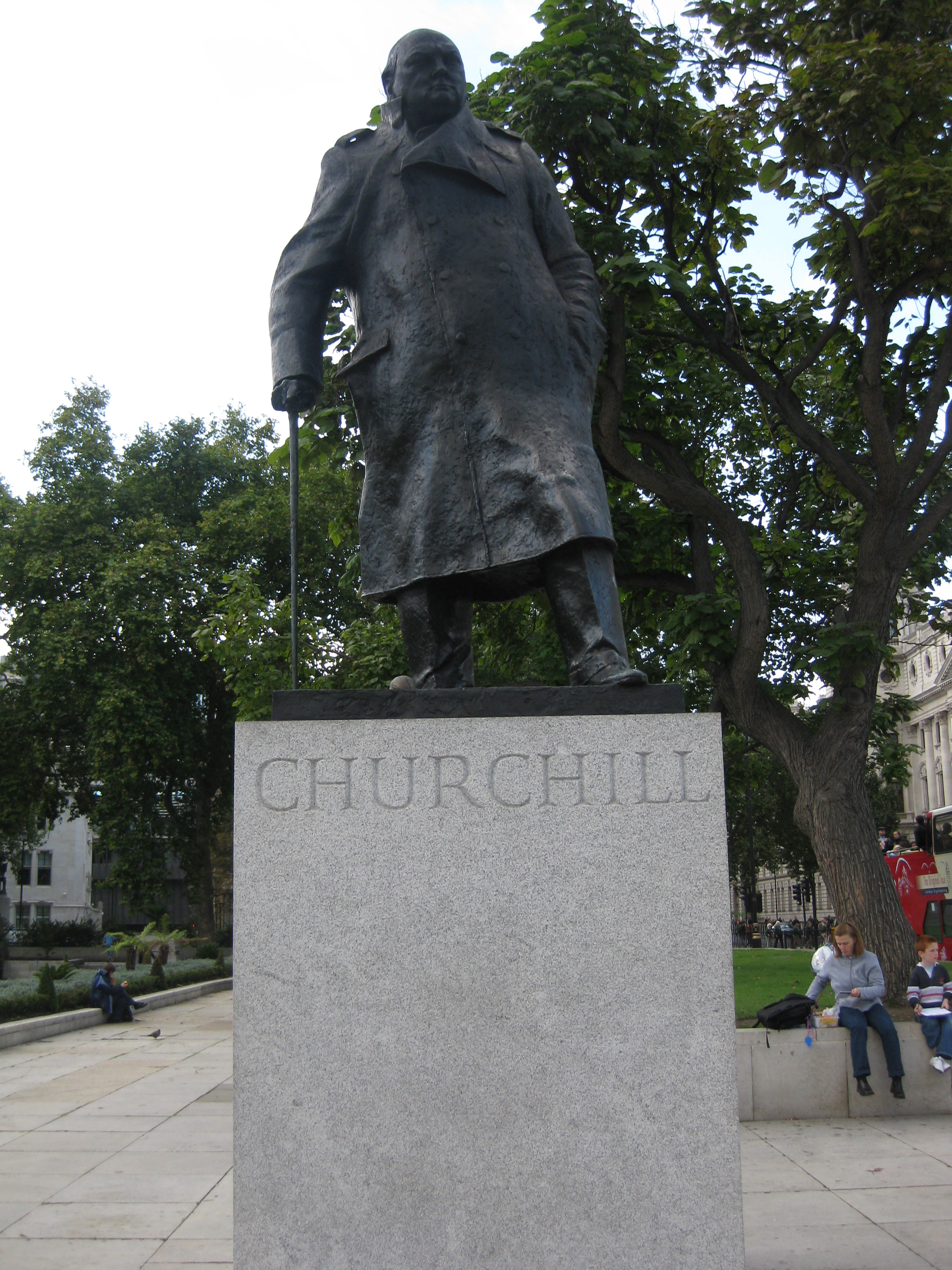
Churchill Statue in Parliament Square, London

Most people are either gifted leaders or gifted teachers, not both.

Let me contrast the two groups in three ways:

First, leaders tend to see the future clearly, while teachers tend to see the past clearly.

When George H. W. Bush was President, he confessed he had trouble with “the vision thing.”  He wasn’t sure where he wanted to take the country, but Bill Clinton was sure, and defeated Bush for President in 1992.

Leaders have to be able to see the future clearly and describe it to others.

By contrast, teachers see the past clearly and can accurately describe its lessons.

I have always had trouble envisioning the future.  As a leader, I shied away from 5-year plans because they were illusory to me.  I usually knew the next thing to do … but not necessarily the next thing after that.

But the past … that’s very real to me.  For many of the special experiences in my life, I can recall the date, the place, the weather, the people involved … all kinds of stuff.

For example, I remember when Nolan Ryan set the all-time season strikeout record.  It happened on a Thursday night in September 1973.  The Angels played the Twins in Anaheim.  Going into the game, Ryan had 367 strikeouts … and was trying to beat the all-time record of 382 set by Sandy Koufax in 1965.  After 9 innings, Ryan had 15 strikeouts (tying the record), but the game itself was tied.  Ryan couldn’t get that last strikeout in the 10th inning, and with two outs in the 11th, he still didn’t have it.  In fact, he was laboring with each pitch.  But he struck out Rich Reese of the Twins on a very high fastball for Number 383.

How do I remember all that?  I was there … with some friends … sitting in the upper deck down the left field line.  That event occurred 39 years ago … but I remember it like it was yesterday.  That memory seems unremarkable to me, but others have told me they’re amazed I can recall those things.

But it’s natural for a teacher.

Second, leaders tend to work with groups, while teachers tend to work alone.

I once heard Pastor Bill Hybels describe ten types of leaders.  He said the leaders who build the big churches are the kind of leaders who can put teams together quickly.  They recruit people, give them a charter, and turn them loose … and then do it again … and again … and again.

The best leaders like being with people.  They feed off their energy and ideas.

By contrast, teachers prefer to work alone.  They like to reflect, and do research, and write … and then march into a classroom or worship center and speak to a group on their own … without assistance.

Here’s the perfect day in my work life:

It’s raining and I’m confined to my study.  I comb my bookshelves for relevant books on a passage or topic and pull out 15 of them.  Slowly and methodically, I read sections of each book … not to steal what someone else has written, but to stimulate my own thinking.  Without effort, an outline begins to form in my head.  I put it on paper and begin to work it over.

While that process is happening, I don’t want anybody to interrupt me.  It’s just me and God and the books and some ideas.

Heaven.

That’s the reseach end … but I also love delivering the message to a group of people … especially if we can enjoy interaction.  However, without the research, the teaching time isn’t nearly as much fun … or productive.

Third, leaders tend to be repetitive, but teachers like to say things once.

I remember learning that churchgoers need to be reminded of a pastor’s vision every thirty days.  The pastor needs to remind people … over and over again … why that church exists and where it’s going.

The leader may do this in a variety of ways … like slogans, symbols, stories … but he has to remind people constantly why the church is doing what it’s doing.

By contrast, teachers hate saying the same thing over and over.  The repetition bores them.

Teachers like to keep truth fresh … illustrating and applying it in countless ways.

Recently I engaged in a painful activity: I re-read some sermons I preached a few years back.

When a message was good, it was full of fresh stories and thoughts.

When a message wasn’t very good, I was overly repetitive and predictable.

An effective leader needs to be repetitive, but an effective teacher longs to be original.

Jesus was both a great leader and a master teacher.  He led His disciples while teaching the masses.  He combined the two disciplines better than anyone who has ever lived.

So remember … your pastor is probably a gifted leader or a gifted teacher … and he gravitates toward the one he does best.

And he’ll probably receive far more criticism in his non-gifted area.

So if you think he falls short in one area, cut him some slack.

Because not all great leaders are great teachers … and not all great teachers are great leaders.

While you can usually tell if someone is a great teacher right away, the fruit of leadership only happens long-term.

What are your thoughts on these two disciplines?

Class dismissed!

Read Full Post »

True or false: all great teachers are also great leaders.

False.  False.  False.

And yet we fall for this gambit time after time: at school, in politics, and at church.

Especially at church.

We make the assumption that if a pastor is a great teacher, he will also be a great leader.

But that isn’t always the case.

I know a pastor who is an excellent communicator.  If he was on television, and the camera panned back, you’d assume the worship center would be full.

But the worship center wasn’t full when he preached … far from it.  In fact, there were many more empty seats than “taken” ones.

Why?

Because behind-the-scenes, he was not a gifted leader.  He tried … really, really hard … but it just wasn’t him.

God gave him the teaching gift but not the leadership gift.

The same thing was true of Gene Mauch.

Gene Mauch was a brilliant baseball manager for the Philadelphia Phillies, Montreal Expos, Minnesota Twins, and California/Anaheim/Los Angeles Angels from 1960-1987.

In Leonard Koppett’s brilliant book The Man in the Dugout, Koppett writes this about Mauch:

“More than any other baseball man of his era, Mauch is singled out by players and rival managers alike as a brilliant student of the game.  ‘He knew more about the details of every position, and all the little technical things, than anyone I came across,’ one player with twenty years of experience told me.”

Koppett continues:

“Mauch knew more baseball, in the technical sense, with deeper insight, than almost anyone around him or in the opposing dugout.  He tried, tirelessly, to impart the appropriate gems of information to his players.  But he did it so tirelessly, in such detail, with such intensity, that he aroused the wrong reaction.  Players would begin to worry more about doing what Mauch wanted than about winning itself.”

Koppett relates a story told by Ron Fairly, who played five years for Mauch in Montreal (the team is now the Washington Nationals).  Fairly would be taking ground balls at first base during batting practice, and he’d find Mauch staring at him from close range.  Fairly would wonder, “What’s he looking at?  What does he see that I’m doing wrong?”  Later, Fairly would be in the outfield, and Mauch would be watching him there.  Then he’d see Mauch at second base, staring at the batting cage.

Finally, Ron Fairly asked Mauch about the second base incident … and Mauch was just trying to understand why the Expos second baseman had looked out-of-sync on a couple of plays the day before.  Mauch really wasn’t staring at his players … he was just trying to figure out a baseball problem in his own mind … but they didn’t know that.

Koppett writes: “All they knew was that there was the boss, frowning, and that when he ever did speak to them it was about how to do this or that better, or avoid this or that mistake.”

Mauch was a great teacher … but he wasn’t a great leader.  His teams won two division crowns but never made it to the World Series … and because he didn’t win, he’ll never make the Hall of Fame.

Koppett’s conclusion: “Mauch was robbing the players of an essential condition: relaxation.  He was being too sophisticated for too many of his players.”

What’s true in baseball is also true in other fields … especially the church.

There are some pastors who are both great leaders and great teachers … but let me tell you, they’re rare.

God has given some pastors the gift of leadership but not the gift of teaching.

God has given other pastors the gift of teaching but not the gift of leadership.

God has also given some pastors the gift of Leadership (with a large “L”) but the giff of teaching (with a small “t”).

And He has given some pastors the gift of leadership (with a small “l”) but the gift of Teaching (with a large “T”).

The pastors who have both the gift of leadership and the gift of teaching are pastoring the megachurches … but some of them are lousy pastors and counselors.

Remember, no one person has all the gifts … except for Jesus.

The pastors who specialize in teaching tend to pastor medium-sized to large churches.

The pastors who specialize in leadership tend to pastor extra large to mega churches.

A veteran pastor once told me about two brothers who were both pastors.

The first brother was a great teacher.  He loved to study and research, and it came out in his preaching.

600 people attended his church.

The second brother was a better leader and had more of the common touch.

5,000 people attended his church … and his sermons were broadcast on the radio.  (I didn’t learn much from listening to him, but he was definitely entertaining.)

But what happens to us is that we get fooled.

We hear someone speak articulately and eloquently and passionately in public, and we’re persuaded by their rhetoric … so we assume that they’re equally persuasive behind closed doors.

But most people in a congregation never get to see their pastor in action with the staff or the board or city officials or community leaders.

We see and hear them teach in public … but we really don’t know how they lead in private.

I was in church ministry for 35 1/2 years … 26 of those years as a solo or senior pastor.

Some of my sermons were better than others … and I’d like to think that I got better with time … but because teaching was my primary gift, I rarely heard much flak about my preaching.  In fact, I distinctly remember two vocal critics of mine telling me they felt I was a gifted teacher.

If you heard me speak, you might assume I was an equally gifted leader … but I knew I wasn’t.  God gave me the gift of Teaching (with a capital “T”) but the gift of leadership (with a small “l”).

I’ll write more on this topic next time.

How have you seen this disparity played out with the leaders and teachers that you know?

Read Full Post »

My pastor was under attack.

He couldn’t sleep.  He couldn’t study.  His personality turned inward.

He was a wreck.

Why?

Years ago, in my third church staff position, a small group of vocal members began to criticize the church’s pastor … who was also my supervisor.

Their main claim?  That he didn’t preach often enough, an indication that he was lazy.

35 years ago, many Protestant churches had:

*Sunday School

*Sunday morning worship

*Sunday evening service (with youth group meetings before or after)

*Wednesday night prayer meeting

That’s a lot of teaching time to fill!

My pastor’s main gift was shepherding – not teaching – so he utilized a team of teachers on Sunday nights and Wednesday nights.  I was happy with the arrangement because I enjoyed hearing others speak … and because I got to speak once a month as well.

I can’t recall what set off the grumbling, but many of us started feeling heightened anxiety around the church campus.  One night, someone caught me in the parking lot and told me that 10% of the church was going to leave if the pastor didn’t start preaching on Sunday nights.

Now what would you do with that information?

Some Christians would keep it to themselves.

Some would tell family and friends from the church.

Some would throw in their lot with the 10%.

Honestly, I wasn’t sure what to do.

I had a friend in the church – a man who went on to become an evangelist – and he and I discussed the situation.  We decided to visit the most influential man in the church … a layman known for his teaching, integrity, and straight talk.

My friend and I sat in his living room and said something like this, “There are people in this church who are attacking the pastor.  They are threatening to leave if he doesn’t start preaching on Sunday nights.  The pastor is devastated by this news and seems paralyzed to do anything about the situation.  What can we do to help him?”

Looking back, I don’t know whether or not this man was supportive of the pastor, but we had to take the risk.

He told us, “Gentlemen, when Paul talked about troublemakers in the church, he named names.  Who are these people?”

Wait a minute.  If we mention the names, isn’t that gossip?  Aren’t we tattling?  Couldn’t we get in trouble if we said too much about what was happening?

And some of those people were our friends.  How could we single out friends like that?

But this man was right.  Paul did name names – along with John, the apostle of love:

Some have rejected these and so have shipwrecked their faith.  Among them are Hymenaeus and Alexander, whom I have handed over to Satan to be taught not to blaspheme.  1 Timothy 1:19-20

Their teaching will spread like gangrene.  Among them are Hymenaeus and Philetus, who have wandered away from the truth.  They say that the resurrection has already taken place, and they destroy the faith of some.  2 Timothy 2:17-18

Alexander the metalworker did me a great deal of harm.  The Lord will repay him for what he has done.  You too should be on your guard against him, because he strongly opposed our message.  2 Timothy 4:14-15

I wrote to the church, but Diotrephes, who loves to be first, will have nothing to do with us.  So if I come, I will call attention to what he is doing, gossiping maliciously about us.  Not satisfied with that, he refuses to welcome the brothers.  He also stops those who want to do so and puts them out of the church.  3 John 9-10

With biblical precedent upholding us, my friend and I divulged the names of the troublemakers we knew about – especially the ringleaders.

I learned an important lesson that day.  Sometimes church powerbrokers are successful in making threats and demands because nobody has the courage to identify them by name.

Think about this:

Last night, my wife and I watched a recently-produced film on Solomon’s life.  The film opens with King David near death – but he hadn’t yet chosen his successor.

So one of David’s sons engaged in a pre-emptive attempt to be anointed as king –  in league with David’s top general.

Their names?  Adonijah and Joab.

Not “one of David’s sons” – but Adonijah.

Not “a high-ranking military officer” – but Joab.

They were both executed for committing treason against David’s choice for king … Solomon.

One of Jesus’ 12 disciples betrayed him.

His name?  Judas from Kerioth.

Not just “one of the Twelve” – but Judas.

Before anyone could finger him, Judas took his own life.

Paul wrote in Romans 16:17:

I urge you, brothers, to watch out for those who cause divisions and put obstacles in your way that are contrary to the teaching you have learned.  Keep away from them.

If you’re in a church, and you hear that someone is plotting against your pastor … do something about it.

Warn the pastor.  If you sense the board is supportive, talk to the board member you know and trust best.

Believe me, the pastor and/or board may have no idea of any division inside the ranks.  Your information may give them time to head off an attack before it ever takes place … or give them a key piece of information they lacked.

If you know that an individual or a group is planning on “going after” your pastor, speak to someone in authority – even if the plotters are your friends.

Because if you don’t, your church will eventually experience months of tension, division, and ugliness.  Friends will separate, donations will plunge, and people will leave.

If you know something, tell somebody!

Anyone, then, who knows the good he ought to do and doesn’t do it, sinsJames 4:17

Read Full Post »

Ever get cooties?

I probably got them – briefly – in the second or third grade.

A girl in my class allegedly had cooties.  At least, that’s what the other kids said.  This girl also happened to live on my street … just two doors down.

Her dad was a pastor, just like mine … but they were even stricter than our family.  For example, we were allowed to watch Shirley Temple movies on television, but her family wasn’t allowed to watch any movies, period.

And one day, I said the words “darn” and “gosh” while playing in her backyard, and boy, did I hear about it!  She said, “Ummm.  Those are bad words” – and then she threatened to tattle and tell someone that I said them.

So I guess if anybody at school had cooties, it was that girl.  In fact, she emanated cooties.

And because cooties are spread from one sex to the opposite sex, guys tend to keep their distance from girls who are infected with that dreaded condition.

When I became a pastor, I sometimes felt like I had a permanent case of cooties, causing most people to keep their distance from me.

It all began in high school.  I had this black knit high-neck shirt with a ring of white around the collar.  To me, it was just another shirt, but a few of my friends at church began calling me “Pastor Meyer” whenever I’d wear it … and sometimes, just “pastor” for short.

After a while, a whole group of guys began addressing me as “pastor” whenever they’d see me.  This was before I sensed God’s call into ministry.

Even though I was elected president of the high school group at church, some of my peers always seemed wary of me.  They didn’t know how to act around me.  (And in some cases, I didn’t know how to act around them.)

So when I became a youth pastor, and later a pastor, I had some inkling of what is was like to have “pastor cooties.”

You may be wondering, “What in the world is he talking about?”

Just this: I sensed that whenever people knew I was a pastor, they became uncomfortable around me.

When I’d sit next to a stranger on an airplane, I enjoyed finding out what he or she did for a living, but I was nervous about that person finding out that I was a pastor.  If they did, the conversation often stopped cold.

When I was around, I could sense that people cleaned up their language … and wouldn’t discuss certain topics … and didn’t know how to treat me … or treated me like The Other.

This was especially noticeable during my first few years in the pastorate when I would visit people in their homes.  One time, I visited the home of a mother-daughter duo unannounced.  When I knocked on the door, I could hear them scurrying around inside, but they never came to the door … even though I waited five minutes.

After that, I always phoned ahead, not only so people could clean their houses, but so they could hide whatever stuff they didn’t want their pastor to see.

I hated having pastor cooties.

There were three areas where I saw this most often:

First, cooties were an issue in counseling.  I learned early in my ministry that whenever I counseled someone multiple times, they came to view me as having PCs.  The better I got to know them – and their weaknesses – the more they would pull back from me.  And if they revealed a problem to me – and I later preached on that same problem – they somehow felt I was preaching at them.

So I made a policy that I would counsel people only once … just diagnosing their issue … and then recommend next steps they could take … like reading a book or seeing another counselor.

And fewer people thought I had PCs.

Second, cooties were a problem in social settings.  I grew up in the home of a Baptist pastor, and Baptists back then didn’t drink alcohol.  In fact, there was a line in the church covenant where we had to promise to refrain from the sale or usage of intoxicating beverages.  Unless my mother had a paper bag hidden somewhere, I’m not sure we ever had alcohol in the house.  I grew up not drinking and viewed that as normal.

But when my wife and I were invited to people’s homes, they would offer us wine, we’d politely decline … and right away, it felt like I had PCs again.

Third, cooties were a huge problem after a funeral.  Whenever I conducted a funeral in a mortuary, I’d stand at the head of the casket after the message while loved ones filed by.  It was my job to look for signs of uncontrollable grief and comfort people, but most of the time, people didn’t even see me.  Occasionally, someone would take my hand and whisper, “Good job,” but that was it.  The message marked me as having PCs – and nobody wanted to get infected.

You’ve heard the saying, “It’s lonely at the top.”  If pastors are at the top of their congregations, then they probably sense a great deal of loneliness.  In fact, 70% of all pastors do not have one good friend.

Why not?

Because pastors want to … and are expected to … live holy, righteous, distinctive lives – and this sets them apart from others.

Because pastors carry the pain of others around with them all the time … but choose to internalize the pain rather than share it with others.

Because pastors have trouble with powerbrokers and critics and staffers and board members … but they don’t believe it’s wise to share those problems with churchgoers indiscriminately.

Because pastors get exhausted and angry and depressed … and they don’t want people to see them that way, so they sometimes avoid people altogether.

I once saw a cartoon in Leadership Journal of a pastor who needed to use the restroom.  There were three choices: “Men,” “Women,” and “Clergy.”

Sometimes pastors wonder if they are a third sex.

But occasionally, there are people in a church who let the pastor know that even if he does have PCs, they love him anyway.

In my last church, one couple invited my wife and me over at various times … to watch election returns … or the Super Bowl … or for the 4th of July … or to watch the World Series … or just to feel safe.

They made me feel like even if I did have PCs, they didn’t care.  People like that are all too rare.

Now that I’m not a pastor anymore, do I still have PCs?  While there’s no surefire test, I’ll say no.

But you can help: if you’re in the Riverside area, come and visit me.  And if I’m in your area and wish to get together with you, I hope you’ll say yes.

Otherwise, I’ll be forced to wonder if I still have cooties.

Read Full Post »

Pride.

It’s the name of a song by U2.

It’s the last name of a country singer.

And it’s one of the seven deadly sins … maybe the deadliest.

And for some reason, it’s a sin that pastors – of all people – are susceptible to.

Pride is something we recognize in others.  Years ago, I remember hearing the pastor of a prestigious church speak during a conference at my seminary.  While he was an excellent speaker, he turned out to be the hero in every story he told.

I could detect the pride in his life … but all too often, miss it in mine.

C. S. Lewis said that the first step to combatting pride is for a person to admit that he or she is proud … but most of us are really good at convincing ourselves that we’re never proud.

Say it with me: “Sometimes I can be a pretty proud person.”

So can pastors.

Last time, I shared three ways that pastors display pride in their ministries.  Let me share two more ways:

Fourth, pastors are conscious that they stand between God and people.

In the Old Testament, a priest represented people before God, while a prophet represented God before people.  But in both cases, these leaders knew they had been called to do something special.

Represent the Almighty.

As a pastor, I sensed that I represented God whenever I preached, or baptized someone, or offered communion, or led in public prayer, or engaged in counseling, or did an infant dedication, or shared my faith.

And it doesn’t take long for a pastor to look around and notice that he’s doing things that nobody else in that spiritual community is doing.  That can make you feel … special.

This doesn’t automatically lead one to pride … but representing God sure can be heady stuff.

In his classic book A Minister’s Obstacles (a book inscribed by my grandfather on May 9, 1949), Ralph Turnbull writes:

“The minister is the prey of pride because he traffics in holy things and is in danger of familiarity with sacred elements of truth and life.  Pride goes with us frequently to our studies and there sits with us and does our work, chooses our subject and words and ornaments, and even accompanies us into the pulpit.”

On rare occasions, while I was preaching, this unwelcome thought would enter my head: “You’re presuming to speak for the God of the universe.  Wow!  You’re really something.”

I’d do my best to bat that thought away before it took root … but the thought would assault me from time-to-time.

Where do thoughts like that come from?  From the Proud One himself.

And they must be resisted as soon as they occur.

Finally, pastors sometimes conduct ministry in their own strength.

Warren Wiersbe, a great pastor to pastors, once wrote that a pastor should be broken before God, but bold before men.

But there is a real temptation in ministry to be bold before men without being broken before God.  Pastors who serve churches in their own strength cause manifold troubles in churches.

Some pastors are naturally charismatic people.  They can get up on a Sunday morning and be interesting without studying or praying or preparing in any way … a few times.  But eventually, it catches up with you.

Someone once told me about a pastor who played tennis on Sunday mornings.  The storyteller used to drive to the tennis courts and pick up the pastor for morning worship.  The pastor would clean up and get dressed just in time to slip through the back door onto the platform and preach his sermon.

Of course, an arrangement like that doesn’t last very long.  Pride, indeed, goes before a fall.

In fact, I believe that many pastors are involuntarily terminated not because they’re inexperienced, or incompetent, or indecisive, but because their pride keeps them from adapting themselves to the leaders and people in their church.

It’s my belief that a pastor needs to constantly remind himself of these truths:

“I am a creature.  God is my Creator.  I am a sinner.  God is my Savior.  I have been called to ministry by God’s grace.  There is nothing in me that made God choose me.  As long as I remember that God is God and I am merely His servant, He may choose to bless my life and ministry.  When I start thinking that I am God and He is my servant, I’m in deep trouble.”

If you’re a pastor, just remember that you are who you are because God graciously called you into ministry.

If you’re a parishoner, pray for your pastor’s walk with God … that he might continually glorify God – not himself – and resist the ever dangerous temptation to be proud.

It’s a battle many of us will fight our entire lives.

Read Full Post »

In the minds of many people, two words rarely go together.

Pastors … and sin.

Since pastors preach against sin, some people come to believe that their pastor is sinless … or at least nearly so.

But when you hang around groups of pastors, as I have for years, you discover that pastors are sinners, too.

They’re just better at hiding their sins than most people.

If you had to guess one sin that pastors commit more than any other, which one would you choose?

Greed?

Sloth?

Wrath?

Lust?

Envy?

Gluttony?

The six words I just mentioned constitute six of the seven deadly sins.  Like all humans, pastors are susceptible to any and all of these shortcomings.

But I left one sin out.

In his classic work Mere Christianity, C. S. Lewis devoted an entire chapter to this sin.  In fact, he called it “The Great Sin.”

Know what it is?

It’s pride.

Lewis said that pride is the complete anti-God state of mind.  Pride is preoccupation with yourself, the belief that you are superior to other people … even when there’s no basis for it.

We all struggle with this issue – even pastors.

Let me share with you three ways that pastors display pride … sometimes unknowingly.  I’ll share two more ways next time.

And I include myself in everything that I write.

First, pastors love to hear themselves talk.

I guess most people do … but more than in most professions, pastors are paid to talk.

We expect pastors to preach from the pulpit.  What we don’t expect is for pastors to preach in private settings.

So try this experiment: if you ever find yourself in a social setting with a pastor, notice what happens.

Regardless of who holds the floor initially, see if the pastor eventually holds court … and if he determines the topic for discussion.

Winston Churchill once volunteered his idea of a good dinner: “to discuss a good topic – with myself as chief conversationalist.”

That’s true of pastors, too … although they could probably learn more by listening.

Why are pastors like this?  I’m not sure.  In my own case, I’m not very good at small talk, so if I can steer a conversation around to a larger issue, I’m more comfortable joining in … and that may be true of other pastors, too.

Second, pastors are competitive with their peers.

The day Magic Johnson announced he had AIDS, I was invited to meet with a group of pastors for some strategy sessions at a mountain cabin.  (There were 15 or so of us there.)

Someone asked the pastors to go around the room and share how their Easter services had gone.  Let me offer a typical response:

“Well, we had 757 people out for Easter this year, which was one-third more than we had last year.  God’s Spirit is really moving at our church.  I sense that we’re ready for a breakthrough.  Since I came to the church two years ago, our attendance and giving have doubled, and we’re reaching our community for Christ like never before.”

By the way, all the pastors answered the question in a similar fashion.  Easter went great … we’re really growing … I’m on top of the world … God is blessing.  (In some cases, I knew better.)

All except for me.  Nobody asked me how Easter went at our church … and nobody noticed that nobody asked me.  It was just as well.

I couldn’t compete with the big boys.

When pastors get together in larger groups, there’s a pecking order.  It’s determined by who dresses the best, or who has the most commanding presence, or who has seniority, or who has the largest church.  Pastors are never completely honest when they’re in a larger group of their peers.  They have a way of displaying their feathers.

Put them with a group of Christian psychologists, and their responses would be completely different.

Or if you placed one pastor in a group with two other pastors, they’d be much more honest … and that pecking order all but disappears.

Pastors aren’t nearly as competitive when they’re with doctors or attorneys or professional athletes.  In fact, pastors tend to be deferential toward people in those professions.

But when they’re with their peers, the competitive juices start flowing.  This is why I once heard J. I Packer say that pastors are a lot like manure.  When they’re all spread out, they do a lot of good, but when they get together, it’s just one big stink.

Third, pastors have a need to be know-it-alls. 

Pastors have a high need to be right.  They love to straighten people out.

I suppose it comes from their training.  When I was in seminary, we had to define and memorize specific biblical and theological terms … and Greek verb tenses … and dates in church history … and the beliefs of various world religions and cults … and what the Bible said about a host of social issues.

In most cases, my professors were absolutely convinced that their views were right and everybody else’s views … even those of fellow faculty members … were wrong.  It was the job of the professors (who held the right views) to correct the students (who held the wrong views).  So when we students were called to various churches, we modeled the attitudes of our professors.

We held the right views, while others held the wrong views.

It’s easy to absorb that attitude when you hang around a seminary for five years, as I did … which is why some Christian experts believe that a pastor’s most effective years begin only after he starts unlearning all the stuff he learned in seminary.

This need to be right is like a reflex action among pastors.  Some learn how to disagree with others graciously, while others run around trying to straighten out everybody with whom they disagree.

I believe that pastors continue to struggle with pride until they suffer greatly or are deeply wounded with their own unique “thorn in the flesh.”

I’ll write more about this theme next time.

Your thoughts?

Read Full Post »

« Newer Posts - Older Posts »