Feeds:
Posts
Comments

Archive for the ‘Current Church Issues’ Category

I’ve done a lot of stupid things in church ministry.

But what I’m about to tell you was one of the stupidest.

Many years ago, in my second pastorate, I became discontented with the level of giftedness in our Sunday morning service.

We started the service with announcements.  (It was the trend back then.)

Then we had a few hymns.

Then we had a time where people in the congregation could share testimonies … followed by another hymn.

Then I preached … followed by a final hymn.

I didn’t like the way the guy who made announcements made them … so I made them instead.

And we didn’t have anyone decent to lead singing … so I led singing instead.

And I was already leading the testimony time … and saying the prayers … and preaching.

It’s a wonder I didn’t play the organ and piano, run sound, take the offering, and watch the kids in the nursery.

Because of personal anxiety, I started doing more and more things myself.

There’s a word for the way I behaved: overfunctioning.

When someone overfunctions, they assume an unhealthy responsibility for the behavior of others.

And pastors, if they’re not careful, can become classic overfunctioners.

Let me share with you four reasons why pastors should not overfunction:

First, overfunctioners deny the giftedness of the body of Christ.

Jesus had every spiritual gift, didn’t He?  He had the gift of leadership … and miracles … and teaching … and faith … and prophecy … and healing … and giving.

He could have been a one-man show.  Instead, He chose 12 disciples to be with Him, and to send them out to preach, and to have authority to drive out demons (Mark 3:13-15).

Jesus could have overfunctioned, but He never did.  He set the pace, but He let His disciples share His ministry … and learn from Him along the way.

Paul didn’t overfunction, either.  He served with Barnabas and Silas and Timothy and Titus and Priscilla and Aquila and Epaphroditus.

While Jesus could have done ministry better than any of the Twelve, He chose to share ministry with them anyway … and when He returned to heaven, they took over.

Even if a pastor can do various ministries better than anyone in a church, it will only grow to a certain level.

A pastor has to recruit, train, and release people to do ministry … and trust that they can do ministry better than he can.

Second, overfunctioners play Holy Spirit in people’s lives.

Years ago, I talked to my board chairman about how frustrated I was with the slow spiritual growth in the lives of some churchgoers.

I’ll never forget what he told me: “Jim, you’ve got to let the Holy Spirit work in their lives.”

I was trying to hurry up people’s spiritual growth so they would attend and serve and give more consistently … but I was trying to do it in the flesh rather than letting God do the work.

When we’re trying to straighten everybody out … when we’re trying to acclerate the pace at which people grow … when we’re doing it for our benefit, not theirs … then we’re overfunctioning and playing Holy Spirit in people’s lives.

And there is no vacancy in the Trinity.

Let’s let God be God.  He has no limits.

And let’s let us be us.  We are very limited indeed.

Third, overfunctioners fail to let people wrestle with their own problems. 

This shows up most in the pastor’s study when he does counseling.

Many pastors go into ministry because they want to rescue people from their maladies.

So when they listen to someone’s problem in a counseling setting, they want to “fix” them right away.

They recommend a book, but give a copy to the counselee rather than letting them buy it themselves.

They open and close the session with prayer, rather than letting the counselee pray at all.

They tell the counselee five ways to deal with their issue rather than letting them make their own discoveries.

Paul writes in Galatians 6:5, “For each of you should carry your own load.”  The word “load” has the idea of a backpack, something that each of us can carry on our own.

Yet back in verse 2, Paul writes, “Carry each other’s burdens, and in this way you will fulfill the law of Christ.”  The term “burdens” has the idea of a load so heavy (think of a piano) that you can only carry the load with the help of others.

Pastors need to help people carry the pianos in their lives while letting people carry their own backpacks.

Finally, overfunctioners eventually run out of steam.

If a pastor tries to be the body of Christ … and he tries to play Holy Spirit in people’s lives … and he fails to let people wrestle with their own problems … then he’s going to collapse emotionally … and he won’t be able to help others for a long time.

Pastors need to know their limits … but in the church, we applaud pastors who work insane hours.

I have a theory about workaholic pastors.  Because they’re not convinced of their giftedness – after all, it seems like other pastors lead and teach and administrate better – they try and outwork others so they can feel good about themselves.

In my second pastorate, I arrived at church at 6 am every Tuesday for a men’s prayer meeting.  We had board meetings on Tuesday nights, and I would stay through and work a 15 or 16 hour day.

One of the board members lived behind the church.  One time, he called me at my office and said, “I see your car in the parking lot.  Go home to your wife and kids.”

That was some of the best advice I ever received.

Because if I just use the spiritual gifts God gave me … then I free others up to use the gifts God gave them.

And if I stop playing Holy Spirit in people’s lives … then maybe they can let the real Holy Spirit take control.

And if I let people wrestle with their own problems … then maybe they’ll solve them when I’m not around.

And if I empower others in the church to carry out their ministries … without my help … then maybe I can spend most nights at home with my family.

When pastors overfunction in a church … the body of Christ underfunctions.

And God never intended for a pastor to be the entire body.

Read Full Post »

If a former pastor came to your church, and he wanted to use his spiritual gifts, where could he serve?

Last year, my wife and I were attending a great church.  We loved everything about it … except there wasn’t any venue for me to use my gifts and teach there.

So we began visiting other churches in hopes that I might find a place to teach.

One Sunday morning, we visited a church with about 70 people in attendance.  From where we were seated, I counted 8 empty rows between us and the stage.  The music wasn’t very good, the pastor ran the whole service, and the entire experience was underwhelming.

Before the service, the pastor and his wife came over and introduced themselves to us, which I thought was cool.  They seemed to be happy we were there.  I gave the pastor my card at the door and told him I’d like to take him out to lunch.

We went out a few days later.  I shared with him that we were looking for a church home and that I was looking for a place I might be able to teach from on occasion.

The pastor blurted out, “I don’t even know you!  It would take a year for you to be able to teach in our church!”

(If he had been open to having me teach, he could have vetted me with a couple phone calls, one or two speaking mp3s, and a resume.  Would have taken two hours.)

Obviously, I had hit a nerve.

I didn’t want to take the pastor’s job, or preach every Sunday, or take the spotlight off him in any way.

I just wanted to teach the Bible to Christians … and I thought he might welcome an offer of help.

But I was wrong.

More recently, I visited a church that advertised a contemporary service … at 11:30 on Sunday morning.

When I got there, I didn’t know where the bathroom was … couldn’t find the door to the worship center … wasn’t greeted by anybody when I finally found the entrance … and counted 43 people at that service.

Several weeks later, my wife came with me and we counted 25 people at that same service.

So I took the pastor out to lunch, and casually mentioned that I had been doing contemporary services for 22 years, and if he ever needed help, I would be glad to assist him in any way I could.

He hasn’t called yet.

There are thousands of ex-pastors who aren’t helping to advance the kingdom of God because they’re not permitted to serve in local churches.

Why not?

Because they’re perceived as a threat by the lead pastor.

Even though it’s bad theology, pastors like to view themselves as being omnicompetent.

Inside their congregations, they believe they know more about the Bible and leadership and preaching and administration and fundraising and evangelism and managing staff and prayer than anybody else does.

Or at least they want people to think that they do.

So if someone comes along that might know Scripture or leadership or staff management as well or better than they do, they feel threatened.

Here’s the irony: that same church would open its arms to an untested young man in his early twenties who felt called to ministry.

He’d be allowed to work with children … or youth … or the worship team … or a small group … and maybe even speak on ocassion.

Why?

Because he’s obviously in an inferior position to the pastor.

But if you have years of experience, and you could do something better than the senior pastor, you would find yourself unwelcome in most churches.

This is why most ex-pastors do one of four things:

*Quit going to church.

*Form their own ministry.

*Find a megachurch and just veg.

*Become an interim pastor.

In each case, that seasoned pastor doesn’t threaten anybody.

Do pastors really want to see the kingdom of God advance in America?

Then they should seek out former pastors as mentors … and coaches … and consultants … and trainers … and unpaid staff members … and fill-in preachers … and teachers of special classes.

But if they’re more interested in being the undisputed sovereigns of their little church empires, then they should chase away anyone who is more gifted in some area than they are.

And from where I sit, they’re doing it quite well.

Why do you think current pastors fail to utilize the gifts and experiences of former pastors?  I’m interested in your observations.

Read Full Post »

I witnessed a wonderful scene this evening.

A church voted to extend a call to a new pastor.

I’m currently serving as an interim pastor at a church in the Northeast.  The church’s founding pastor resigned a few months ago and the leaders quickly assembled a search team and began searching for a new pastor in earnest.

The search team received resumes … sent out questionnaries … interviewed candidates on the phone … interviewed candidates on Skype … reviewed resumes … read the answers to questionnaires … and prayed passionately that God would lead their church to the right person.

Several weeks ago, the search team invited a candidate and his wife to the church for a weekend.  The candidate met various leaders, preached in two services, and answered questions in group settings.

Then he went home to await word of the congregation’s decision.

The atmosphere this evening at the church was electric.  The worship center was packed.  As members entered the sanctuary, their names were checked off of the membership roster and each member was handed a ballot.

The board chairman announced the process … thanked the search team … read Scripture … prayed … and then asked the members to cast their votes.

While they were being counted, the congregation sang enthusiastically to the Lord.

When the vote was announced, the pastor overwhelmingly won a plurality of the ballots cast.

After the pastor’s call was announced, people were invited to stay for cake and coffee.

The process of calling a pastor is long … and tedious … and frustrating … and nerve-wracking … and very, very emotional.

So when a pastor is finally called, it’s a glorious day for the church … and for the pastoral candidate himself.

Pastors are gifts from the risen Christ to His church.  Ephesians 4:11-12 says: “So Christ himself gave the apostles, the prophets, the evangelists, the pastors and teachers, to equip his people for works of service, so that the body of Christ may be built up …”

People from this church have come up to me and said, “Thank you so much for driving across the country to come to our church.  When our pastor left, we didn’t know what we were going to do.  We’re so glad you’re here!”

Those sentiments say little about me … but quite a bit about how much the presence of a pastor means to a church.

It’s Pastor Appreciation Month.  I hope your church invites the congregation to donate toward a generous gift for your pastor and/or pastoral staff … and that you donate toward that gift.

But there are many ways to thank your pastor for who he is and what he does.  There are websites that can suggest many more ideas for you.

But whatever you do, and however you do it, let your pastor know in a personal way how glad you are that he’s your pastor.

Before tonight’s meeting, I spent a few minutes talking with a lay leader who worked closely with the church’s previous pastor.  This leader viewed himself as the pastor’s protector.  He told me stories about how he used to contact people whenever someone was unhappy with the pastor.

In other words, he was the pastor’s “spiritual bodyguard.”

When a pastor has a few such bodyguards around him, he can minister in a freer and more effective manner … as long as his bodyguards don’t turn around and stab him in the back.

Assuming your pastor is a gift from the risen Christ to your church …

How can you let him know you’re thankful for him?

I’d love to hear your ideas!

Read Full Post »

My daughter Sarah recently made a suggestion to me about this blog, so I thought I’d ask you what you think.

She said that I should ask my readers if they would like to submit questions that I can answer in this space.

The questions can be about:

*church conflict

*pastor-church conflict

*conflict at work or in the home

*questions about churches/pastors in general

*questions about Scripture

Just a few weeks ago, a pastoral colleague asked me for some guidelines on selecting church leaders, and I ended up writing three articles on that one topic.

If I receive just one or two questions, I’ll answer with a lengthier response.  If I receive many questions, my responses will be briefer.

If you’d like to submit questions, and you don’t mind if people know who you are, you can submit your questions via the comments section on this blog.

If you’d rather not have people know your identity, then write me at jim@restoringkingdombuilders.org and I won’t reveal your name.

For personal reasons, I won’t be writing much for the next few days, but I will return very soon!

As always, thanks so much for reading.  Enjoy a fun-filled and memorable Labor Day weekend!


Read Full Post »

I recently attended a church service where the pastor engaged in questionable ethics while preaching.  While the congregation seemed to love what he was saying, I felt that he was manipulating them so they would give him the response that he desired.

Having heard … and given … hundreds of sermons in my lifetime, let me share with you four principles for evaluating the ethics of a sermon:

First, the pastor needs to be honest with the biblical text.

When a pastor practices exegesis, he’s taking out truth that God placed in Scripture.  But when a pastor practices eisegesis, he’s putting into the text his own thoughts and ideas … acting like his ideas are better than God’s.

I heard a message a few years ago that I thought was fabulous.  The preacher spoke from James 3:1-12 on taming the tongue.  He dealt with every key phrase in the passage in a way we could all understand.

The message was so good I wondered if I should ever preach again.

But some pastors leapfrog the tough phrases … step around sentences with difficult syntax … and avoid all the tough stuff.  When they read Scripture out loud, it’s unedited … but when they preach it, it’s edited.

Why?

Maybe they don’t understand the text they’re studying … or they can’t translate biblical ideas into contemporary language … or they don’t think certain ideas will resonate with their hearers.

When I was a youth pastor and still learning to preach, I chose a text for a sermon.  When I started studying the passage, I discovered it wasn’t saying what I thought it said … and I had little time left to shift gears.  As I recall, the sermon bombed … but I could not in all good conscience twist Scripture to fit my preconceived ideas.

Ask yourself: is my pastor teaching what God’s Word really says … or what he wants it to say?

Second, the pastor needs to preach the entirety of Scripture.

When I was ordained, I was charged with preaching “the whole counsel of God.”  The phrase comes from Paul’s words to the Ephesian elders in Acts 20:27.

Paul told his friends, “While I was with you, I never held back the Word of God” (NIV).  The phrase is usually taken to mean, “Preach everything that’s in the Bible … whether popular or unpopular.”

If a pastor is truly called by God to preach the whole counsel of God, that pastor will eventually have to preach on controversial issues like homosexual conduct … racism … loving money … capital punishment … gay marriage … substance abuse … hell … child abuse … the role of women in the church … and even political issues.

Here’s why: the Bible speaks to most of these issues, either through direct commands or general principles.  If a pastor teaches what Scripture says about these issues, then his people can penetrate the culture with biblical arguments.  But if the pastor fails to teach what Scripture says, then his people may adopt the mindset of the culture by default.

If a pastor routinely sidesteps controversial issues to avoid conflict inside his church, he’ll cultivate a congregation that’s biblically ignorant and cannot intellligently converse with those outside the church.

Ask yourself: is my pastor dealing with tough issues biblically, or is he sidestepping controversy to be popular?

Third, the pastor must give credit for materials he’s borrowed from others.

I once heard a pastor do a long series on an issue he knew little about … and the more I heard him preach, the more convinced I was that he was “borrowing” his information from another source.

In fact, I was pretty sure I knew who that source was.

My dilemma: if I did the research, and found out my hunch was right, what was I supposed to do with that information?  Confront the pastor?  Take it to the board?

In my case, I decided not to do the research … but plagiarism is a serious matter, especially in Christian circles.

It is unethical for a pastor to take someone else’s quotation … or story … or sermon … and pass it off as his own without acknowledging his source.

In fact, it’s not just borrowing … it’s stealing.

I once used an outline on unanswered prayer that I kept from Dr. Curtis Mitchell from Biola … but when I preached a sermon on that topic, I told the congregation that I was using his outline but that the sermon content was my own.

Whenever I used a story I got from someone else, I would say, “Rick Warren tells the story …” or “That story from R. C. Sproul illustrates the point that …”

When a pastor stands before a congregation, they have the right to expect that their pastor interacted with God and His Word the previous week … and that he didn’t “buy” a sermon from a website for $15 and act like it was his.

Ask yourself: does my pastor give credit to others for ideas, or does he act like they’re all his own?

Finally, the pastor should never manipulate people into doing what he wants.

I know someone who attended a church where the pastor tried to persuade people to attend church services … and would use anger to get his way.

He would say, “If you don’t come to the Sunday night service, I hope your TV blows up.”  (And he would say it often.)

Maybe he was just kidding … or maybe he really meant it.

I learned early in my preaching ministry that “going to the whip” only works once.  A pastor can “guilt” people … or shame them … or threaten them … but most people see through it … especially when a pastor tries to manipulate people into attending services more often or donating more money.

If your pastor does this, here’s how to put a stop to it:

Ask him kindly to show you the verse in the Bible where Jesus or Paul or the apostles use guilt and threaten people if they don’t come to church or give more money.

Of course … the verse isn’t there.

Many pastors use these tactics because they unconsciously seek to control people’s behavior … but it shows an appalling lack of confidence in the Holy Spirit.

I once served under a pastor whose ministry was not going well.  One Sunday, he told the congregation, “The Lord told me that someone is going to respond to the invitation today.”

We sang 12 verses of “Just As I Am,” and no one came forward.

I can’t see hearts, but I suspect that the congregation was being manipulated that Sunday.

Ask yourself: does my pastor tend to manipulate or motivate people with his words?

Let me make one final statement:

If a pastor has been called to teach Scripture … and he trusts the Holy Spirit to use him … and he’s walking with God … and he has prayerfully studied God’s Word before preaching … THERE IS NO REASON TO USE FLESHLY METHODS TO ILLICIT A RESPONSE FROM GOD’S PEOPLE.

In fact, the desire for a visible response may be more about satisfying a pastor’s ego than anything else.

I’d love to hear your thoughts on the ethics of preaching.

Read Full Post »

Early yesterday morning, I listened to an account of a man’s legacy being uprooted.

I got up around 4:30 am, pushed back my recliner, closed my eyes, and listened to ESPN on television.

The president of Penn State University had ordered the removal of a popular statue of former coach Joe Paterno from its familiar location.  To hide what workmen were doing, the entire area around the statue was covered up.

When the 7-foot high, 900-pound statue was removed, it was transported to an undisclosed location.

When an adult abuses the vulernable children placed in his care, you can’t explain it or excuse it.  It’s wrong, and the perpetrator needs to be isolated from society so he cannot harm children again.  Former assistant coach Jerry Sandusky has been found guilty of heinous crimes and is now wallowing in prison.  He will never come out alive.

God have mercy on his soul.

Apparently Joe Paterno and a few others at Penn State knew about Sandusky’s behavior and covered it up.  What they did was horrible and permitted Sandusky to harm still more children.  If true, there is no excuse for such behavior.

Soon after Sandusky’s arrest, Joe Paterno died.  He has met his Maker and is living for eternity in one of two destinations.  I do not pretend to know where that is.

I was never a fan of the Nittany Lions because they ran the football too much for my liking.  I always preferred to watch teams with a wide open passing attack.  But Coach Paterno seemed to be a good man, well respected if not idolized by players and fans alike.

After the President of Penn State called for the hauling down of Paterno’s statue yesterday, the President of the National Collegiate Athletic Association – Mark Emmert – today imposed strict penalties on the university itself for permitting the abuse to occur.

One of those penalties was the vacating of 112 football victories from 1998 – the reporting of the first abuse incident involving Sandusky – through Paterno’s coaching career in 2011.

Paterno had stood alone as the winningest football coach in NCAA history.  But by wiping out 13 years’ worth of victories, he’s now Number 12 all-time.

I don’t pretend to know everything that President Emmert of the NCAA knows about the Penn State situation.  Maybe the school does deserve their $60 million fine.  Maybe they don’t deserve to go to any bowl games over the next few years.

But should much of Joe Paterno’s record as a college football coach be wiped out?

The coach wasn’t found guilty of illegal recruiting, or betting on games, or stealing opponents’ playbooks … all offenses that would have affected the outcome of games on the field.

Besides, the coach didn’t win those games by himself.  Hundreds of players went to Penn State.  They invested time to learn and practice plays.  They learned teamwork and perseverance.  They sacrificed their bodies for their coach, team, and school.

But now, the NCAA is telling those students that all they did on the field counted for nothing.  Students and their parents and all Penn State fans are being penalized, too … all innocent victims of bad decisions made by others.

In my view, the NCAA is being vindictive.  Joe Paterno is dead and gone.  Although guilty of permitting horrible crimes, the school profited from his football program for years … but now much of that is being erased from the record.

Who benefits by vacating the victories?  Nobody.  Who is harmed?  Tens of thousands of people.

I believe that President Emmert is justified in prescribing severe sanctions against the school … but vacating victories?  How did what happened off the field transfer to football on the field?

I do not worship football, or Coach Paterno, or Penn State … and evidently a lot of people do.  Maybe that culture contributed to the toleration of unspeakable actions … and that should not be tolerated.

But since our society believes that the punishment should fit the crime, I don’t see how vacating victories is connected to the crimes committed.

I welcome your thoughts on this difficult matter.

Here’s a great article on the Paterno statue and his legacy: http://sports.yahoo.com/news/ncaaf–cemetery-gates-protect-joe-paterno-from-dealing-with-the-consequences-of-his-inaction.html

Read Full Post »

We’re in a period right now in our country where everybody is thinking about the government.

Last week, the Supreme Court made a momentous decision about health care … and this Wednesday is Independence Day for Americans … and we all know about the election in November.

While journalists write their editorials and radio talk-show hosts offer analysis, it’s easy to get so wrapped up in political coverage that we throw our Christian faith out the window.

Regardless of your political affiliation, if you’re a follower of Jesus, I’d like to encourage you to think about the following four questions:

First, who do you worship and serve: Jesus Christ or an earthly candidate?

Jesus once asked His hearers in Luke 6:46, “Why do you call me, ‘Lord, Lord,’ and do not do what I say?”

Once a person comes to Jesus for salvation, Jesus isn’t just their Savior from sin … He also becomes the Lord/Director of their life.

By definition, a Christian is a person who loves and follows Jesus.  Jesus is first in the lives of His followers.

We sing to Him … and pray in His name … and worship Him with His people … and tell unbelievers about Him.

But at election time, it’s easy for Christians to lose their heads politically and give their allegiance to candidates who are not in line with Jesus’ values.

I trust very few politicians.  If we really knew what happens behind closed doors, we might not trust any of them.

This is why I become alarmed when I see professing Christians express more excitement about a political candidate than about their Savior.

No politician will ever bring the kingdom of God to earth … whether it’s called Camelot or a Shining City on a Hill.

Only Jesus will do that … and He won’t need the help of any earthly politician to pull that off.

Think about it.

Second, do you follow candidates based on biblical principles or partisanship?

There are various ways to assess candidates before we vote for them … but the most common way is to vote for candidates who represent our political party.

Millions of Americans will vote this way in November.  They won’t even pay attention to any ads, debates, or positions.

Just look for the candidates from your party on the ballot and make your mark next to their name.

But this approach should bother all of us who believe we should use the brain that God gave us.

During the primary season … when there were 9 candidates running for the Republican nomination … I took a little test online.  The test asked for my opinion on a variety of issues … and at the end, it told me which candidate best represented my positions.

I was shocked.

Too many people support a candidate who seems likeable … or is good-looking … or can speak well … but do you ever ask yourself:

How consistent with Scripture are their positions on the issues?

I’d rather support an unbeliever who holds biblical values than a believer who doesn’t.

How about you?

Third, how important is telling the truth to you?

If you’ve read this far, some of you aren’t going to like what I’m about to say … but I’m going to say it anyway.

Most politicians are liars … because they would rather win an election and/or defeat their opponents than tell the truth.

Politics is all about winning.

When he was still alive, Jesse Helms – long-time Senator from North Carolina – found himself in a tough political fight.  He ran some despicable ads attacking his opponent … and barely won the election.

The Republicans cheered.  Their man had prevailed!

But truth was the biggest casualty.

I’ve already seen political ads with distortions and exaggerations this political season … and they don’t work on me.  (I refuse to pay attention to them because they are designed to be manipulative.)  I hit “mute” or change the channel much of the time.

Jesus always told the truth to His followers.  He never, ever lied … even if it made Him unpopular.

Listen to the wisdom of 1 Peter 2:21-23:

“To this you were called, because Christ suffered for you, leaving you an example, that you should follow in his steps.  ‘He committed no sin, and no deceit was found in his mouth.’  When they hurled their insults at him, he did not retaliate; when he suffered, he made no threats.  Instead, he entrusted himself to him who judges justly.”

Politics is full of sin, deceit, insults, retaliation, and threats.

The way of Jesus is the exact opposite.  Jesus was righteous, honest, compassionate, forgiving, and loving.

Act that way and you’ll lose an election … but build a kingdom that will outlast them all.

Finally, which kingdom do you want to spread and grow?

Christians are citizens of two kingdoms: heaven and earth.  Jesus told the Pharisees to “give to Caesar what is Caesar’s, and to God what is God’s” (Matthew 22:21).

But if the two kingdoms clash … and this is increasingly happening in our country … Jesus’ followers have to support His kingdom … even if that means disobeying the government.

In Acts 5:29, after being ordered by the Jewish Supreme Court not to speak anymore in Jesus’ name, Peter answered, “We must obey God rather than men.”

Acts 5:33 says about the Sanhedrin, “When they heard this, they were furious and wanted to put them to death.”

My friends, believers all over the world are standing up to the kingdoms of men … and being imprisoned … or losing their lives.  Just yesterday, believers in Kenya were gunned down while they were worshiping the Lord at their church.

That could never happen here, could it?

Our religious freedoms are gradually being eroded in this country … and we have to be vigilant and make sure we’re not indirectly harming our spiritual brothers and sisters by supporting candidates whose policies strip back those freedoms.

Many churches have two flags in their worship center: an American flag, and a Christian flag.

Christian theologian and philosopher Francis Schaeffer used to ask, “If you have two flags, which flag is higher than the other?”

If it’s the American flag … as much as it means to many of us … then it’s possible we’ve identified our country with the kingdom of God.

If they’re both on the same level … then we’re trying to serve two kingdoms simultaneously … which can make one schizophrenic.

But if the Christian flag is higher … it means we endeavor to “seek first the kingdom of God and His righteousness” (Matthew 6:33).

This political season, I’ll read about the candidates … and watch them be interviewed on TV … and listen to the opinions of pundits about their campaigns … and then vote in November.

But I refuse to let my politics influence my faith.  Instead, I make sure that my faith informs my politics.

Because I do not serve or worship Barack Obama or Mitt Romney or Ronald Reagan or JFK.

I trust that you don’t either … if you’re a follower of Jesus.

We serve and worship our King, Jesus Christ, and pray that His kingdom spreads.

King of Kings, and Lord of Lords, and He shall reign forever and ever.

Hallelujah!  Hallelujah!

Read Full Post »

Who is your political hero?

George Washington?  Abraham Lincoln?  JFK?  Ronald Reagan?  Barack Obama?

My personal favorite among politicians is former British prime minister Winston Churchill, who saved the West from the iron will and evil intentions of Adolph Hitler.

At Churchill’s Family Gravesite, Bladon Churchyard, England

After being in political exile for years, England turned to Churchill to prevent Hitler from overtaking Great Britain during the Second World War.  Churchill’s expert leadership behind-the-scenes, coupled with his fierce and inspiring speeches in public, rallied the spirit of the British people to defeat German’s Fuhrer.

Entrance to Churchill’s Underground War Rooms, London

Churchill was both a great leader and a great communicator … but such greatness is uncommon.

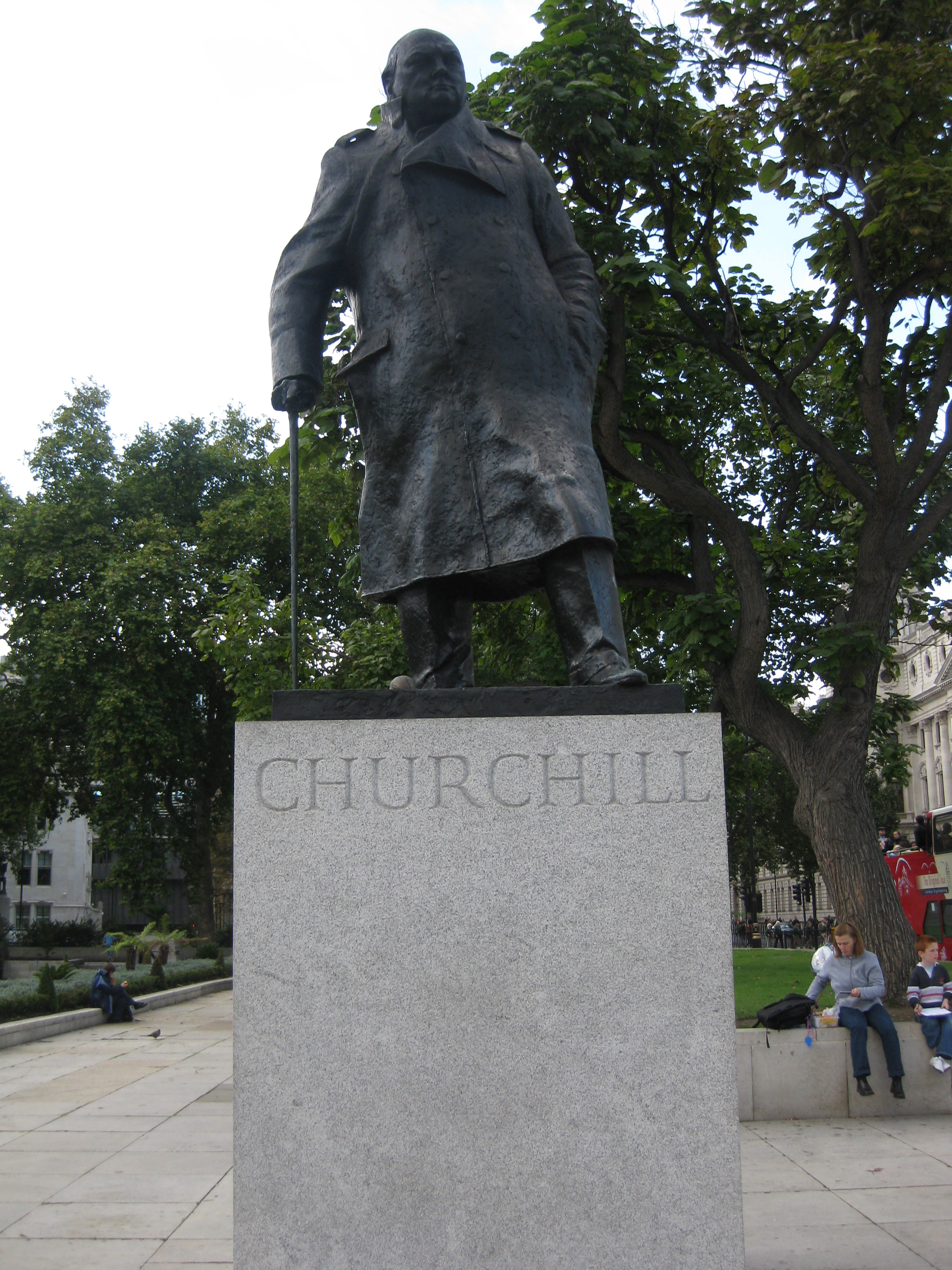
Churchill Statue in Parliament Square, London

Most people are either gifted leaders or gifted teachers, not both.

Let me contrast the two groups in three ways:

First, leaders tend to see the future clearly, while teachers tend to see the past clearly.

When George H. W. Bush was President, he confessed he had trouble with “the vision thing.”  He wasn’t sure where he wanted to take the country, but Bill Clinton was sure, and defeated Bush for President in 1992.

Leaders have to be able to see the future clearly and describe it to others.

By contrast, teachers see the past clearly and can accurately describe its lessons.

I have always had trouble envisioning the future.  As a leader, I shied away from 5-year plans because they were illusory to me.  I usually knew the next thing to do … but not necessarily the next thing after that.

But the past … that’s very real to me.  For many of the special experiences in my life, I can recall the date, the place, the weather, the people involved … all kinds of stuff.

For example, I remember when Nolan Ryan set the all-time season strikeout record.  It happened on a Thursday night in September 1973.  The Angels played the Twins in Anaheim.  Going into the game, Ryan had 367 strikeouts … and was trying to beat the all-time record of 382 set by Sandy Koufax in 1965.  After 9 innings, Ryan had 15 strikeouts (tying the record), but the game itself was tied.  Ryan couldn’t get that last strikeout in the 10th inning, and with two outs in the 11th, he still didn’t have it.  In fact, he was laboring with each pitch.  But he struck out Rich Reese of the Twins on a very high fastball for Number 383.

How do I remember all that?  I was there … with some friends … sitting in the upper deck down the left field line.  That event occurred 39 years ago … but I remember it like it was yesterday.  That memory seems unremarkable to me, but others have told me they’re amazed I can recall those things.

But it’s natural for a teacher.

Second, leaders tend to work with groups, while teachers tend to work alone.

I once heard Pastor Bill Hybels describe ten types of leaders.  He said the leaders who build the big churches are the kind of leaders who can put teams together quickly.  They recruit people, give them a charter, and turn them loose … and then do it again … and again … and again.

The best leaders like being with people.  They feed off their energy and ideas.

By contrast, teachers prefer to work alone.  They like to reflect, and do research, and write … and then march into a classroom or worship center and speak to a group on their own … without assistance.

Here’s the perfect day in my work life:

It’s raining and I’m confined to my study.  I comb my bookshelves for relevant books on a passage or topic and pull out 15 of them.  Slowly and methodically, I read sections of each book … not to steal what someone else has written, but to stimulate my own thinking.  Without effort, an outline begins to form in my head.  I put it on paper and begin to work it over.

While that process is happening, I don’t want anybody to interrupt me.  It’s just me and God and the books and some ideas.

Heaven.

That’s the reseach end … but I also love delivering the message to a group of people … especially if we can enjoy interaction.  However, without the research, the teaching time isn’t nearly as much fun … or productive.

Third, leaders tend to be repetitive, but teachers like to say things once.

I remember learning that churchgoers need to be reminded of a pastor’s vision every thirty days.  The pastor needs to remind people … over and over again … why that church exists and where it’s going.

The leader may do this in a variety of ways … like slogans, symbols, stories … but he has to remind people constantly why the church is doing what it’s doing.

By contrast, teachers hate saying the same thing over and over.  The repetition bores them.

Teachers like to keep truth fresh … illustrating and applying it in countless ways.

Recently I engaged in a painful activity: I re-read some sermons I preached a few years back.

When a message was good, it was full of fresh stories and thoughts.

When a message wasn’t very good, I was overly repetitive and predictable.

An effective leader needs to be repetitive, but an effective teacher longs to be original.

Jesus was both a great leader and a master teacher.  He led His disciples while teaching the masses.  He combined the two disciplines better than anyone who has ever lived.

So remember … your pastor is probably a gifted leader or a gifted teacher … and he gravitates toward the one he does best.

And he’ll probably receive far more criticism in his non-gifted area.

So if you think he falls short in one area, cut him some slack.

Because not all great leaders are great teachers … and not all great teachers are great leaders.

While you can usually tell if someone is a great teacher right away, the fruit of leadership only happens long-term.

What are your thoughts on these two disciplines?

Class dismissed!

Read Full Post »

True or false: all great teachers are also great leaders.

False.  False.  False.

And yet we fall for this gambit time after time: at school, in politics, and at church.

Especially at church.

We make the assumption that if a pastor is a great teacher, he will also be a great leader.

But that isn’t always the case.

I know a pastor who is an excellent communicator.  If he was on television, and the camera panned back, you’d assume the worship center would be full.

But the worship center wasn’t full when he preached … far from it.  In fact, there were many more empty seats than “taken” ones.

Why?

Because behind-the-scenes, he was not a gifted leader.  He tried … really, really hard … but it just wasn’t him.

God gave him the teaching gift but not the leadership gift.

The same thing was true of Gene Mauch.

Gene Mauch was a brilliant baseball manager for the Philadelphia Phillies, Montreal Expos, Minnesota Twins, and California/Anaheim/Los Angeles Angels from 1960-1987.

In Leonard Koppett’s brilliant book The Man in the Dugout, Koppett writes this about Mauch:

“More than any other baseball man of his era, Mauch is singled out by players and rival managers alike as a brilliant student of the game.  ‘He knew more about the details of every position, and all the little technical things, than anyone I came across,’ one player with twenty years of experience told me.”

Koppett continues:

“Mauch knew more baseball, in the technical sense, with deeper insight, than almost anyone around him or in the opposing dugout.  He tried, tirelessly, to impart the appropriate gems of information to his players.  But he did it so tirelessly, in such detail, with such intensity, that he aroused the wrong reaction.  Players would begin to worry more about doing what Mauch wanted than about winning itself.”

Koppett relates a story told by Ron Fairly, who played five years for Mauch in Montreal (the team is now the Washington Nationals).  Fairly would be taking ground balls at first base during batting practice, and he’d find Mauch staring at him from close range.  Fairly would wonder, “What’s he looking at?  What does he see that I’m doing wrong?”  Later, Fairly would be in the outfield, and Mauch would be watching him there.  Then he’d see Mauch at second base, staring at the batting cage.

Finally, Ron Fairly asked Mauch about the second base incident … and Mauch was just trying to understand why the Expos second baseman had looked out-of-sync on a couple of plays the day before.  Mauch really wasn’t staring at his players … he was just trying to figure out a baseball problem in his own mind … but they didn’t know that.

Koppett writes: “All they knew was that there was the boss, frowning, and that when he ever did speak to them it was about how to do this or that better, or avoid this or that mistake.”

Mauch was a great teacher … but he wasn’t a great leader.  His teams won two division crowns but never made it to the World Series … and because he didn’t win, he’ll never make the Hall of Fame.

Koppett’s conclusion: “Mauch was robbing the players of an essential condition: relaxation.  He was being too sophisticated for too many of his players.”

What’s true in baseball is also true in other fields … especially the church.

There are some pastors who are both great leaders and great teachers … but let me tell you, they’re rare.

God has given some pastors the gift of leadership but not the gift of teaching.

God has given other pastors the gift of teaching but not the gift of leadership.

God has also given some pastors the gift of Leadership (with a large “L”) but the giff of teaching (with a small “t”).

And He has given some pastors the gift of leadership (with a small “l”) but the gift of Teaching (with a large “T”).

The pastors who have both the gift of leadership and the gift of teaching are pastoring the megachurches … but some of them are lousy pastors and counselors.

Remember, no one person has all the gifts … except for Jesus.

The pastors who specialize in teaching tend to pastor medium-sized to large churches.

The pastors who specialize in leadership tend to pastor extra large to mega churches.

A veteran pastor once told me about two brothers who were both pastors.

The first brother was a great teacher.  He loved to study and research, and it came out in his preaching.

600 people attended his church.

The second brother was a better leader and had more of the common touch.

5,000 people attended his church … and his sermons were broadcast on the radio.  (I didn’t learn much from listening to him, but he was definitely entertaining.)

But what happens to us is that we get fooled.

We hear someone speak articulately and eloquently and passionately in public, and we’re persuaded by their rhetoric … so we assume that they’re equally persuasive behind closed doors.

But most people in a congregation never get to see their pastor in action with the staff or the board or city officials or community leaders.

We see and hear them teach in public … but we really don’t know how they lead in private.

I was in church ministry for 35 1/2 years … 26 of those years as a solo or senior pastor.

Some of my sermons were better than others … and I’d like to think that I got better with time … but because teaching was my primary gift, I rarely heard much flak about my preaching.  In fact, I distinctly remember two vocal critics of mine telling me they felt I was a gifted teacher.

If you heard me speak, you might assume I was an equally gifted leader … but I knew I wasn’t.  God gave me the gift of Teaching (with a capital “T”) but the gift of leadership (with a small “l”).

I’ll write more on this topic next time.

How have you seen this disparity played out with the leaders and teachers that you know?

Read Full Post »

How do you feel about Christian churches these days?

Based on the many Facebook posts I read, some of you are very happy with your church … especially if the church is ministering effectively to your kids.  If so, that’s wonderful.

I’m struggling … and I wonder if it’s just me.

Last Sunday, my wife and I attended a megachurch in our community.  We’re in the process of church shopping and want to make sure we’re covering all the bases in our area.

We sat on the far right side of the worship center … but I didn’t know that the church puts its services online.  Suddenly, this huge boom camera goes flying over our heads … back and forth, back and forth.

If the thing fell, the coroner would have to be summoned.

So we moved to the back row in the next section over … but that didn’t stop the camera from hovering above us again.

At one point, it got so low that I could have reached out and touched it … but what I really wanted to do was stop the thing from flying over my head every thirty seconds!

Fortunately, the service was great, right?

I don’t even want to mention this … but here goes.  (Lord, if I’m just being a cranky former pastor, please forgive me.)

The music was fine … at least I knew some of the songs … but church music is starting to sound the same to me wherever I go – especially the lyrics.  You could take the lyrics to any song, jumble up their order, and write another song with them … and another … and another …

I’m starting to long for “Here I raise my Ebenezer” and “My sin, O the bliss of that glorious thought …”

The pastor was away, so there was a guest speaker … with the obligatory shirt tail out.  (Can someone explain this trend to me?  Is this somehow more biblical or godly … or is it all about being cool?  Would that same person dress like that while making a business presentation?  Just saying.)

The guest speaker had a great introduction – he actually used a story … and then never used another one.  Not one.  Zilch.  With little application, either.  And no outline.  It almost felt like he made up the sermon as he walked to the pulpit.

And he probably walked away with $2,000 per service for his efforts.

I’m just getting started, so if you want to turn back now …

There’s something else I’m struggling with: the lack of intellectual challenge in preaching today.

Can somebody please come up with something that makes us think?

One or two meaningful quotes would be nice … or a story about a great leader from church history … or a detailed explanation of a theological truth.

But instead, it seems like the preaching is designed for spiritual ninth graders.  I was in ninth grade once … but I don’t want to go back there again.

And one more thing … has anything happened in Christendom between the resurrection of Jesus and yesterday’s news?  While our preaching needs to be biblically based, when is the last time you heard a preacher refer to Martin Luther, or John Calvin, or the Anabaptists, or the Reformation?

To steal a quote from Howard Hendricks, modern-day Christianity is a mile wide and an inch deep.

And what’s happened to gifted vocalists and musicians?

If you love Jesus, and He gave you a beautiful voice, are you relegated to singing on the praise/worship team for all eternity?  Why are churches intentionally not allowing gifted vocalists to sing solos or duets anymore?  At our home church in Phoenix, we had one or two vocal selections every Sunday … and they were often the best part of the service … but my guess is that less than 10% of the churches I’ve visited allow such singers to use their gifts.

Can we please hear something besides praise/worship music all the time?

As I look back over more than 50 years of sitting in church, do you know what I remember best?

Illustrations and solos.

When I talked to a friend recently about my feelings, he told me I need to teach on a regular basis.

Oh, no … God couldn’t be telling me that, could He?

Am I the only one who feels this way?

This holy rant is now concluded.

Read Full Post »

« Newer Posts - Older Posts »