Feeds:
Posts
Comments

Archive for the ‘Personal Stories’ Category

Nobody likes to get yelled at.

Especially kids.

Many years ago, in my second pastorate, I was preaching one Sunday morning.

So the nursery workers could hear the service, someone installed a loudspeaker high on the nursery wall.  (I was always amazed that any parent put their child in that nursery because it smelled of gas.  We never did discover the source of the problem.)

Anyway, on this particular Sunday, I must have been passionate about some issue, because one of the little kids heard my voice, looked up at the speaker on the wall, and cried out:

“Don’t yell, God!”

I wonder how many people have been driven out of churches because the pastor yelled.

A pastor needs passion or people will fall asleep.

A pastor needs to vary his voice pitch to sound interesting.

A pastor needs to get excited every now and then.

But yelling?

I was scheduled to go to the dentist today, but my appointment has been postponed until next week.

Why is it that most people don’t like to go to the denist?

At least in my case, it’s not just the pain … I know I’ll leave that place alive.

I’m more afraid of the dentist yelling at me for not taking care of my teeth perfectly … even though I floss every day.

And I don’t like to get yelled at.

Let me share three reasons why pastors don’t need to yell when they preach:

First, yelling never makes a point more emphatic.

I once read about a pastor who took his notes into the pulpit with him.  In one place, he wrote, “Weak point.  Yell louder.”

My wife and I recently attended a church service where the pastor spoke a mile a minute during his message.  He sounded like former Lakers’ broadcaster Chick Hearn on steroids.

After the service, I told my wife, “He could have made his points more effectively if he had slowed down and spoken softer at times.”

I wish our politicians would quit yelling when they speak.  Maybe pastors can lead the way.

Second, yelling assumes that people aren’t listening. 

I’ll never forget the third sermon I ever preached.  (It was much better than the first two.)  It was on 1 Peter 4:8.  I went to my pastor that morning and asked him if it would be all right if I pounded the pulpit when I preached that night.

He said it was fine.

When I pounded the pulpit, I’m sure I felt better … but I’m not sure anyone else felt better.

Like many pastors, I once assumed that if I sensed I was losing people as I preached, I had to yell a bit to recapture their attention.

I no longer believe that … especially in a day when pastors use amplification when they speak!

Finally, yelling makes people feel that God is yelling at them, too.

I stay away from people who yell at me.  Most people act the same way.

And when a pastor yells at a congregation, some listeners – maybe most of them – sense that God is yelling at them, too.

That’s certainly the way the kid in the nursery reacted to me many years ago.

He so identified my voice with the voice of God that when I yelled, he thought God was yelling at him.

But doesn’t God also speak through a still small voice?  Elijah needed to learn that lesson.

I think the day of yelling preachers is long gone.  It doesn’t work anymore.

Passion is good.  Conviction is necessary.  Even an occasional rant is okay.

But yelling?

I agree with my small friend:

“Don’t yell, God!”

Read Full Post »

Albert Pujols is considered to be one of the best players in baseball today … and some believe he’s the greatest hitter of all time.

Pujols is also a believer in Jesus Christ.

Last winter, when Pujols was trying to decide which team he should sign with as a free agent, he and his wife did something unusual.

He and his wife got down on their knees and asked the Lord to help them make their decision.

And Pujols signed with the Los Angeles Angels (from Anaheim!).

It’s amazing how the Lord guides us when we ask for His help.

My wife and I recently moved back to Southern California.  As I was putting my new study together, I noticed that I was missing several items: some magnets that I’ve purchased in other countries and a set of DVDs.

I have torn this place apart looking for them.

In fact, one night last week, I went through every box in the garage … and there were a lot of boxes there!

While I categorized all the boxes, I never did find the magnets or the DVDs.

Yesterday morning, I did something I should have done earlier.

I asked the Lord to show me where the magnets were.

Immediately, the Lord led me to look in a certain area of the garage.

I opened boxes I had opened several times already … only this time, I spotted a small box that I hadn’t remembered seeing.

The magnets were in that box.

But I still couldn’t find the DVDs.

A few hours ago, I asked the Lord to guide me to them so I could stop obsessing about where they were.

He led me to a stack of boxes in the garage.

A couple minutes later, I found the DVDs … in a box underneath another box that I had thought I had opened.

Have you ever had this happen to you?

You’ve lost something: your ATM card, your keys, your wallet, or your glasses.

You’ve looked everywhere and can’t find them anywhere.

And then you stop looking around you and start looking up.  You ask the Lord to show you where they are.

And He does … miraculously.

That’s a very small use of the power of prayer.  There are much bigger issues to pray about than lost magnets and DVDs.

But if the Lord can guide us to those items, can’t He answer our larger requests as well?

James 4:2 puts it simply: “You do not have because you do not ask God.”

If you want the Lord’s guidance, may I encourage you …

Ask.

Read Full Post »

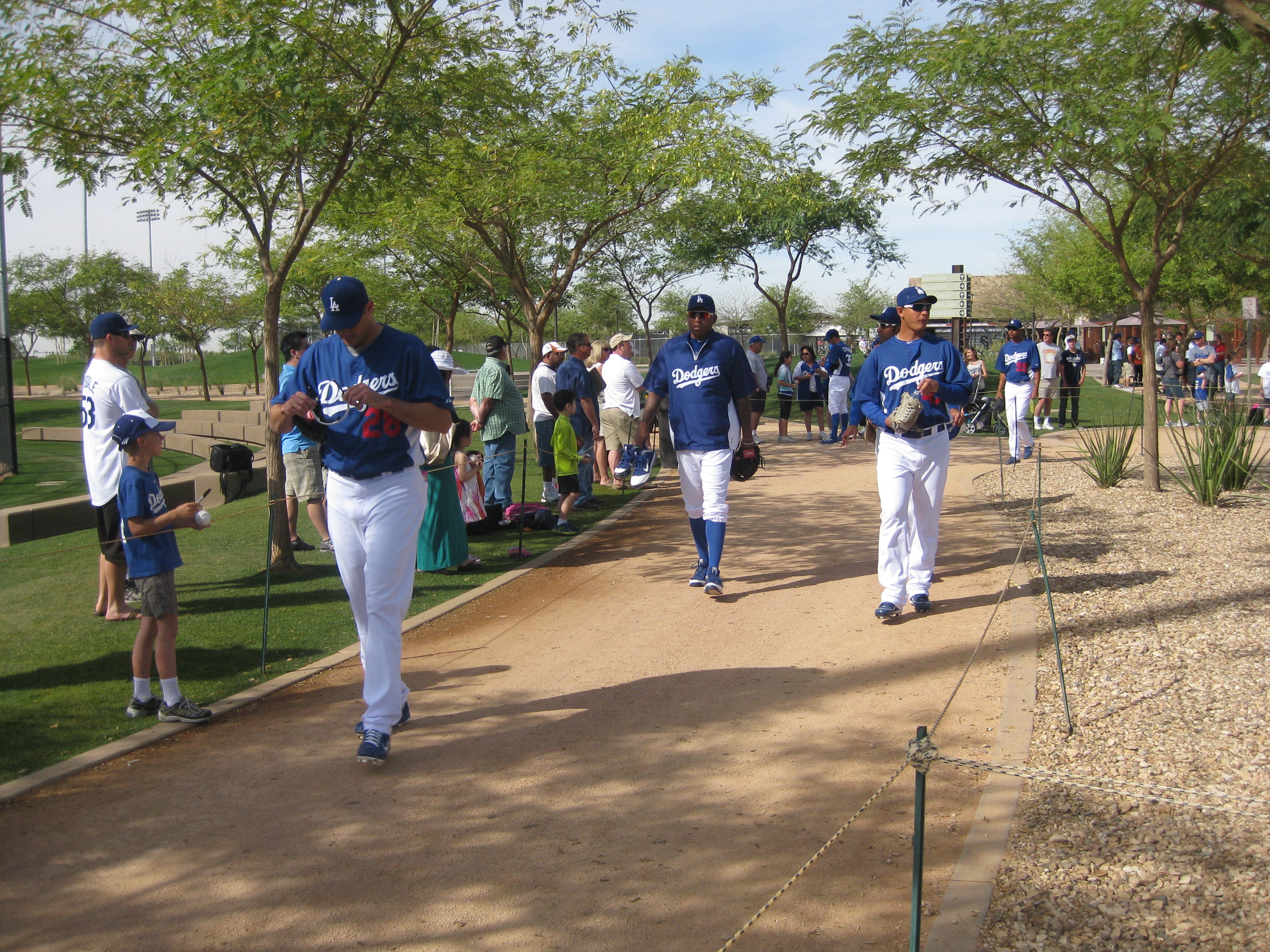
Several weeks ago – my next-to-the-last day in Phoenix – I drove over to the Dodger camp in Glendale for one last look at spring training before moving to California.

While the fans lined the ropes hoping that a Dodger player might stop and autograph a ball for them, I spotted two men walking through the crowd: Don Mattingly, Yankee legend and current Dodger manager, and Peter Gammons, Hall of Fame sportswriter.

While Don Mattingly was once a household name, Peter Gammons is known mostly to baseball fans.  For years, he offered commentary on baseball matters on ESPN and now works for the Major League Baseball Network.  He’s been named Sportswriter of the Year three times.

As you can see from this photo, there weren’t many people around yet that day.  One fan asked Gammons for his autograph (not Mattingly) and Gammons used the timeworn phrase, “I’ll get you later.”

Now if I was Gammons, I probably wouldn’t have stopped, either.  After all, he was walking with Mattingly – probably preparing to do a report on the Dodgers – and he wanted to keep the conversation going.  Fair enough.

But when Gammons did return – this time, walking with a Dodger minor league coach – he was once again asked for his signature, only this time he didn’t stop and sign as he had promised to do – he just kept going into the Dodger clubhouse.

It would have taken Peter Gammons less then ten seconds to sign something for the gentleman who requested his signature – and I doubt if a mob would have ensued afterwards.  The man asking would probably never see Gammons again.

But I’m not trying to jump on Gammons – after all, I didn’t request his signature – but on the casual way we make and break promises.

How many of you have had someone make one of the following promises to you recently?

“I’ll drop that in the mail today.”

“I’ll call you back by tomorrow night.”

“I’ll be home by six.”

“I’ll pick up your medicine on the way home.”

“I’ll be there at ten o’clock sharp.”

“I’ll pray for you as you visit the doctor.”

We make casual promises to each other all the time, don’t we?

We give others – often members of our family – assurances that they are important to us and that we’ll come through for them.

But what happens when we don’t come through as promised?

When my kids were small, I did everything in my power to keep my promises to them.  If they could learn to trust me, I figured, then maybe they could learn to trust their teachers, their employers, their pastors … and their God.

I don’t know how many promises I didn’t keep.  (I hope it wasn’t many.)  But I tried to keep every one I made … and made as few as possible so I could remember them all.

In The Message, Jesus says this in the Sermon on the Mount:

“And don’t say anything you don’t mean…. You only make things worse when you lay down a smoke screen of pious talk, saying, ‘I’ll pray for you,’ and never doing it … Just say ‘yes’ and ‘no.’  When you manipulate words to get your own way, you go wrong.”

It’s especially important for Christian leaders to keep their promises.  For example, if a pastor wants to avoid conflict with churchgoers, then he needs to follow through with these promises:

“I’ll stop over and see your mother in the hospital later today.”

“I’ll bring a report to the meeting next week.”

“I’ll bring that book you asked about on Sunday.”

“I promise I’ll spend some time in prayer for your family.”

“I will see you for lunch tomorrow at 11:45.”

Keep your promises … and your credibility goes up.

Start breaking them … and watch your trust level go south.

Let me encourage everyone reading this to make fewer promises but to keep the ones you make.

Most of us do not have Alzheimer’s.

And when we realize we’ve broken a promise, we need to admit it, apologize for it, and then make good on that promise at the first opportunity.

I’m sure that Peter Gammons didn’t mean to break his promise to that fan.  He probably just forgot.

And we’ll forget our promises sometimes, too.

But if we want others to trust us … and we want our word to mean something … let’s keep the promises we make.

After all, where would we be if God did not keep His promises to us?

Read Full Post »

When I was in my early teens, our local radio station did something every Good Friday that now seems unbelievable.

For 15 minutes – from 3:00 to 3:15 in the afternoon – they did an audio narration of the crucifixion of Jesus as if seen by an eyewitness.

Up to that time, I didn’t know much about Good Friday.  I knew that Jesus died on a Friday, but the churches I attended didn’t celebrate that day, focusing all their efforts on Easter instead.

But that annual radio broadcast really brought it home for me.

Most of us are aware of the events of Good Friday … but how about its meaning?

The meaning of Good Friday is found in my favorite verse: 2 Corinthians 5:21.  Paul writes:

“He made Him who knew no sin to be sin on our behalf, that we might become the righteousness of God in Him.”

At a point in time, God the Father made God the Son something He was not.

He made Him sin.

The Son incarnate became Sin incarnate.

When did that happen?  On the cross … on Good Friday.

I cannot imagine what it’s like to become sin.

There are sins I know about … sins I’ve read about, or seen depicted in movies … but I don’t even want to think about them.

There are sins I’ve committed that I never want to think about again.

There are sins I’ve been tempted to commit but haven’t … sins that nearly frighten me because of their repercussions.

But on that cross, Jesus became sin itself.

He became pride.  He became lust.  He became slander.  He became murder.

He became violence, and rape, and betrayal, and abuse … every sin you can think of.

No wonder Jesus felt forsaken by His Father.  No wonder the Father turned His back on His Son.

Why did Jesus do this?  Paul tells us:

“… that we might become the righteousness of God in Him.”

The Son became sin that we might become righteous.

How does that happen?

If we admit our sinfulness to God … and trust Christ’s work on the cross for us … we gain divine righteousness.

Our sin … for His righteousness.

It’s the best deal in the universe.

I made that deal when I was six years old.  With my father kneeling beside me, I told Jesus that I was a sinner.  I asked His Son to become my Savior.

He did.

It’s the best deal I’ve ever made.

It cost me nothing.  It cost Jesus everything.

This is why we call the Friday before Jesus died Good Friday.

It initially looked like Very Bad Friday … until the events of three days later took place.

It’s only Good Friday in retrospect.

It’s why I sing with my brothers and sisters worldwide:

Were the whole realm of nature mine,

That were a present all too small,

Love so amazing, so divine,

Demands my soul, my life, my all.

Read Full Post »

Moving Back Home

The day after Christmas in 2009, Kim and I left California and moved to the Phoenix, Arizona area.

We had been invited by a friend to stay in a house he and his wife owned in the Phoenix suburb of Surprise.

Surprise was a great refuge.  Several months later, we rented our own place in a quiet community.  When Kim later got a job in Phoenix, we moved there to be closer to her workplace.

There are four things I like about Phoenix:

First, my family is there: my step-father, mother, sister, step-sister, and two step-brothers and their families.  I greatly enjoyed gathering together with family for major holidays.  I miss them all very much.

Second, we found a great church: Christ’s Church of the Valley in Peoria.  The church celebrated its 30th anniversary yesterday, and I so much wanted to be there.  I’m sure the church has its share of problems – all churches do – but I rarely saw anything amiss.  I learned so much at CCV about how to minister to a secular culture.  And on our last Sunday, the service began with a spirited rendition of one of my favorite songs: “I Won’t Back Down” by Tom Petty.  Gotta love a church like that!

Third, I enjoyed spring training.  Several weeks ago, my friend Dave came to nearby Glendale to see the Dodgers play at Camelback Ranch, and we had a lot of fun watching the Blue Crew together.  The following week, my friend Russ and I sat in that same stadium behind home plate with major league scouts.  (Many of them had radar guns to time the velocity of pitchers’ fastballs.)  I’ll miss the ease of driving to a stadium for a quick game.

Fourth, Phoenix was perfect for writing.  I’m not sure I ever would have written a book in California.  As difficult as it was at times, I needed solitude to complete my divine assignment.  Moses, Elijah, Jesus, and Paul all needed wilderness experiences to prepare them for greater ministry, and Phoenix fit that role in my life.  But to be honest, I’m weary of looking at the brownness of the desert.  I need more green in my life.

Throughout my life, God has always called me to my next assignment through an invitation to serve in a church.  This time, the call to move came through our minds and circumstances.  There was no way I could pursue my ministry in Phoenix.  For various reasons, Kim and I sensed that we needed to be in Southern California.

Reasons:

First, our kids are here.  Ryan and Vanessa live less than 90 minutes away, making it possible to see them more often.  And Sarah, who lives in the Bay Area, now lives 280 miles closer to us than when we lived in Phoenix.  Hopefully that gap will decrease further in the days ahead.

Second, my network is here.  The regional chapter of the Society for Church Consulting is having its initial meeting this week, and I want to be there.  I may have another ministry opportunity nearby as well.  Talbot School of Thelogy – my seminary – holds a variety of interesting events year round.  And Southern California offers many more opportunities for my RKB ministry … like the workshops I’ll soon be leading at a major convention.

Third, many of my best friends are here.  When I was in high school, I was a member of the Bomb Squad.  Four of my friends and I viewed ourselves as guys who had “bombed out” in love … and that bond united us for a long time.  Three of those friends still live in SoCal … while a fourth lives in Kingman, Arizona.  Kim’s two brothers live in SoCal as well, as do various ministry colleagues.  It wasn’t easy making friends in Phoenix, so it will be nice to see people once more who mean so much to me.

Finally, there’s a lot to do here.  Seven days ago, we moved to Sun City, 20 miles south of Riverside.  This is a beautiful area, a mix of rural and suburban, and a place of great beauty.  (There are canyons and valleys everywhere.)  We’re one hour from San Diego, Palm Springs, and the local mountains, and less than 90 minutes from the ocean.  While the traffic in the LA area can be brutal at times, it’s because people love to live here.  Phoenix is great if you like to hike, swim, or play golf, but those aren’t my favorite pastimes.  Being closer to the ocean is more my style.

I haven’t written anything for two weeks because of the move – my computer was offline for ten days – but I’m all set up and ready to go, so thanks for reading.

And it feels great to be back home.

Read Full Post »

Spring training.  Those two words used together have often caused me great joy.

I became a baseball fan at the age of six.  Growing up in Anaheim – 25 miles or so from Los Angeles – my first baseball memory was hearing Vin Scully on the radio calling the Opening Night game between the Phillies and Dodgers … in 1960!

My dad took me to my first ballgame that year.  The Pirates – and Roberto Clemente – beat the Dodgers 5-2 at the Coliseum behind Bob Friend.  I can still see big Frank Howard of the Dodgers, quite an imposing figure, in right field.

The only option I had for going to spring training was Palm Springs, where the California Angels played.  (The Angels trained in California and the other Cactus League teams trained in Arizona.)  My mother took me to a game there in 1969 … but I remember another game in 1972 much better.

Nolan Ryan had been traded from the Mets to the Angels.  While facing the Giants in Palm Springs, Ryan hit three batters in the first two innings … and he threw hard.  Many of us in attendance that day wondered if the Angels had made a mistake trading their most popular player – Jim Fregosi – to the Mets for Ryan (and several other players).

But spring training really came alive for me when my mother and step-father moved to Phoenix.  I was able to stay at their place and visit the eight major league camps with full access to all the players.

Some of my most vivid spring training memories:

*One day in Palm Springs in 1977, Nolan Ryan pitched for the Angels, went into the clubhouse and showered, and then walked around the stands for a few minutes.  (Nobody recognized him).  When he left the ballpark, I followed him outside and asked him to pose for a picture for me.  (I’ll post it if I can ever learn how to work my scanner.)

*Danny Kaye, the entertainer, used to sit in the stands in Palm Springs when the Mariners were playing the Angels.  One time, he sat in the stands right by me, trying to hide from the public.  Didn’t work.

*In 1978, Rod Carew was traded from the Twins to the Angels for 4 players.  When the Angels visited Sun City to play the Brewers, I waited by the Angels’ bus for Carew.  He was carrying a Pepsi in a six-pack holder.  While he signed three cards for me, I took the plastic holder off his hands … and kept it for years.  (If I still had it, could I put it on ebay?)

*I once spotted Angel owner Gene Autry outside the Cubs’ ballpark in Mesa … and Leo Durocher walked right up to him.  I got a great picture of the two of them.

*Speaking of Mesa, Yankee Hall of Fame pitcher Lefty Gomez once worked for a sporting goods company and showed up at Hohokam Park where the Cubs played.  He posed for me, too.

*In the early 1980s, Greg Minton was the closer for the Giants.  One day, my son Ryan crept underneath the stands and found Minton waiting to take batting practice in the cage.  When I asked to take a photo, Minton put Ryan on his lap and embraced him.  Minton signed the photo the following year and wrote, “To Ryan, Take My Job, Greg Minton.”  Priceless.

*Ryan approached Reggie Jackson for his autograph one spring.  Although Reggie can be a first-class jerk, he signed two cards for Ryan … because NBC was filming the encounter.

*In 1984, future Hall of Famer Goose Gossage signed with the San Diego Padres.  At his first press conference at Scottsdale Stadium, Gossage stood against a wall below the upper stands and answered reporter’s questions … while Ryan stood in the stands and tried to take Goose’s hat off his head.  (Another great photo.)

*Jose Canseco of the A’s had a monster season his rookie year in 1986.  The following spring, Ryan got Canseco’s autograph at Scottsdale Community College where the A’s trained at the time … and there was nobody around.  (I took their picture, and although Canseco has turned out to be a jerk, it’s still one of my favorite photos.)

*In 1988, Ryan and I visited the Mariners’ stadium in Tempe.  (The Angels are there now.)  A gangly 18-year-old kid appeared and happily signed autographs for the ten or so of us who were gathered.  His name?  Ken Griffey Jr.

*That same day, the Mariners played an intrasquad game.  When the players were done on the field, they showered, changed clothes, and then sat in the stands.  Ryan and I walked up to players and got everyone’s autograph as many times as we wanted.

*Back in 1999, my daughter Sarah and I went to a workout at the Giants’ ballpark in Scottsdale … and we were the only two people getting autographs afterwards.  When Barry Bonds came out, he asked Sarah before signing, “Why aren’t you in school?”  When I asked him to sign a card, he bent the corner (telling me, “Now you can’t sell it”) and then signed it … and after he left, I just bent it back.

*That same year, Sarah and I drove to Mesa where the Angels once had their minor league complex.  Carney Lansford, former third baseman for the Angels and A’s, was the manager of an Angels’ farm team.  Because Sarah went to the same high school as Lansford (Wilcox High in Santa Clara), they had a great conversation about teachers they had in common.

For years, the great thing about spring training in Arizona is that you had full access to the players.  When they drove into the parking lot, you could meet them as they went into the clubhouse.  After they got dressed, you could meet them going to the practice field.  After practice, most of them would stop for photos or an autograph, and after they got dressed, you could try and catch the ones you missed going to their cars.

That’s all changed now.  The players drive into guarded parking lots.  You can’t get near them when they walk toward the field.  They’re all millionaires … and they act that way.

But I remember a better time … a simpler time … and I will always celebrate the beauty of spring training.

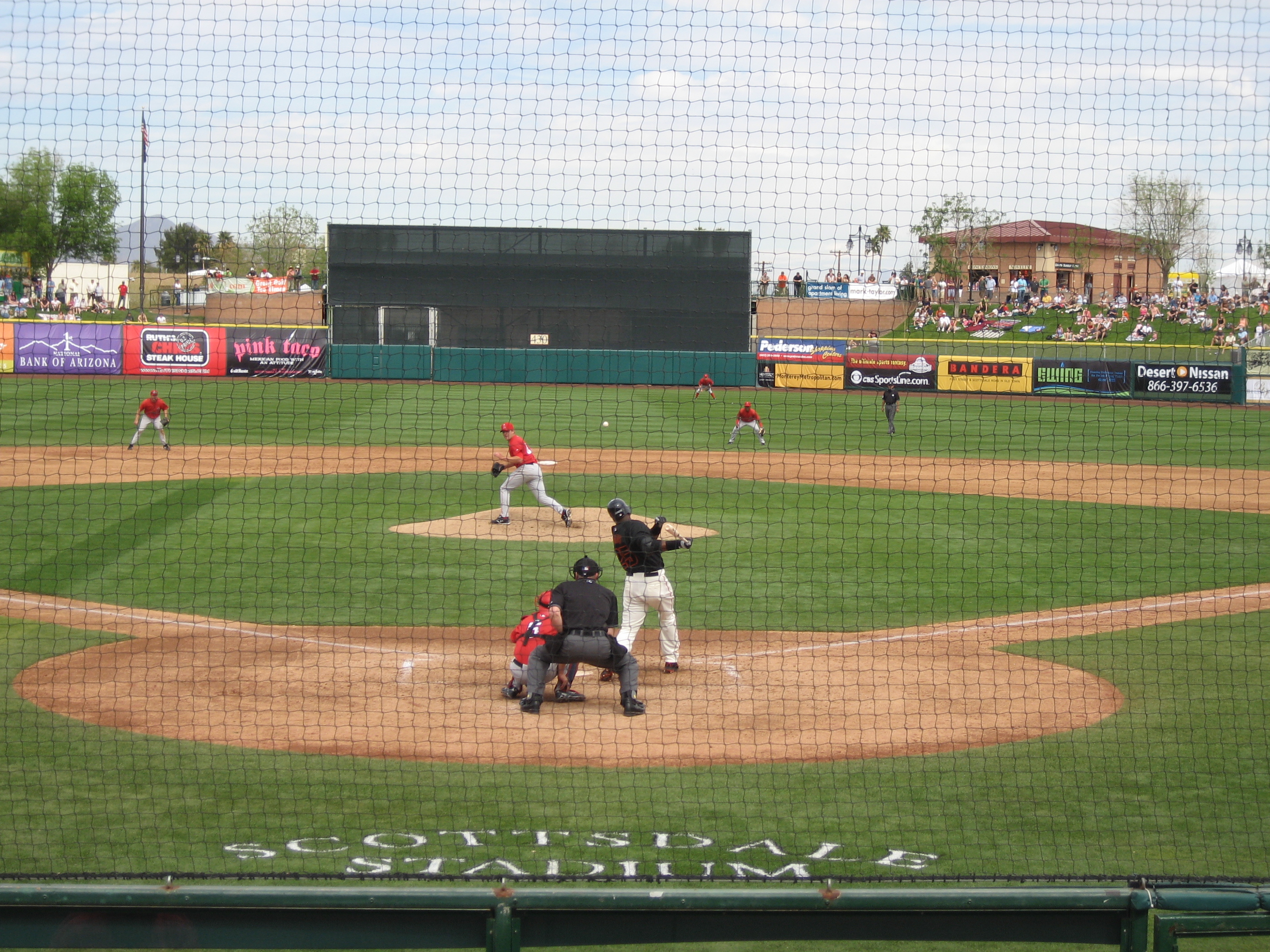
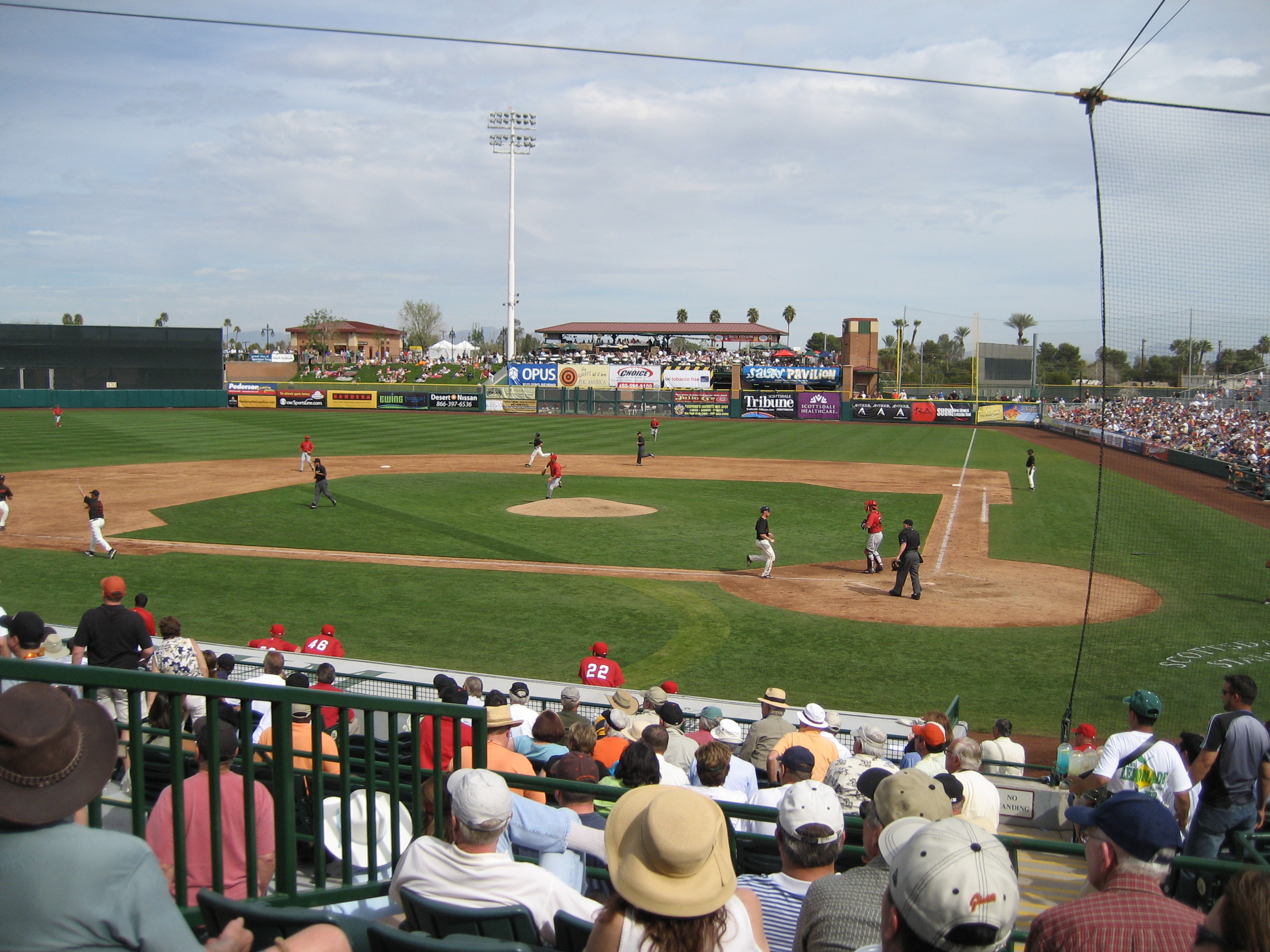
Here are some more current photos of spring training in Arizona:

Giants and Royals in Surprise, March 2010

Read Full Post »

Last Sunday, I had the privilege of preaching at a church in California.

And I enjoyed it very much.

Last November, for the first time in nearly two years, I spoke at another church in California.  While I was grateful for the opportunity, I was so out of sync that I forgot my Bible.  (I borrowed my wife’s.)

But things went well this past Sunday – and I remembered my Bible!

I spoke on John 3:16.  While I considered Hebrews 6:4-6, I let that thought pass.

When you haven’t run for a while, it’s better to attempt a mile than a marathon.

Here’s what I miss most about preaching:

First, I miss the preparation time.  I love interpreting a passage … and doing research on it … and finding relevant applications … and synthesizing material … and the actual writing of the message itself.

I love it so much that in my last ministry, I usually studied far into the night on Thursdays and didn’t finish the message until around noon on Friday – my day off.

When you speak every week, your consciousness is heightened all week long because you’re constantly scanning your surroundings for applications and stories.

And your whole week culminates in Sunday morning.

I miss that.

Second, I miss the pre-service prayer time.  Last Sunday, the people involved in the service gathered in a side room.  We all held hands and then the pastor prayed for the service.

In the past, I always felt pulled in two directions right before the service.

On the one hand, I wanted to visit with churchgoers because I genuinely loved them.  While I couldn’t get to everybody, I wanted to reach as many people as I could … and most people showed up a few minutes before the service started.

But I also wanted to be present for the pre-service prayer – because I needed it myself.

I miss that.

Third, I miss the moment right before the message starts.  I suppose it’s a similar feeling for actors, or singers, or musicians.  You know you’re about ready to go on … and there’s no backing out now.

And you’ve been preparing diligently for that very moment.

One of my favorite preachers, D. Martyn Lloyd-Jones, used to refer to “the romance of preaching.”  He told his students that you never knew what God was going to do on any particular Sunday.

Sometimes you prepare well and the message falls flat.  Other times, you’re ill-prepared and the Spirit of God just carries you along.

Ah, the romance of preaching.

I miss that.

Fourth, I miss expounding the Word of God.  I believe in the primacy of Scripture.  God’s people are to follow His Word regardless of what the state, business, education, or family say about a matter.

That’s an awesome responsibility: to challenge the culture with a book that’s twenty to forty centuries old.

When I’m preaching God’s Word, I am conscious that I am standing in a long line of preachers who believe they have a word from God for their hearers.

For example: while we all know that “God loves me,” this question crossed my mind as I was preparing for the message:

How do we know that God loves us?

There are many faiths that don’t believe that God loves people.  Why do we think He does?

First, because He tells us so in His written Word: “For God so loved the world …”

Second, because “He gave His one and only Son …”

Without God’s Word and God’s Son, we would not know that God loves us.

Sounds so simple … but it’s incredibly profound … and it’s the job of the preacher to remind us of those truths.

I miss that.

Finally, I miss liberating people with truth.  Jesus said in John 8:32, “Then you will know the truth, and the truth will set you free.”

This is true liberation theology.

Charles Spurgeon used to say that a sermon should make people sad, mad, or glad.

But I always had one overarching aim when I preached: to free people with truth.

I never tried to shame people, or make them feel guilty, or condemn them for being human.

Instead, I tried to point listeners to the only One who could loose their chains: Jesus.

I miss that.

Over the past two years, I’ve resigned myself to the fact that I may never preach again.

Most churches in our day have just one teacher, and that’s the pastor.  If you’re not paid to preach, you ain’t preaching.

But the Lord may be opening up an opportunity for me to preach every week … and if He does, I’ll be eternally grateful.

Because as much as I act like I don’t miss it, I do.

Read Full Post »

Ever wonder what’s it like to be a pastor’s kid?

You grow up sensing that you’re very different from your peers.

You attend Sunday School, Sunday morning worship, the Sunday evening service, and midweek prayer meeting every single week for years.

You aren’t allowed to play in front of your house on Sunday afternoons (and can only play in the backyard quietly).

You’re the only kid you know who doesn’t go to the movies (except for the pastor’s kids two houses down who can’t even watch Shirley Temple movies on television).

You grow up without a color TV – and only obtain one after you get married.

And you don’t play cards, dance, or swear … and learn that smoking and drinking are the top sins that God hates.

While you love your parents and your church, you constantly feel like you don’t belong … and you don’t know anybody famous who is like you.

Until a Yankee named Bobby Richardson came along.

Bobby Richardson was the second baseman for the New York Yankees from 1955-1966.  As a kid, I learned he was also a Christian, just like me.  I first heard his name while collecting baseball cards.

When I was six years old, my parents were visiting friends in Orange, California.  Game 3 of the 1960 World Series was on TV.  I was drawn to baseball even then.

Bobby Richardson came up and hit a grand slam home run down the left field line.  While I was rooting for the Pirates (I have never rooted for the Yankees), I had to admire the little guy with the big bat.  He was named the Most Valuable Player for the Series even though the Yankees lost (thank you, Bill Mazeroski) – the only player ever named MVP for a losing team.

Richardson then played in the World Series for the next four years – winning in 1961 and 1962 – and catching the final out in the seventh game of the ’62 Series off the bat of the Giants’ Willie McCovey.

The second baseman became an All-Star and was known for his fielding prowess and his skill in not striking out.  He only struck out three times in a game once in his whole career – and Sandy Koufax accomplished that feat in the 1963 World Series.

Richardson retired at age 30, the same age as Koufax when he retired.

In 1965, my parents bought me Richardson’s book The Bobby Richardson Story at the Inspiration House at Knott’s Berry Farm.  (They had a Christian bookstore there at the time!)

Richardson infused courage into me when he said, “If you take a stand early, people respect you.”

And his Yankee teammates all did.

Several months ago, my friend Russ told me that Bobby Richardson was going to be speaking at a prayer breakfast in Prescott on January 31.  Did I want to go?  Unsure of my schedule, I finally said yes – and I’m so glad I did.

Bobby Richardson at Prayer Breakfast in Prescott, AZ

Richardson’s stories were great.

He roomed with Tony Kubek (later a famous broadcaster), once singing hymns with him into the night.

His batting average was .299 going into his last game in 1959, and he needed one hit to hit .300 (the mark of a really good hitter).  The pitcher, catcher, and third baseman all sent him word they would help him get that last hit … but he lined a single to right without their help and ended the season at .301.

He told us the inside story of Phil Linz and the famous harmonica incident on the Yankee bus in 1964.  Loved it!

But best of all, he told us about the impact that he had on Mickey Mantle’s life – especially during his last days.

A few days before Mantle’s death in 1995, Bobby Richardson and his wife visited The Mick in the hospital.  Through a series of events, Mantle received Jesus and quoted John 3:16 to Richardson as evidence of his new faith.

Mickey Mantle also asked Bobby Richardson to conduct his funeral service.

After the prayer breakfast was over, people wanted to meet the speaker and get his autograph.

Richardson After the Prayer Breakfast

Richardson wisely set up a table in the lobby.  There was no charge for his signature.  My friend Russ, who invited me, asked Richardson to sign a copy of his book …

Russ and Bobby Richardson

… along with a baseball card I brought along for the occasion.

Richardson Signing a Baseball Card

When it was my turn, I just wanted a photo with Bobby.  Afterwards, I told him how much he meant to me as a kid because he was a Christian … and very few players acknowledged their faith publicly back then.

He told me that things had changed so much that when the Yankees won the pennant in the late 1990s, 18 of the 25 players were believers.  (Makes it harder to hate the Yankees!)

When I told him that I’d seen his grand slam on TV in the 1960 Series, Richardson held out his hand and shook mine.  He told me that he was supposed to bunt in that situation.  After he hit the homer, manager Casey Stengel told him in the dugout, “Nice bunt!”

Richardson played a big role in Baseball Chapel, so I asked him about Gary Carter, the believer and Hall of Fame catcher who is battling multiple brain tumors.  (Carter played a leadership role in Baseball Chapel years ago).  Richardson said he wasn’t doing too well and needed our prayers.

I’ve met players like Ted Williams, Joe DiMaggio, Jackie Robinson, Willie Mays, Mickey Mantle, Hank Aaron, Roberto Clemente, Sandy Koufax, and Nolan Ryan.  I’ve had conversations with guys like Duke Snider, Don Sutton, and Richie Allen, and had the privilege of sitting next to Alvin Dark at a banquet years ago.

But I’ve never met a kinder ex-player than Bobby Richardson.  He was everything I hoped he’d be and more.

Thank you, Bobby, for giving this kid a Christian role model decades before Tim Tebow came along.

Bobby Richardson and a Longtime Fan

Read Full Post »

What are great Christian leaders really like behind the scenes?

Let me share a story with you.

When I first got married, I took a full-time job as a church custodian.

On Good Friday, a famous preacher and author – who was also on the radio – came to speak at the church.

The church seated around 400 people.  More than 600 attended that night.  The place was packed.

I stood outside with a friend waiting for the speaker to arrive.  He was late.

When the speaker finally showed up, he was grouchy.

A seminary classmate who was African-American played the piano and sang during the first part of the service.  He was good.  But the speaker wasn’t paying attention.  Sitting on the stage, he began playing with his microphone cord like a jump rope, causing people to laugh.

And then when this famous man began to speak … he started off with a racial joke.

My mouth dropped open.  I was horrified.

And then he gave a great message on Christ’s seven last words from the cross.  People were spellbound.

Every Christian leader has their flaws.  Some are public, some more private.

Charles Spurgeon, the Prince of Preachers, smoked cigars – and said he did it to the glory of God.

The marriage of John Wesley (founder of the Methodists) was an absolute wreck.  (“You wreck me, baby, yeah you break me in two …”)

John Bunyan, author of Pilgrim’s Progress, couldn’t stay out of debtor’s prison.

Yet we consider those men to be great Christian leaders.

But would we today?

A pastor friend recently told me about a famous Christian author whose daughter claimed that she only had a couple of conversations with her father while growing up.  You may have this man’s books.  (I do.)

And another author – a man whose books have helped me immensely – is now divorced.  Based on his writings, he’s the last man I would have expected to undergo that experience.

Rick Warren has issues.  So does Beth Moore … and Erwin McManus … and Max Lucado … and Paul Crouch … (Oh, wait, not Paul Crouch).

I don’t know what their issues are.  Their spouses probably do.  Their staffs might.  But you might never know.

But they have issues, just like anyone else.

Leaders struggle with handling money … and lust … and overeating … and alcohol … and pride … and poor self-esteem …

While a select few sins should disqualify people from leadership, most issues do not.

And because of our frail humanity, it’s a wonder God ever uses anybody, but He does … in spite of our frailties.

Some people are masters at appearing perfect in public.  I have admired some of these individuals greatly.

I practically worshiped one of my professors.  He was smart, funny, passionate, and wise.

Then I had the privilege of having dinner with him and another leader.

My professor was painfully shy, socially awkward, and a poor conversationalist.

But man, could he preach!

It’s okay to have heroes.  We need role models.

But let’s not turn any leader into a god.

Because there’s only one God, and only He is perfect.

And yet for some reason, He only uses imperfect people.

Think about that the next time you’re tempted to rip into a Christian leader.

Read Full Post »

The church my wife and I attend opened last Sunday’s service with a Tom Petty song.

No, we didn’t sing it as a worship song.  The band performed it.

No, it wasn’t “Free Fallin’,” even though that song mentions Jesus.

No, it wasn’t “Southern Accents,” even though the bridge always moves me.  (“There’s a dream I keep having/where my mama comes to me/ and kneels down over by the window/and says a prayer for me.”)

The song was “Runnin’ Down a Dream,” and it was done well, even down to the “woo hoos.”  (The song went along with the theme “Catch the Vision for 2012.”)

With all the great worship songs out there, why would a church start a service with a song by a secular artist?

It all has to do with having an outreach orientation.

I grew up being taught the following evangelism philosophy:

The church gathers for worship weekly.  Then its people scatter back to their homes, neighborhoods, and workplaces to live out and share the gospel with unbelievers.

How well does that philosophy work?

At least in my experience, not very well.  The latest statistics are that only 2% of all Christians share their faith.  Most churches grow because believers leave smaller/unhealthy churches for a megachurch.

But how is that fulfilling Christ’s Great Commission?

I believe that being an outreach-oriented church isn’t about programming but about a mindset.

That’s why I was blown away by the State of the Church report that our pastor, Don Wilson, shared with our church last Sunday.

Let me share 12 things that Christ’s Church of the Valley (CCV) does well that demonstrates its outreach-orientation.  Please forgive me if it sounds like I’m a pitchman for the church.  The church has its flaws, but it does so many things right that it constantly amazes me.

1. Mission: WIN people to Christ, TRAIN believers to become disciples, SEND disciples to impact the world.

The church’s mission is WIN, TRAIN, SEND.

Notice the order: outreach is first, training is second.  Isn’t this the order of the Great Commission in Matthew 28:19-20?  “Make disciples … baptize them … teach them …”

In my experience, if outreach isn’t first, it won’t happen.

Parking Lot Attendant at CCV

2. Vision: Pastor Don doesn’t just want to win the community around the church for Christ.  He wants to win all of Phoenix for Christ because 86% of the people in Arizona don’t attend church.

That’s a huge vision!

The church is located on Happy Valley Road in northwest Phoenix, but people drive long distances to attend the church, coming from as far away as Surprise and Scottsdale.

A few years ago, CCV planted a church in Surprise.  In 2011, that church became CCV Surprise.  While the church in Surprise has a live worship time, Pastor Don’s messages are shown there on video.  In 2012, CCV will expand into Scottsdale.

3. Target: the church targets men.

If a church targets children, the whole family will come to church 7% of the time.

If a church targets mothers, 18% of the time.

If a church targets fathers, 93% of the time.

This may explain why there are TV monitors in the refreshment areas featuring sporting events every Sunday.  Last year, I watched an NFL playoff game at church while enjoying a hamburger lunch.  There was no reason to hurry home.

The church also offers competitive sports leagues on its campus, including an upcoming tackle football league.

Play Area for Kids at CCV

4. Strategy: the church encourages people to invite their friends, family members, and co-workers.

9% of the people who attend CCV came because they drove by.

9% found the church online.

11% saw the CCV bumper sticker on someone’s car.  (You see them everywhere in Phoenix.)

68% attend because they were invited by someone who already attends the church.

For churchgoers to invite others, their church has to offer people answers and experiences they cannot find anywhere else.

If I’m excited about my church, I will invite others.

Guests I Invited - They Each Get a Free Meal

5. Statistics: I do not believe any church can be measured merely by statistics, but they do tell a story.

Pastor Don said that the church aims to grow in 3 areas by 10% each year.

2010 worship attendance: 15,377 per week

2011 worship attendance: 17,855 per week

CCV Worship Center

2010 baptisms: 1,175

2011 baptisms: 1,539

2010 neighborhood group attendance: 5,711

2011 neighborhood group attendance: 8,158

6. Example: Pastor Don made a point of telling the church that he attends a neighborhood group, he invited neighbors to church, and he and his wife pledged to increase their giving for 2012.

Whenever a pastor challenges believers to do something, those people are wondering, “Are you doing what you’re asking us to do?”  Most people won’t know about a pastor’s involvement unless he shares it himself.

7. Training: CCV has four ways of training people: Starting Point (a once-a-month class orientation class); Foundations (where the church’s beliefs are presented); Neighborhood Groups (which are designed for both spiritual growth and outreach); and T-Groups (the “T” standing for Transformation, groups of 3 people who help each other grow spiritually).

Information Area, Normally Packed at Weekend Services

8. Missions: the church goes on short-term mission trips to places like Kenya, China, and Ireland, where they’re planting a church this year.  Pastor Don also travels to Africa several times a year to train pastors.  The church’s missions’ budget is $2.3 million annually.

Kenya? Did Someone Mention Kenya?

9. Compassion: the church assisted 1,400 families financially in 2011; provides free funerals (including the one for Harmon Killebrew); and has a team of people who assist widows.

Baseball Hall of Famer Frank Robinson after Harmon Killebrew's Funeral at CCV

My wife fell in the parking lot one Sunday morning, and within a couple minutes, a woman in a golf cart picked us up and drove us to the lobby entrance.  We were blown away by the culture of service.

10. Elders: the church has 9 elders, including a friend of ours we highly respect.

3 elders are selected every year.  Their names and brief biographies are placed in the program at the end of each year.  If you think there’s a reason they shouldn’t be an elder, you’re to write down that reason and submit it.

The elders are responsible for the church’s doctrinal purity and financial integrity, as well as praying for the sick and for the pastor before he preaches.

11. Impact: Toward the end of last week’s message, Pastor Don announced that CCV is now the 10th largest church in America, and one of the fastest growing.

And the church will celebrate its 30th anniversary this April.

Line for Christmas Eve Service at CCV

By the way, Pastor Don doesn’t compromise the gospel or any biblical commandments.  He hits the hard issues head-on.

12. Conflict: The more outreach-oriented a church truly is, the less conflict they have.  The more inreach-oriented a church is, the more conflict they have.

It’s possible that I may be leaving Phoenix soon.  If so, the Lord may have wanted me here in part to learn from a church like CCV.

I am not suggesting that your church should become like CCV.  Far from it!  But we can all learn something from other churches, especially those that are effectively winning people to Christ.

May the Lord richly bless you and your church in 2012!

Read Full Post »

« Newer Posts - Older Posts »