Feeds:
Posts
Comments

Archive for the ‘Current Church Issues’ Category

Sometimes I just don’t understand God … and maybe it’s a good thing I don’t.

Because if God shared some of His powers with me for a day – a frightening thought – I’d start zapping certain people.

Several politicians blatantly lie to the American people on television?

Zap … one of them has a heart attack on camera.

A Hollywood producer makes a film touting the virtues of perverted sex?

Zap … the cast and crew come down with a mysterious illness, killing half of them.

A board member begins spreading false rumors designed to force his pastor’s resignation?

Zap … he can’t speak for six months.

It’s long been my opinion that if God meted out a little instant divine judgment here and there, far more people would obey His commands … and take Him more seriously.

The Lord certainly did this sort of thing in both Testaments … both to unbelievers and believers:

*When Lot’s wife hesitated to fully obey the Lord, she was buried under an avalanche of salt.

*When Korah and his buddies rebelled against Moses, the earth opened up and they fell to their deaths.

*When Achan stole forbidden plunder from Ai, he was instantly executed.

*When Zechariah failed to believe Gabriel’s announcement of John’s birth, Zechariah was struck dumb until his son was born.

*When Ananias and Sapphira claimed to have given the entire proceeds of their property sale to the Lord – but kept back some income for themselves – God struck them both dead.

*When King Herod Agrippa heard the crowd yell, “This is the voice of a god, not of a man,” Luke writes, “Immediately because Herod did not give praise to God, an angel of the Lord struck him down, and he was eaten by worms and died.”

In Scripture, God doesn’t zap every sinner … or every sin … or else everybody but Jesus would have died.

No, He zaps people on rare occasions … and we don’t know His criteria … but everybody standing nearby goes, “Uh oh, I better do what God says from now on!”

Couldn’t we use just a little bit of that today?

I have a theory that an increasing number of people don’t believe in God because they see little or no evidence of His judgment on sin.

*They see musical celebrities engaging in simulated sex on stage … and getting away with it.

*They watch televangelists distort Scripture and harm people’s lives … and nothing happens.

*They hear about priests who take advantage of young boys … and they’re transferred to other parishes.

So many people in our day keep pushing the envelope … and walking toward degradation … all the while defying God by inwardly saying, “God, if You’re really there, You’ve got to punish that behavior!”

But there’s no punishment … and no zapping … just silence.

So many people conclude, “God must not exist … or if He does, He’s certainly powerless.”

Let’s be honest:

*I don’t mind if God zaps big sins … as long as He lays off my little ones.

*And it’s okay if God zaps people I don’t know … just so He lays off people I do know.

*And I don’t care if God zaps people for specific sins … just so He doesn’t zap me for mine.

*And it’s all right if God zaps unbelievers instantly … just so He gives believers plenty of time to repent.

But then we read 1 Peter 4:17-18:

“For it is time for judgment to begin with the family of God; and if it begins with us, what will the outcome be for those who do not obey the gospel of God?  And, ‘If it is hard for the righteous to be saved, what will become of the ungodly and the sinner?'”

Many of us assume that when judgment does break out on our world, God will zap unbelievers first, and partially protect believers.  Certainly Revelation 6-19 lends credence to this argument.

But Peter’s words indicate that when God does shift into “judgment mode,” He may very well start with His own people first … and we’re in no hurry for that to occur.

I heard this statement years ago: “God’s judgment may be slow, but it’s sure.”

For the most part, I agree with that sentiment.  God doesn’t deal with most sins instantly … even though He will deal with them eventually.

But I’m still baffled … and sometimes disappointed … that He doesn’t deal with everyone’s sins more quickly.

Yes, I understand that He’s not willing for any to perish, and for all to come to repentance.

But if He meted out a little justice on television, or took out a few key politicians while caucusing … and the judgments could directly be tied back to Him … wouldn’t more people believe in Him?

Maybe … or maybe not … and that’s why it’s good that I’m not God.

Read Full Post »

I’ve only seen four episodes of Duck Dynasty, all of them through the magic of a Roku box.

While eating frogs, duck calls, and blowing up beaver dams aren’t my preferred style of entertainment, I can see why they’re amusing to many people.

Right now, everyone seems to be weighing in on Duck Commander Phil Robertson’s recent comments about homosexuality to an interviewer from GQ.

So let me share some broader thoughts about the way Christians -like Commander Phil – communicate to the culture:

First, the gulf between culture and Christians is widening at an accelerated rate.

Popular culture doesn’t care what Christians think or believe anymore.

Thirty years ago, politicians asked, “How will this play in Peoria?”  There was a cultural sensitivity toward middle America, which included devout believers.

That’s now gone.  When an artist writes a song or a producer funds a film, nobody considers how Christians will react.

As the culture races to experiment with new moralities and family structures, most Christians hold the same beliefs we did twenty centuries ago … and because we’re not playing along, the perception is that we’re standing in the way of “progress.”

Today’s article from Atlantic Monthly writer Larry Alex Taunton explains this divide well and is worth reading:

http://www.theatlantic.com/national/archive/2013/12/the-genuine-conflict-being-ignored-in-the-i-duck-dynasty-i-debate/282587/

Second, we Christians are losing our ability to say anything meaningful to the culture.

Christian leaders remain unaware of how they sound to a postmodern culture.

Last week, I watched an interview with a prominent megachurch pastor on a national news station concerning the Phil Robertson controversy.  I’d give that pastor a “B+” for talking to Christians but a “D-” talking to the culture.

Why?

Because when most evangelical pastors are given a public forum … even when they preach … they speak only to their constituency.

You can hear it in their language … tone of voice … lack of sensitivity … and, sad to say, arrogant assumptions.

Let’s face it: in the culture-at-large, evangelicals have few spokesmen who can address an issue with both truth and sensitivity.

If some truth is missing, Christians will be angry.

If some sensitivity is missing, the culture becomes angry.

What works in our pulpits doesn’t always translate well to secular journalists.

Phil Robertson spoke biblical truth, but his coarse language made him sound angry.  Because his views and manner play well with his family, church, and region, he’s probably expressed himself like that scores of time in the past without recrimination.

But his words didn’t resonate well with millions in our culture this time.

I believe that Jesus wants His followers to win souls rather than arguments.

When we focus on being right, we win few if any souls.

But when we focus on souls, we’re forced to speak the truth in love … and in the process, we win more people to Jesus.

Third, when Christians speak to the culture, we need to lead with arguments followed by Scripture.

Increasingly, our culture doesn’t believe in God … or the God of the Bible … and rejects the Bible itself.

So when we quote Scripture to make a point, most people shrug it off … like Christians would if Muslims quoted from The Koran.

Last week, I even heard a prominent conservative commentator call Christians ignorant because of some of our biblical beliefs.

We have to know our audience better.

Sometimes Jesus went right to Scripture while teaching … like He did in Matthew 22:34-40.

Sometimes Jesus made arguments first and then quoted Scripture … like He did in Matthew 22:23-33.

Sometimes Jesus bypassed Scripture altogether and just told a story …. like He did in Matthew 20:1-16.

When Phil Robertson quoted Paul’s words in 1 Corinthians 6:9, some of his hearers thought he was equating homosexuality with beastiality and murder.

They missed his point that we’re all sinners … because gays and their apologists don’t believe they’re doing anything wrong when they have sex with each other.  Because what they’re doing is legal … and even moral to millions … Christians seem to be attacking a practice that’s already culturally acceptable.  

I wish Robertson had gone on to read verse 11 because it encapsulates the gospel message: “And that is what some of you were.  But you were washed, you were sanctified, you were justified in the name of the Lord Jesus Christ and by the Spirit of our God.”

Paul says that regardless of our sin – even adultery or homosexuality – Christ can wash us clean … declare us righteous … and make us whole.

Maybe the truths of verse 9 would have been better received if the good news from verse 11 had been added.

Finally, the more controversial the issue, the more articulate Christians need to be.

Throughout the course of my pastoral ministry, I didn’t shy away from any controversial issue in the culture.

I presented entire messages about the New Atheists … Intelligent Design … homosexuality … abortion … racism … and gay marriage, just to name a few.

But before I delivered those messages, I studied all of Scripture on that issue … became familiar with secular arguments … wrote out my message in manuscript form … and was very careful about what I said.

Because if I offend people with the way I say something, then they won’t be open to the biblical position I’m trying to convey.

When discussing homosexuality in public – still an incredibly sensitive topic to millions – Christians need to preface their remarks by saying something like this every time:

“The Bible teaches from Genesis to Revelation that sexual expression belongs only inside a committed heterosexual marriage relationship.  For a follower of Christ, this rules out premarital sex … extramarital sex … and same gender sex.”

I’ve often began discussions about male homosexuality by asking this question: “What do you think of anonymous and promiscuous sex?”

My guess is that most people think sex should have some aspect of commitment and love built into it.

Then say, “That’s why the Bible is against homosexual conduct … even when two gay men are married … because one or both partners nearly always give the other permission to engage in anonymous and promiscuous sexual activity outside their own relationship.”

And those facts have rarely been considered by those who champion homosexual behavior.

One wonders: why have Christians singled out homosexual behavior when heterosexual sexual sins are far more common?

My guess: because those who commit heterosexual sins aren’t organized (there’s no equivalent of GLAAD for adulterers) and aren’t considered a threat to the practice of Christianity in our culture.

I wish those who espouse the blessings of homosexual conduct and gay marriage took the time to understand how scary militant homosexuality comes across to devout Christians.

Last week, I ran across a comment from an expert who stated that civil rights should trump religious rights … and that’s what scares Christians to death.

We’re afraid that we’re going to become a persecuted minority … or even extinct … for practicing our faith the way we always have.

While Christians and gay advocates may never agree on the topic of sex, can we at least agree to COEXIST and COMMUNICATE in ways that demonstrate compassion, dignity, and respect?

If so, then maybe this whole Duck Dynasty controversy will have done some good.

Read Full Post »

How much influence should people with money have in a local church?

According to the New Testament, while wealthy people are welcome in a church – after all, everybody needs Jesus – they are not to use their wealth to make demands or influence decisions.

Probably the best passage along this line is 1 Timothy 6:17-19.  Paul writes:

Command those who are rich in this present world not to be arrogant nor to put their hope in wealth, which is so uncertain, but to put their hope in God, who richly provides us with everything for our enjoyment.  Command them to do good, to be rich in good deeds, and to be generous and willing to share.  In this way they will lay up treasure for themselves as a firm foundation for the coming age, so that they may take hold of the life that is truly life.

During my 36 years in church ministry, I cannot remember a single time when a wealthy believer threatened to give or not give unless I did what he or she wanted.

Maybe some gave more if they liked the ministry, and gave less if they didn’t, but I was never aware of anyone using their wealth as a bargaining chip to get their way.

But this does happen in churches today … as the following two examples attest.

Several months ago, I received a phone call from a pastor and his wife on the East Coast.  This couple were both upset because he had been invited to a committee meeting that night, and he had received advance notice that he would be asked for his resignation.

Why?  Because a wealthy and influential woman on the committee didn’t like the pastor and decided his ministry was over.

While this committee could advise the pastor, it lacked the authority to fire him.  As I recall, the pastor could only be removed from office by congregational vote.

But, this pastor told me, this woman had run out the previous three pastors, and he was next on her list.

And because of her wealth and influence, nobody in the church had the guts to stand up to her.

I gave the pastor some counsel on how he could do exactly that … but I never found out what happened.

However, I do know what happened with a pastor friend of mine.

My friend had been pastoring a church for three years.  A wealthy board member insisted that the pastor do ministry a certain way.  The pastor resisted his demands.  (The pastor was typically labeled uncooperative.)

The wealthy board member then threatened to leave the church.  The pastor was willing to let him go, but the other board members wanted him to stay because he was wealthy.  (The more he gave, the less they had to give.)

So they talked him into staying … and then the entire board turned against the pastor and fired him outright.  Because of the pastor’s age, his career in church ministry is essentially over.

And that rich board member quickly hired a pastor that he wanted to run the church … but know that board member will really be running the church through the pastor.

And yet who does God call to lead a local church: a wealthy “board member” or a godly pastor?

Let me share three principles about pastors and wealthy donors:

First, pastors ultimately serve Almighty God, not the Almighty Dollar.

Most pastors cannot be bought, and that’s how it should be.  While pastors are sometimes aware of who has money in a church … clothes, cars, houses, and vacations make this obvious … no pastor can let people with money dictate how a ministry is going to be run.

As Paul says in the 1 Timothy 6 passage above, the rich are “to put their hope in God” … not wealth … and the pastor is to do the same.

If a pastor … or a board … or a congregation lets money make decisions, then money has become that church’s god, and the church will eventually experience freefall.

Every church needs to make sure that its priorities are GOD/MONEY, never MONEY/GOD.

Second, pastors are wise to listen to the wealthy, but not obey their dictates.

Some relatively poor Christians give generously to their church, while some wealthy believers give little, so there’s no direct correlation between wealth and donations.  In fact, some wealthy people manage their income poorly and are in debt up to their eyeballs.

So just because someone has money doesn’t mean they should be given disproportionate influence in their church.  I always tried to hear the concerns of those who donated generously – they were heavily invested in the church’s future, after all – but I could never allow their desires to determine ministry direction or priorities.

Finally, pastors need to confront anyone who uses money as a weapon – even if that means they leave the church.

“Now listen, pastor, I insist that we hire a full-time youth pastor.  If you do, I’ll pay for the remodeling of the youth room, but if you don’t, our family can’t stay at this church any longer.”

“Well, Joe, I’m sorry you feel that way.  I am God’s man, and I cannot be bought, so if that’s your attitude, I encourage your family to find somewhere else to worship.”

“Pastor, you need to know that others agree with me, and they are willing to remove you as pastor if you don’t do things our way.”

“Really, Joe?  Who are these people?  What are their names?”

“I can’t reveal any confidences, pastor, but if I leave, they’re going with me.”

“Well, Joe, that may be the case, but unless you’re going to pastor a new church, those people are fools to follow you anywhere.”

Okay, maybe the pastor shouldn’t make that last statement … but it feels good to say it!

I thank God for the wealthy believers that I have known over the years who loved the Lord … served faithfully … gave without strings … offered occasional suggestions … but let their pastor lead the church under Christ’s headship.

I suspect this is reality in most churches.  But when the wealthy try and buy influence in a church, they need to be confronted … or shown the door.

How much influence do you believe people with money should have in a church?

Read Full Post »

Why do some professing Christians seem to hate particular Christian leaders?  That’s what I recently asked Dave Rolph, today’s guest blogger.

Pastor Dave Rolph

Dave is the senior pastor of Calvary Chapel Pacific Hills in Aliso Viejo, California:  http://www.ccpacifichills.org/

Dave is also the teacher on the nationally-syndicated radio program The Balanced Word (he’s one of the best Bible teachers I know) and is the editor of The Word for Today Bible: http://www.amazon.com/Word-Today-Bible-Chuck-Smith/dp/0718009029/ref=sr_1_1?s=books&ie=UTF8&qid=1386010957&sr=1-1&keywords=the+word+for+today+bible

Aside from his impressive credentials, Dave has been my friend through thick and thin for 45 years.  We attended the same church, graduated from the same college and seminary, and rooted for the same sports teams.

Here are Pastor Dave’s thoughts on this timely topic:

I think sometimes we are too hard on the Pharisees.  We are amazed by the fact that they rejected Jesus, hated Him, and were ultimately complicit in killing Him.  And while we rightfully regard them as being wrong, we are sometimes unfairly ignoring why they were the way they were.  When I put myself in the place of a Pharisee, I can at least understand their motivation.

The Pharisees were good, well-meaning people.  They knew the Bible well, and were plugged in with history and tradition.  They understood that all the past problems of the Jewish people had come about because of an attitude of syncretism, whereby their faith was watered down by paganism.

This compromise had been the cause of hundreds of years of slavery, and they were determined that they would never compromise again.  You can understand why they were frightened by this new, young radical rabbi named Jesus.

His teachings were unbiblical, in their eyes.  He was twisting the traditional practices and understandings, and reinterpreting their long-held convictions.

Associations were so important to Pharisees.  It was how they maintained their purity.  But Jesus was associating with all the wrong people.  Of course, the first century brought many radical cult leaders to Israel. Most of them weren’t seen as threats though.  What frightened the Pharisees the most about Jesus was His success.  If He were allowed to continue, He had the potential to swallow up everything they held holy.  He had to be stopped.  The future of the faith was at stake.  So they hated Him and they killed Him.

I get it, but it was tragically wrong.

Jesus told them that by hating and killing Him, they were simply repeating what their fathers had done to every prophet who came before Him.  It occurs to me that the sons of the Pharisees do the same thing, when they are threatened by new success.  It has happened throughout church history, where people were burned at the stake for doing things differently.  Radical ideas like translating the Bible into English, or suggesting that salvation comes by grace through simple faith in Jesus.

I get the hatred, and I understand the fear, but it was tragically wrong.

In my lifetime, I have seen good, conservative, fundamental people who love God, and hate Billy Graham, because he didn’t do things their way.  They didn’t like some of his associations.  They were afraid of his success.

I witnessed the same fear as I was saved, and began my association with Calvary Chapel and Pastor Chuck Smith.  Really good people who I greatly admired, including many of those at the college and seminary I ultimately graduated from, were threatened by a guy who would put dirty hippies on a stage.  These were new methods, new outreaches, and a frightening level of success.  Church as they knew it was in danger.

I now understand the hatred and fear. But it was tragically wrong.

Now almost every day I read about someone who seems to hate Pastor Rick Warren.  They are suspicious of his methodology.  His associations are sometimes disturbing.  He does things differently than they’ve ever been done before.  His success and notoriety are staggering.  His influence is frightening.  His approach threatens to swallow up everything that came before.

I get it. But like before, like always, it is tragically wrong.

I have sympathy for Pharisees.  I understand their motivation.  I have been one on occasion.

But they have always been wrong, and they are still tragically wrong.

What kind of hatred of Christian leaders have you witnessed?

Read Full Post »

Where in this world would you like to visit?

Great cities like London and Paris?

Great countries like Italy and Switzerland?

Great cultures like China and Kenya?

Any great churches you’d like to visit?

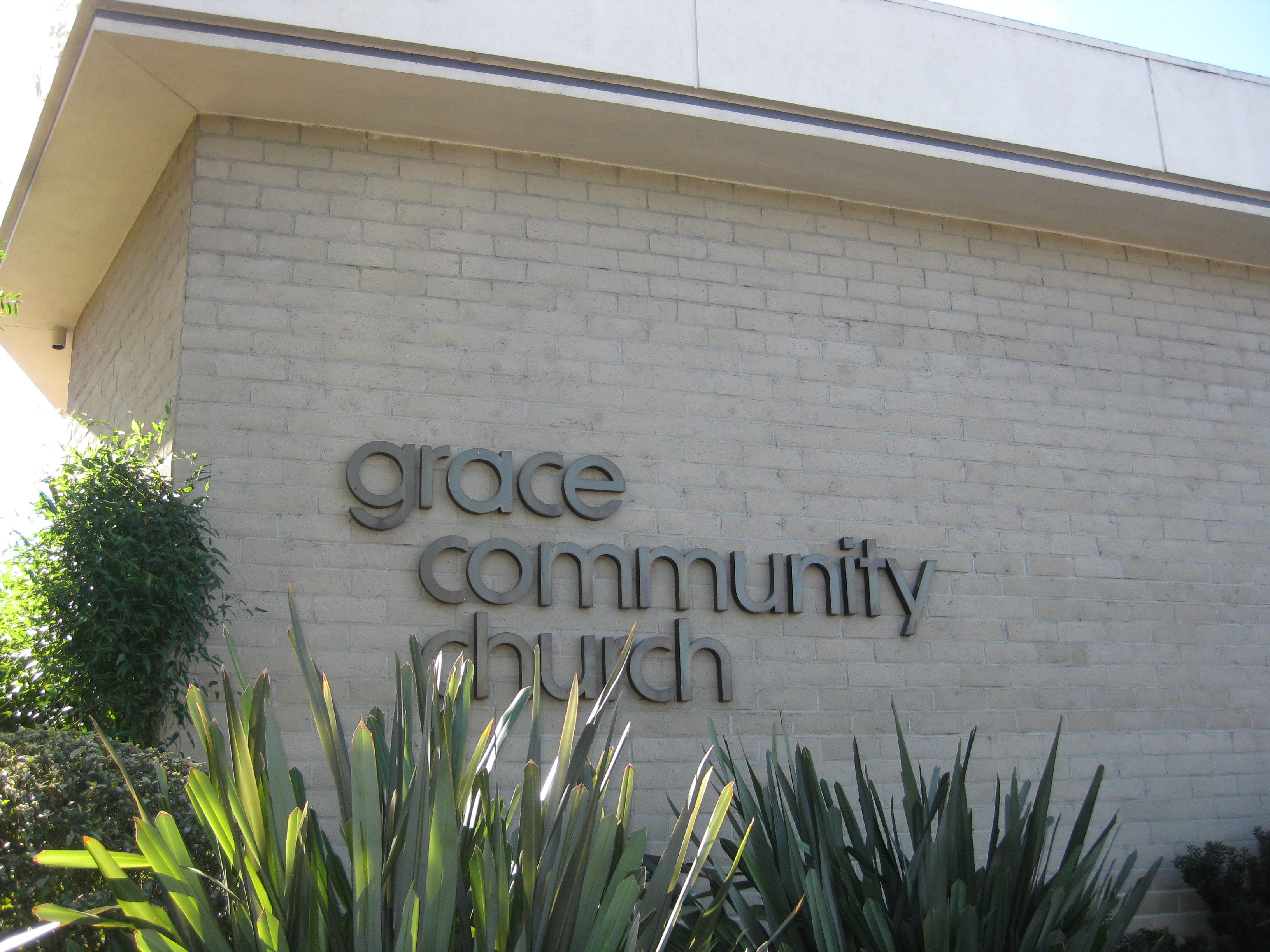
For decades, I’ve had one prominent church on my Bucket List: Grace Community Church in Sun Valley, California … where John MacArthur has been senior pastor for 44 years.

IMG_8463

Yesterday, I finally visited the church with my wife.

MacArthur has positively impacted my life and ministry.  When I was 14, I attended Hume Lake Christian Camp, and MacArthur was the featured speaker.  His personal testimony and practical teaching motivated me to dedicate my life to Christ and read Scripture on a daily basis.  For that reason, I will always be grateful to Pastor John for the way God has used him in my life.

When I became a pastor, I read his books on spiritual gifts, God’s will, giving, the Beatitudes, worship, and the armor of God, among others.  And I’ve heard him speak many times.

But for many believers, MacArthur has gained a reputation as being hypercritical about the charismatic movement, the seeker movement, and the emerging church movement, among others.

In fact, sometimes I’ve received the impression that MacArthur is against more than he’s for.

So I wanted to see for myself: how does Grace Community do church?  HDJDM?  (How does John do ministry?)

Here are my impressions:

*Community.  The church is located in what looks like an older lower-middle class area.

IMG_8490

*Parking.  The main lot at Grace is good-sized but cannot contain all the cars.  People parked beyond the canal adjacent to the property, across the street, and on neighborhood streets (which is where we parked).

IMG_8488IMG_8466 IMG_8493

*Demographics.  The congregation was a cross-section of young and old as well as African-American, Hispanic, Asian, and Caucasian individuals and families.  The line into the women’s restroom was out the door.

IMG_8460  IMG_8468 IMG_8479

*Dress.  Many men wore suits – including Pastor MacArthur – but the majority dressed semi-casually.

*Music.  During the first service, only hymns like “My Faith Has Found a Resting Place” and “My Faith Looks up to Thee” were sung.  They were played by a small orchestra.  A 100-voice choir with robes sang a hymn, as did a soloist during the offering.  The congregation didn’t sing any contemporary worship songs.  Everyone used hymnals.

*Sermon.  Pastor John spoke on John 6:1-15, the story of Jesus feeding the five thousand.  He looked at his notes far more than at the congregation, which surprised me.  He used the phrase “the truth” repeatedly.  His message contained few – if any – stories, and was heavy on exegesis.  The outline was simple, not special.  The message lasted about 55 minutes.  Some around me were nodding off.

IMG_8477   IMG_8473

*Worship center.  I was surprised that:

  1. Most of the walls in the worship center – which are made out of brick – were bare.  No banners.  No verses.  No mission statements.
  2. The back of the church was bustling during Pastor John’s message.  Because the worship center lacks a lobby, people walk from outside directly into the worship center or vice versa.  Whenever someone opens a door, light streams in, creating a distraction – especially if you’re sitting in the back, where we were.
  3. There were no video screens, so we couldn’t see the pastor’s face or gestures from our vantage point.
  4. Everyone sat in pews.  No chairs or theater seating.

*Worship times.  There were two services: one at 8:30 am, another at 10:30 am.  The first service lasted 1 hour, 36 minutes.

IMG_8464

Ministry booths: There’s a section called Grace Walk that is lined with attractive ministry booths.

IMG_8482 IMG_8481

Seminary: The Master’s Seminary is located toward the parking lot as you enter/leave the campus.

IMG_8486IMG_8483

If you closed your eyes, you’d think you were in 1969 … the same year that Pastor John came to Grace … and yet the place felt 99% full.  Some were even standing against the back walls.  And yet when people in my area were asked to raise their hands if this was their first time at Grace, the ushers handed out zero promotional packets.  The church does have a Visitor and Information Center, though.

IMG_8469

Fundamentalists are known for being both theologically and methodologically conservative.  I’m with MacArthur on theological essentials (we graduated from the same seminary), but differ from him on ministry methods.

Jerry Falwell used to say, “If it’s old, it’s good.  If it’s new, it’s bad.”  That’s what I sensed about Grace’s worship service.  My guess is that little has changed since MacArthur came more than 4 decades ago, which is truly amazing.  No worship wars at Grace.

My overall impressions:

Grace Community Church knows who they are, what they stand for, and who they’re trying to reach.

People come far more to hear Pastor John speak than for the music or overall worship experience.

The church seems oblivious to trends in both the church and secular worlds.

Why change anything?  The church practices excellence and functions like a well-oiled machine, attracting thousands every Sunday.

When Pastor John retires or joins Jesus, succeeding Pastor John may be an issue … but right now, he’s still going strong.

And I appreciate Pastor John because – even if you don’t agree with him – the church of Jesus Christ needs more prophetic voices.  Most pastors today are afraid to speak boldly on controversial issues because they don’t want to offend anybody.  If more pastors spoke prophetically – teaching God’s Word without regard for consequences – Pastor John wouldn’t stand out so much.

I was excited to visit Grace, but probably wouldn’t make this my church home.  Because I grew up in fundamentalist churches, I’ve been trying to escape their rigid outlook and judgmental tone for much of my life.  While I resonate with Grace’s emphasis on truth, I need a church that presents that truth in more contemporary and relevant packaging.

I wish Pastor John and Grace Community Church well as they reach people for Christ in a way that makes sense for them.

And I pray that they extend that same Grace to those pastors who do church differently than they do.

Read Full Post »

October is Pastor Appreciation Month.

If you regularly attend a church, how grateful are you for its pastor(s)?

The concept of showing appreciation to our spiritual leaders is biblical.  Paul writes to the church at Thessalonica:

Now we ask you, brothers, to respect those who work hard among you, who are over you in the Lord and who admonish you.  Hold them in the highest regard in love because of their work.  1 Thessalonians 5:12-13

What form might this take today?

I won’t presume to speak for other pastors … just for myself … but here are four appreciation expressions I always cherished:

First, I was touched whenever someone wrote me a note about my ministry.

When I first became a pastor, I stood at the back door after the Sunday service to greet people as they were leaving.  I enjoyed meeting “my flock,” but sometimes, the comments I heard seemed insincere.  For example, a fairly well-known pastor and his wife visited our worship service one time, and as she passed me at the door, she stopped and said. “Good diction.”  I could have done without that “compliment!”

Joe Aldrich used to call this the “glorify the worm” ceremony.  It’s almost like people feel obligated to say something positive about the service and sermon … even if they don’t mean it.

So, like many pastors, I eventually stopped greeting people at the door after the service, preferring to remain up-front, especially so I could pray with people who had a problem.  Although not my intent, this meant that if someone wanted to express appreciation for the message, they had to seek me out after the service.  By doing this, I received far less feedback – and sometimes no feedback at all.

But if someone sent me an encouraging email that night or a gracious note later in the week, their thoughtfulness lifted my spirits.  For years, I kept an email folder titled “Thank Yous” and would re-read those notes if I was doubting my ministry effectiveness.  To this day, I keep a box filled with notes of appreciation from those in past churches.

The best notes don’t say, “Thank you for your message/ministry, pastor.”  The best notes say, “God really used you to speak to my heart today.  I’m going to ask God to help me change this area of my life.”

Do that, and your pastor might break out into praise … or tears.

Second, I was touched whenever someone gave me a book as a gift.

For centuries, books were the tools that pastors used to prepare sermons.  With biblical software, the internet, and e-books, the hardbound or softbound book isn’t as popular as it once was … but books still have great value for many of us in ministry.

During my first staff position – as a youth pastor – the youth group gave me The Treasury of David by Charles Spurgeon when I graduated from seminary.  Still have that set.  (Although you can now get it on your Kindle for free.)

When I left my second staff position, a deacon gave me a book of poetry.  He wrote something inside like, “No church could ever have tested you like this one.”  (He was right!)  Another family gave me a set of commentaries by J. Vernon McGee.

In my last ministry, one man gave me a book on Joe DiMaggio signed by the author.  A woman gave me a book called Jesus CEO.  Someone else gave me an old set of Spurgeon’s sermons.

It can be a challenge to buy books for a pastor – some have extensive libraries – but even a gift certificate to buy books from Amazon is most appropriate.  Craftsmen can always use new tools.

Third, monetary gifts are welcome during Pastor Appreciation Month.

Many churches send out a letter to the congregation and ask people to give a special gift to their pastor(s) every October.  You won’t believe what a blessing this is.

During my last ministry, I took a sabbatical of six weeks after seven years of service.  Before I left, the church collected a pastor appreciation gift a month early so I could use that gift during my time away.  Although things went south at that church several years later, I will never forget the kindness and generosity of that congregation for most of my time there.

Those unexpected funds allowed my wife and me to buy some things we couldn’t normally afford.  One time, I bought my wife a large Goldilocks chair.  Another time, I purchased a marvelous recliner – one I still use every single day.

And when I see those chairs, I’m reminded of the gracious people who sacrificed so we could occasionally take time to relax!

Finally, the best gift is to know that people in the congregation are walking with the Lord.

In 2 John 4, the apostle John writes:

It has given me great joy to find some of your children walking in the truth, just as the Father commanded us.

If your church paid your pastor $500,000 a year, but no one was growing spiritually, that pastor would be poor indeed.

But if your church barely paid your pastor enough to live on, but God’s people were truly walking with the Lord, that pastor would be rich!

Few pastors venture into ministry to become wealthy.  We enter ministry because God has called and equipped us to serve His people.

And whenever the pastor can tell that believers are growing in their faith, he knows he is doing what God called him to do.

I’m getting to the age where I don’t know how many years I have left.  Two?  Ten?  Twenty-five?  Only God knows.

But if someone has touched my life – especially for the Lord – then I want them to know now how much they’ve meant to me.

And so I thank God for three pastors who have touched my life deeply:

*For Pastor Bill Brittin, who dedicated me as an infant.  Years later, I served as his youth pastor for 3 1/2 years.  To this day, he’s the only man I call “pastor.”  He is now with Jesus.

*For Dr. Earl Grant, the first pastor I ever worked for.  I only served under him for two years, but learned enough to last a lifetime.  He performed my wedding ceremony … because I married his daughter.

*For Pastor Dave Rolph, my friend for 45 years.  Dave and I took English and Greek together at Biola, sat in the back row together at chapel four days a week at Talbot Seminary, and graduated together 33 years ago.  Dave has always been there for me, and it’s been exciting to see the way God has used him both in his churches and on the radio.

When is the last time you expressed appreciation to one of your pastors?

If they’re still around, how about doing just that … maybe this week?

Read Full Post »

Have you ever wanted to peak inside the marriage of a well-known Christian pastor, evangelist, or missionary?

That’s the goal of William Petersen’s delightful book, 25 Surprising Marriages: How Great Christians Struggled to Make Their Marriages Work, published by Timothy Press.

In the early 1980s, Petersen published a little paperback called Martin Luther Had a Wife.  The book contained 5 stories of great Christian leaders and their marriages.  Over time, Petersen published 4 similar books (I bought all 5), now compiled into one volume.

I read a few pages of each biography during my quiet time with the Lord, and I have found Petersen’s marital portraits to be encouraging, inspiring, and occasionally disturbing.

Let me share some of the more interesting/disturbing aspects of the first five couples portrayed in the book:

*John Newton was heavily involved in the slave trade from Africa to England before he became a believer.  He was guilty of deserting a ship, having indiscriminate sex with slaves (even raping one woman), and mocking Christ and the gospel.  After he finally came to Christ, he was refused ordination by the Church of England.

Yet he was so head over heels in love with Polly that his life eventually changed.  I can’t imagine anybody in our day waiting as long as John waited for Polly.  As I was reading about their romance, I thought to myself, “This is a far better story than most Chick Flicks in our day.”  He went on to become a small-town pastor, a prominent Christian leader, and the co-author of “Amazing Grace” as well as writing an autobiography, Out of the Depths.

*Dwight Moody was turned down for church membership the first time he applied.  Once an ambitious shoe salesman, he was outspoken, dominant, and impulsive, while his wife Emma was more reserved and yet far better educated.  Some people called him “Crazy Moody.”

Moody became an evangelist, traveled a million miles, preached to 100 million people, and saw 750,000 come to Christ.  He also founded the YMCA and the Moody Bible Institute.  And yet when people were disloyal to her husband, Emma acted like they had committed an unpardonable sin.

*Charles Spurgeon – one of my few Christian heroes – loved to smoke cigars … got gout when he was only 35 years old … and died at a relatively young age.  Saved at 16, he became the pastor of Park Street Chapel in London at 19.  His wife Susie was 3 years older than her husband and frequently corrected his mistakes in language or history.  When Spurgeon went on a preaching tour, they hated to be separated.

Although he lacked polish and refinement (qualities especially important in London at the time), Spurgeon went on to found a college and an orphanage, edit a magazine, write 140 books, and become one of the greatest preachers in history.  His book Lectures to My Students is one of my prized possessions, especially his chapters on depression and handling criticism.

In Spurgeon’s day, the sermons of prominent pastors were reviewed in the newspaper, and Spurgeon’s messages were often dissected in a negative fashion, which greatly wounded him.  He suffered from depression throughout his life, yet maintained a joyful sense of humor.  During one hot spell in London, when Spurgeon’s deacons refused to do anything about cooling down the worship center, Spurgeon took his cane and knocked out every window in the place.  While I wish we had audio or video of Spurgeon’s preaching (that will have to wait for heaven), thank God that his sermons are still in print.  If you’ve never read Spurgeon, you can download some of his books for free for the Kindle.  A master of the English language, there has never been anybody quite like him.

*William Booth was moody and prone to depression.  When he asked that his membership with the Methodist Church be renewed, Booth was turned down.  Unable to find a denomination where they felt at home, Booth and his wife Catherine eventually founded The Salvation Army, probably becoming the greatest husband-wife team in Christian history.

Throughout his lifetime, it was generally conceded that Booth’s wife Catherine was a better preacher than he was.  She also wrote many of her husband’s messages.  (He would request a topic, and she would do the research and writing.)  But sadly, after Catherine died, 6 of their 8 children defected from The Salvation Army.

*Billy Sunday – a famous baseball player in his day (Ty Cobb eventually broke his record for stolen bases) – was a leading evangelist in the late 1800s and early 1900s.  He and his wife Nell served the Lord faithfully for decades.  He consulted with his wife on everything he did.  When the Sundays would enter a town, their goal … get this … was to convert 20% of the people to Christ!  Crowds would line up for 8-10 hours to hear him preach.  It is estimated that 100 million people came to Christ during his ministry.  Sadly, 4 of their children died horrible deaths … their oldest son by suicide.

What have I learned by reading about these marriages?

*It’s much easier to get married in our day.  John Newton had to convince Polly’s parents that he’d be an acceptable partner for their daughter … and the process took years.  Newton asked Polly to marry him 3 times … and she only accepted his third request.  Because they could only write each other letters (no texting or emails back then!), couples sometimes lost contact with each other for months.

*These men depended upon their wives and believed that their counsel was the voice of God to them.  After Polly’s death, John Newton wrote, “She was my pleasing companion, my most affectionate friend, my judicious counselor.  I seldom, if ever, repented of acting according to her advice.  And I seldom acted against it without being convinced by the event that I was wrong.”

*Christian leaders are human beings before they’re anything else.  They are not promised exemptions from mood swings … physical ailments … wayward children … and financial difficulties.  We sometimes think, “If only I was as spiritual as __________, then God would bless my life.”  But even those who appear spiritual in public struggle with their emotions and relationships behind the scenes.

On occasion, I’ll write more about the marriages of famous Christian figures, like C.S and Joy Lewis … Martin and Katie Luther … and Hudson and Maria Taylor.  They both fascinate and encourage me!


Read Full Post »

What happens inside a congregation after a pastor has been forcibly terminated?

It might surprise you … and even shock you.

From all I’ve gathered, here are four events that often occur after a pastor has been forced to leave a church:

First, there are immediate attempts to discredit that pastor.

In Season 5 of the hit TV show 24, Karen Hayes and her assistant Miles march into the Counter Terrorism Unit (CTU) and attempt to absorb CTU into Homeland Security.

With CTU Director Bill Buchanan onsite and in their way, the pair get together and concoct a story designed to (a) discredit Buchanan in the eyes of his loyal CTU followers, and (b) provide justification for their own takeover.

But to discredit Bill Buchanan – a man of great integrity and sound judgment – they have to lie about him.  In their minds – because they believe they are better suited to lead CTU than Buchanan – their lie is justified.

I can’t cite any studies on attempts to discredit former pastors, but I’ve heard plenty of stories, and they’re basically the same.  As soon as the pastor leaves, some people begin to slander him.

But the sad part is … few people make any attempt to stop the lies.

But if you permit a lie to be told without correcting it, aren’t you guilty of perpetuating that lie?  And how can God bless your church if there’s such blatant sin in the camp?

Over the past several years, I have been shocked to learn how often Christians – even Christian leaders – lie.  They do this either to discredit another leader or to build up their own accomplishments.

I’m reminded of the time that a pastor near Willow Creek Church was circulating false stories about Bill and Lynne Hybels.  The two of them went directly to that pastor and said, “The things you’re saying about us are tearing our hearts out!”  The lies stopped.

On behalf of every pastor who has been undeservedly forced to leave a church, let me say to those who are spreading falsehoods: “The things you’re saying are tearing our hearts out!”

Please, stop lying about men and women who have been called by God to serve His church.

Second, the interim pastor tries to discredit the previous pastor behind the scenes.

There are several options available to interim pastors after they follow a pastor:

*The interim can ignore the previous pastor.  In their book The Elephant in the Boardroom, Weese and Crabtree write: “It would be refreshing and liberating for many members to hear their pastor speak, in positive terms, the name of the pastor who went before and was referred to as an instrument in God’s plan for building the church.  In reality, the opposite is often the case.  A pastor is sometimes so threatened by the esteem paid to a predecessor that he or she gives the signal to members that they are not to speak about the predecessor in the pastor’s presence.”

A pastor wrote me recently and said that after being forced to resign, the bully responsible for the pastor’s departure told that pastor’s church friends to shun him, which hurt that pastor deeply.  Seven months later, that pastor is still in great turmoil.  But like it or not, the previous pastor’s presence hangs over a church for a long time, so we can’t just pretend that he was never around.

I love the way the San Francisco Giants handle matters with their past managers and players.  As often as they can, they bring them back to honor them just for being a part of the Giants’ family.  Even if a famous manager or player left the Giants under less than optimal conditions, the Giants still attempt to honor them in public.  If secular companies can do this, why can’t churches do this as well?  What about Hebrews 13:7?

*The interim can trash the previous pastor.  Several pastors have contacted me recently and told me how hurt they were to hear that the interim pastor who followed them adopted this approach.  The interim’s attitude seemed to be, “Your pastor deserved to leave this church.  You shouldn’t have any more contact with him.  He shouldn’t even be in the ministry anymore.  I’m your pastor now, so follow me.”

I can understand why an interim pastor – who has a short window in which to try and turn around a leaderless church – would want a congregation’s attention focused away from the previous pastor.  But to do that, must the interim intentionally harm the reputation of the previous pastor and act like that pastor was evil incarnate?  Where do we find this tactic in Scripture?  If the interim trashes the previous pastor, won’t the interim eventually be trashed as well?  (See Matthew 7:1-2.)

*The interim can honor the previous pastor.  This is the approach recommended by Weese and Crabtree who label this approach TLC: talk, listen, and confirm.  They write: “Members and leaders need to confirm that past experiences, including those with a predecessor, make an important contribution to the drama of their lives even when a significant change had to be made.”

They continue: “The operation of the human ego in pastors can work against a healthy pastoral transition.  The ego does not want to ‘adopt’ the effective ministries that were the ‘children’ of the previous pastor; it wants to have its own children. . . .  It is best to think of a pastoral transition as a blended family in which former effective ministries are adopted by the new pastor while new ministries are birthed as well.”

The best way to honor a previous pastor is to speak well of him in public … and to defend him from slander in private … even if he wasn’t perfect.  (Interims aren’t perfect, either.)

Third, some of the people responsible for pushing the pastor out become church leaders.

In fact, those who pushed out the previous pastor will try and cozy up to the interim.  They’ll rip on the previous pastor and tell the interim that he’s just what the church needs … even if they don’t yet know him.

Some interims fall for this approach.  Maybe they no longer feel significant in ministry or they need affirmation or they’re glad to hear that the previous pastor had his foibles.  But then they take this information and embellish it.

However, if they were saner, they’d realize that the people who tried to push out the previous pastor may be at the forefront of pushing out the interim.  People who crave power want it no matter who is leading their church.

In fact, let’s just say it: the bullies responsible for forcing out an innocent pastor should never be allowed to get anywhere near church leadership unless they repent … even if they become bosom buddies with the interim or the next pastor … and the interim/next pastor needs to know all the names of those who pushed out the previous pastor.

I recently asked a pastor this question: “If you became the pastor of a church, and you knew the names of those who pushed out the previous pastor, would you put any of those individuals into leadership?”  My pastor friend didn’t even blink.  He immediately uttered, “No.”

Forgive me, but how can pastors be so stupid?

If Jesus had stayed on the earth 40 years instead of 40 days, and He decided to get the old gang back together, would He have chosen Peter again?

Yes, because Peter repented of the fact he had denied Christ three times.

But do you think Jesus would have put an unrepentant Judas back into leadership?

No way.

And yet in church after church, after the previous pastor has left, Judas is asked to become a church leader … and we wonder why we can’t expand the kingdom of God.

Finally, most of the pastor’s supporters eventually turn on him.

I’m going to share a story that I’ve never told before.

Two months after my wife and I left our last church, I drove by myself back to our old place – a full day’s drive.  Our house was on the market but hadn’t yet sold.  We had left many things behind and needed to transport them to our new home.

I stayed for the last time in our old bedroom.  That night, I walked around our former neighborhood and spotted the house of the individual most responsible for our departure.

I knew who that was and what he had done.  In fact, his wife had called churchgoers in an attempt to harm our reputations.  To this day, I don’t know why he attacked me, although my hunches are probably accurate.

Anyway, I sat on a park bench and prayed for him and his family.  I forgave him and his wife.  I asked God to bless them.

But several months later, this man spent an entire evening running me down in front of friends and supporters even though he had never confronted me to my face.

When he was allowed to do that, I knew what would happen: my wife and I would lose nearly all our friends from that church.

We weren’t there anymore.  We didn’t know what was being said about us,  so we couldn’t adequately defend ourselves.

After this trashing occurred, people who promised they would remain my friends slowly stopped being my friends … and I will probably never see them again this side of heaven.

The trashing was aided and abetted by a Christian leader who should have known better.  He knew exactly what he was doing and why he was doing it.  He was scapegoating me for the entire conflict.

After this happened, I contacted some friends from that church, but their attitude toward me had changed.  They were done with me, and I knew it.  They have made zero attempts to renew our friendship.

What hurts the most is not that we’ve lost friends, but that friends who once believed in us seem to have sided with our critics.

We still have a few friends in that community, and because they’ve remained with us through thick and thin, they will probably always be our friends, for which we’re grateful.

I can accept the fact that when a pastor and his wife move away from a church community, the pastor and his wife … as well as their church friends … will all make new friends … and gradually drop some of their old friends.

But I refuse to believe that God supports the trashing of a Christian leader’s reputation when that leader is not guilty of any major offense.

When I was nineteen years old – and had only been a youth pastor for two weeks – I learned about some sexual shenanigans that involved top leaders in my church.  I was devastated.

My pastor – who later became my father-in-law – told me that night, “Jim, don’t ever be shocked by what Christians do.”

Over the years, I’ve tried to take his advice … but forgive me if I’m still shocked by how Christians behave during pastoral transitions.

Because if Christians preach that every person is made in the image of God … and that God loves every one of us … and that Christ died for every person … and that God isn’t finished with any of us yet … then how can Jesus’ people trash Christian leaders – especially those who aren’t present to defend themselves?

Let’s play on Jesus’ team … and not on Satan’s.

Check out our website at www.restoringkingdombuilders.org  You’ll find Jim’s story, recommended resources on conflict, and information about upcoming seminars.

Read Full Post »

While browsing through various tweets on Twitter two days ago, I ran across a three-month-old blog post on the topic of pastors and suicide from Brian Dodd.  Here is his article in full: http://briandoddonleadership.com/2013/04/10/pastors-and-suicide/

Dodd states that the pastoral profession has one of the top three suicide rates of any profession, along with doctors and attorneys.

The author had a pastor friend who took his own life, leaving behind a wife, two children, and three grandchildren.  The deceased pastor’s suicide note had been posted for a brief time on Facebook.

Then Dodd said this:

As Christians, many of us should be embarrassed at how we treat pastors, church staff, and their families!!!! Embarrassed!!!  These people pray for us daily, go to God on our behalf, study for years to get better equipped to serve us, live in glass houses, sacrifice more than we will ever know, each week feed us God’s Word, and tell us what Jesus thinks about the issues of our life.  And we have the unmitigated gall to question their communication skills, insights, biblical knowledge, and leadership skills.”

Here’s the coup de grace:

“If you are someone who is always hassling your pastor, talking bad about him/her, listening to people’s ‘prayer concerns,’ or leading the charge to have them removed, please do us all a favor and just stop.  It’s acceptable to address issues, just not in a way that demeans people.  And if you can’t do that, do us all a favor and just leave the church … NOW!!!”

My sentiments exactly.

Dodd’s article led me to another one by Steve Vensel on the phenomenon called “mobbing.”  Vensel has been a practicing counselor for 30 years.  Steve Brown – a wonderful preacher and writer – was Vensel’s pastor for many years.  Vensel eventually earned a PhD from Florida Atlantic University by writing about the issue of mobbing.  Here’s his initial blog post on this topic: http://www.poopedpastors.com/blogs/mobbing/

The following are my questions followed by Vensel’s answers:

What is mobbing?

Mobbing is defined “as the prolonged malicious harassment of a coworker by a group of other members of an organization to secure the removal from the organization of the one who is targeted.”

What does mobbing involve?

“Mobbing involves a small group of people and results in the humiliation, devaluation, discrediting, degradation, loss of reputation and the removal of the target through termination, extended medical leave or quitting.”

What happens after a person experiences mobbing?

“It is a traumatizing experience that often results in significant financial, career, health, emotional and social loss.  Mobbing is unjust, unfair and undeserved.  In a church setting the organization includes staff members, elders, deacons, and congregation members.”

How do these people act before mobbing begins?

“The pastor is rarely confronted by individuals seeking to solve an actual problem or there may be a bullying attempt to control the pastor.  The mobbing begins as others are pulled in and persuaded that the target is the problem.  In churches there is rarely, if ever, a chance for the pastor to face his accusers because of the ‘people are saying’ syndrome and ‘they’ don’t want to cause problems!

How do pastors respond to mobbing?

“Mobbing is progressive and eventually the targeted pastor is so confused by the unfairness of it, and so in shock by the brutality of it, they simply don’t know what to do. . . . pastors are often told not to talk to anyone or they will split the church and that would not honor Christ.”

What is the impact of mobbing on pastors?  (For me, this is the most thought-provoking statement in the article.)

“The personal impact includes deep humiliation, anger, anxiety, fear, depression, and isolation.  There is often a profound sense of shame (guilt is ‘I’ve done something bad,’ shame is ‘I am something bad’) that works to redefine all previous accomplishments as meaningless and all future hopes as dashed.  In short, mobbing often convinces the target that they are failures and always will be.”

Did you catch that?  Mobbing “works to redefine all previous accomplishments as meaningless and all future hopes as dashed.”  This means that after a mobbing, the typical pastor cannot identify any ministry successes in his past and cannot envision any ministry success in his future.

Vensel goes on:

“While a mobbing is taking place the pastor and his family do not know who they can trust or who they can talk to.  Fearing further reprisals they remain silent, deepening their isolation, and become either depressed or physically ill.  It is a vicious cycle that, because of the shame attached to it, doesn’t end when they leave the church.”

I have never received a satisfactory answer to the following two questions:

How can professing Christians act this way toward someone called by God?

And how can professing Christians allow mobbing to occur in their own church?

I went through this experience nearly four years ago, and its effects are ever with me.  I wrote a book to help me work through what happened, but most pastors don’t have that luxury.

I’m going to try and learn more about mobbing a pastor, and when I do, I’ll pass on my findings to you.

What are your thoughts on mobbing a pastor?

Check out our website at www.restoringkingdombuilders.org  You’ll find Jim’s story, recommended resources on conflict, and a forum where you can ask questions about conflict situations in your church.


Read Full Post »

Meet Pete.

Pete works for a high tech company in a major American city.  He’s 32-years old, has a Master’s degree in computer programming, and is married with one child.

Oh, yes … Pete has also been a Christian for less than two years.

Some of Pete’s co-workers know he’s a Christian.   He attends a prayer meeting during lunch time on Wednesdays, and he’s had to turn down a few social invitations on Sundays because he takes his family to church.

Pete has been growing in his new-found faith, but something happened at work yesterday that’s really bothering him.

During a break, someone brought up the topic of gay marriage.  Pete tried to avoid the discussion, but before he could leave the room, his boss said, “Hey, Pete, you’re a Christian, aren’t you?  What does your church think about gay marriage?”

Pete sat there tongue-tied.  He honestly didn’t know.

Coming from a secular background, Pete’s family automatically took the positions of their political party on every moral/social issue imaginable.  On those rare occasions when Pete’s family did discuss a controversial issue, they spent most of their time ridiculing those who didn’t agree with their views.

Pete knew what his family of origin thought about gay marriage – but he didn’t know where his church family stood.

Why not?

Because his pastor never said anything about it.  Not once.

Since Pete didn’t know what his church or pastor believed about the issue, he was uncertain where he himself stood.  So when Pete got home, he went online to find out what Christians believe about gay marriage, but what he read just confused him even more.

He asked a church friend about the subject, but his friend said, “I honestly don’t know where we stand on that one.  But personally, I’m all for it.”

So Pete sent his pastor an email, asking him where the church stood on gay marriage.  The pastor replied, “This issue is so divisive that we have decided not to discuss it.”

When Pete went back to work the next day, he candidly told his boss, “You know, I don’t know where my church stands on gay marriage.”  Pete’s boss said, “Well, I’m all for it, and here’s why …”

I chose gay marriage in this post merely to illustrate a point: since many pastors are afraid to speak on anything controversial, the culture is capturing Christian hearts and minds by default.

Let me make four points about this:

First, Christians want to hear their pastor’s position on relevant moral and social issues.

Back in the 1990s, I pastored a seeker-targeted church in Silicon Valley.  People were always asking me what my views were on the issues of the day.  I’d share with them positions informed by Scripture, but sometimes I’d wonder if they’d leave the church over what I’d said.  In nearly every case, they stayed.

One year, I was in the bookstore at Willow Creek Community Church, and I noticed that Bill Hybels had preached a 3-sermon series called Our Modern Moral Trifecta.  I bought the series and went home to listen how he handled sermons on abortion, racism, and homosexuality.  His sermons were biblical, practical, sensitive … and edgy.  In my mind, Hybels hit the ball out of the park with each message.

Did addressing those topics empty out the church?  Hardly.  Willow was the largest church in America at the time.  In the same way, Pastor Don Wilson touched on a variety of cultural issues at Christ’s Church of the Valley in Phoenix when my wife and I attended there from 2010-2012 … and the church grew into the stratosphere.

I only visited the Crystal Cathedral one time – in February 2000.  That morning, Robert Schuller spoke on the seventh commandment – “Thou shalt not commit adultery” – and he absolutely nailed that message.  I know that Schuller had a reputation for soft-pedaling tough issues, but that morning, I was proud of him for telling it like it is.  People want the truth.

Look, I know there are some issues we probably shouldn’t touch … mostly because the Bible doesn’t touch on them.  For example, in 36 years of ministry, I don’t think I’ve ever said anything about gun control … although if I pastored in Newtown, Connecticut, I might be forced into taking a position on that subject.

But if the Bible is clear about an issue – and it’s clear on marriage (Moses, Jesus, and Paul all agree on its essence) – then we can speak about it with boldness.

Second, a pastor may only have to speak on a controversial issue once.

I don’t want to attend a church where the pastor is ripping on abortion or condemning the government all the time.  Even if you agree with the pastor, it’s wearying.  If some pastors are thinking, “I won’t preach about moral/social issues because some people are going to insist I speak about them regularly,” then I understand the reluctance to address them.

But if a pastor speaks on a moral/social issue once – and really does his homework – that may be the only time he ever has to speak about it … and homework may include making sure there is a consensus among the governing leaders on that topic.

After Bill Hybels spoke on abortion, churchgoers could not only buy the tape (now CD) of his message, they could also buy a booklet that covered the same ground.  If anybody in the church asked, “What is the pastor’s position on abortion?”, they would simply be directed to the bookstore.  Since Hybels had already gone on record about abortion, he didn’t need to deal with it repeatedly … and those who knew his position could represent him accurately.

I tried to include at least one culturally relevant topic inside a series maybe 3-4 times a year.  For example, when I did a series on tough theological questions, I dealt with the New Atheists.  I’d announce the topic ahead of time, and if people didn’t want to come that Sunday, that was their decision.

But if a pastor is going to speak about a controversial issue, he really needs to know his stuff.  When I spoke about intelligent design at my last church, I studied more for that message than any I’ve ever given.  Although the message was long, I remember receiving applause from the congregation when I was done … not because they were glad I was finished, but because they knew I cared enough about them to do my homework.  (An atheist became a theist that day.)

And after that Sunday, if anybody ever asked me, “Jim, what do you think about intelligent design?”, I could give them a copy of my manuscript or send them to the bookstore to buy the CD.  Nowadays people can go to their church’s website and watch an archived video message or download a podcast.

People want their questions addressed.  They want the nuances.  They want to represent Christ well, both at home and in the culture.  Seems to me that’s part of equipping the saints to do the work of the ministry.

Third, there are some issues that pastors cannot ignore.

When the Bay Area was hit by a massive earthquake on Tuesday, October 17, 1989, the area was also hit by scores of aftershocks afterwards.  The earthquake was the only issue on anybody’s mind.  So when Sunday came, I preached on Psalm 46, which begins: “God is our refuge and strength, an ever-present help in trouble.  Therefore we will not fear, though the earth give way …”  People needed assurance that God was still sovereign after that quake.

After 9/11 – which happened on a Tuesday as well – it wasn’t time to say, “Well, we were in Ephesians 3 last week, so we’re in Ephesians 4 this week.”  A shaken group needed to know that God was still in control, so we talked about the differences between Christians and Muslims and how what happened fit into God’s ultimate plan.

On occasion, pastors have to address the issues that are foremost on people’s minds.  For example, during the Clinton/Lewinsky scandal in 1999, some churches openly talked about that issue because topics like leadership character and moral outrage were being discussed all over the country.

Six weeks before the vote on Proposition 8 in California, I preached on Jesus’ view of marriage from Matthew 19.  Although some people didn’t like what Jesus said … or what I said … I felt that God was compelling me to preach on the issue even though our community was a gay haven.  As Paul asked in Galatians 1:10: “Am I now trying to win the approval of men, or of God?  Or am I trying to please men?  If I were still trying to please men, I would not be a servant of Christ.”

Scripture, Jesus, and the Christian church have a unified position on marriage.  If pastors don’t let their people know where they stand on this issue, they’ll turn to NPR or Rush Limbaugh or MSNBC or Michael Savage for their information instead of the Word of God … and they’ll take a political position rather than a biblical one.

Every church in America is going to have to take a position on gay marriage, one way or the other.  Isn’t it better for pastors to lead the way than to lead from behind?

Finally, pastors need to speak on tough issues with a gracious tone.

I grew up in fundamentalist churches.  There’s a tone that fundamentalists preachers use that I despise.  It’s condescending, sanctimonious, and condemning.  They don’t say “we” but “you.”  They act like they’re perfect and you’re a mess.

If a pastor is going to speak on a controversial topic using that kind of tone … forget it.

But where the Bible is clear, let’s preach boldly but lovingly.  Where the Bible is silent, let’s preach humbly … but let’s not shy away from topics because they’re controversial.

Pastors once spoke freely about heterosexual marriage.  It was the most benign of topics.  Because marriage has now become a topic of dispute, are we going to avoid it because it might provoke some opposition?

But we can’t shut our Bibles when people need a word from God.  Read Matthew 22-23.  Jesus never shied away from discussing any issue … and He always based His positions in the Word of God.

Pastors should feel confident and free enough to speak on any topic … because the Petes attending our churches need to know God’s viewpoints on today’s issues.

Check out our website at www.restoringkingdombuilders.org  You’ll find Jim’s story, recommended resources on conflict, and a forum where you can ask questions about conflict situations in your church.

Read Full Post »

« Newer Posts - Older Posts »