Feeds:
Posts
Comments

Archive for the ‘Personal Stories’ Category

Do you know any pastors personally?

If so, are you under the illusion that they’re perfect?

My grandfather … father … step-father … and father-in-law have all been pastors.

They are godly men … in my mind, even great men.

But many pastors … if not most … wish they could be perfect … and sometimes put on the façade that they are.

But there are always people around a pastor to remind him that he is very, very fallible.

During my 36 years in church ministry, I did my best to make as few mistakes as possible … but I still made my share.

Here’s the first one:

When I was 19, I was hired by my church to work with the high school and college groups over the summer.

A few days after being hired, our church held a missions conference.

The first night, a missionary showed slides of the new Bible Institute that his organization had built in India.

The missionary was quite a character.  His presentation was hilarious.  I laughed … hard … along with everybody around me.

As soon as the service was over, the Church Gestapo confronted me and said that since I was now a paid youth leader, I needed to set a better example for the young people.

I told him, “But the presentation was funny!”  He agreed … but reiterated what he said anyway.

I learned two things from that initial encounter: first, as long as I was in ministry, some people were always going to be keeping me under surveillance; second, some people weren’t going to allow me to be normal.

That puts a lot of pressure on you to meet everyone’s expectations.

Fast forward ahead 35 years.

My wife had spent five days in the hospital with great abdominal pain.  She didn’t receive a diagnosis until Friday.  It was scary … but she was going to be okay.

Our church was holding a rare Saturday morning conference.  Should I stay at home and care for my wife or attend the conference?

If I didn’t attend the conference, some people might accuse me of being unsupportive … so I went.

I felt almost giddy.  I could dress down.  I had no duties.  I could be a person.

The conference speakers were excellent.

I sat in the back, and the only person near me was a woman I’d known for years.

From time-to-time, I turned around and made little comments to her about what was being said.  It felt good to be away from the hospital.

At the break, someone came up to me and reamed me out for being rude.

To quote Yogi Berra, it was deja vu all over again.

Was I rude?  I didn’t think so at the time, but maybe I was.  I certainly didn’t mean to be.

But once again, I had that feeling that I had to be perfect every time I came within three miles of the church campus.

In his book, Leadership That Works, Leith Anderson introduces the concept of “parish poker.”  He writes:

“Becoming a pastor is like joining a poker game.  Although I am neither a gambler nor a poker player, I know that at the beginning of a game each player has a limited number of chips to play with and must use them strategically to win.”

Anderson goes on:

“Churches generally give new pastors 50 to 100 ‘chips’ to get started.  After that, they either gain chips or lose what they have, depending on how well they learn the catalog of rewards and penalties the church runs by (which, of course, no one bothered to tell the new pastor about).”

Anderson then lists various behaviors and the number of chips involved:

Preach a good sermon (+2 chips)

Preach a bad sermon (- 8 chips)

Visit sick person in hospital (+7 chips)

Sick person dies (was expected to recover) (-10 chips)

Sick person recovers (was expected to die) (+40 chips)

Bring cookies to monthly board meeting (+ 1/2 chip)

Lose temper and shout at monthly board meeting (-25 chips)

In my last ministry, I thought I had earned thousands of chips over the years, so if I made a mistake, I’d still have thousands more left … but some people insisted that if I made even one mistake, I deserved to lose all my chips.

Sometimes “parish poker” doesn’t seem fair.

Let me make three observations about pastors and perfection:

First, expect that your pastor will disappoint you somewhere along the line.

He will say something in a sermon that will make you wince … or angry.

He will make a decision you don’t agree with.

He will make an inappropriate comment to you personally … laugh about something serious … or fail to greet you while passing.

I didn’t say you had to like it … just expect it.  He isn’t an angel, so don’t idealize him.

But realize this: every other pastor is just as imperfect.

Second, if you’re really upset with him, talk to him directly.

Whenever somebody spoke with me personally about my perceived misbehavior, I tried to thank them.  It takes courage to confront your pastor.

If you do it out of anger, your pastor will invariably become defensive.

If you do it calmly and lovingly, he will hear what you’re saying much better.

Try not to come off as the Church Gestapo.  Every church has them … and every pastor runs from them.

Finally, let your pastor be a person.

I read around 75 books for my doctoral program.  One of them was called The Pastor as Person.

The basic thesis of the book was this: the pastor is a person before he is a pastor.

Many pastors forget that they’re persons.  Since so many people at church want them to be angels instead, that’s what they try to be.

But after a while, a pastor has to stop trying to be somebody else and just be himself.

If you want your pastor to be an angel, you’re being unfair.  He can’t be who you want him to be.

But if you accept the fact that he’s human … and that he gets weak and tired and frustrated and even angry at times … then you’ll be doing him a great favor.

Because the New Testament tells us that Jesus was human … that, at times, He was weak and tired and frustrated and angry … and that He was made “a little lower than the angels.”

Jesus was morally perfect.  Your pastor isn’t.

But Jesus was also a person … a human being … and He had limitations.

Just like pastors.


Read Full Post »

When a pastor is forced to leave a church unjustly, how does he heal?

This is a question that I’m asked a lot … and one I wonder about myself.

Let me handle this in a question and answer format:

How do pastors feel after they’re forced to leave a church?

Abandoned.  Betrayed.  Crushed.  Devastated.  Exiled.  Forsaken.  Grief-stricken.  Hated.  Isolated.  Judged.  Kicked.  Lanced.

I’ll let you fill in the words beginning with M-Z.

Most pastors give everything they have when they serve a church, and when they’re dismissed … or forced to resign … the pain is indescribable.

It feels like your grandparents, parents, siblings, and children have all made a pact that they never want to see you again.

And in the process, you stop trusting people … and that’s understandable.  It takes time to rebuild that trust.

What kind of losses does a terminated pastor experience?

The pastor loses his job … his income … and maybe his home … which will harm his credit rating.

He loses his significance … his self-esteem and confidence … most of his church friends … and possibly his career.

And what hurts most of all is that some “Christians” are determined to ruin the pastor’s reputation through exaggeration and misinterpretation … and the pastor doesn’t know who these people are or what they’re saying.

But when he starts making contacts in the Christian community, he discovers that some Christian leaders have already heard one version of why the pastor left … the wrong version.

Six months after I’d left my previous church, I visited a denominational executive … from another denomination … and he already knew about my departure.

The Christian world is all too small.

How long does it take a pastor to heal?

It takes one to three years, depending upon several factors:

*How much abuse did the pastor receive before he finally left?

*How concerted was the effort to destroy his reputation after he left?

*How much of a severance package was the pastor given?

*How do the pastor and his family handle criticism?  (Can the pastor’s family hold him up, or does he need to hold them up?)

*What kind of a support system does the pastor have?

*What hope does the pastor have of future employment?

Why do pastors hibernate for a while after termination?

They can’t stop thinking about what happened to them.

They can’t believe the people who betrayed them.

They can’t fathom why they weren’t treated in a biblical manner.

They can’t understand how Christians could abuse and forsake their pastor.

After pastors initially experience termination, their thoughts … words … and expressions become toxic.

The pastor figures, “I’m such a wreck that nobody wants to be around me.”

Some people attempt to listen to and love the pastor, but when their efforts aren’t successful, they distance themselves from the pastor.

And the pastor feels rejected all over again.

Why don’t pastors heal more quickly?

Because the grief process works slowly.

This past weekend at Saddleback Church, Pastor Rick Warren gave a message called “How God Blesses Broken Hearts” from Matthew 5:4.  His message greatly ministered to me.  Here’s the link:

http://mediacenter.saddleback.com/mc/archives/

Pastor Rick says:

“Never minimize other’s pain.”

“Never rush people.  Pain and grief takes time.  I can’t tell you what’s the appropriate time to grieve for anything in your life.”

He said that since the suicide of his son Matthew over a year ago, he has cried every single day.

I believe that churchgoers want … and even need … their pastors to be superhuman.  When they discover that their pastor is as frail as they are in the face of loss, they feel let down … and often abandon the pastor altogether.

When I went through this experience 4 1/2 years ago, I believe that I lost friends because I didn’t become “the old Jim” fast enough.  It was painful for friends to see me in pain … but I’ve never been able to fake how I feel.

But I am eternally grateful to those few people who chose to be present … listened to my pain … and loved me anyway.

Those people will always be my real friends.

What steps can a pastor take to accelerate healing?

The following steps all have one thing in common: a pastor must humble himself before God and receive help from others … especially in the body of Christ.

Step 1: Get a physical examination.

See your doctor immediately.  Tell him what happened to you.  Anti-depressants can be a godsend.

Step 2: Contact a Christian counselor.

Only 20% of forced-out pastors seek counseling after they’ve been terminated.

Why only 20%?

Maybe the pastor doesn’t know the right counselor … but it only takes a few phone calls to find someone.

Maybe the pastor is afraid the counselor will blame him for his dismissal … but that’s highly unlikely.

Maybe the pastor is afraid of the cost … but how much is healing your soul worth?  (And most counselors will give a discount to a terminated pastor.)

After I left my last church, I saw two counselors … both women … and they were terrific.  They understood my situation because both women had been in ministry.  They provided valuable insights into congregational life and made positive suggestions for healing.

It’s the right move.

Step 3: Attend church when you feel like it.

Why not every weekend?

Because attending worship can be an incredibly painful experience for a pastor who has undergone termination.

I still have a hard time singing praise and worship songs 53 months later … and I don’t know what to do about it.

And when I listen to preaching, I need to hear someone who acknowledges and understands pain … which is why I’ve been listening to Rick Warren recently.

It’s why I sat under the teaching ministry of Don Wilson in Phoenix for 18 months.

And it’s why it’s difficult to find a church home near the community where I live.

Step 4: Spend lots of time in the Psalms and in 2 Corinthians.

David and the other psalmists openly express their feelings to God in unedited form.  I keep coming back to the Psalms constantly.

And when Paul wrote 2 Corinthians, he was defending his ministry to the church in Corinth, where he was being hypercriticized in an attempt to discredit him as an apostle.

Read these books in different versions.  I love reading them in The Message.

Find a good devotional book that deals with suffering in a realistic way as well.  I recommend Beside Still Waters by Charles Spurgeon.

Step 5: If you’re a pastor, commit your future to God.

He knows you.  He loves you.  He cares about you.

Others may have abandoned and forsaken you.  He never will.

Tell the Lord you’ll do anything He wants and you’ll go anywhere He sends.

Then follow the Spirit’s promptings.

The Spirit led me to a church in New Hampshire … for only three months … but it was just what my wife and I needed at the time.

Can God use a terminated pastor again?

The Lord used Peter in an even greater way after he denied Christ three times.

Paul was chased all over the ancient world but planted churches and wrote half the New Testament.

And Jesus was terminated on the cross … but He had a powerful post-resurrection ministry.

Yes, God can use terminated pastors again … and in an even greater way than before.

I believe the “stain” that a pastor receives after being unjustly terminated is the same stain that Jesus, Paul, Peter, and the other apostles received.

If only church search teams and denominational executives believed this.

What are your thoughts about how terminated pastors can heal?


Read Full Post »

I did something last Friday that I shouldn’t have done … and hopefully will never do again.

What was it?

At their parents’ request, I picked up two elementary age children from their school … and it was a nightmare.

The father teaches at the school, and the mother had to be away, so they needed someone to watch their boys for the afternoon, and my wife has done it before.

I arrived at the school ten minutes early … but nothing prepared me for the chaos that ensued.

Along with other vehicles, I moved into the left hand lane to turn into the school’s turnaround area.

We didn’t budge for at least 15 minutes.

But some cars began zipping past me on the right.  Where were they going?

The cars drove down the road … made a left … then made a U-turn … and came back toward the school so they could turn right into the parking lot ahead of those of us turning left!

Another woman drove up next to the cars in my line on the right … and then made an illegal U-turn in front of everybody!

It was absolute chaos … and nobody was directing traffic.

I finally turned left into the parking lot … looked everywhere for the boys amid a sea of faces … and couldn’t find them.

So I stopped the car next to the curb … stood up outside to get a better view … and was promptly reprimanded by a school official, who ordered me to get back into my car.

(All I was thinking was, “God, please don’t make me leave the turnaround area and go through that mess again!”)

We finally located the boys … they jumped into my car … and we traveled at a snail’s pace until we came to a fork.

Go right … and you’re stuck in an immovable line of cars making their way back to the street.

Go left … and you drive through some cones blocking the entrance to the street … but it was the quickest way out.

The chaos in that parking lot reminded me of three truisms about church conflict:

First, when people become anxious, they make up their own rules.

Some parents who were trying to pick up their kids didn’t care about propriety … or traffic laws … or taking turns.

So they cut in front of other vehicles … took shortcuts … and put others at risk.

I told the school official about some of the lawbreaking drivers … but the school had no plans to police incoming parents.

When major conflict surfaces in a church, some churchgoers forget they’re Christians and act like pagans instead.

They ignore everything Scripture has to say about conflict.

They spread nasty rumors without verifying their truthfulness.

They join the mob trying to force their pastor to quit.

And in the process, they model chaos for their families … new believers … and unbelievers.

But what’s worse is that it appears as if nobody is in charge.

If conflict ever breaks out in your church, remind people of what Scripture says about conflict resolution … or anarchy may result.

Second, when people become anxious, their focus becomes narrow.

Some parents who were picking up their kids were so intent upon finding their wee ones that they didn’t seem to notice anybody else.

The evidence?  Their selfish driving and lack of consideration.

When we become anxious, we block out the world around us, and focus on what’s troubling us.

Have you ever lost your child inside a store?

You don’t notice the merchandise on the shelves … or the people in your way … because you only have eyes for your child.

And you only expand your horizons when your child has been located.

When a church has a major conflict, people tend to focus on one person: the pastor.

In their minds, he’s either caused the conflict, or hasn’t stopped it … so he’s gotta go.

Anxious Christians fail to ask questions … do any investigative work … or hear from the other side.

They can’t see the bigger picture … that the devil is trying to destroy their congregation … so they join the mob … and the enemy smiles.

If conflict ever breaks out in your church, work hard to get people to see the bigger picture … or your pastor is toast.  

Finally, when people become anxious, they’ll do anything to find relief.

To leave that school in a hurry, some parents will willing to break the law … outrage other drivers … and risk injuries to their children and vehicles.

And when a major conflict surfaces inside a congregation, people … even God’s people … will do almost anything to make the conflict go away.

They don’t want to learn the truth about what’s really happening.

They don’t want to take the right road for resolving issues.

They don’t want to speak to people on both sides.

So they quickly choose a side … usually that of their friends … and lobby for the conflict to end.

And if that means that the pastor’s head rolls … so be it.

If conflict ever breaks out in your church, tell church leaders that you insist they use a biblical process for resolving matters … or hell itself will assume leadership.

If I could pound one thought into the head of every Christian churchgoer about congregational conflict, I’d say this:

When conflict erupts inside your church, apply biblical principles to your situation, and God will honor and bless your congregation.

But if your people make up their own rules … have a narrow focus … and do anything to find relief … a lot of innocent people are going to get hurt.

And God can’t bless your church until your congregation repents and learns what you should have done.

In the meantime, I’m going to avoid school parking lots.

_______________

While I was writing this article, I just hit 70,000 views on my blog.

If you come here from time to time, thanks for reading!

If this is your first time here, I invite you to return.

And if you read my blog regularly, thank you so much for your attention!  I am humbled by the fact you come back again and again.

Remember: I love interaction, so feel free to leave comments.  I strive to respond to all of them within 24 hours.  When it comes to church conflict, we’re all learners.

And if you’d like to chat privately, you can reach me at jim@restoringkingdombuilders.org or check out my website at http://www.restoringkingdombuilders.org

How do I know that anxiety produces chaos in churches?

I’ve written a book about my experiences called Church Coup: A Cautionary Tale of Congregational Conflict.  You can purchase the paperback or e-book from Amazon.


Read Full Post »

Something happened on Facebook recently that distressed me.

One of my friends – a good friend, I thought – became Facebook friends with one of my enemies.

This “enemy” wasn’t someone that I despised, but someone who, let’s just say, is not one of my biggest fans.

Why was I concerned?

Because I didn’t want my “enemy” to influence my friend to stop being friends with me.

You ask, “Jim, that doesn’t happen among Christians, does it?”

Oh, yes, it does … and it’s happened to me a lot over the past few years.

How does this happen?

It’s simple.  Pastors … no matter how hard they try … make some enemies.

Those enemies have friends in the church … and the pastor is often friends with those same people.

A pastor’s enemies are usually vocal.  They’re always trying to explain why they don’t like the pastor … or why they don’t attend their church anymore.

Let me give you an example.

Nearly 20 years ago, a woman demanded that I do something for her, and when I resisted, she went ballistic on me.

She told many people how unhappy she was with her pastor, including a newer believer who was gearing up to start a vital ministry.

The newer believer quit coming to church.  When I went to her house, she refused to come to the door … and her whole family left en masse soon after that.

A friend had now become an enemy.

This kind of thing happens all the time in churches.

Someone is unhappy with the pastor … spreads their discontent to others … and usually finds someone who takes their side.

What do you do when a friend and an enemy become friends?

Do you “unfriend” your friend on Facebook and never speak with them again?

Do you distance yourself from your friend and think, “If you want to be friends with that person, then we are no longer friends?”

Do you contact your friend and demand that he or she “unfriend” your enemy?

These sound like responses an 11-year-old girl would make … but not a mature believer.

Over time, I’ve learned three important lessons about friends befriending enemies:

First, it’s okay for your friends to be friends with your enemies.

I don’t want anyone telling me who I can and can’t have as a friend … and I need to extend that privilege to others.

There are people that I don’t like but my wife adores.

There are people that I like that my wife can’t stand.

And there are people that my friends like who don’t like me.

It is possible for someone to be friends with you and friends with your enemy without being unduly influenced by either party.

This happens to many of us when two friends separate and divorce.  We don’t take one side or the other … we remain friends with both individuals.

We must allow our friends the same courtesy.

Second, real friends stay loyal to you.

If Joe (an enemy) tells Judy (your friend) that you’re a no-good-so-and-so, and Judy ends up siding with Joe, Judy may drop you as a friend.

But what kind of friend was Judy if she’d abandon you like that?

But if Joe tries to persuade Judy that you’re no good, and Judy ends up defending you, Judy has proven to be a faithful friend.

Let’s say that a pastor leads a congregation of 500 people and that he assumes all 500 people are his friends.

But then a rumor flares up that the pastor has stolen money from the church … a rumor that’s totally false … but a rumor some people pounce on to say, “Let’s get rid of the pastor.”

The pastor may think to himself, “Okay, maybe I’ve lost a handful of friends, but 480 people are still loyal.”

But the accusation … whispered through the church … may result in the pastor losing several hundred friends … and even his position.

That’s when the pastor finds out who his real friends are.

Like all pastors, I’ve been accused of various wrongs over the years, and it’s hurtful to watch people I thought were friends walk away … often for good.

But I’ve also discovered that many people have vigorously defended me, even when it’s cost them friendships.

Those people are your real friends.

Finally, your friends may eventually have to choose between you and your enemy.

I have a good friend who was also friends with one of my enemies … although I didn’t know he was my enemy at the time.

Anyway, whenever my friend and my “enemy” got together, the “enemy” delighted in running me down.

Finally, my friend had had it.  He told the “enemy” to stop running me down … and when he wouldn’t stop … my friend stopped being his friend.

I don’t like having enemies.  I don’t want to hate anybody … a response I can control … but some people have chosen to hate me … a response I can’t control.

And when I hear that a friend and an enemy have gotten together, it makes me a little bit nervous.

But we all have to learn to trust people, and to believe that our real friends will defend us and support us no matter what our enemies might say.

I didn’t like most of the music from the late Seventies, but I did like this song by the late Andrew Gold – his only real hit – called Thank You For Being a Friend (otherwise known as the theme to The Golden Girls TV show).

And I dedicate this song to all of my real friends … and want you to know how much I appreciate and love each one of you!

(Choose the first song in the top left corner … and skip the ad.)

https://search.yahoo.com/search;_ylt=AiyyiGzjjtBgG6oYMxz1f8ybvZx4?fr=yfp-t-901-s&toggle=1&cop=mss&ei=UTF-8&p=andrew%20gold%20thank%20you%20for%20being%20a%20friend%20youtube


Read Full Post »

Fifteen years ago, I was called to become the associate pastor of a church led by a pastor friend.  If things went well, the plan was for me to become the senior pastor after he retired.

And things went well … most of the time.

I went to the church with one primary agenda:

I wanted to get along with everybody … including the senior pastor … the other staff members … members of the church board … the children, youth, and seniors … and everyone else.

So I worked harder than normal at relationships, and tried not to give people any reasons to dislike me.

As always, my go-to verse concerning relationships was Romans 12:18: “If it is possible, as far as it depends on you, live at peace with everyone.”

From my angle, I listened well … tried to understand where people were coming from … monitored my speech … and worked hard to address people’s genuine concerns.

And yet when I left that church nearly 11 years later, some people hated me anyway.

Why do some people dislike their pastor so much?

Let me offer 4 possible reasons among many:

First, some people want a different kind of pastor.

On my initial visit to the church, my wife and I were scheduled to meet with the church board for an interview on Saturday morning.

The night before, the church treasurer … who sat on the board … resigned and announced he was leaving the church.

And he hadn’t even met me!

Why did he leave?  Because he wanted the church to hire an associate from a specific liberal seminary … and that was never going to happen in that evangelical church.

Had this individual stayed at the church, he might have caused all kinds of trouble.

Some people will never like their pastor because he isn’t ideal in their eyes …

But if the pastor is going to be faithful to his calling, there’s nothing he can do about it.

Second, some people want full access to their pastor.

Before my first board meeting, the pastor asked me to lead a discussion in the meeting from a chapter in a book the board was reading.

After I asked one question, a board member responded, “Who cares?  Next question!”

I had barely started, and this board member was already on my case!

It didn’t take long to discover that in his eyes, I was a terrible preacher … my ideas were unworkable … and my ministry philosophy was crazy.

And he let others know how he felt.

I tried to talk to him …. suggested we have lunch together …  but there was no interest.

Before I came, this man had full access to the pastor.  After I came, he lost some of that access because of my new position.

This gentleman wanted similar access to me after I became pastor, but he couldn’t imagine it happening … so he strongly disliked me … and eventually left.

Pastors need to be accountable … first to God … and then to the church board … but not to individuals on that board.

And when the pastor obeys God first, some leaders may very well hate him …

But if the pastor is going to be faithful to his calling, there’s nothing he can do about it.

Third, some people take offense at statements the pastor makes.

Last Sunday in Rome’s Vatican Square, the Pope went “off script” and delivered his homily off-the-cuff.  Many people praised the Pope for this approach.

But many pastors prepare a manuscript of their messages because they need structure when they speak.

My best lines often came when I was unscripted … but that’s when I was susceptible to saying stupid things, too.

One time, I made a statement … with passion … about a topic I felt strongly about.  I could have … and should have … said it better.

One couple were outraged by my statement.  They demanded that I apologize to them.

Although pastors are not infallible while speaking, apologizing for what you’ve said in the pulpit sets a bad precedent, especially since someone is always offended by God’s Word.

(How would you feel if your pastor began every few sermons with this statement: “I want to apologize for something I said last Sunday?”)

But this couple wouldn’t let up.  They complained to the church board … but the board supported me.  They then wrote the board a letter … and the board still supported me.

So this couple left the church … and we were all relieved.

Yet even when a pastor speaks the truth in love, somebody isn’t going to like it … and they’re going to dislike the pastor in return …

But if the pastor is going to be faithful to his calling, there’s nothing he can do about it.

Finally, some people violently disagree with their pastor’s decisions.

Whenever I made major decisions as a pastor, I solicited input and sought the approval of the staff and board … but some people still thought I was a dictator anyway.

One time, I wanted to make changes in our Sunday services.  I took my time and asked for input … drew up seven brief guidelines … and presented them to the board for approval.

They were all approved.

But a relative of one of the board members didn’t like the guidelines.  She became angry … and let others know how she felt.

I liked her.  And I met with her … listened to her … explained my position … which she seemed to understand … and asked if she would contact me if she had any other concerns.

She promised me she would … but her disagreement morphed into hatred.  She proceeded to engage in sabotage, eventually leaving the church in anger … and I never saw her again.

Was there anything I could have done to salvage that relationship?

Some laymen might say yes.  Many pastors would say no …

But if the pastor is going to be faithful to his calling, there’s nothing he can do about it.

If you don’t like your pastor … and you’re tempted to spread your feelings to others … please leave your church instead … quietly.

And if you’re a pastor who wants everybody to like you … please choose another profession.

The night before He died, Jesus warned His disciples, “If the world hates you, keep in mind that it hated me first…. If they persecuted me, they will persecute you also” (John 15:18, 20).

The world hates Jesus’ followers.  I get it.

But I will never understand why some Christians hate Jesus’ appointed and anointed servants: pastors.

And I don’t think Jesus understands it, either.

Do you?


Read Full Post »

When I first became a pastor in my late twenties, I was appalled at how many pastors in our district were forced to leave their ministries because they were opposed by a handful of antagonists.

As a rookie pastor, I met on a monthly basis with the district minister and other area pastors for lunch, and whenever I heard about a pastor who was forced to resign, I wanted to know why it happened and how he was faring, especially since I had become friends with some of those pastors.  The dominant impression I received was that each minister resigned because “he had it coming” and that lay leaders reluctantly handed out the treatment he deserved.

For example, one pastor in our district told his congregation in frustration that they “didn’t give a damn” about a certain issue, but because the pastor used the word “damn” in a public meeting (not a church service) some leaders believed that he had disqualified himself from service.  But I wanted to know why he used that language.  When I first entered the district, this pastor took a special interest in me, and if he became so incensed that he used emphatic language inside church walls, then maybe some detractors pushed him over the edge.

Another pastor friend was forced to leave his church because his daughter had been falsely accused of an offense and he resigned to protect her.  (The truth came out sometime later.)

But in district circles, we rarely heard about unhealthy congregations.  Instead, the implication was that if a pastor was forced out of office, you could trace his departure to something he did or said wrong.  The very presence of conflict indicated his guilt.  It’s like saying, “Caiaphas is furious; the Pharisees are incensed; Pilate is anxious; the mob is unruly.  Who is responsible?  It must be the fault of that man hanging on the center cross.”

So early in my career, I learned how district leaders viewed pastors who experienced a forced exit.  The pastor was usually blamed for whatever conflict occurred.  Upon hearing the news that another colleague had resigned, I would call that pastor and ask him why he left, and every man was transparent enough to tell me.

Then I’d ask, “How many other district pastors have called to express their concern?”  The answer was always, “You’re the only one.”  As I recall, in my first several years as a pastor, seven colleagues were forced to leave their churches, and every one told me I was the only minister who called, which broke my heart.  I later did a study of pastors in our district and discovered that out of sixty pastors that had departed, fifty were no longer connected to the denomination.  I felt so strongly about this issue that I wrote an article for our denominational magazine titled “Who Cares for Lost Shepherds?”

Why don’t pastors demonstrate more concern for their colleagues who experience forced exits?

Maybe pastors have enough happening inside their own churches to reach out to peers, or they wouldn’t know what to say to a colleague, or they don’t want to become embroiled in another church’s issues.  But my guess is that most pastors don’t want to associate with anyone they perceive as a loser.

If you’re forced out of a church, the perception is that you must be incompetent, immoral, or ignorant of church politics.  There is something wrong with you, not the church, and if you were smarter, you wouldn’t have such problems.

For example, I recently heard a seminary professor refer to a leadership structure he utilized when he was a pastor, stating that he never really had a major conflict with a congregation over two decades of ministry.  Translation: If you handled matters my way, you wouldn’t have any conflict.

But this sentiment seems arrogant to me.

Jesus wasn’t crucified because he was unhealthy but because the political and religious leaders of his day were spiritually rebellious.

Paul wasn’t chased out of European cities because anything was wrong with him but because his hearers were hostile toward the gospel.  (Were all Paul’s problems with the churches in Corinth and Galatia his fault?  Doesn’t he usually place the responsibility for church troubles at the feet of the whole church rather than single out certain leaders?)

It’s popular to say, “If the team isn’t winning, fire the coach,” but some pastors have led their churches to growth and yet are forced to leave because the powerbrokers feel less significant as the church expands.

While a small percentage of pastors deserve termination, the great majority who are involuntarily sacked have done nothing worthy of banishment.  [David] Goetz recommends that denominations keep better records of forced exits to identify repeat-offender churches and suggests that denominations discipline churches that slander or abuse their pastors.

__________

This is an excerpt from my book Church Coup which was published a year ago by Xulon Press.  The book describes a real-life conflict that happened nearly five years ago in my last church ministry.

I wrote the book to describe how a major conflict feels from the pastor’s side and to suggest a multitude of ways that such conflicts can be avoided.

If you’re interested in purchasing the book, you can buy a hard copy or download the e-book from Amazon.com.  Just click on the picture.

Thanks for reading!


Read Full Post »

Today is Opening Day in baseball, and hope springs eternal for every fan.

Will the Red Sox repeat as World Champs?  Will the Dodgers go all the way instead?  And how far will the A’s and Mariners and Pirates and Reds go?

I’m not very good at predicting the future.  I’m better at looking back at the past.

So when I think back to 1960 – when my interest in baseball began – I think of players in whom I had a special interest.

Last time, I mentioned 5 of those players: Roberto Clemente, Stan Musial, Steve Garvey, Brooks Robinson, and Ted Williams.

This time, I’ll complete that list.  Here are my Top 5 Favorite Players:

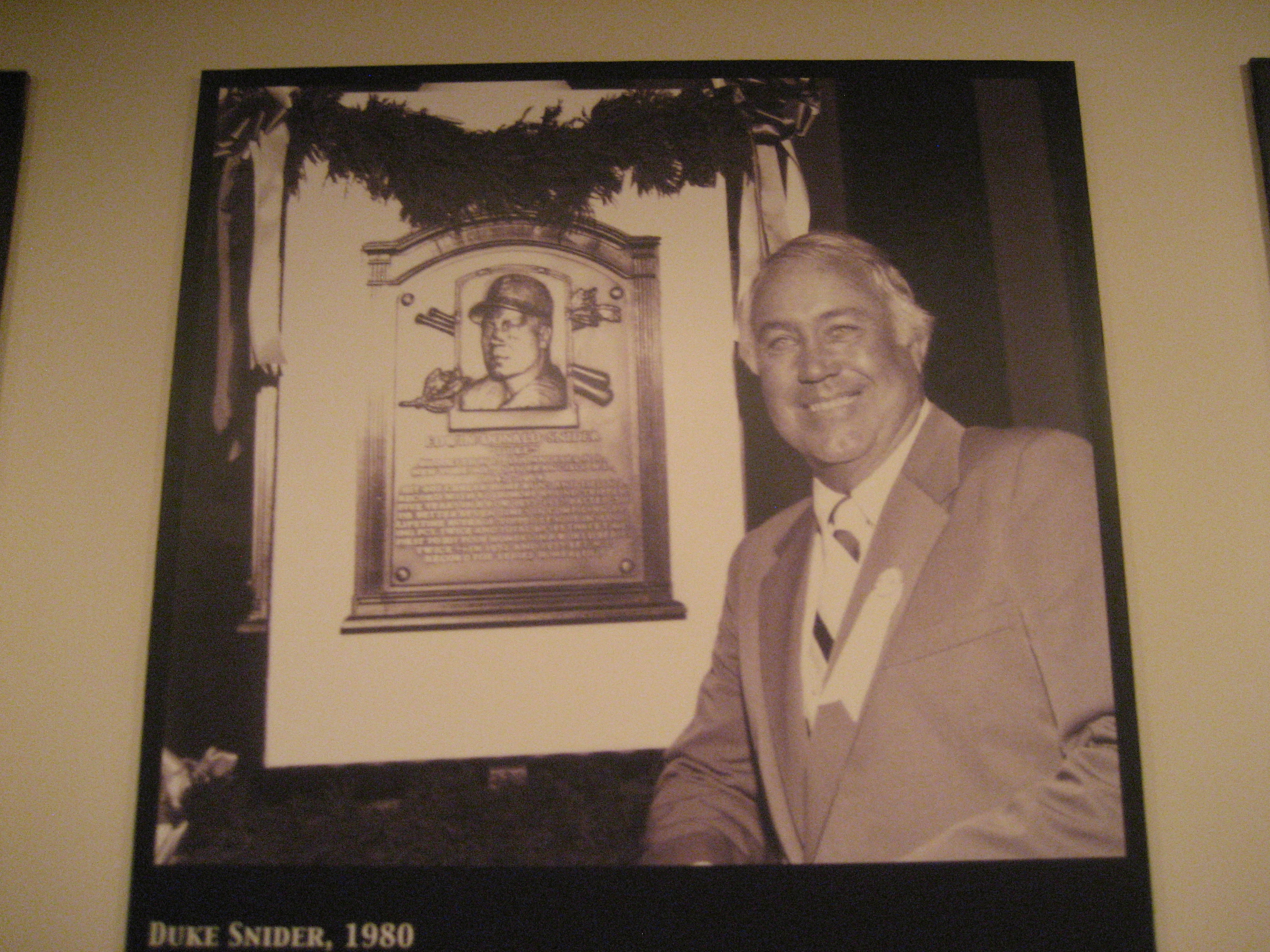
Favorite Player #5: Duke Snider

Songwriter Terry Cashman put out a song in 1981 called Talkin’ Baseball in which he mentioned the names of many ballplayers.  Having grown up in New York City, he and his friends were enamored with the center fielders for the New York Giants, New York Yankees, and Brooklyn Dodgers: Willie Mays, Mickey Mantle, and Duke Snider.

During his song, Cashman kept singing about “Willie, Mickey, and the Duke.”

Duke Snider was a left-handed, power-hitting center fielder for the Dodgers.  As a kid, I read an article where he noted that he had hit 4 home runs in the World Series against the Yankees on 2 occasions.  That impressed me!

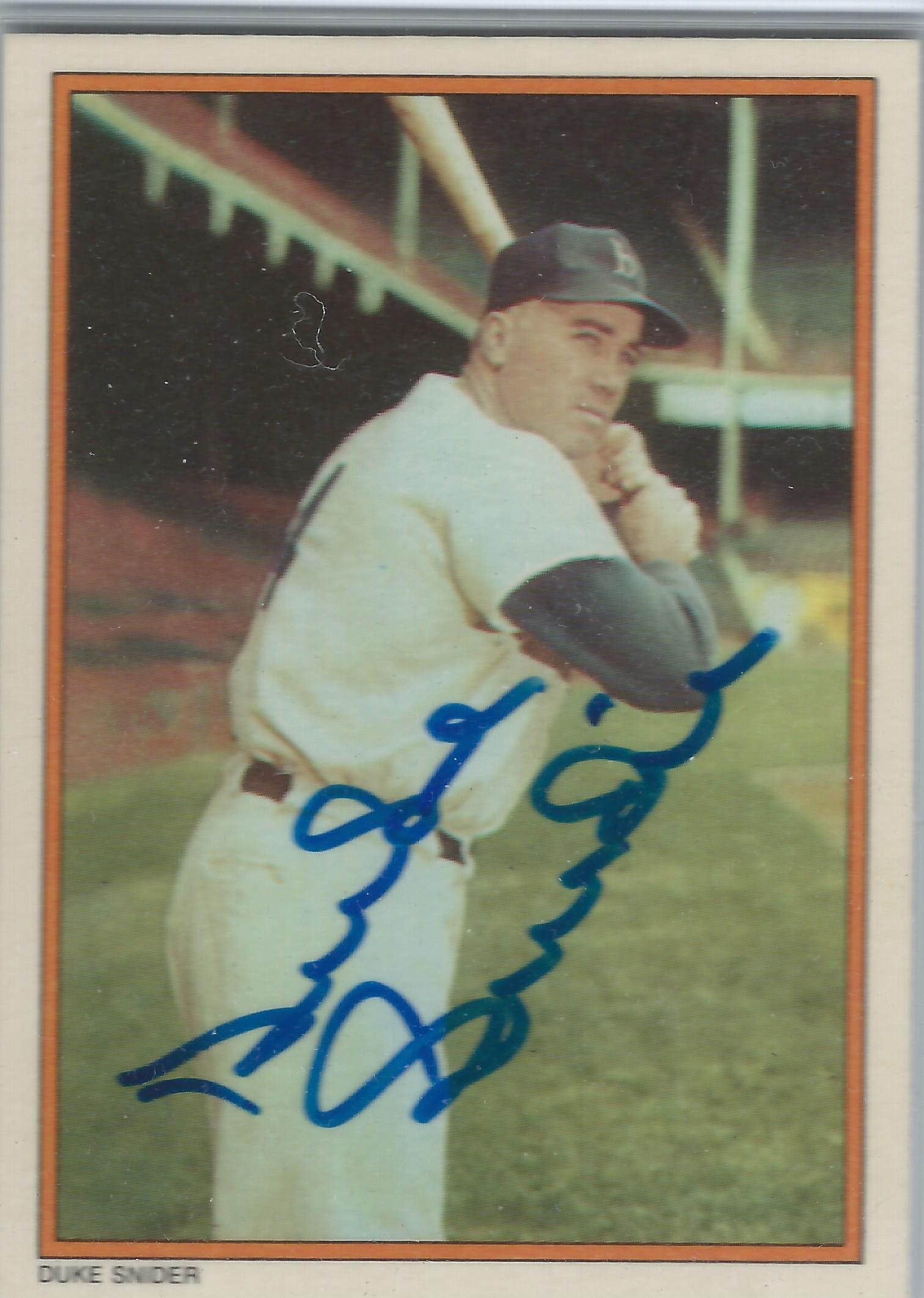
Duke Snider Signed Card

When the Dodgers moved from Brooklyn to Los Angeles, the Duke came along.  For years, he lived in nearby Fallbrook.

He hit 407 lifetime home runs – 40 or more 5 years in a row – and was elected to the Hall of Fame in 1980.

Trip to New York Sept. 20-22, 2010 433Trip to New York Sept. 20-22, 2010 546

In 1988, I met Snider at a baseball card convention.  The Duke was dutifully signing whatever people put in front of him until I mentioned something I had just read in his autobiography The Duke of Flatbush.

Duke Snider Book Cover

Snider mentioned that he had invited Christ into his life in 1979 and that he and his wife regularly attended worship services and Bible study at their church in Fallbrook.

When I brought this up, Duke stopped signing, brightened up, and talked to me for a few minutes about his faith in Christ.  He and his wife had become involved with The Torchbearers ministry and he told me they had flown to England to receive teaching from Major Ian Thomas.

I can’t remember much else of that conversation, but I’ll always treasure that time … and I look forward to resuming that conversation someday!

Favorite Player #4: Ty Cobb

Ty Cobb hit .367 over his 25-year career, winning 12 batting titles, stealing 892 bases, and amassing 4, 191 hits.

He also made a truckload of enemies.  Some people believe that Cobb was the meanest player who ever lived.

Normally I don’t like players who are rude and inconsiderate.  I knew someone who used to sell newspapers in downtown Menlo Park, California, and he said that Cobb regularly bought a paper from him – and was nasty.  (Cobb lived in nearby Atherton for many years.)

But I have 3 reasons for still making Cobb one of my favorites:

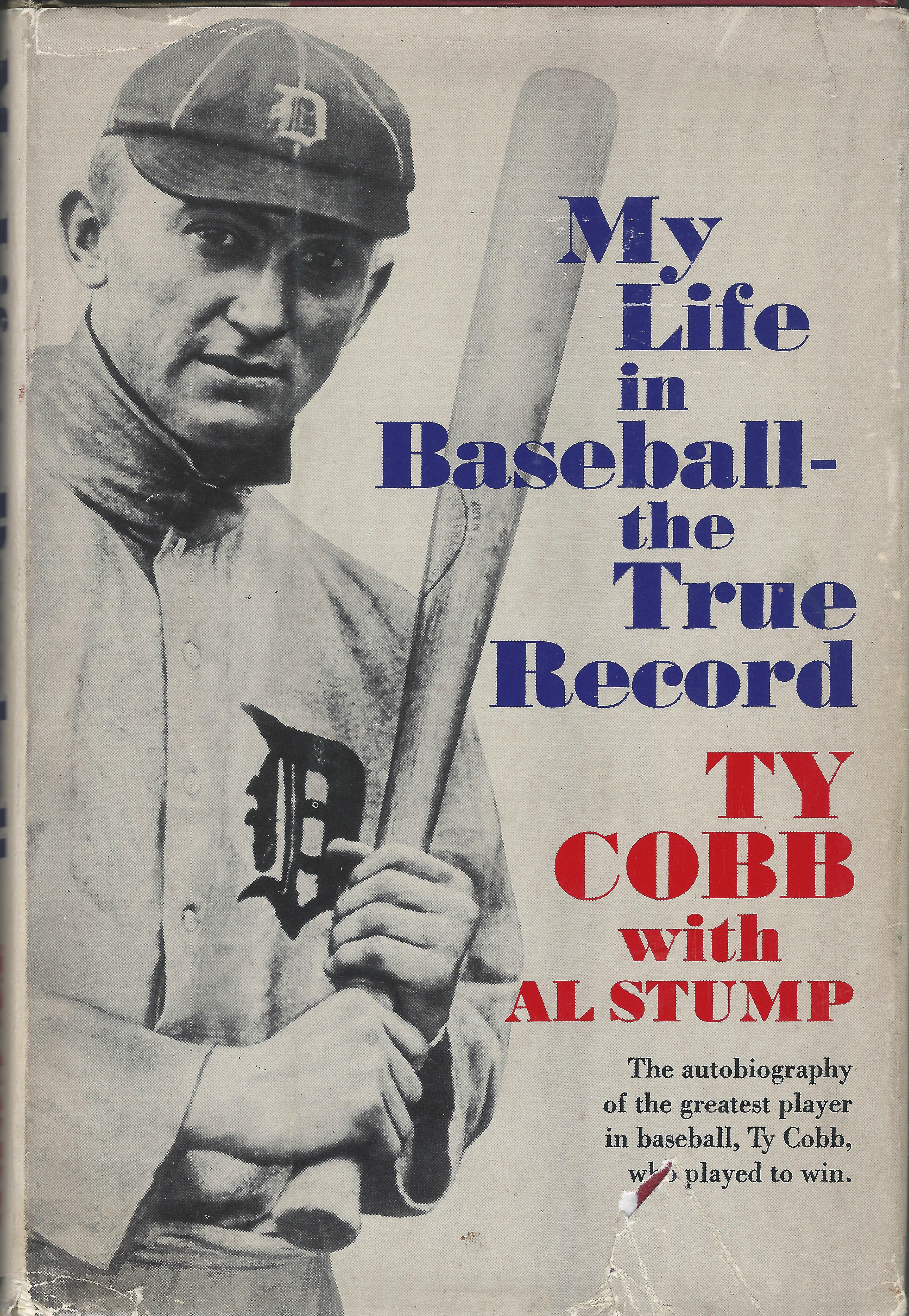
*As a kid, I read his autobiography My Turn at Bat, and learned a lot about base running which I incorporated into my game.

Ty Cobb Book Cover

*His mother accidentally shot his father (she thought he was an intruder), and Cobb worshiped his father.  That wound stayed with him the rest of his life and affected his personality.

*Cobb mellowed somewhat after his playing days and became good friends with Babe Ruth – whom he formerly hated – by playing golf together as documented in the book Ty and the Babe.

Ty and the Babe Book Cover

I admired Cobb because he used his brains as much as his talent, and because I was never a big kid, Cobb helped me learn how to win by thinking, not just by slugging.

Seven years ago, my son Ryan and I took a trip through the South, and we stopped in Royston, Georgia, where Cobb grew up.  We visited the Ty Cobb Museum and his tomb just outside town.

Jim and Ryan Southern Trip 054 Jim and Ryan Southern Trip 050 Jim and Ryan Southern Trip 047Jim and Ryan Southern Trip 038 Jim and Ryan Southern Trip 036Jim and Ryan Southern Trip 059

When I was ten years old, I found a gospel tract at my grandfather’s church in Chicago.  The tract stated that Ty Cobb had received Christ at the end of his life.  While I’ve never seen this bit of information verified, I hope it’s true.  (Mickey Mantle received Christ a few days before his death as well.)  If so, maybe heaven will truly be a “Field of Dreams.”

Favorite Player #3: Willie Mays 

There are many people who believe that Willie Mays was the greatest all-around ballplayer who ever lived.  (Ken Griffey Jr. and Barry Bonds are also in the conversation.)

He won 2 Most Valuable Player Awards … hit 660 home runs … and could beat you with his bat, glove, or legs.

Willie Mays Signed 1957 Topps

As a kid, my brother John and I played fast-pitch with a tennis ball in our backyard.  He was the Dodgers … I was the Giants … which meant that I got to be Willie Mays.

Even though I was a Dodger fan, I’d check the box scores every day to see how the Say Hey Kid had done the previous day.

In early 1968, I took a picture of Willie and John inside the lobby of the Grand Hotel in Anaheim.  We have it … somewhere.  I’ll post it if I can ever find it.

I saw Willie in various venues over the next several years, but he became increasingly grouchy.

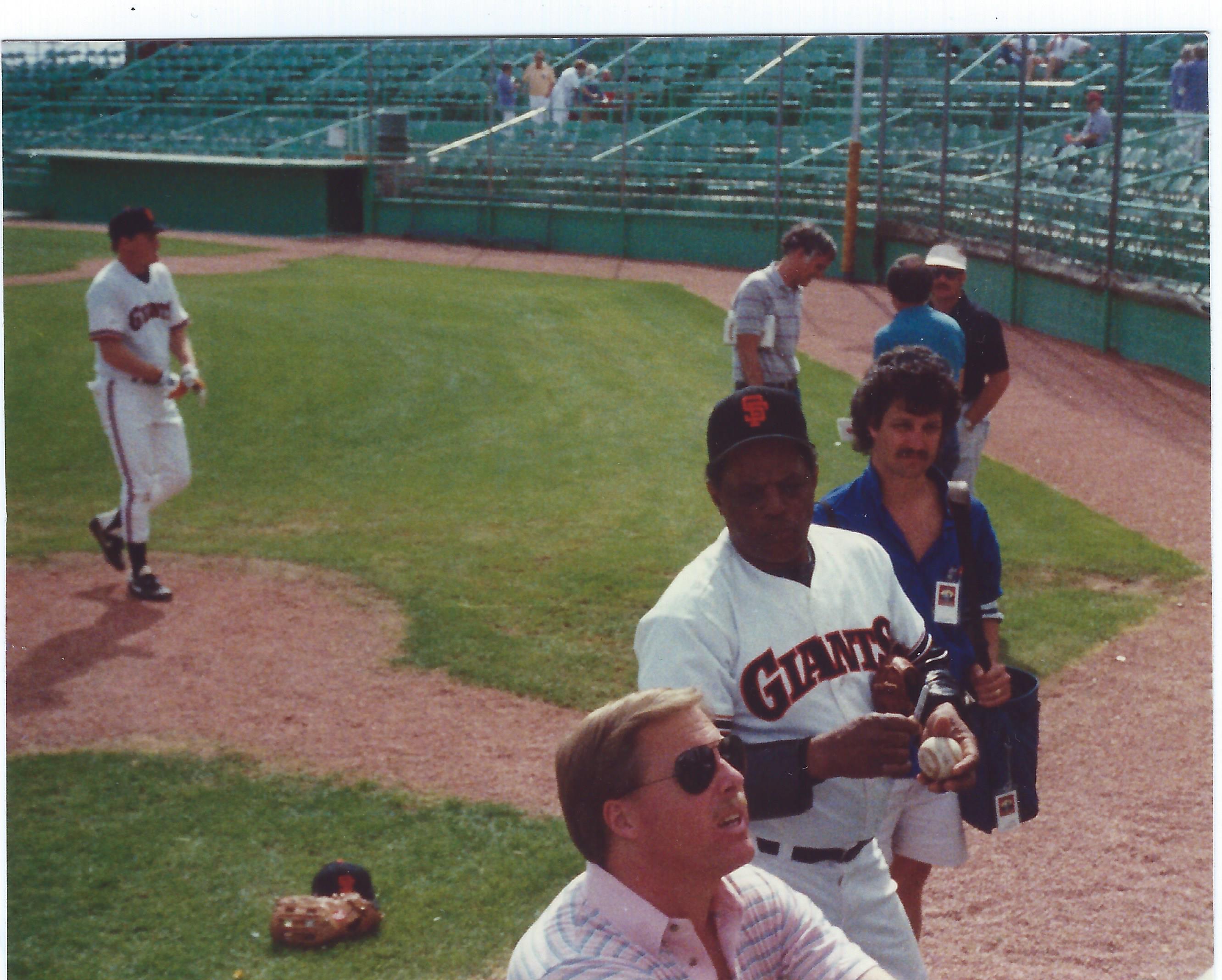
Willie Mays Signing Autographs

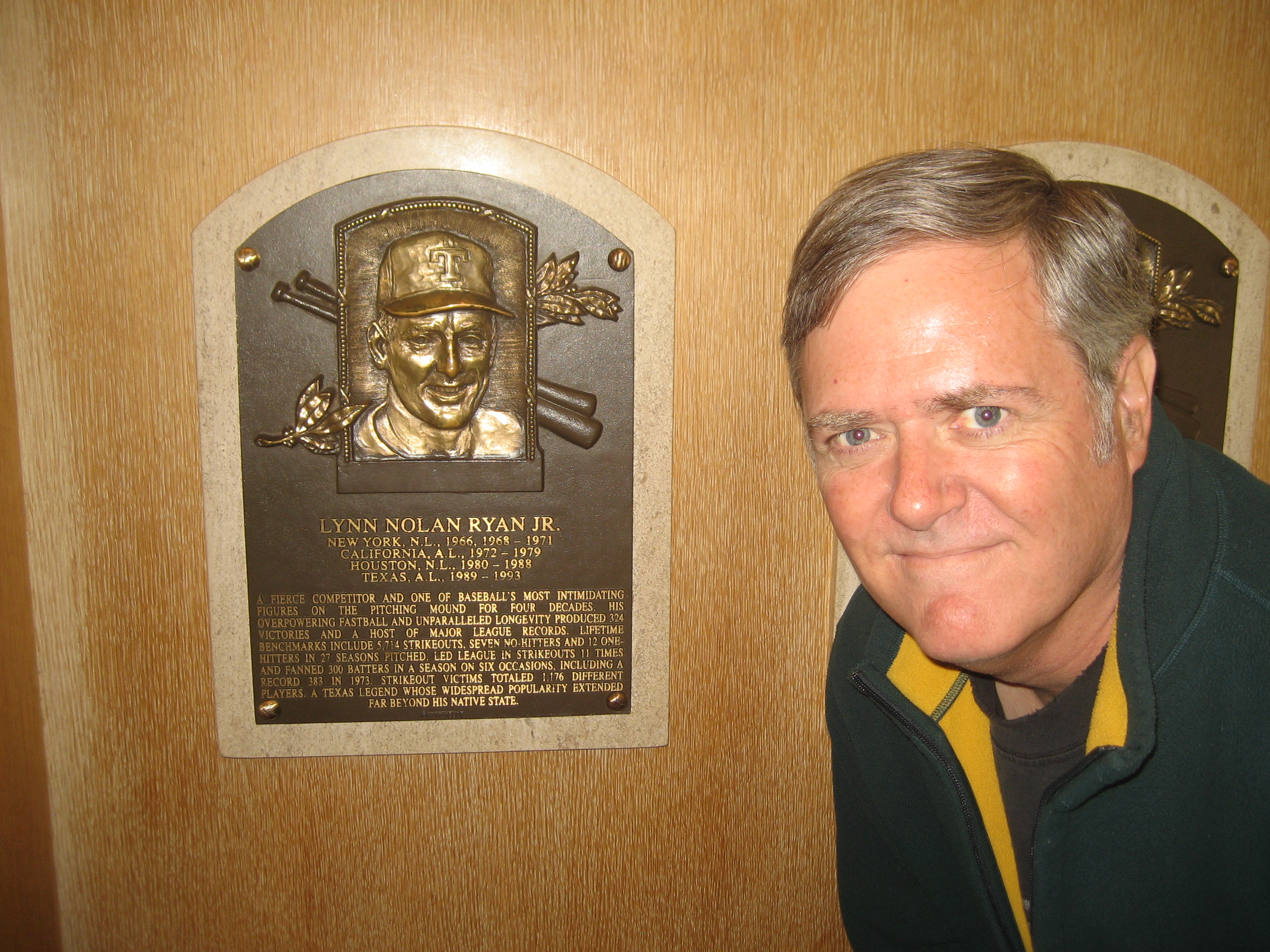
It’s got to be a burden to be so visible … and to be considered by many to be the greatest player who ever lived.  (I’m posing with his plaque at the Hall of Fame in Cooperstown, New York.)

Trip to New York Sept. 20-22, 2010 436

I got to see him play in person on several occasions … and plan to tell my grandsons all about it!

Favorite Player #2: Sandy Koufax

Growing up in Southern California, I became a Dodgers’ fan, cheering for Maury Wills, Don Drysdale, Tommy and Willie Davis, and anyone wearing Dodger Blue.

But the greatest Dodger of them all was Sanford Koufax.

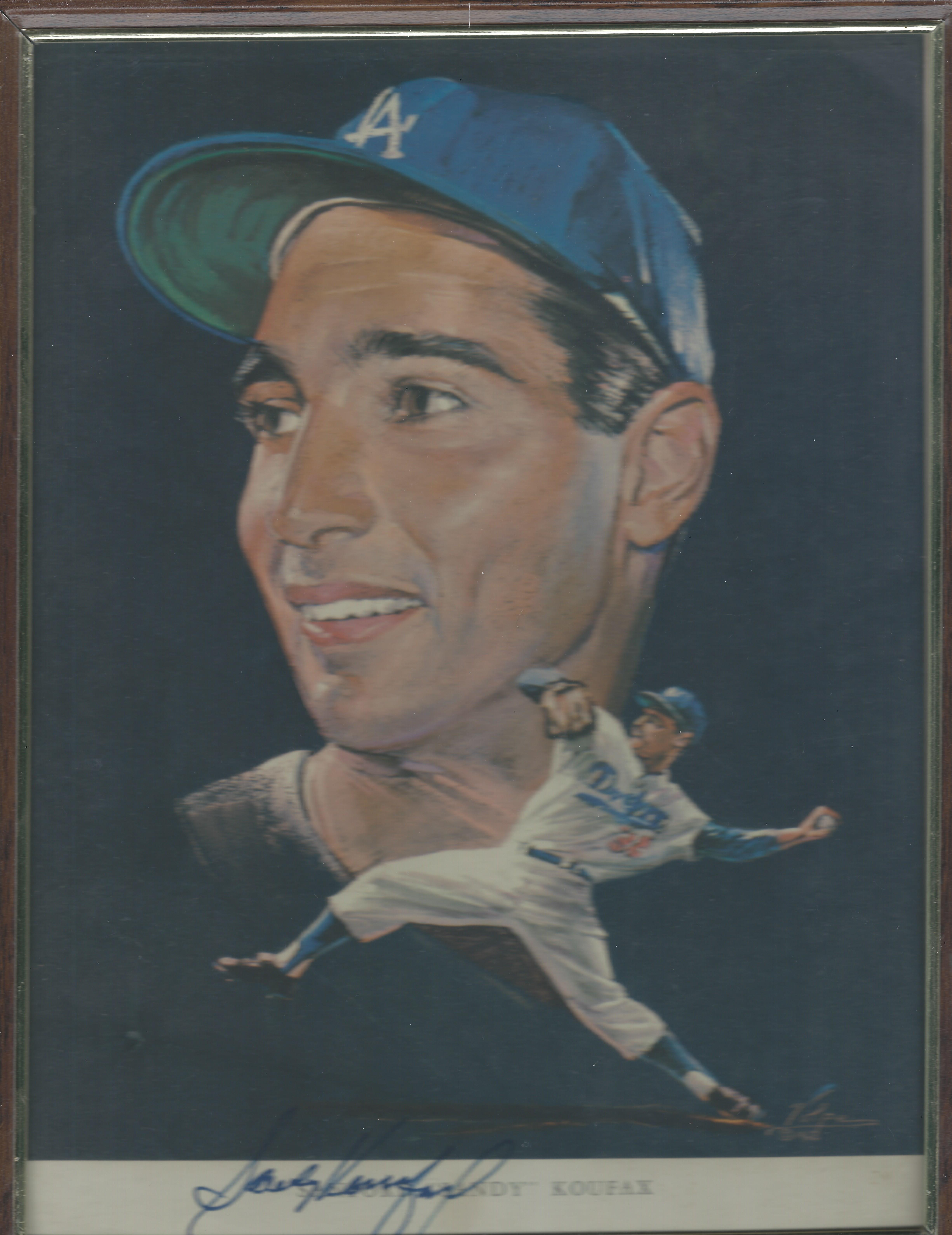
Sandy Koufax Signed Photo

He won 5 Earned Run Average titles in a row along with 3 Cy Young Awards.

I saw him pitch in-person twice: a 3-hit shutout against the Houston Colt 45s (now the Astros) in 1963, and a 4-2 pennant-clinching victory against the Milwaukee (now Atlanta) Braves in 1965.

In that 1965 game, Koufax set the all-time record for strikeouts in a season: 382.

Koufax won 25 games in 1963 … 19 in 1964 … 26 in 1965 … and 27 in 1966.  Here is his plaque at the Baseball Hall of Fame in Cooperstown:

Trip to New York Sept. 20-22, 2010 527

Every time Koufax pitched, you wondered if he was going to throw a no-hitter.  He did throw 4 no-hitters … the last one a perfect game.  (My brother John and I listened to it on the radio.)

I can still recall sitting in English Class during the Seventh Game of the 1965 World Series.  Koufax had shut out the Minnesota Twins 7-0 in Game 5, and was asked by Manager Walter Alston to pitch Game 7 on only two days’ rest!

In our day, this would never happen with a starting pitcher.

What did Koufax do?  He shut out the Twins 2-0 …  striking out 10 … and the Dodgers were again World Champs.  I bought that game on iTunes.  Best $1.99 I’ve ever spent!

Koufax was a magnetic pitcher but came off as a humble and considerate person.  He was easy to root for because he seemed surprised by all his success.

Trip to New York Sept. 20-22, 2010 544

When my parents gave me a signed copy of his autobiography one year, it became one of my most prized possessions.

As great as Koufax was, there’s someone I came to love even more:

Favorite Player #1: Nolan Ryan

The first time I saw Nolan Ryan pitch in person, he hit 3 San Francisco Giants in an exhibition game in Palm Springs in 1972.

Like many pitchers, Ryan threw hard but couldn’t control where the ball was going.

He played several seasons for the New York Mets, and then was traded to the California Angels after the 1971 season.

Somehow, Ryan started putting things together in 1972.  Every time I opened the Santa Ana Register, Ryan had pitched another shutout … and struck out a bunch of guys.

In 1973, Ryan threw 2 no-hitters.  He threw 7 in all … the all-time record, surpassing Sandy Koufax’ record of 4.

Nolan Ryan Signed 1978 Topps

After we got married, Kim and I lived in Santa Ana and later in Anaheim.  When Ryan pitched, I listened to every game.  He often had a no-hitter through six innings.

I’d ask Kim, “Can I go to the ballpark?”  (She always said yes.)  Back in the mid-1970s, I could drive to the stadium … park my car in the lot for free … and then walk right in when the ushers opened the gates after the seventh inning.

I always hoped to see Ryan throw a no-hitter in person, but I never did.

However, I did get a game ball from one of his victories.

Ticket Stub May 2, 1979

On May 2, 1979, Ryan defeated the Yankees in Anaheim.  Rod Carew made the final putout for the Angels, and as he approached the dugout, my friend John asked Carew for the ball.

Carew tossed it to John, who ran up the aisle and gave it to me.

In September 1973, Ryan pitched on a Thursday night against the Minnesota Twins.  Many of my friends went to the game that night.

Ryan need 15 strikeouts to tie Sandy Koufax for the all-time record … and 16 to beat the record.

After 9 innings, Ryan had 15 strikeouts … and nothing left in his gas tank … but he got that 16th strikeout on a high fastball thrown past Rich Reese … and he ended up with 383 strikeouts in a single season, the all-time record.

Ryan went on to become a legend.  When he was eligible for the Hall of Fame, he received the second highest percentage of votes in history.

Trip to New York Sept. 20-22, 2010 458

Whenever I encountered Ryan, he was cordial.  Kim and I once drove to Anaheim Stadium and asked Ryan to sign two posters before a game.  They hung on my wall for years.

Back in 1979, I drove down to Palm Springs and caught an Angels’ exhibition game.  Ryan was just walking around the stands and then exited the ballpark.

Nobody knew who he was.

I followed him and asked him to pose for a picture for me, which he did.  If you see photos of him today, he’s aged a lot.

Nolan Ryan Spring Training 1979

My father was a pastor, but he was also a big baseball fan.  He used to bring my brother and me packs of baseball cards.  And when Dodgers like Roger Craig, Don Drysdale, and Maury Wills made personal appearances in our area, he drove us to meet them and get their autographs.

When I was at Cooperstown a few years ago, I took a picture of this painting of a small baseball fan asking for the autograph of the great Pirate shortstop Honus Wagner.  If you click on the picture and read the text, you’ll understand why I’ve enjoyed having a connection to these players for so many years.  Thanks for reading!

Trip to New York Sept. 20-22, 2010 308


Read Full Post »

Baseball has been in my blood since I was six years old.

Back in 1960, my father took my brother and me to our first game at the Los Angeles Coliseum where we watched the Pittsburgh Pirates beat the Dodgers 5-2.  I can still see the right fielders for both teams: Frank Howard for the Dodgers, Roberto Clemente for the Pirates.

I’ve had so many thrills as a fan.  I have been privileged to:

*run the bases at a public open house at Dodger Stadium shortly before it opened.

*attend the groundbreaking of Anaheim Stadium on July 31, 1964 … and I kept dirt from the home plate area for years.

*go to the All-Star Game in Anaheim in 1967 … a game that went 15 innings until Tony Perez hit a home run off Catfish Hunter.

*attend various playoff games and two World Series games.

*see games at Wrigley Field (Chicago), the old Comiskey Park (great park!), Fenway Park, Camden Yards, and Yankee Stadium, among many ballparks.

Trip to New York 2 Sept. 22-25, 2010 087Fenway Park Sept. 13, 2012 241Fenway Park Sept. 13, 2012 267

When I was 13, I discovered that every player in the American League was staying at the Grand Hotel in Anaheim – only 3 miles from my house – for 3 road trips every year.

All my friends in our neighborhood discovered this, too.

Including exhibition games, Old Timer games, and that All-Star game, I met players like Joe DiMaggio, Jackie Robinson, Willie McCovey, Tom Seaver, Al Kaline, Pete Rose, and Rod Carew.

Some were pleasant … others were businesslike … and a few were downright mean (like Early Wynn and Elston Howard), but wow, what a great time my friends and I had growing up!

Years ago, I made a list of my favorite players, and recently condensed it to just 10.  I’ll share favorites 10 through 6 today and 5 through 1 next time.

Favorite Player #10: Roberto Clemente

Besides the fact that Clemente played in the first game I ever attended, I admired his flair.  He won 4 batting titles … dominated the Orioles in the 1971 World Series … and ended up with exactly 3,000 hits.

I watched him play at Dodger Stadium in 1966 … and what an arm he had!  An absolute cannon.

On the Sunday before the All-Star game in 1967, I was at the Grand Hotel waiting for players to check in, and Clemente was spotted walking along the road  He looked regal in his blue suit and signed for everybody … maybe 30 people.

Sometime after that, I learned that if you wrote Clemente during the season, he would sign everything you sent him … so my brother and I did just that.

Roberto Clemente Signed CardClemente Drawing

Several years ago, I read most of the book Clemente by David Maraniss, but I can’t finish it because I don’t want to read about Clemente’s tragic airplane death on January 1, 1973 while taking relief supplies to Nicaragua.

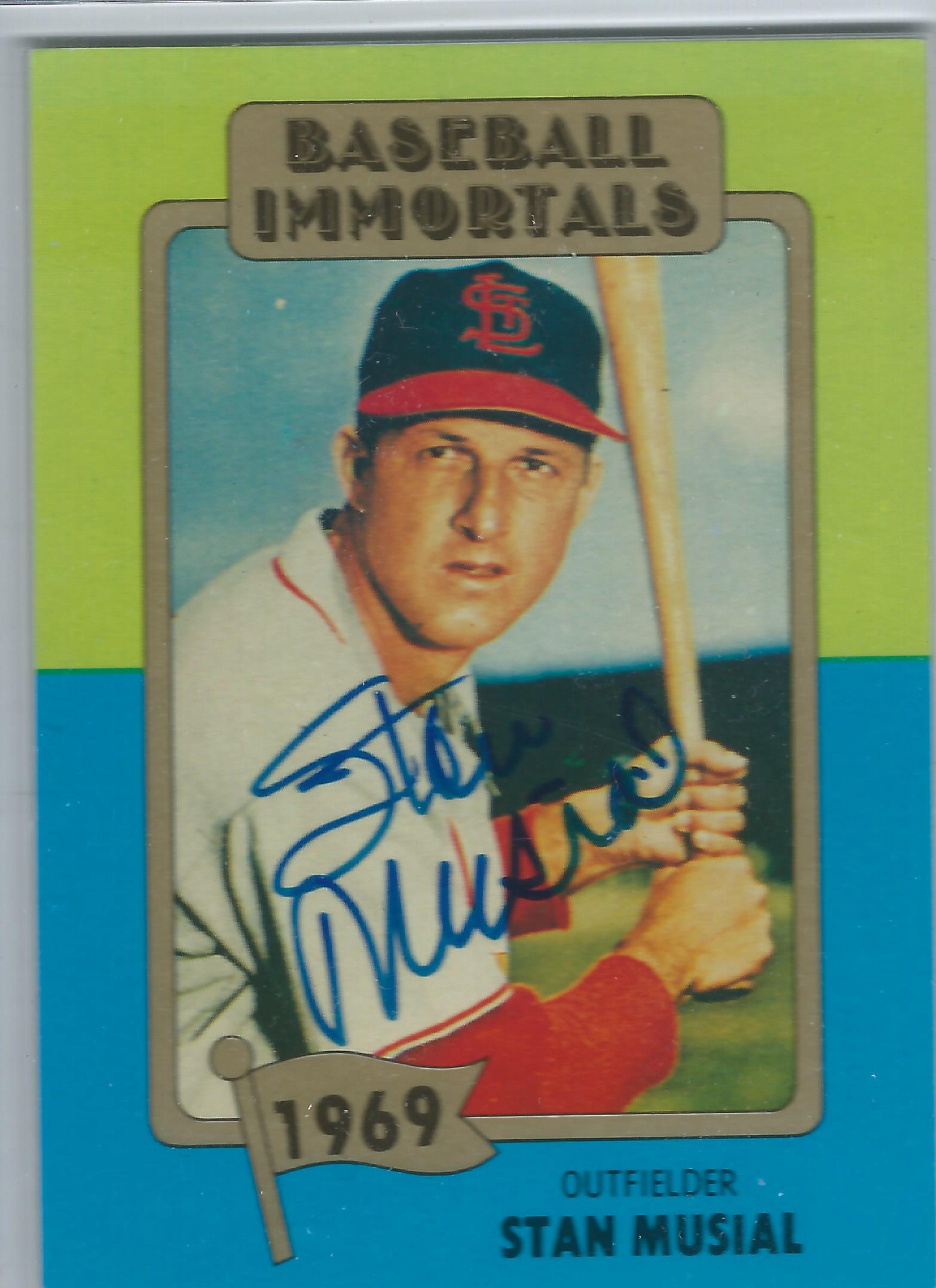
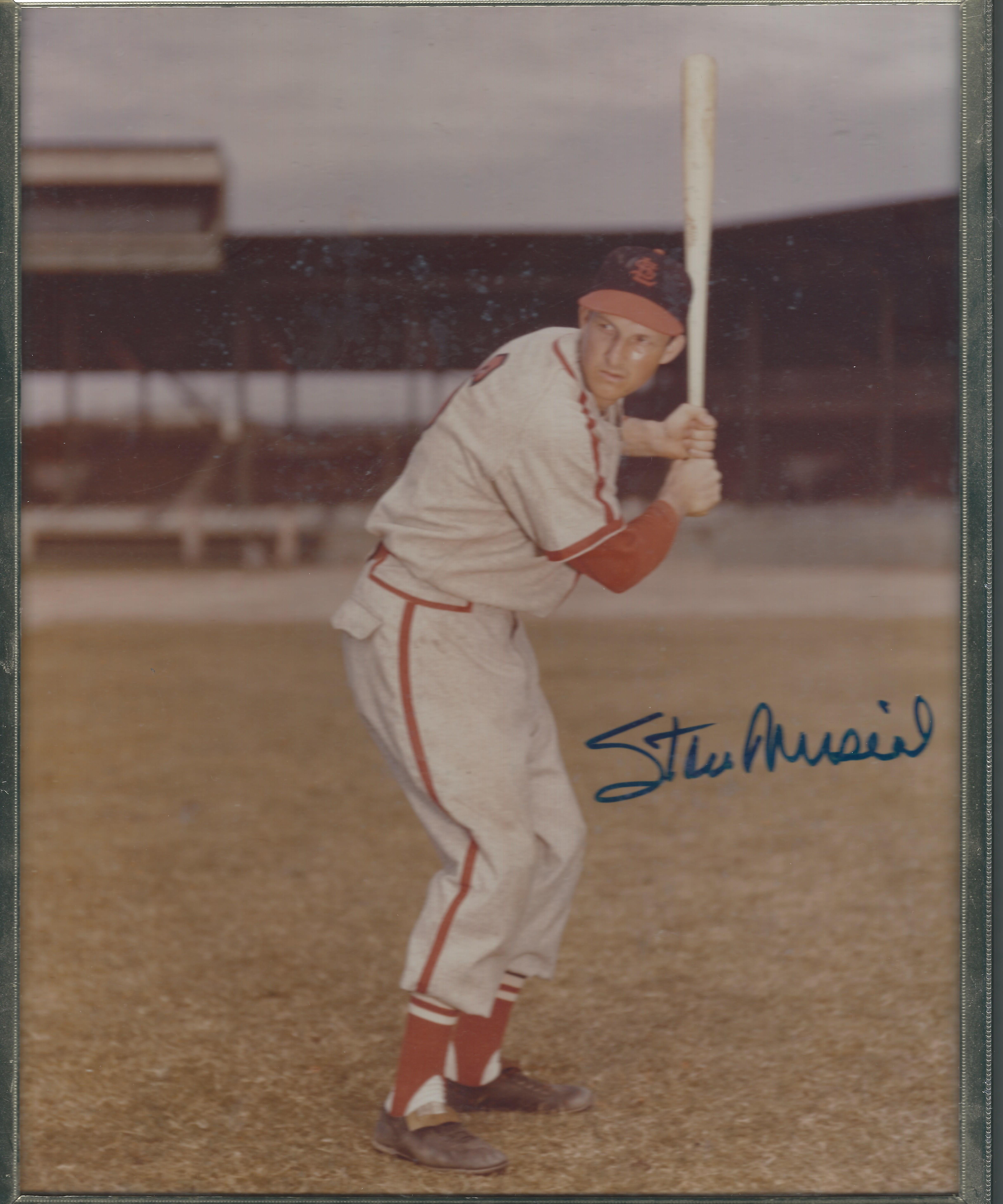
Favorite Player #9: Stan Musial

Stan the Man played his entire career for the St. Louis Cardinals, amassing 3,630 hits: 1,815 on the road, 1,815 at home.  How’s that for consistency?

I read a biography on his life as a kid and was amazed at his greatness.  He won 7 National League batting titles and 3 MVP awards.

Stan Musial Signed CardStan Musial Signed Photo

Musial’s last year was 1963, and when the Cardinals came to Dodger Stadium that September, the Dodgers announced they were going to hold a Stan Musial Night on Thursday evening.

I was determined to go, even though I was only 9 years old.  I asked my dad if we could go, and he said no.  But I wouldn’t give up.

Call me stubborn … manipulative … or spoiled … but I WANTED TO GO TO THAT GAME!

So I went to my room and cried … and screamed … and yelled bloody murder.  The neighbors must have felt that my parents were engaged in some radical form of abuse.

They finally relented and our entire family went to the game … but we sat so high up that we couldn’t see much.

I only had two encounters with Musial … and was thrilled to get his autograph at the All-Star Game in 1967 after a meeting of general managers.

He was a classy man … and the greatest Cardinal of them all.

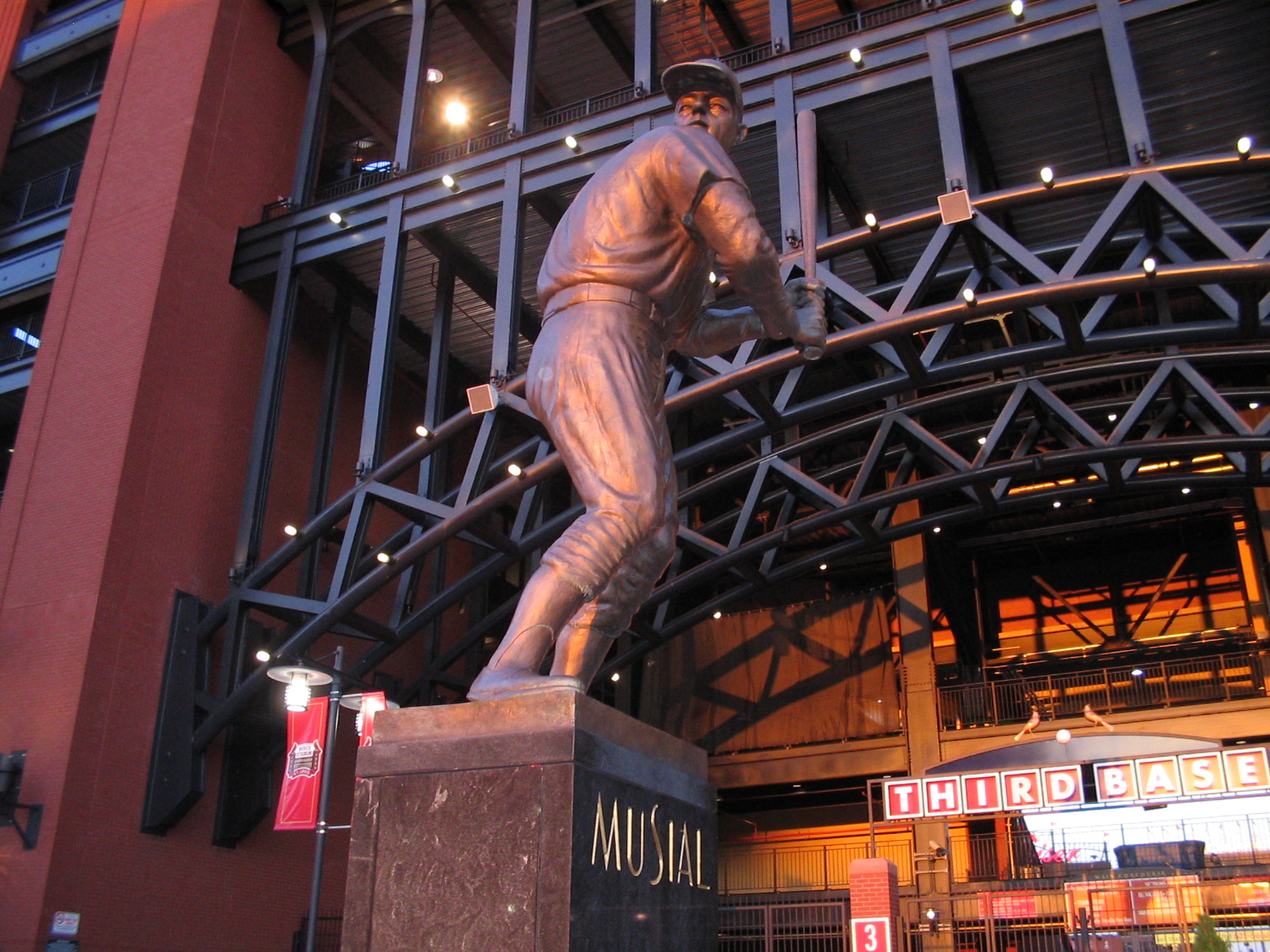
Jim and Ryan Southern Trip 387

That’s why this statue of Stan the Man is in front of Busch Stadium in St. Louis.

Favorite Player #8: Steve Garvey

One Saturday in 1972 – when I was 18 – I drove to San Diego with 2 friends.  We visited the Town and Country Hotel because the Dodgers were staying there.

Sometime during the afternoon, Steve and Cyndy Garvey started talking to the three of us.  They were SUPER nice.  This was long before Steve was an All-Star and Cyndy co-hosted a TV show in LA.

We must have talked to them for 20 minutes.  I’ve never forgotten how pleasant they were.

Two years later, Steve Garvey was the regular first baseman for the Dodgers and the Most Valuable Player in the National League … long before he received any bad press.

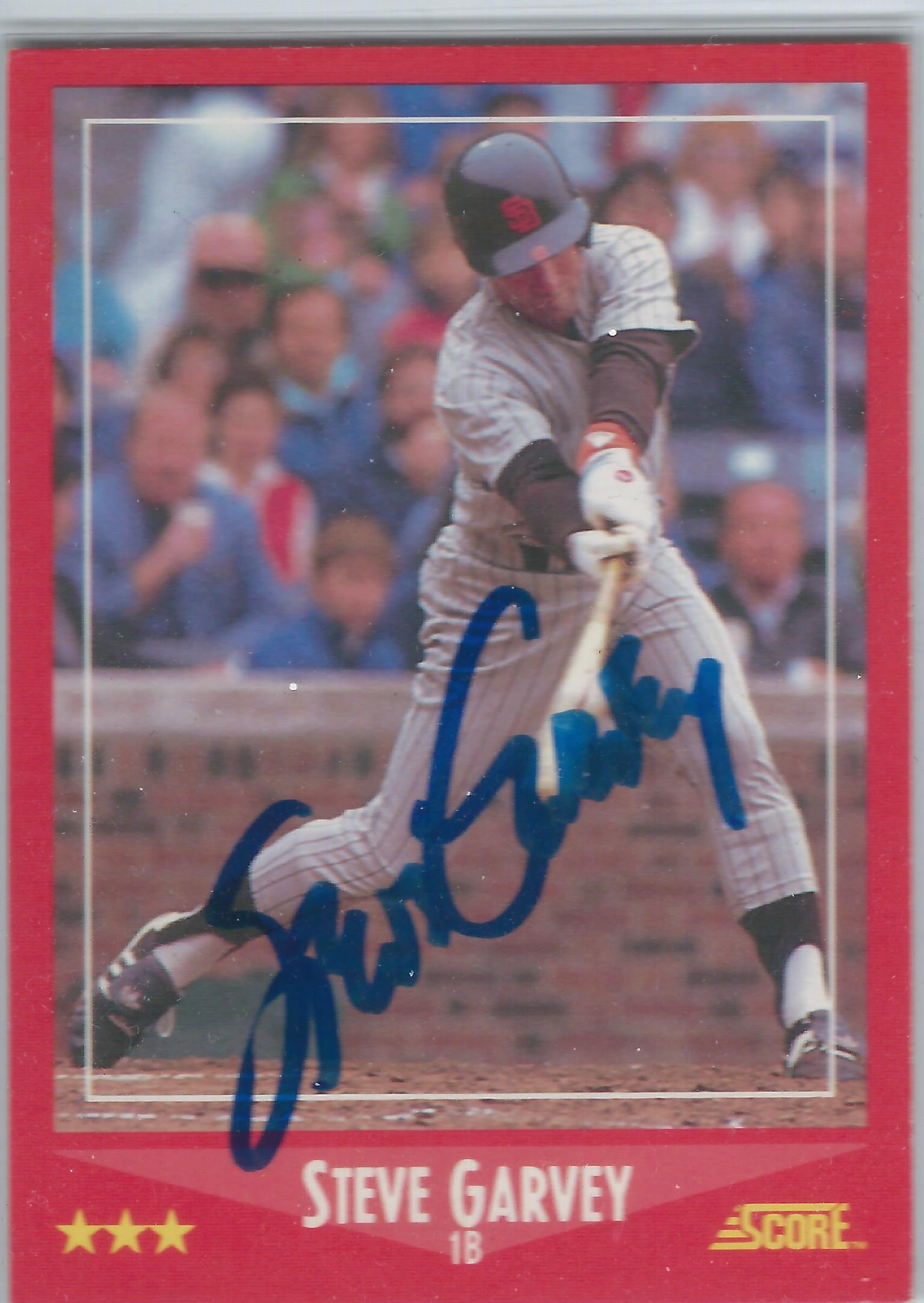
Steve Garvey Signed Card

I admired Garvey’s ability to hit to all fields … dig errant throws out of the dirt … and hit in the clutch.  He was always a winner.

In addition, Garvey was always great to his fans … signing autographs … posing for pictures … and acting like he enjoyed it … like in this photo with my son Ryan.

Garvey and Ryan

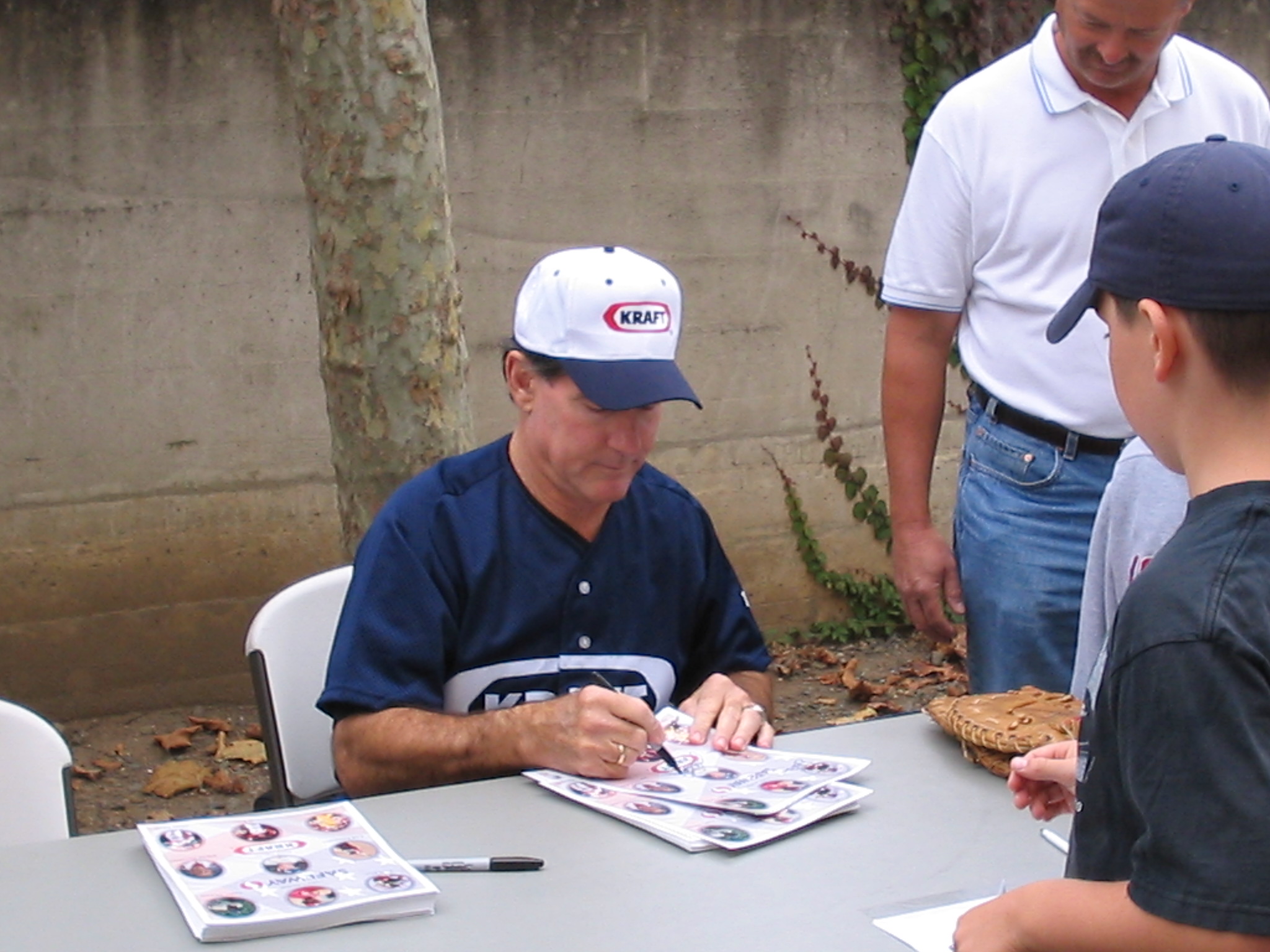
A few years ago, I saw him at a benefit softball game, and told him that I believed he was Hall of Fame worthy.  He sincerely thanked me.

Safeway Baseball Pictures August 20, 2005 012

Steve Garvey remains a great ambassador for baseball.

Favorite Player #7: Brooks Robinson  

To this day, if I ask my friends, “Who were the two nicest players in the American League when we collected autographs?”, they always answer: Harmon Killebrew and Brooks Robinson.  And both were superstars.

Brooks Robinson Card Signed

Brooks was the third baseman for the Baltimore Orioles.  He won the American League MVP award in 1964 and the World Series MVP in 1970.  He was such a great fielder that he was nicknamed “The Human Vacuum Cleaner.”

I liked Brooks because he was always kind and personable with his fans.

Brooks Robinson

In The New Bill James Historical Baseball Abstract, James rates Brooks the 7th greatest third baseman of all-time … and then goes on to write about nice and not-so-nice players … crowing Brooks The King of Nice Ballplayers.

Here’s one that wasn’t so nice:

Favorite Player #6: Ted Williams

Several years ago, my wife and I visited the San Diego Sports Hall of Fame in Balboa Park.  The baseball exhibits focused on two Hall of Fame ballplayers: Ted Williams and Tony Gwynn.

I cried my way through the whole thing.

Ted is a legend in San Diego.  There’s even a parkway named after him off Interstate 15.

IMG_3217

But Ted Williams … whose mother devoted her life to the Salvation Army in San Diego … was a brutally honest but moody man.

In my view, Ted was the greatest hitter who ever lived.  He won 7 American League batting titles … hit 521 home runs (including one in his last at-bat) … and hit .342 lifetime.  He also hit .406 in 1941, the last player ever to hit .400 in a single season.  (Tony Gwynn hit .394 in 1994 but fell short.)  Since he retired in 1960 – the year I became interested in baseball – I never saw Ted play.

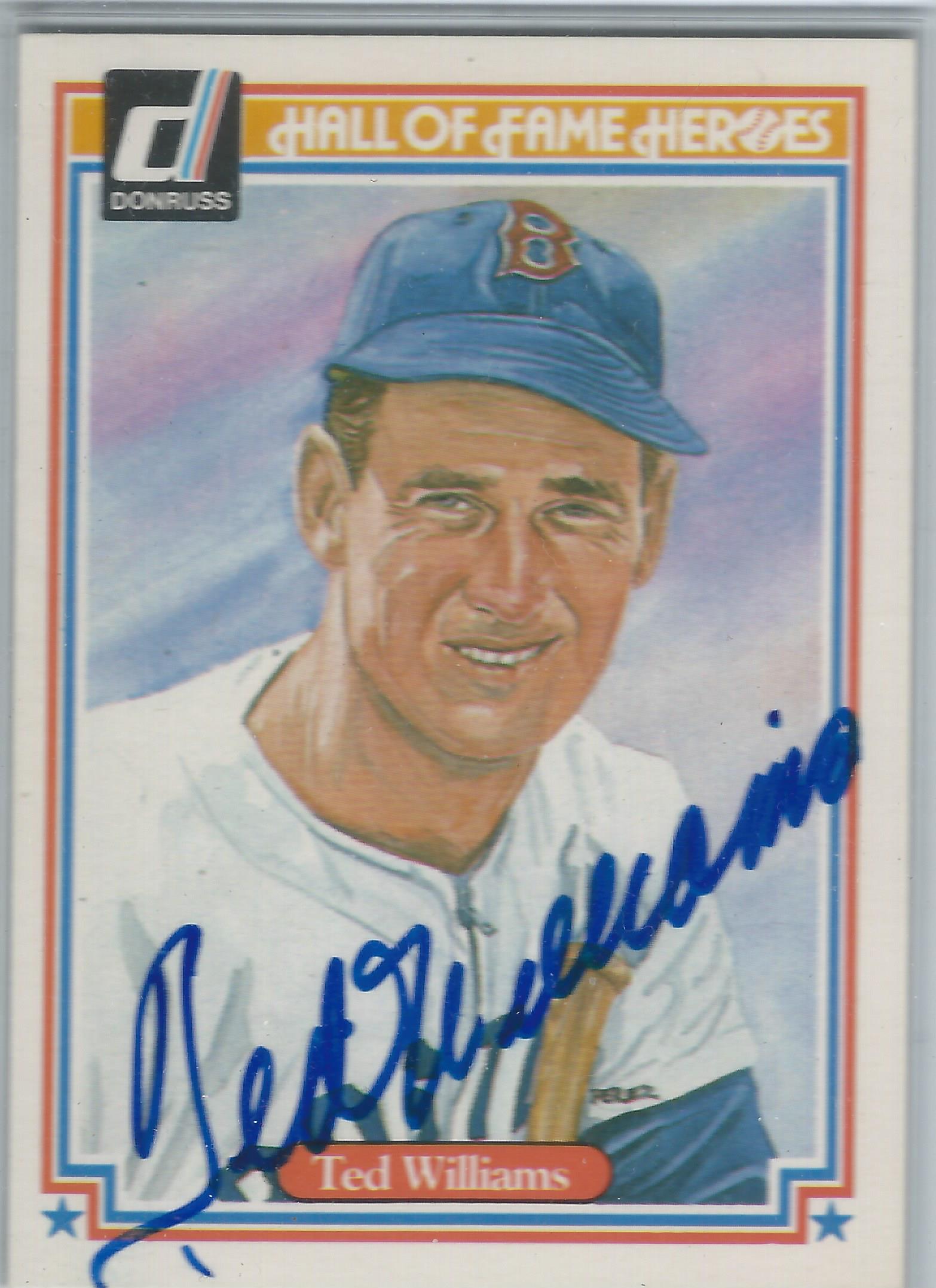
Ted Williams Signed Card

On those few occasions I saw him in-person, he had a presence about him.  He was movie-star handsome and plugged all kinds of products.  But he loathed pitchers … as well as sportswriters.

But when kids were around, The Kid changed completely.

In 1969, Ted became the manager of the expansion Washington Senators.  When the team came to the Grand Hotel late in the season, only my brother and I showed up for autographs.

Ted came out late in the afternoon and sat on a shoeshine chair by the pool and starting reading a newspaper.  He scared me to death.

But my brother John … who was 13 at the time … went up to Ted and they started conversing.  Ted looked through John’s baseball cards … many of which were of Ted himself!  Ted probably talked to John for 15 minutes and seemed genuinely interested in him.

I wish I had just one photo of that meeting.

There’s a statue of Ted Williams outside Fenway Park in Boston.  It’s hard to see at night, but it shows Ted’s interest in a boy … just like my brother.

Fenway Park 2 Sept. 13, 2012 167

I’m fascinated by deeply flawed people who do great things, and Ted certainly falls into that category.

Who are my Top 5 ballplayers of all time?  I’ll share that post on Opening Day.

Who are some of your favorite baseball players – and why?


Read Full Post »

He was fighting a battle inside … a battle that had no sign of ending soon.

For his entire life, Bob had attended church services … and enjoyed doing so.  Church was in his DNA.

But recently, things had changed.  Bob no longer felt at home at church … any church.

He tried visiting churches in his community, but never felt comfortable.

During one service, a staff member asked those with a need to stand up so believers nearby could pray for that person.  While Bob had needs, he didn’t feel comfortable having strangers pray for him.

At another church, the pastor said during the announcements, “If you want to attend this event, see Joe.”  The pastor assumed that everybody knew Joe … but Bob didn’t, and felt left out.

Exhausted and frustrated while searching for a home church, Bob took a break a few Sundays and watched a service on television from a megachurch he liked … but he longed to find a church home nearby.

One Saturday night, he went online and located the website of a church that met at a local community college, and since it was close to home, he thought he’d give it a try.

So on Sunday morning, Bob got up on time … showered and dressed … grabbed his Bible … got in his car … and drove to where the church was located.

When he drove into the parking lot, he noticed there weren’t many cars there.  Was this a small church where he might stand out?

When Bob walked into the building, nobody was present to greet him.  As he turned to walk down a long hallway, he noticed a literature table … but no one was there.

As he proceeded down the hallway, he noticed another literature table … again with nobody staffing it.

No one said a word as Bob walked toward what he hoped was the worship center, which he eventually found.

He hesitated for a moment, looking for greeters, but they were talking to each other … with their backs to him … so he slipped into the auditorium … without ever being offered a bulletin.

Bob looked for a seat in the back row, but since some seats were roped off, he walked beyond the ropes and sat down on the second seat next to the aisle.

Looking to the right, he saw a man in a suit talking to three other men against the wall.

Looking toward the front, he saw two other men talking behind the church podium.

Since the church had Bible classes before the service, maybe those men were discussing their studies … but they seemed oblivious to others.

Church growth experts claim that a guest forms 11 impressions about a church within the first 30 seconds … and so far, Bob had only formed negative impressions of this church … but maybe the service would be different.

Suddenly, an older woman appeared at the end of the aisle.  Pointing to the seat next to Bob, she said, “This is my seat.”  And then, pointing to the seat he was sitting in, she said, “And that’s my friend’s seat.”

Already feeling apprehensive, Bob now felt embarrassed.  “Okay, I’ll leave,” he said.

He walked back down the row … back down the hallway … back into the parking lot … and drove home.

Bob turned on the television and once again watched the service broadcast by the megachurch.  The preacher told the congregation how much God loved each one of them.

And Bob thought about his experience at church that morning and wondered:

If people matter to God, why don’t they matter more to God’s people?

_____________________

If you haven’t yet figured it out, I’m Bob.  This article reflects the frustration that I’m experiencing finding a local church that loves guests without making them feel uncomfortable.

Maybe as a longtime pastor, I’m too critical … but I don’t think so.

Maybe it’s no wonder that 85% of all churches are stagnant or declining in attendance because from my vantage point, most believers are engrossed with their own friendships and concerns on Sundays … and their church simply isn’t ready for company.

The first thing that non-growing churches can do is to ask themselves, “How can we improve the way we welcome our guests?”

It’s not rocket science … but for some reason, most churches think they’re doing fine when they’re failing miserably.

My wife and I once visited a large, prestigious church where we were locked out of the worship center for the first ten minutes while they had a baptism … and then the pastor complained about the decline in church attendance during his sermon.

Please, sir, look in the mirror.

If I feel this way … and I’m a veteran believer … how do you think unbelievers or seekers feel when they visit the average church?

Visiting a church is an anxiety-inducing experience … especially when you’re by yourself … and every time a church isn’t ready for company, it becomes that much harder to visit the next church.

Sometimes people aren’t rejecting Christ … they’re rejecting churches where they instantly sense rejection … and no, it’s not logical.

If Christians are serious about reaching the world for Christ, maybe we can start by better welcoming the guests that God brings to our churches on Sundays.

Remember Jesus’ words?

“… I was a stranger and you invited me in … I tell you the truth, whatever you did for one of the least of these brothers of mine, you did for me” (Matthew 25:35, 40).


Read Full Post »

Frank Pastore was a major league baseball pitcher, a speaker on apologetics, and a Christian talk show host.  He died last year when his motorcycle was struck on the 210 Freeway near Los Angeles.

Frank Pastore Signed CardsIn 1996, my church flew Frank and his son to our community to speak at our church.  That Saturday night, my son and I joined Frank and his son for dinner at Chili’s – where we discussed Frank’s career with the Cincinnati Reds – and then we retreated to my church study, where Frank and I discussed Christian books we both loved.

The next day, he spoke at our Sunday service and blew everyone away with his knowledge and passion for the truthfulness of the Christian faith.

Several years later, I saw his initial appearance on Bill Maher’s television show Politically Incorrect.

And then I lost track of him.  A friend said that Frank was giving pitching lessons to his son, and I heard that Frank had a talk show in the Los Angeles area.  Although I regularly read the transcripts of his shows, I never got to hear Frank in his element.

But before Frank died, he wrote a book called Shattered: Struck Down, But Not Destroyed.  My sister Jan showed me her copy last week … and what I read made me both angry and sad.

When I first contacted Frank, he was teaching at my seminary.  He was also hosting a radio show for the school.  He absolutely loved what he was doing.

Then one day, Frank was invited to a clandestine meeting by men he respected … who were plotting to overthrow the school’s president … one of my former professors.

When Frank came home that day, he told his wife that he felt like he needed to take a bath.  He said, “It’s just dirty business, and I thought this was ministry.  But it’s no better than the world.”  (Don’t those last two lines make you want to weep?)

I once attended a meeting of some prominent Christian pastors.  We were all members of the same organization … and we weren’t happy with the direction it was taking.

One of the pastors suggested that he knew how we could get rid of the leaders.  I immediately said, “I’m not having any part in this,” and that was the last I heard about any sort of plot.

Frank Pastore wanted to say the same thing to those men … that he didn’t want anything to do with their plot.  But now that he knew what they were doing, he had become a threat.

His wife told him that he would be blackballed if he didn’t go along with the plot.  Frank writes about these men:

“I looked up to them.  They were my mentors.  We hung out together.  Their opinions had become my own…. I heard a lot of stuff I still wish I didn’t know.  Gradually I began to realize that they weren’t the men of integrity I’d thought they were.”

Frank says that if this scenario had happened in the Mafia, those men would have put out a hit on him.  He writes: “But this wasn’t the Mafia.  This was ministry.  So they put a kinder, gentler hit on me – character assassination by slander and gossip.  To my face they acted as though nothing had changed.  But all the while, they were destroying my reputation.”

The men who tried to stage a coup against their president were later disciplined … but the slander worked.

Frank was uninvited from speaking at conferences and retreats.  A program he had launched in churches began going south.  He wasn’t asked to teach in the undergraduate program for the next semester.

Then Frank appeared for the second time on Politically Incorrect … and he was fired afterwards.

If you’re interested in reading Shattered by Frank Pastore, you can download it from Amazon for $9.99.  I love the book because it’s just like Frank: authentic and honest.

And I’ll write more about what Frank – and many pastors – go through in my next article.

Read Full Post »

« Newer Posts - Older Posts »