Feeds:
Posts
Comments

Archive for the ‘Please Comment!’ Category

How many times have you heard a pastor preach a sermon on conflict management?

It doesn’t happen very often.

And yet when Christians become upset about an issue in their church, they can become irrational … overly emotional … and even engage in nasty, unchristian behavior.

And this can cause people to attack the pastor … leave the church in droves … weaken attendance and giving … and harm the church for years.

And if that happens, it’s too late for a pastor to start preaching about how Christians should handle conflict.

Last year, I preached a sermon titled “Resolving Conflict Biblically.”

After the service, one woman – in her mid-80s – told me that she had attended a well-known megachurch for much of her life.

In fact, her pastor was a household name among Christians.

But she said that my message was the first one she had ever heard on how to resolve church conflict in a biblical manner.

She probably did hear some messages on that topic, and just forgot.

But I believe that pastors need to speak on church conflict one or two Sundays every year.

Why?

Let me give you three reasons:

First, pastors need to condition their people that conflict among Christians is inevitable.

If two ministry leaders book the same room at the same time … that’s not unusual.

If a nursery worker doesn’t show up or call on a Sunday morning … that happens.

If a senior complains about not singing any hymns during worship … that’s normal.

These are all minor conflicts.

I believe that most pastors have a high tolerance for minor conflicts.  They don’t get too ruffled by these issues.  They’re occupational hazards.

But to the new believer … or the woman who just lost her job … small issues can quickly seem gigantic.

So a pastor needs to tell his people, “These conflicts happen from time-to-time.  When they do, let’s stay calm.  And here’s how to work them out.”

Do you know how few people learn how to address and resolve conflicts when they’re growing up?

The church can be a great help in this area.

Second, pastors need to empower their congregations to resolve conflict biblically.

When Paul wrote about conflict in 1 and 2 Corinthians, he directed those letters to the entire congregation … not just to church leaders.

He did the same thing with Romans … Galatians … Ephesians … and Philippians.

Paul wrote 9 letters to congregations, and 4 to individuals – including 3  to pastors (Timothy and Titus) – and he obviously believed that the average Christian (not just church leaders) needed instruction on conflict management.

In fact, Paul chose to empower every believer with his writings, saying things like:

I urge you, brothers, to watch out for those who cause divisions and put obstacles in your way that are contrary to the teaching you have learned.  Keep away from them.  Romans 16:17.

I appeal to you, brothers, in the name of our Lord Jesus Christ, that all of you agree with one another so that there may be no divisions among you and that you may be perfectly united in mind and thought.  1 Corinthians 1:10

If you keep on biting and devouring each other, watch out of you will be destroyed by each other.  Galatians 5:15

Yes, pastors need to talk about conflict prevention and resolution with church leaders … but with every churchgoer as well … because it’s the responsibility of every Christian to keep their church healthy.

Finally, pastors need to help people face and resolve their own conflicts.

When I was a pastor, there were many times where people came to me … told me about a conflict they were undergoing at the church … and hoped I’d solve it for them.

But my job wasn’t to step in and solve their problems.  That’s dysfunctional behavior.

Instead, I would share with them how to handle the conflict themselves.

Remember the story of Moses in Exodus 18?  The people of Israel brought Moses their problems all day, every day – and it was impacting Moses negatively.  Moses told Jethro his father-in-law:

“… the people come to me to seek God’s will.  Whenever they have a dispute, it is brought to me, and I decide between the parties and inform them of God’s decrees and laws.”  Exodus 18:15-16

But Jethro saw that this system was wearing Moses out.  Instead, Jethro encouraged Moses in verse 20 to:

“… teach them the decrees and laws, and show them the way to live and the duties they are to perform.”

Then Jethro encouraged Moses to appoint wise judges who would hear the simpler cases, only bringing the more difficult ones directly to Moses … and this system worked beautifully.

How will many people learn to handle conflict in marriage … at work … with their family … and at church … unless their pastor teaches them God’s Word?

When should a pastor preach on conflict?

First, when the church is at peace, and there aren’t any major conflicts.  I always told my congregations, “The best time to prepare for war is during a time of peace.”  Consider it insurance.

Second, consider teaching on conflict one or two Sundays before your church votes on your governing leaders (like elders or deacons) or the annual budget.  Just write it on the calendar … preferably now.

In my last church, I preached on conflict early in November every year.

One year, I thought, “Hey, things are going well.  I’ll preach on something else this time.”

Guess what?  A few months later, major conflict broke out.

Coincidence?  I don’t know … but I’ll always wonder.

One more tip: I believe that every pastor should create a one-page document summarizing what the New Testament says about conflict management and hand this out annually … maybe even putting this document on the church website.

You might call it, “How We Handle Conflict at Our Church.”

Then if conflict does surface, your church has developed ready-made guidelines that any and every believer can implement.

Can you think of any other reasons why pastors need to periodically preach on conflict?

__________

This is the 350th article I’ve published using WordPress.  Thanks so much for reading!

If you’re a pastor or a board member, you might consider printing some articles and distributing them to your staff or board for discussion.  I’m always encouraged when I hear that someone has done just that.

If there are any topics you’d like me to cover, please send me a message at jim@restoringkingdombuilders.org

May God grant you His peace in your home, workplace, and church life!


Read Full Post »

Imagine that you’re enjoying a family get-together on Father’s Day, when suddenly, your brother decides to confront you about a remark you made several hours earlier – only he does it in front of your entire family.

You might feel defensive responding in front of others.  Your brother might engage in theatrics to put you on the spot.  Various members of your family might immediately take sides.  The entire confrontation could divide your family and result in one big mess.

So rather than responding in front of your family, the wiser course might be to say, “Can we discuss this matter in private rather than in front of the entire family?”

The implication underlying Matthew 18:15-17 is that your brother – in this case, your pastor – has said or done something that threatens to harm your relationship, or even his ministry.   Nowhere in Matthew 18:15-17 are pastors or church leaders excluded from Jesus’ directives.

Matthew 18:15 does not say: “If your brother sins against you, ask someone else to confront the offender.”

And it does not say, “If your brother sins against you, tell everyone but your brother how much he hurt you.”

And if you’re a member of a church board, this verse does not say, “If your brother sins against you, ask the board chairman to confront the pastor.”

And nowhere does Jesus say, “If you’re upset with your pastor, send him an email and let him know what you really think.”

No, if you heard the pastor say something sinful, or you saw him do something wrong, it’s your job to confront the pastor – or you need to let it go.

But if it’s serious enough that you can’t let it go, then work up your courage and set up a one-on-one meeting with your pastor as soon as possible.

*When should you have the meeting?

One Sunday in my first pastorate, I tried serving communion a different way.  The following Sunday, a board member reprimanded me for my little experiment – five minutes before the following Sunday’s service in the men’s bathroom.

The very worst times to have a confrontation with your pastor are right before and directly after a service where he’s preaching.

Before the service, the pastor will be focused on his message and may not take your concerns seriously.

After the service, the pastor will have expended an enormous amount of adrenaline and may not be in full control of his emotions.

You want to speak with your pastor when he’s at his best, not when he’s at his worst.

A pastor friend once surveyed his colleagues and discovered that the optimal day to confront a pastor was on a Tuesday.  This makes sense because the pastor has recovered from his adrenaline loss the previous Sunday and is just beginning to focus on his message for the following Sunday.

When I was a pastor, my preference was for individuals to call and make an appointment with me.  Depending upon that person’s identity, we’d agree on a meeting place together.

*Where should you have the meeting?

If you meet in the pastor’s study at church, you’re on his turf, and he can control the environment … but in some cases, that might be the only possible place.  A neutral room at the church might work as well.

If you invite the pastor to your house, he may become wary and not come at all.

My preference – if possible – was to have a tough meeting in a public place (like a restaurant) where both parties had to be on good behavior.

It’s extremely difficult for most people to confront their pastor about an offense.  Most people prefer to let things go or tell others how they feel.

But if you really love your pastor – and you want him to change – confronting him may be something that God is calling you to do.

And nobody said that obeying God would be easy.

__________

The article you have just read is adapted from an e-book I’m writing for church boards (and decision makers) who are frustrated with their pastor and are exploring the possibility of terminating him.

I’m about 80% done with the first draft and welcome your comments about what I’ve written.


Read Full Post »

My wife and I recently watched a television show where a soldier who had seen combat overseas was experiencing post-traumatic stress disorder back home.

The soldier kept reliving an attack upon an enemy compound, leading him to believe, for example, that a routine thunderstorm outside his house was really caused by enemy fire.

I’ve seen these kinds of shows before, but what struck me during this episode was the real source of the soldier’s pain.

After reenacting events, it came out that the soldier was torn up inside because he saw his commanding officer accidentally kill a fellow soldier … and nothing in his training had prepared him for that moment.

He couldn’t comprehend how a leader on his side could take the life of a colleague.

Only when the truth came out was the soldier finally able to start the healing process …. and sleep through the night.

In churches all across our land, pastors and their family members are suffering emotional and spiritual trauma, even to the point where some have been diagnosed with PTSD.

For example, I recently read an article about a pastor’s son in his early teens.  Because this young man couldn’t handle the attacks upon his father any more, he contemplated suicide by standing above a river … and nearly jumping in.

What causes such trauma for pastors and their family members?

It’s not criticism.  Pastors get used to that.

It’s not having people disagree with you.  Pastors automatically factor that into their ministries.

It’s not watching people leave the church.  Pastors know that they need “blessed subtractions” from time-to-time.

No, what causes trauma is when professing Christians – especially Christian leaders – relentlessly assassinate their pastor’s character, seeking to destroy him at all costs … and the congregation lets it happen.

Why is that traumatizing?

Because pastors teach their congregations to love one another … to work out their differences … to treat each other with dignity and respect … and to realize that we’re all made in God’s image.

But when the pastor is treated like he’s a criminal … or evil … or demonic … there is nothing in his theology or his experience he can draw upon to make sense of things.

Pastors cannot fathom how Christians – including church leaders – can act like non-Christians inside God’s holy church.

When I wrote my book Church Coup, I removed the following quotations because of space, but I thought I’d share them with you now:

__________

Dr. Shelley Rambo is professor of theology at Boston University.  In her recent book, Spirit and Trauma: A Theology of Remaining, Dr. Rambo challenges Christian leaders to think about trauma survivors in a theological way.  Citing Dr. Rambo’s work, columnist Anthony Bradley explains:

A traumatic event is not like a death of a loved one or being rejected by a friend.  Instead, it involves activities that were life-threatening, either physically or in one’s perception, creating a sense of unrecognizable fear, utter helplessness, or horror.  Rambo points out that trauma is a wound that ‘remains long after a precipitating event or events are over,’ and it ‘exceeds categories of comprehension’ related to an event.  Trauma is an encounter with death that exceeds the human capacity to take in and process the external world.  In fact, because of trauma, what one knows about the world is shattered.  What is true and safe are ruptured . . . . Life is not the same anymore.  The trauma interprets life for the sufferer.[1]

__________

Did you catch that?  “What one knows about the world is shattered … the trauma interprets life for the sufferer.”

I know pastors who were forced out of their churches who experience similar trauma nearly every day.  They ask me, “When will my suffering end?  When will I be whole enough to serve God again?”

__________

Bradley continues:

Surviving post-trauma is a life of navigating one’s way through a minefield of triggers that remind the sufferer of the traumatic event or events.  Triggers can lead to random bouts of sobbing, irregular and disturbed sleep patterns, outbursts of anger, depression, anxiety, loss of hope, loss of interest in things once loved, thoughts of suicide, self-medicating with drugs or alcohol, as well as running away from thoughts, conversations, people, places that might arouse traumatic memory.  Because trauma survivors re-experience the event in ways outside of one’s control, healing is not a matter of believing the right things about God.  Or getting the gospel right.  Time does not heal traumatic wounds.  Traumatic memory is something only God can heal.  The Holy Spirit must empower trauma sufferers to re-imagine their future . . . . Those limping around in life after experiencing trauma need people who love them enough to realize that they may never ‘get over it’ and that their on-going struggle does not represent weak faith.[2]

__________

In our case, my wife was diagnosed with PTSD by a counselor.  My wife and I are familiar with the triggers:

*Christmas and Easter

*visiting a worship center laid out like our former church

*seeing a random comment on Facebook by a one-time opponent

*running across a photo showing the faces of people who betrayed you

*trying to explain for the umpteenth time why you are no longer in church ministry

*reading our situation into a TV show or movie plot

*noticing what David wrote about his enemies in the Psalms

Several months ago, I gave a copy of my book to a family, who passed it on to a family member who had once been a pastor, but was forced out of his church.

His response after reading the book?  “I am glad to learn that I am not alone.”

It’s one of the most common responses I receive from pastors.

People sometimes ask me, “Are you healed now?”

My answer is always the same: I feel much better, but I will probably never fully get over what happened 52 months ago … and I know I am not alone.

Why not?

Because there is nothing so traumatic as knowing that fellow Christians are intentionally shooting to harm you.

May God forgive each one.

[1] Anthony Bradley, “When Trauma Doesn’t Heal,” World Magazine Online, 4 May 2011; available from http://onlineworldmag.com; Internet.

[2] Ibid.

Read Full Post »

Several years ago, I had breakfast with the president of a seminary in Africa.

He told me that pastoral transitions are handled poorly almost everywhere … and much of the time, major conflict breaks out as a result.

Although I’m still a learner, let me share three brief guidelines for pastoral resignations:

First, make the announcement sooner rather than later.

There are at least two schools of thought on this point.  When a pastor definitely knows that he’s going to resign:

*Let the information leak out slowly.

*Make a public announcement and get it out in the open.

In most cases, I favor the latter approach.

If a pastor tells a few people in confidence that he’s leaving, one of them will invariably tell others … including their spouse … but few will share the pastor’s reasoning accurately.

The more people who know, the more they’ll speculate as to why he’s really leaving … and the pastor can easily lose control of the situation.

My first ministry as a youth pastor went well, but I was only part-time, and the church wanted to hire a full-time associate pastor … and I was too young for that position.

When I knew that I wasn’t going to be staying, I stood in front of the church, announced my resignation … effective a few months later … and ended all speculation that I would be the new associate.

This allowed me take control of the situation.  I announced my reasons for leaving publicly, and gave people plenty of time to adjust to my departure.

It’s hard to keep secrets in churches.  Better to just get it all out in the open than to play games.

Second, leave a gap between the last pastor and the next one.

I know a church where a staff member left one Sunday, and his replacement started the next Sunday.

That’s as disconcerting as having your mother die, and a week later, your father remarries.

People need time to grieve the departure of a pastor or staffer, especially someone who has meant a lot to them or been in the church for a long time.

And if people don’t have the time to grieve, guess who receives the brunt of their criticism?

That’s right … the new guy.

In the case of a staff member, it’s better to plug the gap with volunteers from inside the church … other staff members … board members … and even people hired from outside the church.

In the case of a senior pastor, it’s better to bring in special speakers until an interim arrives.

After a little while, people will start asking, “When’s the new guy coming?”

That’s far better than hearing them say, “This new staffer doesn’t compare to our beloved __________.”

Finally, leave the church completely.

Just yesterday, a former church leader told me what happened at his church.

The pastor of his church was retiring, so he resigned … and stayed in the church.

The result?

The church split.

Why would that happen?

I know why.

After I resigned from my first staff position, another position opened up … church custodian.  (The theological term is ecclesiastical engineer.)

I planned on getting married … needed a full-time job … and was hired to clean the church.

The church went on to hire an associate pastor, and we got along well.

But people began approaching me to complain about the youth program … and about the associate pastor.

I listened … but shouldn’t have.  Sometimes I commiserated … but should have kept my mouth shut.

The associate worked for the senior pastor … not for me.

But because I was a former staff member … and many people knew me … my opinion carried weight.

And I’m sure my opinions were shared with others.

Without thinking, I was undermining the associate pastor just by my presence on the church campus.

Pastors and staff members: please … when you resign … LEAVE THE CHURCH.

Only return if you’re invited.

It doesn’t matter how many of your friends or family members attend that church.

It doesn’t matter how long you’ve served.

It doesn’t matter if your kids were dedicated and baptized there.

It doesn’t matter how cordial and kind you are.

Your presence will undermine your successor and confuse God’s people … so after your last day, pack up your things and go … please.

My second staff position was in a church that had existed for nearly a century.

In the back of the church, little plaques listed the name of each pastor, along with the years he served.

Back then, those names and dates meant nothing to me.

But today, I’d look at those names and ask:

I wonder how well each transition was handled?

If a quarterback fumbles a handoff, the other team may end up with the ball.

My prayer is that God’s servants will hand the ball off so wisely that the devil and his teammates never touch that ball.


Read Full Post »

Last Sunday was Easter, and my wife and I visited a megachurch that’s been gaining quite a reputation.

During the message, the speaker – a staff pastor – made the following statement:

“There are three parts in the Trinity.”

That’s such a glaring theological error that it drove me bonkers.

The correct statement is that “there are three persons in the Trinity.”

The Father, Son, and Holy Spirit are persons, not “parts.”

But the speaker’s slip-up reminded me of how often Christians – even pastors – confuse the members of the Trinity in their speaking and praying.

Especially their praying.

Have you ever heard a pastor say this?

“Heavenly Father, thank you for dying on the cross for us.”

I’ve heard it all too many times.

But is the statement accurate?

No.  God the Father didn’t die on the cross for our sins … God the Son did.

But, some people wonder, aren’t the Father and the Son identical?

No, they are distinct persons.  The Father isn’t the Son, and the Son isn’t the Father.

The Father is God … and the Son is God … and the Spirit is God.

All three members of the Trinity are divine beings.  Each member possesses the essence of God.

But each member is also distinct from the others.

At Jesus’ baptism, the Father gave His verbal approval from heaven … the Spirit descended upon Jesus in the form of a dove … and the Son plunged beneath the waters of the Jordan River.

One God, three persons.

The Father didn’t descend as a dove … the Son didn’t affirm anyone from heaven … and the Spirit wasn’t baptized.

The members of the Trinity are not interchangeable.

They have distinct names and duties.

When Jesus taught His disciples to pray, He began, “Our Father in heaven, hallowed be your name” (Matthew 6:9).

Should we pray to the Holy Spirit?  Jesus never said we should.

Is it wrong to pray to the Spirit?  Maybe not … but the New Testament pattern is to pray to the Father through the Son in the power of the Spirit.

I realize the Trinity is a mystery greater than our feeble minds.

But when believers – especially pastors – get sloppy with their terms and practices, they perpetuate theological error.

Dads pass them on to their sons … Bible study leaders pass them on to their groups … and Christians pass them on to unbelievers.

Years ago, I led a Bible study where we leaders were told, “When you ask a question, don’t correct people’s answers.”

I asked a question about Jesus, and one man replied, “Jesus was half man and half God.”

I swallowed hard, took a deep breath, and let that comment pass … correcting it later in the study.

(Jesus was fully God and fully man … the mystery of the incarnation.)

Words matter.  Theology matters.

And the Trinity matters big time.

So let’s be clear about the Trinity:

The Father is God … the Son is God … and the Spirit is God.

As the hymn “Holy, Holy, Holy” puts it:

“God in three persons, blessed Trinity.”

What do you think about this issue?


Read Full Post »

When I was in college, I visited a nearby law school to hear Madelyn Murray O’Hair, the famous atheist, speak.

I didn’t know what to expect.

Would she end up being articulate, caring, and thought-provoking?  Would she decimate the arguments for the existence of God and convert students to her cause?

As it turned out, there was nothing to worry about.

Her talk was more like a rant … not directed at Christians, but at the federal government … because she believed that her atheist organization should receive tax-exempt status from Uncle Sam.

But in the process, MM O’Hair came off as bitter, vulgar, mean … and utterly ugly.

Since she was the Poster Child for American Atheism, I left the lecture unconcerned about her ability to attract new converts.

But 40 years later, the atheists have regrouped.  They are better organized, have some money, and appear to be growing in numbers.

In fact, atheists have been placing signs in strategic places all over our land, proclaiming:

Nobody died for our sins

Jesus Christ is a myth

On this Good Friday, let me make three observations about this statement:

First, Jesus is not a myth.  He was really born, really lived, and really died.

You can ignore Him … hate Him … mock Him … or worship Him … but to claim that He didn’t exist is purposeful ignorance.

The Bible isn’t the only ancient document that states that Jesus existed.  I have a book called He Walked Among Us by Josh McDowell that documents Jesus’ existence from non-biblical, historical documents as well.

The truth is that many atheists wished that Jesus had never existed.

Why not?

Because they don’t want to acknowledge His Lordship … His church … His influence … or His commands.

Atheists exist, and so did Jesus … so the statement that “Jesus Christ is a myth” is itself mythological … as well as illogical.

Second, Jesus really died.  Again, it’s all a matter of history.

If He really lived, then He really died.

Both Luke and Acts state that Jesus ascended to heaven after His death and resurrection.

He didn’t ascend before He died but after He died.

Jesus of Nazareth died the same kind of death as hundreds of His countrymen … execution by crucifixion.

The Easter Bunny is a myth, so he/she can’t die.

But because Jesus truly walked this earth, He just as truly died … and then was buried.

So the statement, “Nobody died for your sins” might be true … except that the atheists’ intention is to claim that Jesus couldn’t have died for any meaningful reason because He never lived to begin with.

But He did live and die … just as every atheist will.

And that leads me to my last observation about their statement:

Finally, Jesus died for everyone’s sins … whether they receive Him or not.

Jesus died … that’s history.

Jesus died for my sins … that requires faith.

I don’t think atheists want Jesus to exist because they don’t want to acknowledge that they commit any sins … or at least, any sins that might make them account to a higher power.

Most people aren’t atheists for intellectual reasons, but for moral reasons.  They only want to be accountable to themselves.

But they seem to intimate that Christians do commit sins … especially the sin of saying that Jesus lived and died for people’s sins.

Personally, I think it takes far more faith to believe that Jesus didn’t live and didn’t die than to say that He did.

And if He did die, the record is clear: He didn’t die for His own infractions.

Like millions of Christians past and present, I believe that Jesus died for my sins … that He paid the penalty for my offenses against God by offering Himself as my substitute.

He loves everyone … including you … whether you love Him in return or not.

His love extends to atheists … agnostics … the poor … celebrities … your friends and neighbors … and even politicians.

You can’t stop Jesus’ love.  Just as we can do nothing to make Him start loving us, we can’t do anything to make Him stop loving us.

And whether or not you asked Him to die for you … or wanted Him to die for you … He died for you anyway.

And as long as you live, if you ever want to receive that love … demonstrated by His death for you … He will forgive you of all your sins.

So let me rephrase that atheist sign that’s going around:

Jesus died for your sins

Jesus Christ is reality itself

Let me share with you my favorite Easter verses from 2 Corinthians 5:14-15 … and I still have never yet heard a sermon preached on them:

For Christ’s love compels us, because we are convinced that one died for all, and therefore all died.

And he died for all, that those who live should no longer live for themselves, but for him who died for them and was raised again.

If Christians truly believe that Jesus lived … died … and rose again … then believers must not live for ourselves, as atheists tend to do.

We must live for Jesus instead.

How alive are you spiritually right now?

That’s the best reflection of what you truly believe.


Read Full Post »

Fifteen years ago, I was called to become the associate pastor of a church led by a pastor friend.  If things went well, the plan was for me to become the senior pastor after he retired.

And things went well … most of the time.

I went to the church with one primary agenda:

I wanted to get along with everybody … including the senior pastor … the other staff members … members of the church board … the children, youth, and seniors … and everyone else.

So I worked harder than normal at relationships, and tried not to give people any reasons to dislike me.

As always, my go-to verse concerning relationships was Romans 12:18: “If it is possible, as far as it depends on you, live at peace with everyone.”

From my angle, I listened well … tried to understand where people were coming from … monitored my speech … and worked hard to address people’s genuine concerns.

And yet when I left that church nearly 11 years later, some people hated me anyway.

Why do some people dislike their pastor so much?

Let me offer 4 possible reasons among many:

First, some people want a different kind of pastor.

On my initial visit to the church, my wife and I were scheduled to meet with the church board for an interview on Saturday morning.

The night before, the church treasurer … who sat on the board … resigned and announced he was leaving the church.

And he hadn’t even met me!

Why did he leave?  Because he wanted the church to hire an associate from a specific liberal seminary … and that was never going to happen in that evangelical church.

Had this individual stayed at the church, he might have caused all kinds of trouble.

Some people will never like their pastor because he isn’t ideal in their eyes …

But if the pastor is going to be faithful to his calling, there’s nothing he can do about it.

Second, some people want full access to their pastor.

Before my first board meeting, the pastor asked me to lead a discussion in the meeting from a chapter in a book the board was reading.

After I asked one question, a board member responded, “Who cares?  Next question!”

I had barely started, and this board member was already on my case!

It didn’t take long to discover that in his eyes, I was a terrible preacher … my ideas were unworkable … and my ministry philosophy was crazy.

And he let others know how he felt.

I tried to talk to him …. suggested we have lunch together …  but there was no interest.

Before I came, this man had full access to the pastor.  After I came, he lost some of that access because of my new position.

This gentleman wanted similar access to me after I became pastor, but he couldn’t imagine it happening … so he strongly disliked me … and eventually left.

Pastors need to be accountable … first to God … and then to the church board … but not to individuals on that board.

And when the pastor obeys God first, some leaders may very well hate him …

But if the pastor is going to be faithful to his calling, there’s nothing he can do about it.

Third, some people take offense at statements the pastor makes.

Last Sunday in Rome’s Vatican Square, the Pope went “off script” and delivered his homily off-the-cuff.  Many people praised the Pope for this approach.

But many pastors prepare a manuscript of their messages because they need structure when they speak.

My best lines often came when I was unscripted … but that’s when I was susceptible to saying stupid things, too.

One time, I made a statement … with passion … about a topic I felt strongly about.  I could have … and should have … said it better.

One couple were outraged by my statement.  They demanded that I apologize to them.

Although pastors are not infallible while speaking, apologizing for what you’ve said in the pulpit sets a bad precedent, especially since someone is always offended by God’s Word.

(How would you feel if your pastor began every few sermons with this statement: “I want to apologize for something I said last Sunday?”)

But this couple wouldn’t let up.  They complained to the church board … but the board supported me.  They then wrote the board a letter … and the board still supported me.

So this couple left the church … and we were all relieved.

Yet even when a pastor speaks the truth in love, somebody isn’t going to like it … and they’re going to dislike the pastor in return …

But if the pastor is going to be faithful to his calling, there’s nothing he can do about it.

Finally, some people violently disagree with their pastor’s decisions.

Whenever I made major decisions as a pastor, I solicited input and sought the approval of the staff and board … but some people still thought I was a dictator anyway.

One time, I wanted to make changes in our Sunday services.  I took my time and asked for input … drew up seven brief guidelines … and presented them to the board for approval.

They were all approved.

But a relative of one of the board members didn’t like the guidelines.  She became angry … and let others know how she felt.

I liked her.  And I met with her … listened to her … explained my position … which she seemed to understand … and asked if she would contact me if she had any other concerns.

She promised me she would … but her disagreement morphed into hatred.  She proceeded to engage in sabotage, eventually leaving the church in anger … and I never saw her again.

Was there anything I could have done to salvage that relationship?

Some laymen might say yes.  Many pastors would say no …

But if the pastor is going to be faithful to his calling, there’s nothing he can do about it.

If you don’t like your pastor … and you’re tempted to spread your feelings to others … please leave your church instead … quietly.

And if you’re a pastor who wants everybody to like you … please choose another profession.

The night before He died, Jesus warned His disciples, “If the world hates you, keep in mind that it hated me first…. If they persecuted me, they will persecute you also” (John 15:18, 20).

The world hates Jesus’ followers.  I get it.

But I will never understand why some Christians hate Jesus’ appointed and anointed servants: pastors.

And I don’t think Jesus understands it, either.

Do you?


Read Full Post »

When I first became a pastor in my late twenties, I was appalled at how many pastors in our district were forced to leave their ministries because they were opposed by a handful of antagonists.

As a rookie pastor, I met on a monthly basis with the district minister and other area pastors for lunch, and whenever I heard about a pastor who was forced to resign, I wanted to know why it happened and how he was faring, especially since I had become friends with some of those pastors.  The dominant impression I received was that each minister resigned because “he had it coming” and that lay leaders reluctantly handed out the treatment he deserved.

For example, one pastor in our district told his congregation in frustration that they “didn’t give a damn” about a certain issue, but because the pastor used the word “damn” in a public meeting (not a church service) some leaders believed that he had disqualified himself from service.  But I wanted to know why he used that language.  When I first entered the district, this pastor took a special interest in me, and if he became so incensed that he used emphatic language inside church walls, then maybe some detractors pushed him over the edge.

Another pastor friend was forced to leave his church because his daughter had been falsely accused of an offense and he resigned to protect her.  (The truth came out sometime later.)

But in district circles, we rarely heard about unhealthy congregations.  Instead, the implication was that if a pastor was forced out of office, you could trace his departure to something he did or said wrong.  The very presence of conflict indicated his guilt.  It’s like saying, “Caiaphas is furious; the Pharisees are incensed; Pilate is anxious; the mob is unruly.  Who is responsible?  It must be the fault of that man hanging on the center cross.”

So early in my career, I learned how district leaders viewed pastors who experienced a forced exit.  The pastor was usually blamed for whatever conflict occurred.  Upon hearing the news that another colleague had resigned, I would call that pastor and ask him why he left, and every man was transparent enough to tell me.

Then I’d ask, “How many other district pastors have called to express their concern?”  The answer was always, “You’re the only one.”  As I recall, in my first several years as a pastor, seven colleagues were forced to leave their churches, and every one told me I was the only minister who called, which broke my heart.  I later did a study of pastors in our district and discovered that out of sixty pastors that had departed, fifty were no longer connected to the denomination.  I felt so strongly about this issue that I wrote an article for our denominational magazine titled “Who Cares for Lost Shepherds?”

Why don’t pastors demonstrate more concern for their colleagues who experience forced exits?

Maybe pastors have enough happening inside their own churches to reach out to peers, or they wouldn’t know what to say to a colleague, or they don’t want to become embroiled in another church’s issues.  But my guess is that most pastors don’t want to associate with anyone they perceive as a loser.

If you’re forced out of a church, the perception is that you must be incompetent, immoral, or ignorant of church politics.  There is something wrong with you, not the church, and if you were smarter, you wouldn’t have such problems.

For example, I recently heard a seminary professor refer to a leadership structure he utilized when he was a pastor, stating that he never really had a major conflict with a congregation over two decades of ministry.  Translation: If you handled matters my way, you wouldn’t have any conflict.

But this sentiment seems arrogant to me.

Jesus wasn’t crucified because he was unhealthy but because the political and religious leaders of his day were spiritually rebellious.

Paul wasn’t chased out of European cities because anything was wrong with him but because his hearers were hostile toward the gospel.  (Were all Paul’s problems with the churches in Corinth and Galatia his fault?  Doesn’t he usually place the responsibility for church troubles at the feet of the whole church rather than single out certain leaders?)

It’s popular to say, “If the team isn’t winning, fire the coach,” but some pastors have led their churches to growth and yet are forced to leave because the powerbrokers feel less significant as the church expands.

While a small percentage of pastors deserve termination, the great majority who are involuntarily sacked have done nothing worthy of banishment.  [David] Goetz recommends that denominations keep better records of forced exits to identify repeat-offender churches and suggests that denominations discipline churches that slander or abuse their pastors.

__________

This is an excerpt from my book Church Coup which was published a year ago by Xulon Press.  The book describes a real-life conflict that happened nearly five years ago in my last church ministry.

I wrote the book to describe how a major conflict feels from the pastor’s side and to suggest a multitude of ways that such conflicts can be avoided.

If you’re interested in purchasing the book, you can buy a hard copy or download the e-book from Amazon.com.  Just click on the picture.

Thanks for reading!


Read Full Post »

I think it’s about forgiveness, forgiveness,

Even if, even if, you don’t love me anymore

-Don Henley, The Heart of the Matter

In my book Church Coup, I related the story of Pastor Guy Greenfield who had been forced into early retirement by a small group of antagonists from his church.

As related in his book The Wounded Minister, Greenfield wrote each person who hurt him a lengthy personal letter detailing how he felt about “what they did to me, my ministry, my marriage, my family, my health, and my future.”

Did anyone answer their former pastor?  Not one.  They didn’t want to make things right with him – they wanted him to disappear.

How can a pastor find closure when he can no longer interact with those who have tried to harm him?

The only remedy is unilateral forgiveness.

Let me write a letter to church antagonists and bullies on behalf of those thousands of pastors who have been forced to leave their previous positions prematurely:

__________

Dear Christian Friend,

You didn’t follow Jesus’ instructions in Matthew 18:15-17 or Paul’s instructions in 1 Timothy 5:19-21 that deal with confronting a believer/leader who has done offended you.  This made me feel violated … but I forgive you anyway.

You failed to speak to me directly about any of my personal shortcomings or ministry mistakes although you freely discussed them with others.  This wounded me to the core … but I forgive you anyway.

You made false accusations against my character which caused churchgoers to distance themselves from me.  Losing those friendships hurts me to this day … but I forgive you anyway.

You did not provide me with a fair forum where I could answer any charges made against me.  Even a serial killer gets his day in court … but I forgive you anyway.

You ignored the section of the church constitution and bylaws that delineates how to remove a pastor, making up the process as you went along.  In my case, I played by the rules … but I forgive you anyway.

You seemed to have no interest in my restoration, using the tactic of “mobbing” to force me to resign.  Being abused by God’s people stings … but I forgive you anyway.

You didn’t know – and probably didn’t care – that when you forced me to resign, you may have ended my pastoral career.  This causes me unspeakable pain … but I forgive you anyway.

You hurt my family deeply – to the point they’re unsure if they want to attend church anymore – even though they viewed you as their spiritual family.  When they hurt, I hurt … but I forgive you anyway.

You have tried to hurt my reputation – some things you’ve said have been reported back to me – and I cannot understand why.  I committed my life to serving you … but I forgive you anyway.

You probably thought you were doing good by removing me from office, but the way you did it was wrong.  I’m still disappointed that you didn’t follow God’s Word … but I forgive you anyway.

Because I have a lot of forgiving to do, it’s going to take me a while.  Only God can forgive those offenses instantly.

I guess the next time we meet will be in heaven.  I look forward to reconciling with you there.

Sincerely,

Your Former Pastor

__________

I have found that when a forced-out pastor takes his last book down from the shelf … stares for the final time at the worship center … and drives away from the church campus forever … he cannot fathom why professing Christians treated him like he was demonic.  There’s nothing in his theology or experience to explain why he was arrested, tried, convicted, and sentenced without any kind of process, biblical or otherwise.

But pastors who have been forced out of their congregations can better understand these words of their Master on the cross:

“Father, forgive them, for they don’t know what they’re doing.”

Even though they thought they knew what they were doing, we pastors do know what they were doing.

And to each of them we say, “I forgive you anyway.”


Read Full Post »

Today is Opening Day in baseball, and hope springs eternal for every fan.

Will the Red Sox repeat as World Champs?  Will the Dodgers go all the way instead?  And how far will the A’s and Mariners and Pirates and Reds go?

I’m not very good at predicting the future.  I’m better at looking back at the past.

So when I think back to 1960 – when my interest in baseball began – I think of players in whom I had a special interest.

Last time, I mentioned 5 of those players: Roberto Clemente, Stan Musial, Steve Garvey, Brooks Robinson, and Ted Williams.

This time, I’ll complete that list.  Here are my Top 5 Favorite Players:

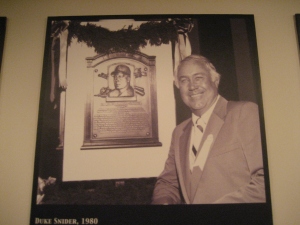
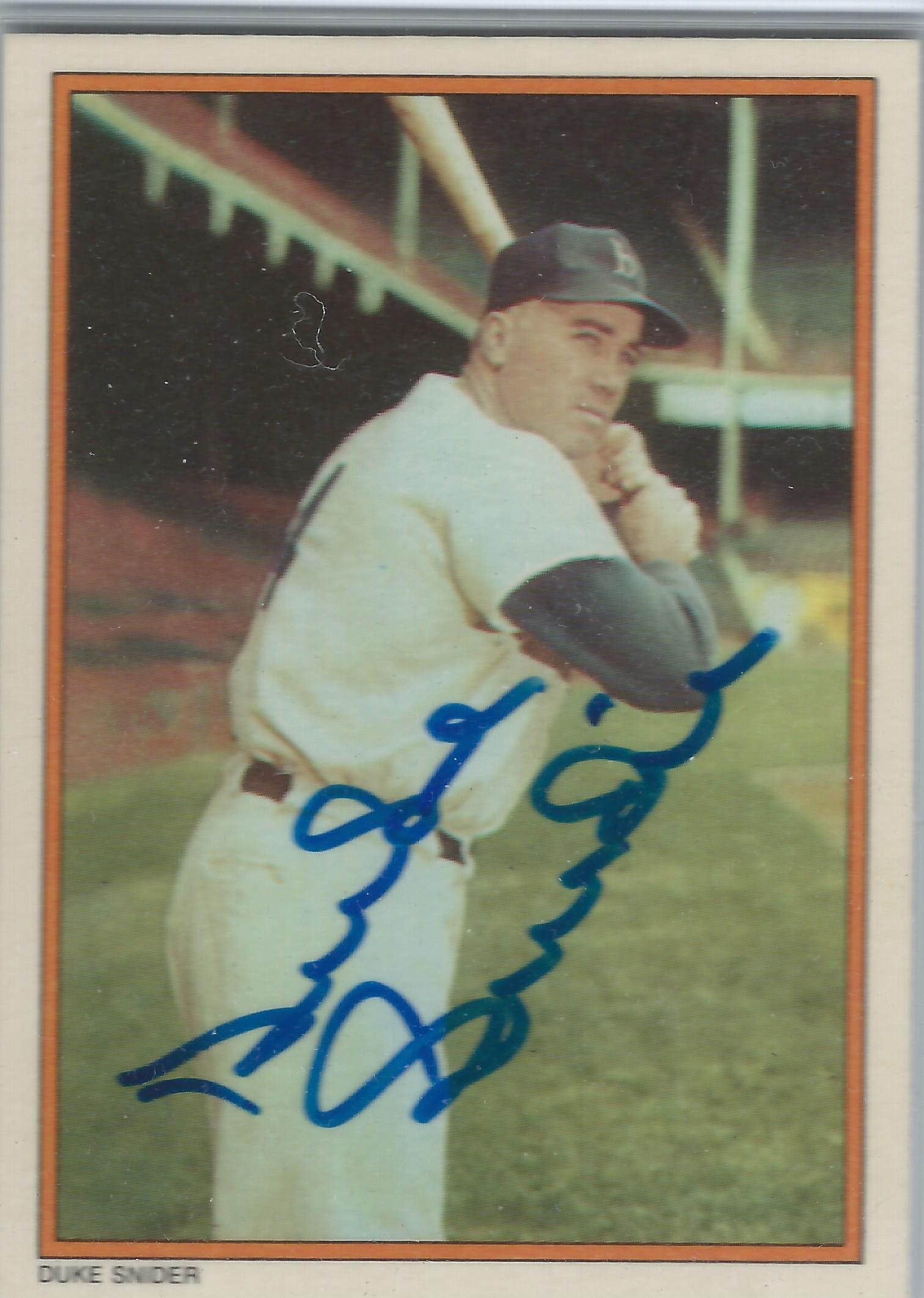
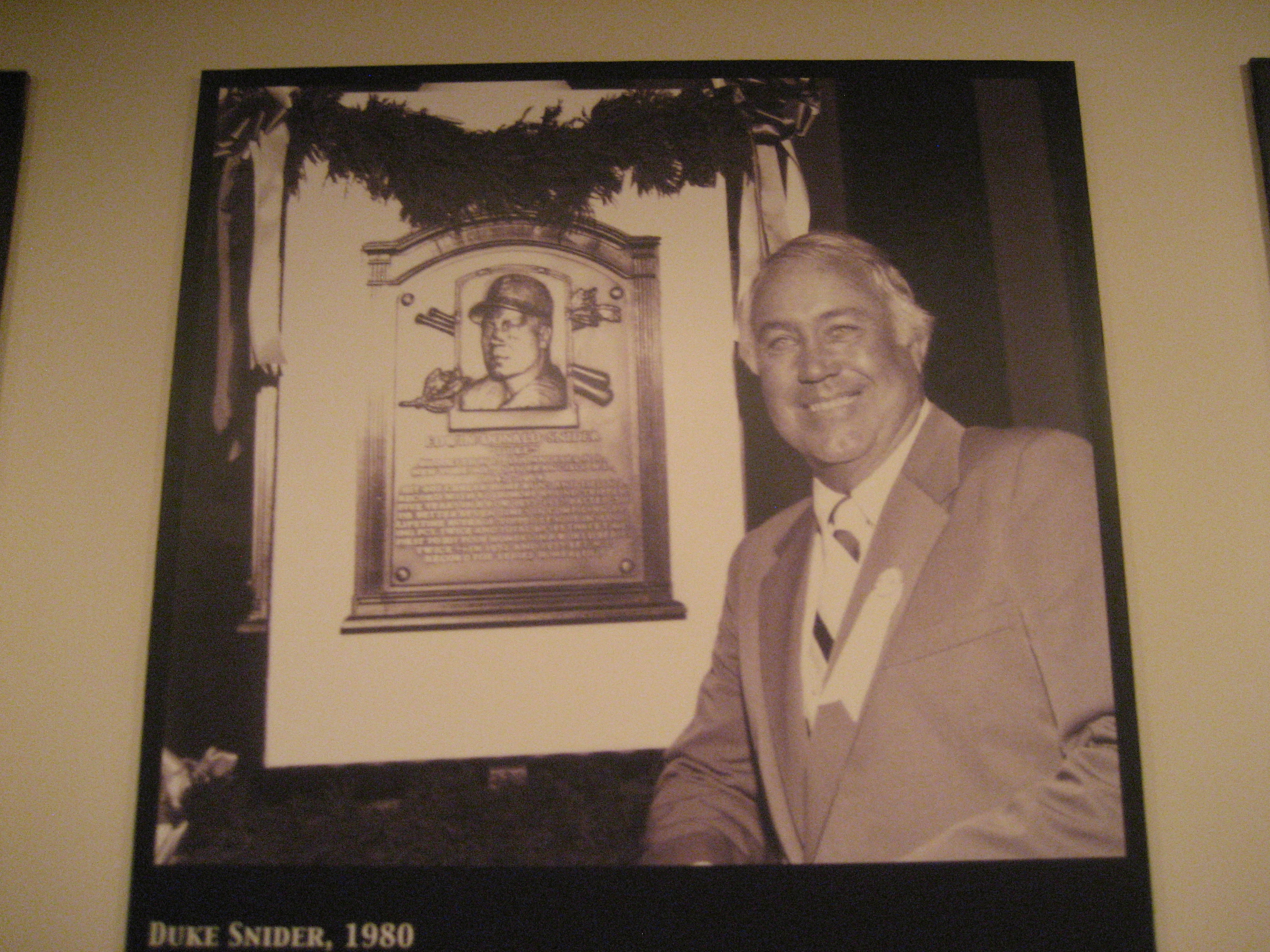
Favorite Player #5: Duke Snider

Songwriter Terry Cashman put out a song in 1981 called Talkin’ Baseball in which he mentioned the names of many ballplayers.  Having grown up in New York City, he and his friends were enamored with the center fielders for the New York Giants, New York Yankees, and Brooklyn Dodgers: Willie Mays, Mickey Mantle, and Duke Snider.

During his song, Cashman kept singing about “Willie, Mickey, and the Duke.”

Duke Snider was a left-handed, power-hitting center fielder for the Dodgers.  As a kid, I read an article where he noted that he had hit 4 home runs in the World Series against the Yankees on 2 occasions.  That impressed me!
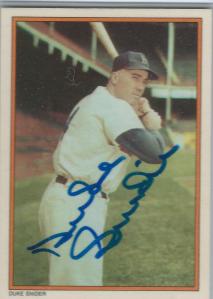
Duke Snider Signed Card

When the Dodgers moved from Brooklyn to Los Angeles, the Duke came along.  For years, he lived in nearby Fallbrook.

He hit 407 lifetime home runs – 40 or more 5 years in a row – and was elected to the Hall of Fame in 1980.
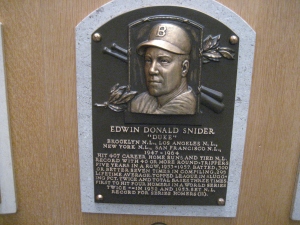
Trip to New York Sept. 20-22, 2010 433Trip to New York Sept. 20-22, 2010 546

In 1988, I met Snider at a baseball card convention.  The Duke was dutifully signing whatever people put in front of him until I mentioned something I had just read in his autobiography The Duke of Flatbush.
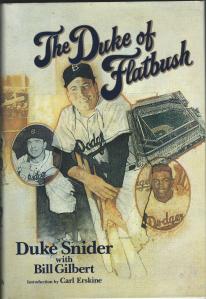
Duke Snider Book Cover

Snider mentioned that he had invited Christ into his life in 1979 and that he and his wife regularly attended worship services and Bible study at their church in Fallbrook.

When I brought this up, Duke stopped signing, brightened up, and talked to me for a few minutes about his faith in Christ.  He and his wife had become involved with The Torchbearers ministry and he told me they had flown to England to receive teaching from Major Ian Thomas.

I can’t remember much else of that conversation, but I’ll always treasure that time … and I look forward to resuming that conversation someday!

Favorite Player #4: Ty Cobb

Ty Cobb hit .367 over his 25-year career, winning 12 batting titles, stealing 892 bases, and amassing 4, 191 hits.

He also made a truckload of enemies.  Some people believe that Cobb was the meanest player who ever lived.

Normally I don’t like players who are rude and inconsiderate.  I knew someone who used to sell newspapers in downtown Menlo Park, California, and he said that Cobb regularly bought a paper from him – and was nasty.  (Cobb lived in nearby Atherton for many years.)

But I have 3 reasons for still making Cobb one of my favorites:

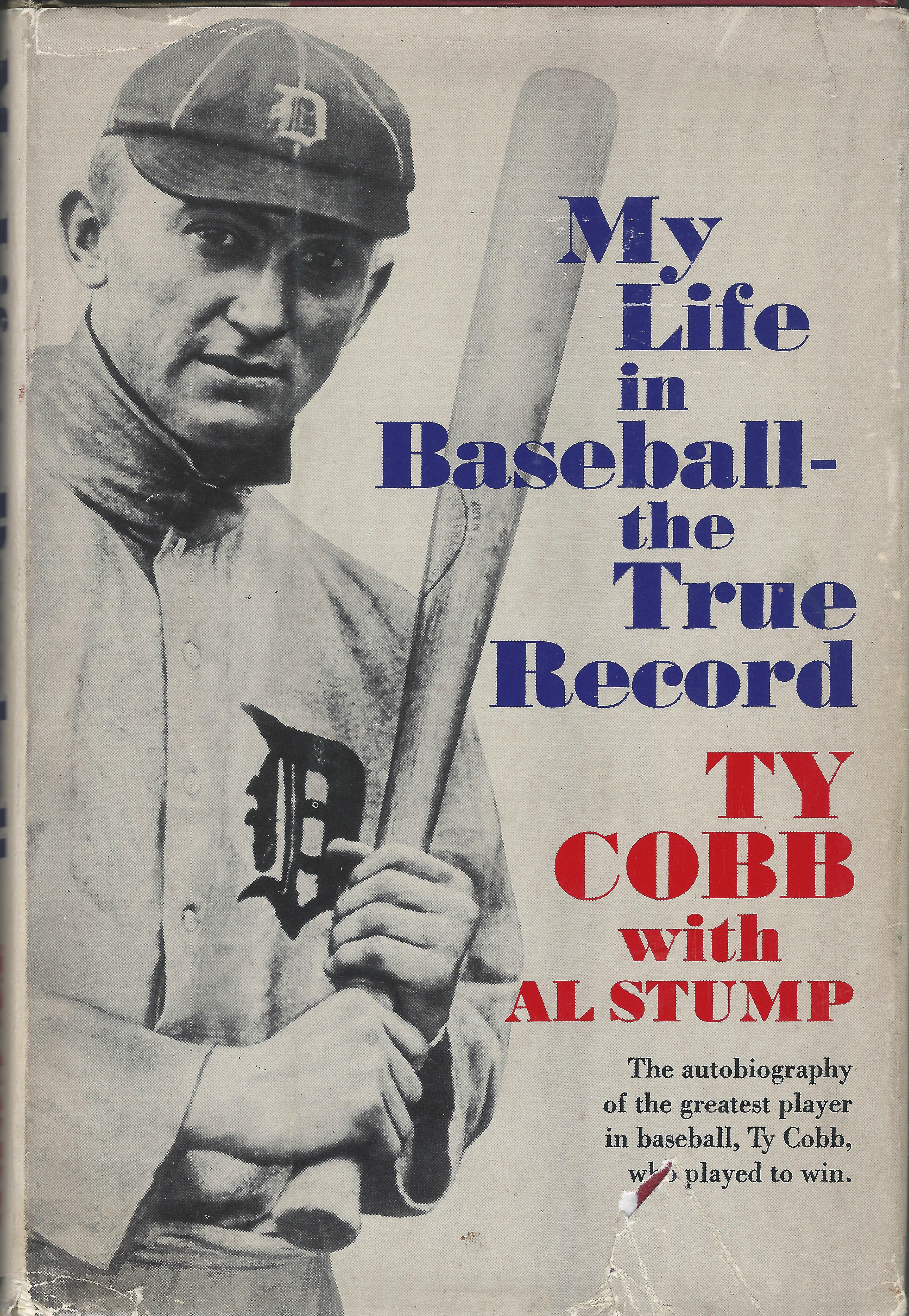
*As a kid, I read his autobiography My Turn at Bat, and learned a lot about base running which I incorporated into my game.
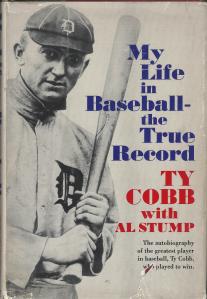
Ty Cobb Book Cover

*His mother accidentally shot his father (she thought he was an intruder), and Cobb worshiped his father.  That wound stayed with him the rest of his life and affected his personality.

*Cobb mellowed somewhat after his playing days and became good friends with Babe Ruth – whom he formerly hated – by playing golf together as documented in the book Ty and the Babe.

Ty and the Babe Book Cover

I admired Cobb because he used his brains as much as his talent, and because I was never a big kid, Cobb helped me learn how to win by thinking, not just by slugging.

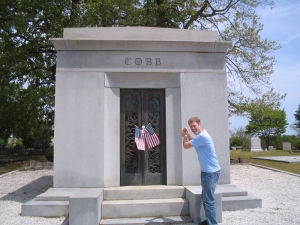
Seven years ago, my son Ryan and I took a trip through the South, and we stopped in Royston, Georgia, where Cobb grew up.  We visited the Ty Cobb Museum and his tomb just outside town.

Jim and Ryan Southern Trip 054 Jim and Ryan Southern Trip 050 Jim and Ryan Southern Trip 047Jim and Ryan Southern Trip 038 Jim and Ryan Southern Trip 036Jim and Ryan Southern Trip 059

When I was ten years old, I found a gospel tract at my grandfather’s church in Chicago.  The tract stated that Ty Cobb had received Christ at the end of his life.  While I’ve never seen this bit of information verified, I hope it’s true.  (Mickey Mantle received Christ a few days before his death as well.)  If so, maybe heaven will truly be a “Field of Dreams.”

Favorite Player #3: Willie Mays 

There are many people who believe that Willie Mays was the greatest all-around ballplayer who ever lived.  (Ken Griffey Jr. and Barry Bonds are also in the conversation.)

He won 2 Most Valuable Player Awards … hit 660 home runs … and could beat you with his bat, glove, or legs.
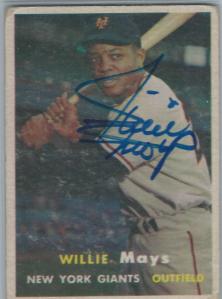
Willie Mays Signed 1957 Topps

As a kid, my brother John and I played fast-pitch with a tennis ball in our backyard.  He was the Dodgers … I was the Giants … which meant that I got to be Willie Mays.

Even though I was a Dodger fan, I’d check the box scores every day to see how the Say Hey Kid had done the previous day.

In early 1968, I took a picture of Willie and John inside the lobby of the Grand Hotel in Anaheim.  We have it … somewhere.  I’ll post it if I can ever find it.

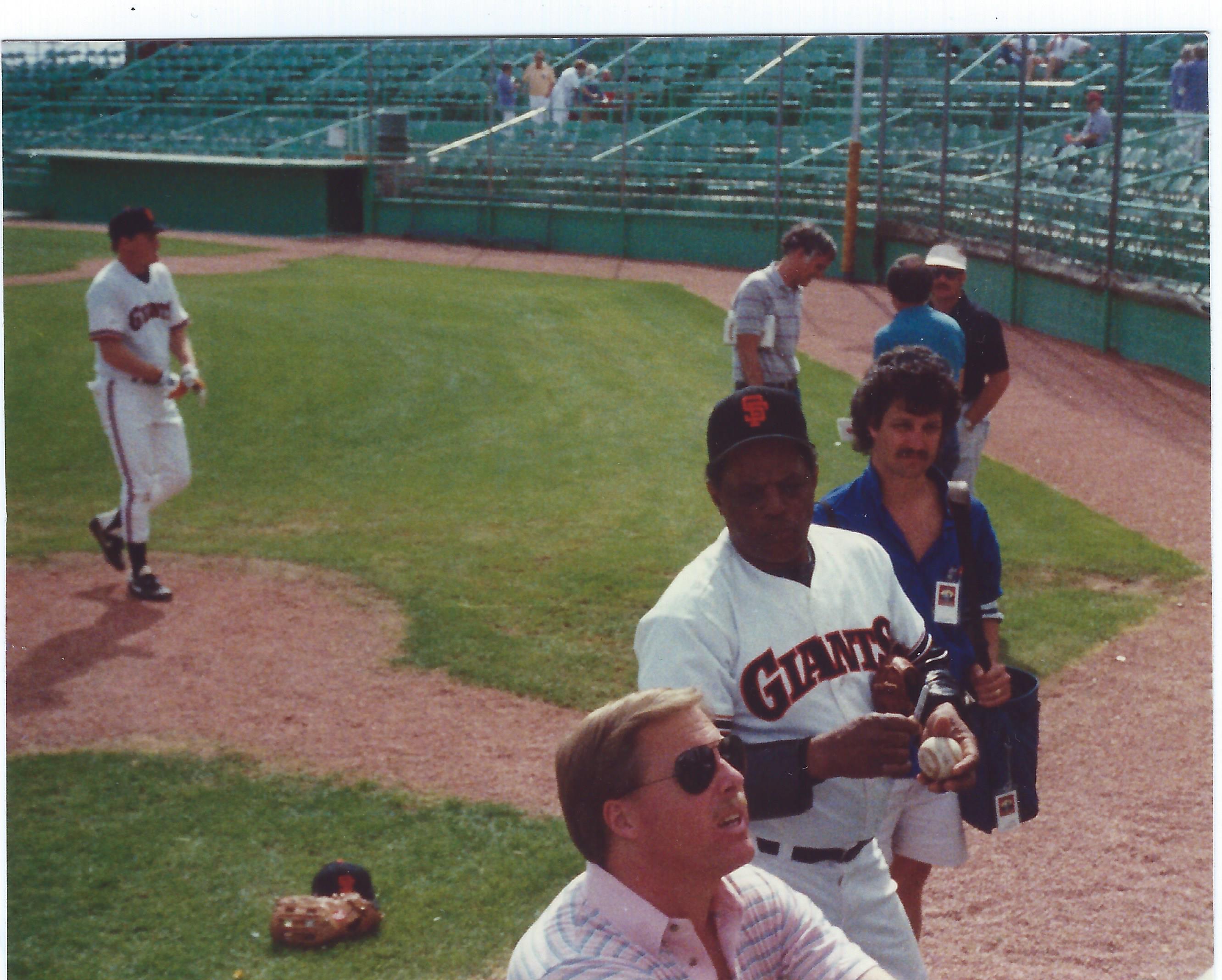
I saw Willie in various venues over the next several years, but he became increasingly grouchy.
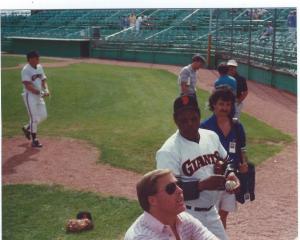
Willie Mays Signing Autographs

It’s got to be a burden to be so visible … and to be considered by many to be the greatest player who ever lived.  (I’m posing with his plaque at the Hall of Fame in Cooperstown, New York.)
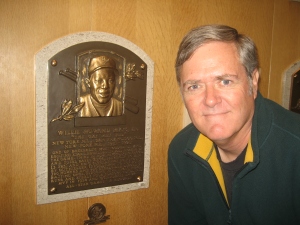
Trip to New York Sept. 20-22, 2010 436

I got to see him play in person on several occasions … and plan to tell my grandsons all about it!

Favorite Player #2: Sandy Koufax

Growing up in Southern California, I became a Dodgers’ fan, cheering for Maury Wills, Don Drysdale, Tommy and Willie Davis, and anyone wearing Dodger Blue.

But the greatest Dodger of them all was Sanford Koufax.
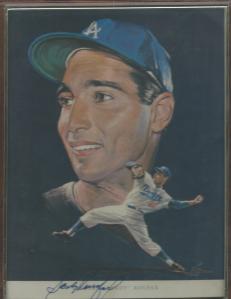
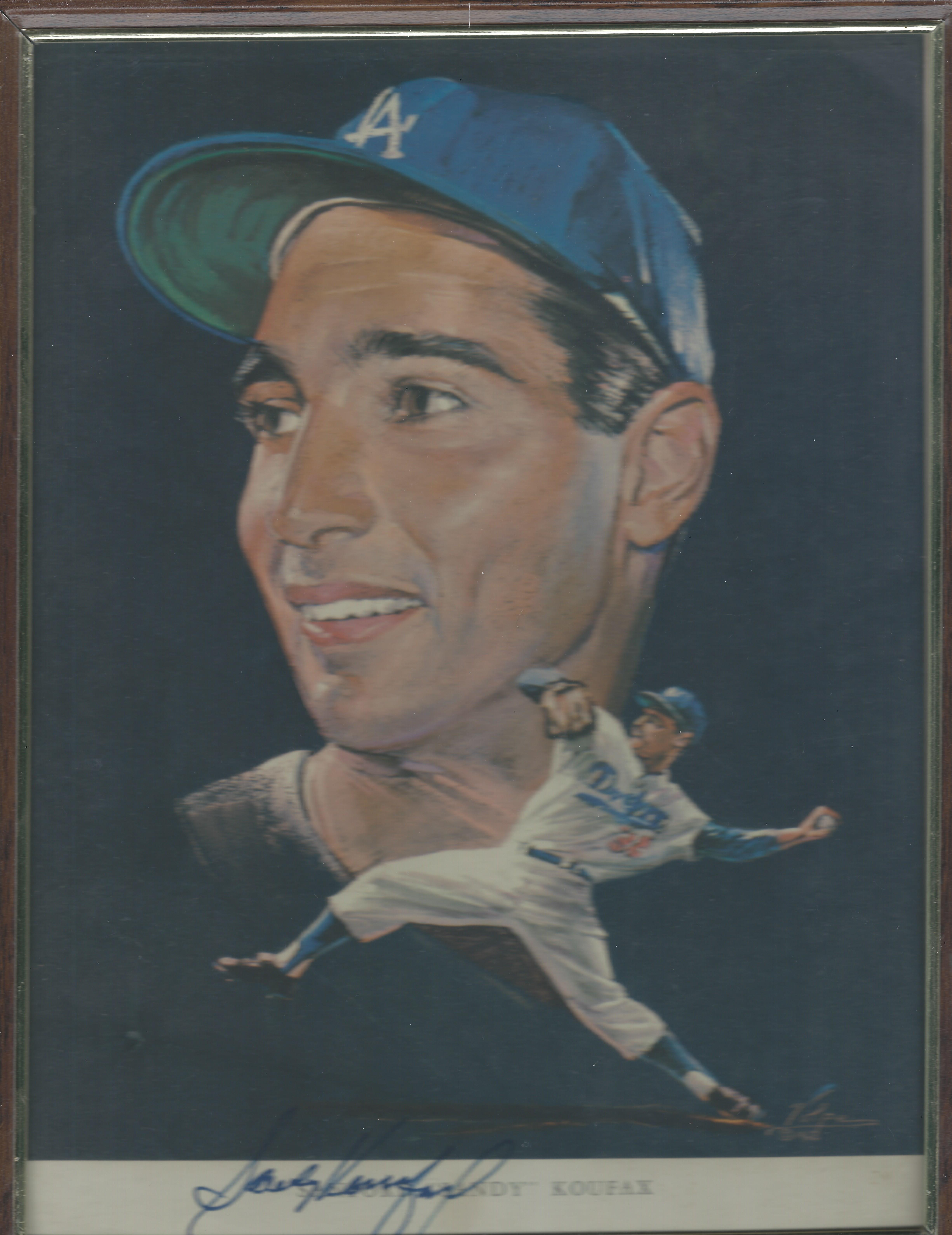
Sandy Koufax Signed Photo

He won 5 Earned Run Average titles in a row along with 3 Cy Young Awards.

I saw him pitch in-person twice: a 3-hit shutout against the Houston Colt 45s (now the Astros) in 1963, and a 4-2 pennant-clinching victory against the Milwaukee (now Atlanta) Braves in 1965.

In that 1965 game, Koufax set the all-time record for strikeouts in a season: 382.

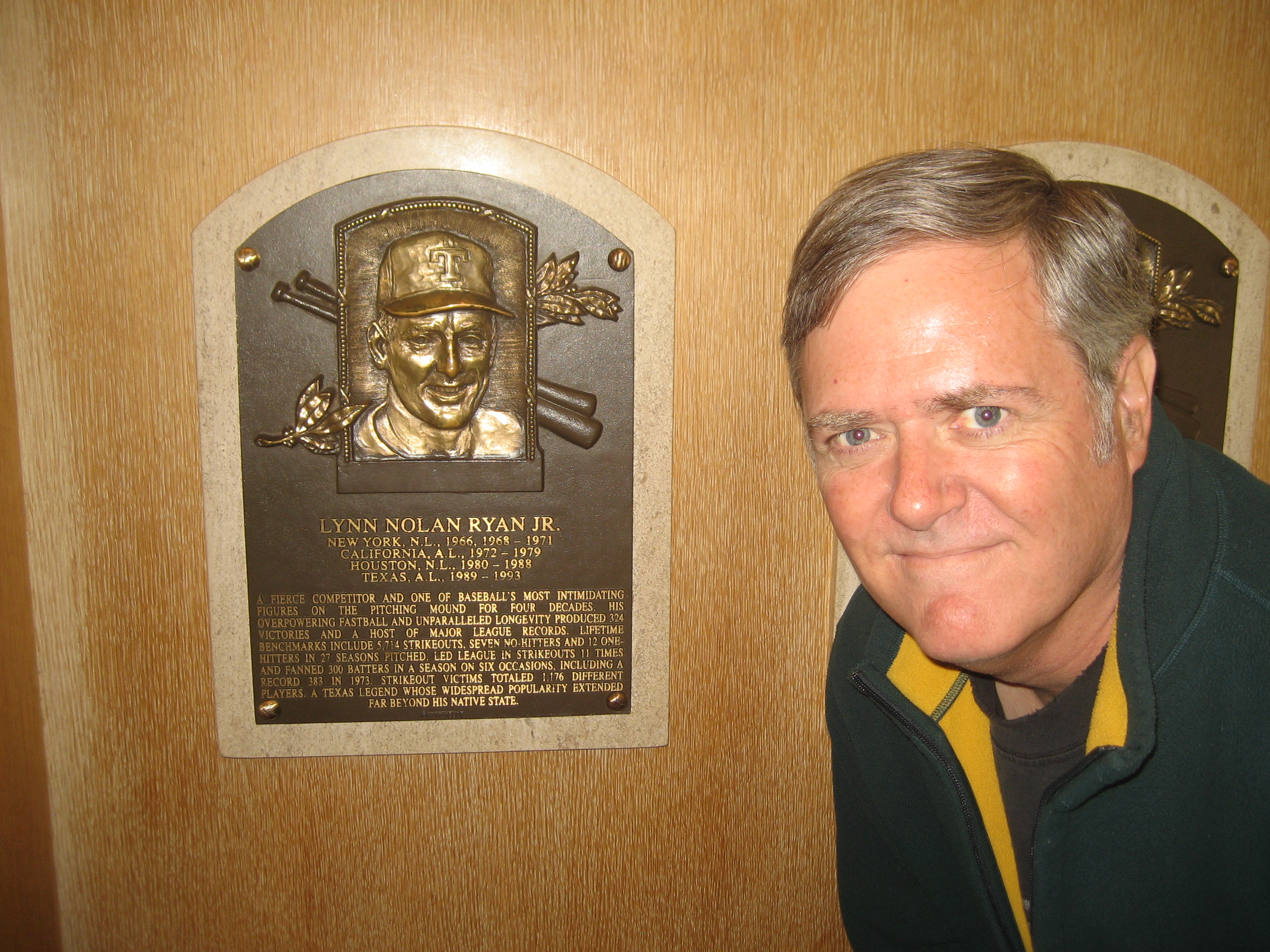
Koufax won 25 games in 1963 … 19 in 1964 … 26 in 1965 … and 27 in 1966.  Here is his plaque at the Baseball Hall of Fame in Cooperstown:
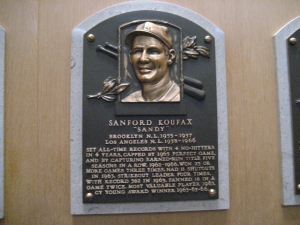
Trip to New York Sept. 20-22, 2010 527

Every time Koufax pitched, you wondered if he was going to throw a no-hitter.  He did throw 4 no-hitters … the last one a perfect game.  (My brother John and I listened to it on the radio.)

I can still recall sitting in English Class during the Seventh Game of the 1965 World Series.  Koufax had shut out the Minnesota Twins 7-0 in Game 5, and was asked by Manager Walter Alston to pitch Game 7 on only two days’ rest!

In our day, this would never happen with a starting pitcher.

What did Koufax do?  He shut out the Twins 2-0 …  striking out 10 … and the Dodgers were again World Champs.  I bought that game on iTunes.  Best $1.99 I’ve ever spent!

Koufax was a magnetic pitcher but came off as a humble and considerate person.  He was easy to root for because he seemed surprised by all his success.
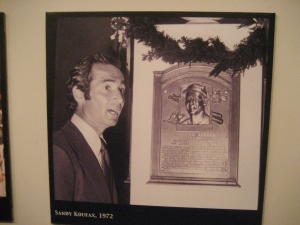
Trip to New York Sept. 20-22, 2010 544

When my parents gave me a signed copy of his autobiography one year, it became one of my most prized possessions.

As great as Koufax was, there’s someone I came to love even more:

Favorite Player #1: Nolan Ryan

The first time I saw Nolan Ryan pitch in person, he hit 3 San Francisco Giants in an exhibition game in Palm Springs in 1972.

Like many pitchers, Ryan threw hard but couldn’t control where the ball was going.

He played several seasons for the New York Mets, and then was traded to the California Angels after the 1971 season.

Somehow, Ryan started putting things together in 1972.  Every time I opened the Santa Ana Register, Ryan had pitched another shutout … and struck out a bunch of guys.

In 1973, Ryan threw 2 no-hitters.  He threw 7 in all … the all-time record, surpassing Sandy Koufax’ record of 4.
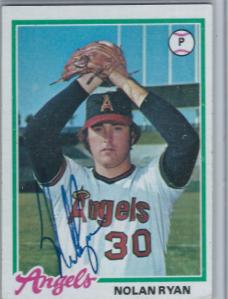
Nolan Ryan Signed 1978 Topps

After we got married, Kim and I lived in Santa Ana and later in Anaheim.  When Ryan pitched, I listened to every game.  He often had a no-hitter through six innings.

I’d ask Kim, “Can I go to the ballpark?”  (She always said yes.)  Back in the mid-1970s, I could drive to the stadium … park my car in the lot for free … and then walk right in when the ushers opened the gates after the seventh inning.

I always hoped to see Ryan throw a no-hitter in person, but I never did.

However, I did get a game ball from one of his victories.
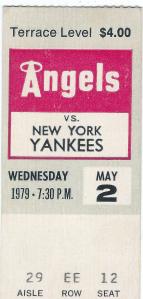
Ticket Stub May 2, 1979

On May 2, 1979, Ryan defeated the Yankees in Anaheim.  Rod Carew made the final putout for the Angels, and as he approached the dugout, my friend John asked Carew for the ball.

Carew tossed it to John, who ran up the aisle and gave it to me.

In September 1973, Ryan pitched on a Thursday night against the Minnesota Twins.  Many of my friends went to the game that night.

Ryan need 15 strikeouts to tie Sandy Koufax for the all-time record … and 16 to beat the record.

After 9 innings, Ryan had 15 strikeouts … and nothing left in his gas tank … but he got that 16th strikeout on a high fastball thrown past Rich Reese … and he ended up with 383 strikeouts in a single season, the all-time record.

Ryan went on to become a legend.  When he was eligible for the Hall of Fame, he received the second highest percentage of votes in history.
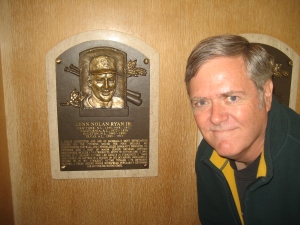
Trip to New York Sept. 20-22, 2010 458

Whenever I encountered Ryan, he was cordial.  Kim and I once drove to Anaheim Stadium and asked Ryan to sign two posters before a game.  They hung on my wall for years.

Back in 1979, I drove down to Palm Springs and caught an Angels’ exhibition game.  Ryan was just walking around the stands and then exited the ballpark.

Nobody knew who he was.

I followed him and asked him to pose for a picture for me, which he did.  If you see photos of him today, he’s aged a lot.

Nolan Ryan Spring Training 1979

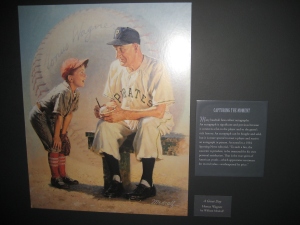
My father was a pastor, but he was also a big baseball fan.  He used to bring my brother and me packs of baseball cards.  And when Dodgers like Roger Craig, Don Drysdale, and Maury Wills made personal appearances in our area, he drove us to meet them and get their autographs.

When I was at Cooperstown a few years ago, I took a picture of this painting of a small baseball fan asking for the autograph of the great Pirate shortstop Honus Wagner.  If you click on the picture and read the text, you’ll understand why I’ve enjoyed having a connection to these players for so many years.  Thanks for reading!
Trip to New York Sept. 20-22, 2010 308


Read Full Post »

« Newer Posts - Older Posts »