When my father was a kid, he and his brother Carl sneaked into the top floor of a hotel where a large group of major league baseball players were meeting … probably in the late 1930s.
I’m told they got the autographs of Babe Ruth and Lou Gehrig, among others, but that their mother eventually threw them out.
My grandmother may not have had much use for those autographs, but my mother knew what baseball meant to me. So when I wanted to get autographs of players in my hometown of Anaheim … or in downtown Los Angeles … she let me go … nearly always with a friend or two.
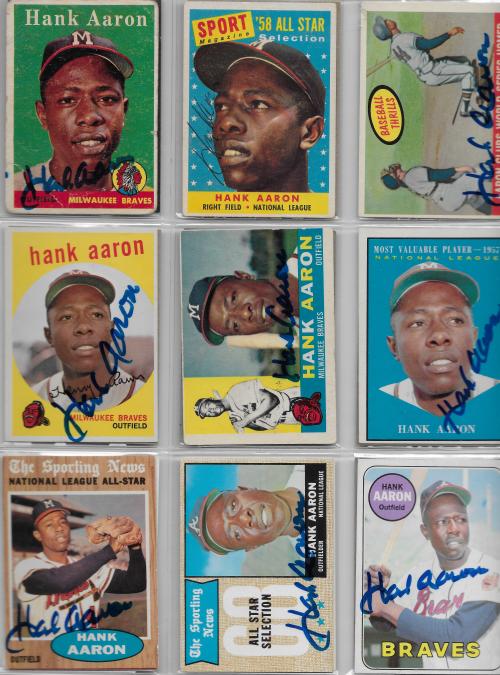
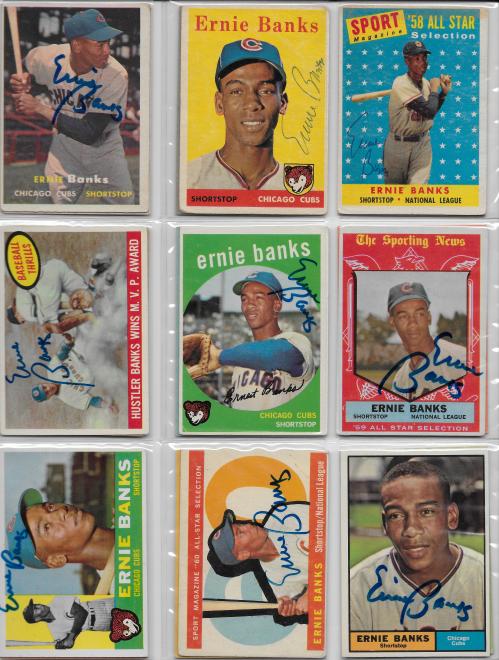
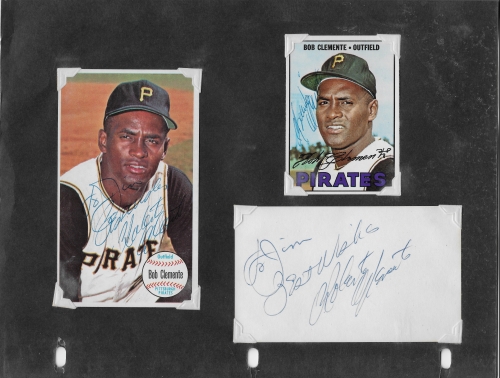
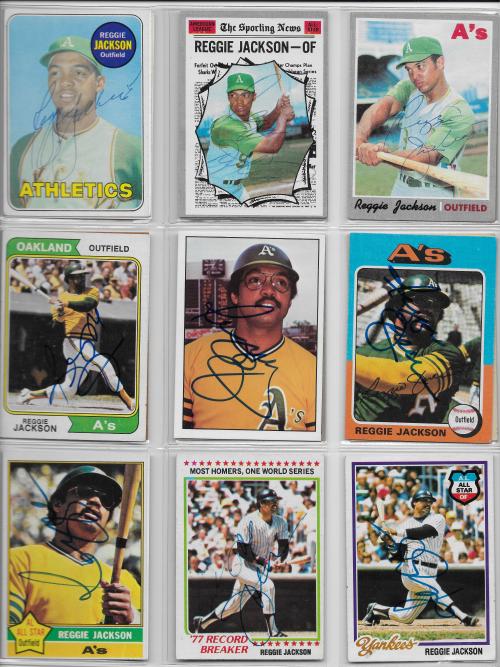
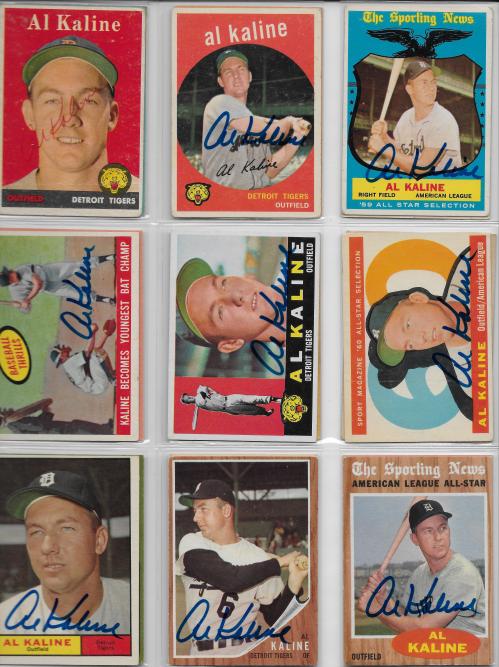
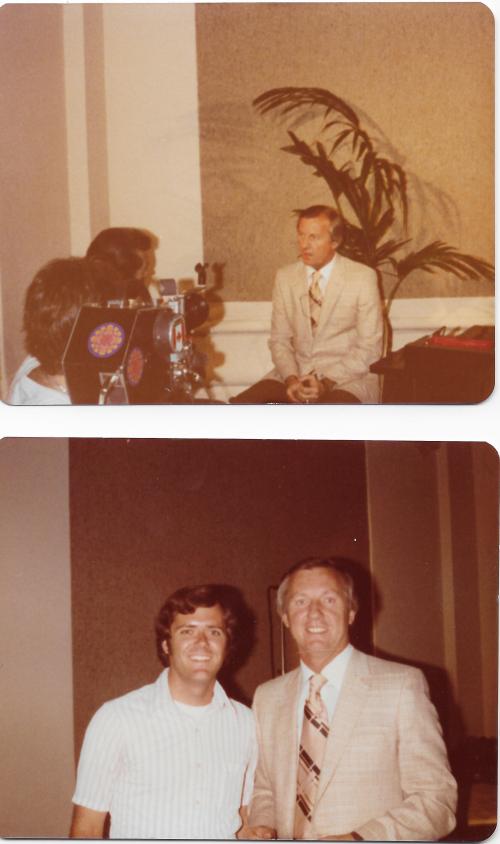
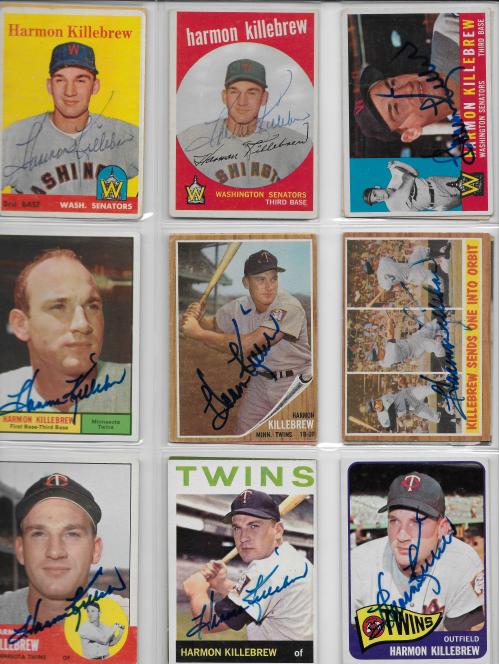
Last time, I wrote about experiences I had with six baseball Hall of Famers from the 1960s: Hank Aaron, Ernie Banks, Roberto Clemente, Reggie Jackson, Al Kaline, and Harmon Killebrew.
Here are encounters with six more players, including the three most celebrated superstars of the 1960s:
Seventh, Sandy Koufax.
I can’t begin to tell you how much Sandy Koufax meant to me as a kid growing up in the greater Los Angeles area.
Due to Walter O’Malley’s stinginess, the Dodgers only televised nine games per year … all from Candlestick Park in San Francisco … so I could only see Koufax pitch on television three times a year, at best … unless the Dodgers went to the World Series, which they did three times in four years.
I did see Koufax pitch twice in person: a three-hit, 3-0 shutout against the Houston Colt 45s (now the Astros) on June 14, 1963, and a 4-2 victory against the Milwaukee Braves on October 2, 1965 … a game that clinched the pennant for the Dodgers.
Koufax pitched four no-hitters, one each year from 1962-1965 … won five consecutive ERA titles … set the (then) all-time record for strikeouts in a season with 382 … twice struck out 18 batters in a game … and had a mystique about him that’s unique even for today.
In 1966, he won 27 games and lost only 9 … and then retired at age 30 due to injuries.
I once saw Koufax on the field before a game and yelled “Sandy!” … from the Bob Uecker seats … and he actually looked up toward me.
Following the 1965 season, Koufax published an autobiography appropriately titled Koufax. My parents gave it to me for Christmas … personally signed.
I couldn’t believe it … and still have it.
In 1967, Koufax became an announcer for the Game of the Week on NBC, and he was in Anaheim for the All-Star Game. The night before the game, I got his autograph in my autograph book.
Although he threw left-handed, Koufax batted … and signed … right-handed.
Then I went home for dinner … begging to be taken back to the hotel … and grabbed a mint condition 1955 Koufax rookie card for him to sign if I saw him again that night.
I did see him … and he did sign it … and this may have been the first baseball card I ever got signed.
I have not taken it out of this binder for nearly 50 years.
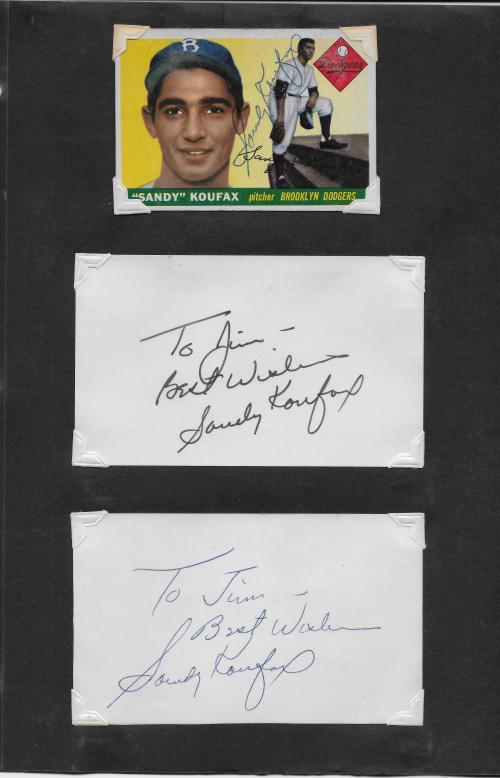
Of course, all this was before vintage cards … or rookie cards … were worth anything monetarily.
I’ve been told that by getting the card signed, I have greatly reduced its value, but I never collected cards with the idea of reselling them, and I never got autographs to sell them, either.
Koufax was a good signer through the mail in the early 1970s, and I was able to get all my cards signed that way, although I risked losing some increasingly valuable cards.
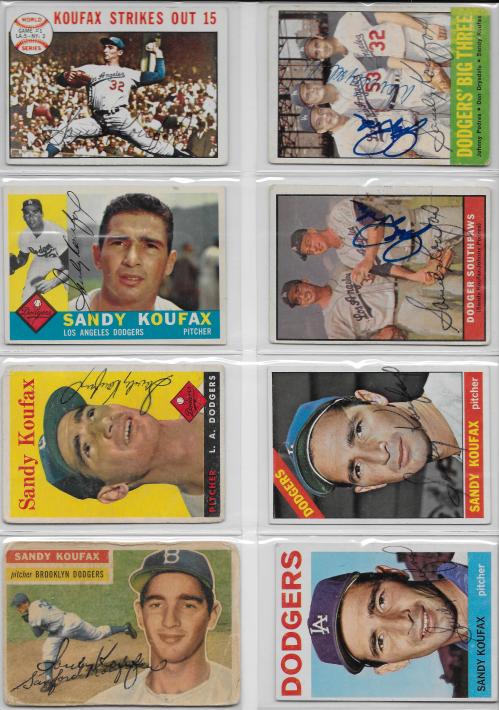
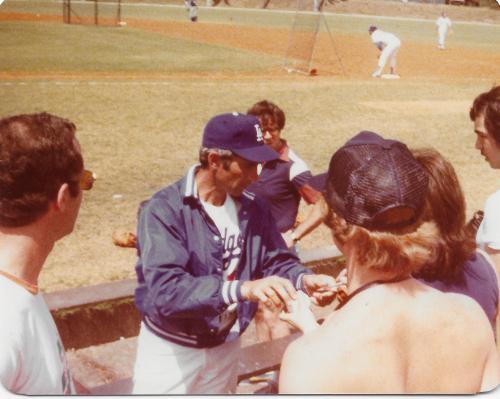
The only other time I saw Koufax in person was at spring training in Vero Beach, Florida, in 1980. My brother and I went together for a week and had an absolute blast.
Here’s Koufax being mobbed by fans:
Sandy is still alive and in his early 80s. Jane Leavy’s book Sandy Koufax is a terrific read, as is Michael Leahy’s book The Last Innocents, which takes a close look at seven Dodgers’ players from the 1960s, including Koufax.
Eighth, Mickey Mantle.
The first day I ever got autographs at a hotel was at the Grand Hotel in Anaheim in April 1967.
The New York Yankees were in town, and I brought along an autograph book that had been signed by friends from fifth and sixth grade … I kid you not.
When we arrived at the hotel, there was a huge window looking into the coffee shop, and there sat Mickey Mantle … eating an ice cream sundae.
Upon spotting Mantle, some kids rushed into the coffee shop, but Mantle said he would sign when he came out … which he did … in my autograph book.
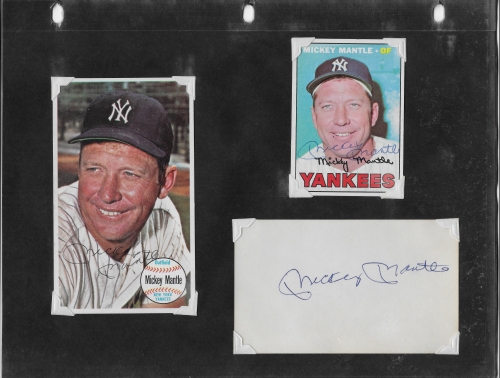
Over the next two years … 1967 and 1968 … Mantle signed at least five times other times for me … once every road trip. (The Yankees came to Anaheim three times a year back then.)
Here are three of those signatures (remember, we didn’t have Sharpies back then):
Here are a few Mantle stories:
*A friend of mine joined me at the hotel one day to get Mantle’s autograph, and when he did, Mantle made a snide comment about his appearance, which ended up circulating all around our Jr. High school.
*My brother John and another friend decided to ride the central elevator at the Grand Hotel (which they weren’t supposed to do) and when the elevator stopped at a certain floor, Mantle got on. When they asked him for his autograph, he yelled at them.
*A kid in a wheelchair once waited for Mantle to emerge from the hotel, and when he did, Mantle went right up to him, but the kid didn’t have a pen for Mantle to sign anything with. I quickly offered my pen, and when Mantle was done, he asked, “Whose pen is this?” I said, “Mine,” and Mantle signed my item next.
*I wasn’t there, but I was told that a fan wanted a picture taken with Mantle in front of the small fountain outside the hotel. The fan was so nervous that he fell in the fountain.
*My brother’s friend Mark joined us one afternoon to try and get Mantle’s autograph. When Mantle came out of the hotel, he signed for my brother, then boarded the bus. When we motioned for Mantle to open the bus window, he did. When Mark asked him for his signature, Mantle mistakenly told him, “I already signed for you,” and signed another one for my brother … which he turned and gave to Mark.
The last time I saw Mantle was before an Old-Timers game at the Sheraton Hotel in Anaheim around 1971. Mantle took my card … turned and stared at me for a moment … and then signed it.
He and Johnny Bench were the most intimidating players I ever asked for autographs. Maybe Bench is nice now (as he seems to be on a TV commercial), but he was tough during the latter part of his playing days.
According to former teammate Bobby Richardson, Mantle became a Christian in the closing days of his life in 1995, so I look forward to seeing the Mick again.
Ninth, Juan Marichal.
Growing up a Dodgers fan, the San Francisco Giants were their rivals … and when the Dodgers went to Candlestick Park, they could not hit Giant pitcher Juan Marichal.
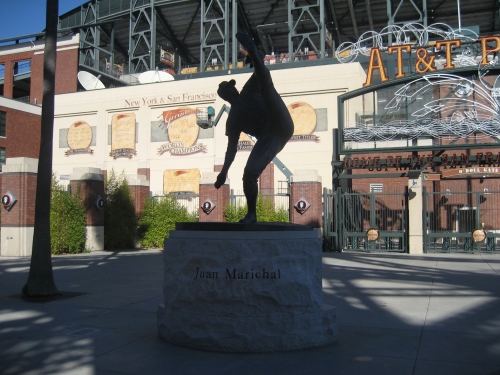
Marichal threw nine different pitches from three different angles (overhand, three-quarters, and sidearm) … a total of 27 different looks for a batter … but he was best known for his high leg kick, portrayed in this statue outside AT&T Park in San Francisco.
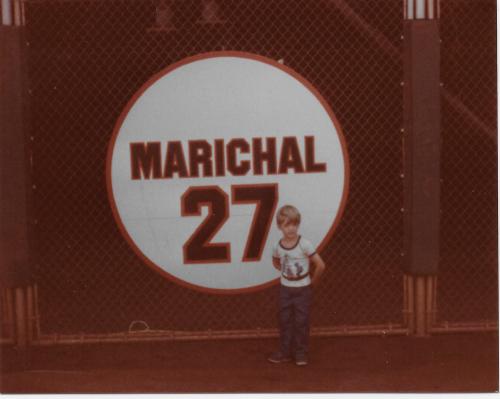
Believe it or not, the Giants used to hold a picture day at Candlestick Park in the early 1980s, and I got this picture of Ryan in front of Marichal’s number on the outfield fence.
The first time I got Marichal’s autograph was in 1968 at the Grand Hotel when the Giants came to Anaheim for an exhibition game on a Saturday before the season started.
The next time I saw him was at the Ambassador Hotel in Los Angeles around 1971 … the same hotel where Bobby Kennedy was shot in June 1968. Marichal looked at me and asked, “Why don’t you go and get a job?” (I worked for McDonald’s at the time but got off work to go and see the Giants.) He usually signed only one item back then.
But the following year … 1972 … Marichal changed his disposition and signed everything in sight!
(The typical pattern is that players start off as good signers … become grumpier after gaining fame or stardom because average people, not just baseball fans, start to recognize them in public … become even worse as they near retirement … and then after a year or two out of the game, become better signers once again.)
Besides the “job” comment, I had only two other encounters with Marichal.
In 1983, Marichal appeared at a card show in Santa Rosa, California, and the autographs were only $2.50 each. Marichal signed a lot of cards for me that day, and shook my hand afterwards. He couldn’t have been nicer.
Several years later, Marichal appeared at a baseball clinic for kids several miles from my house, and he generously signed six cards.
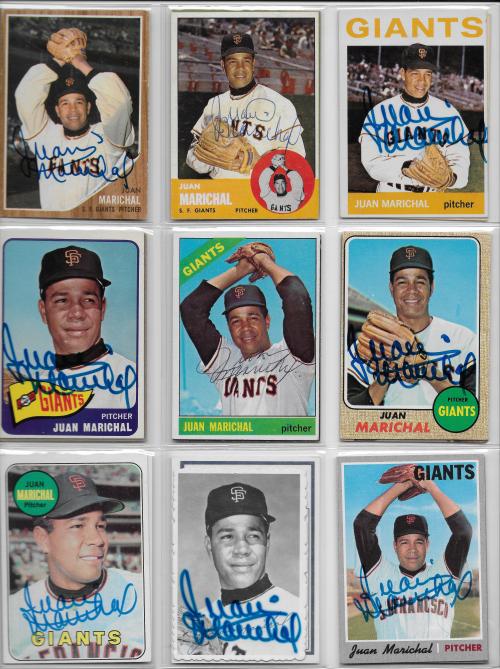
Marichal may be best known for clubbing Dodger catcher John Roseboro with a bat at Dodger Stadium in the heat of the pennant race in August 1965.
John Rosengren has written an inspiring book about that incident and the subsequent relationship between the two men called The Fight of Their Lives: How Juan Marichal and John Roseboro Turned Baseball’s Ugliest Brawl into a Story of Forgiveness and Redemption. I keep meaning to write a blog about the book and hope to get it done sometime.
Tenth, Willie Mays.
Willie Mays is considered by many baseball experts to be the greatest all-around player in the history of the sport. He played with passion, charisma, and daring.
And he was my brother John’s favorite player.
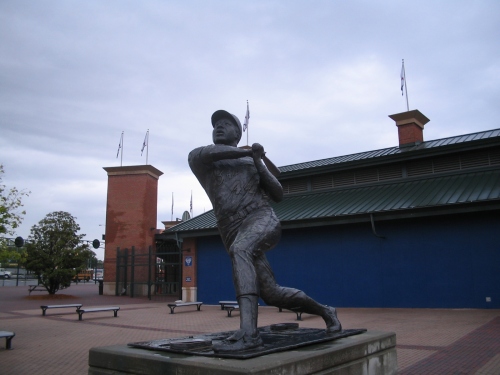
The first time I got Mays’ autograph was at the Grand Hotel in 1968 … the same occasion when I first got Marichal’s autograph.
When the players came off their bus, my brother and I followed Mays into the hotel, and I took a photo of the two of them. I still have it … somewhere … but the flash didn’t work, and Mays made a comment about it at the time.
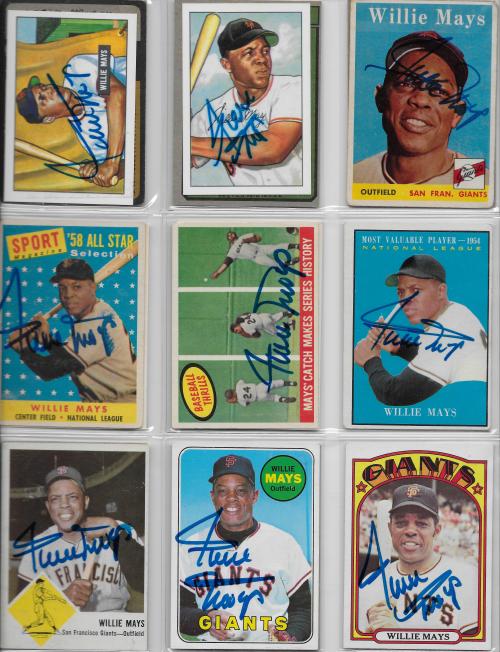
I was fortunate enough to get his signature three times that day … unlike Mantle, Mays never looked at who he was signing for … but all three signatures were different. His autograph didn’t become uniform until he started signing at shows years later.
The next time I got his autograph was at spring training in Palm Springs in 1971. My friend Dave and I went to the Giants hotel but we saw Mays slip away while wearing his uniform. We jumped in Dave’s Volkswagen, followed Mays to the park, and got his autograph just as he was going into the clubhouse … but his signature (which I still have) was lousy.
This sets up the craziest autograph story I’ve ever experienced.
Remember how I mentioned earlier that the Giants stayed at the Ambassador Hotel in Los Angeles when they came to town?
Well, one time in 1972, five of us went to the Ambassador in my friend Dave’s VW bug. We got the autographs of most of the Giants … they came out the front for a cab or to take the bus … but we missed Mays … who usually rented a car, parked out back, and drove to Dodger Stadium himself.
If we waited for Mays, we’d miss the other Giants, and we didn’t want to do that … but maybe, we thought, we can get him after the game.
However, the Giants boosters were also staying at the hotel, and somehow, one of our group found out the room number where Mays was staying … information that didn’t interest me at all.
So after the game, Mays came out of Dodger Stadium, signed maybe one autograph (with a huge crowd surrounding him), got in his car, and took off.
Please understand that back in the early 1970s, the best way to get a player’s autograph was at the team hotel. You could write a player in the mail, but if he didn’t answer, you’d lose your valuable cards, and that was a tough risk to take.
I don’t remember who made the suggestion, but somebody said, “Hey, let’s see if we can catch Mays at the hotel.” So we drove to the Ambassador and waited … but there was no sign of Mays anywhere.
And then someone made this fateful suggestion: “Hey, I’ve got Mays’ room number. Why don’t we go up to his room and ask him to sign for us?”
I’m sure I said, “No! Bad idea! Let’s just go home.”
But what if Mays was really cool and signed for us?
Someone else prevailed, and the next thing I knew, two of my friends were knocking on the hotel room of Willie Mays … just after midnight.
Mays opened the door, and he was wearing maroon pajamas. He took a look at the five of us … I was hiding a bit down some stairs … and one of the five asked, “Willie, can we have your autograph?” Mays asked, “Who are you guys with?” My friend replied, “We’re with the Giants boosters, Willie. Can we have your autograph?”
As Mays peered into the hallway and saw five of us, he said, “I’m going to call the house man on you.”
We ran … down the stairs … into the basement … up some stairs … across the back lawn of the Ambassador … and found Dave’s VW. Dave peeled out down Wilshire Boulevard, and when he hit the Harbor Freeway, went 85 mph … as far from the Ambassador Hotel as we could get.
The next morning, I had a crew meeting at McDonald’s, and I kept waiting for the cops to come and arrest me.
Years later, I started a sermon with that story, and Dave … who also became a pastor … has used it as well.
While discussing this incident a few years ago, we both admitted that we’re still waiting for someone to come and arrest us for what we did to poor Willie 45 years ago.
Since that incident, I’ve gotten Mays’ autograph through two main venues: in spring training and at a card show (where his signature was only $2.50).
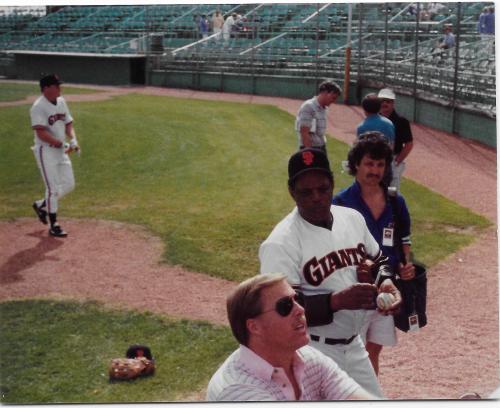
I once read where Mays said that everywhere he goes, if he signs one autograph, he ends up signing 100. I can’t imagine what it’s like to be so visible … and so popular … and Mays has gained a reputation as somewhat of a grouch over the past few decades.
And after what we put Mays through at the Ambassador Hotel, I can’t blame him.
Sorry, Willie.
Mays can hardly see anymore … if at all … and the last I heard, he charges $100 per autograph.
Eleventh, Willie McCovey.
McCovey played on the Giants with Marichal and Mays, and when Don Drysdale of the Dodgers pitched against him, McCovey absolutely murdered him.
Big Stretch became the Most Valuable Player in the National League in 1969 and hit 521 home runs in his career. He and Mays formed a powerful one-two punch.
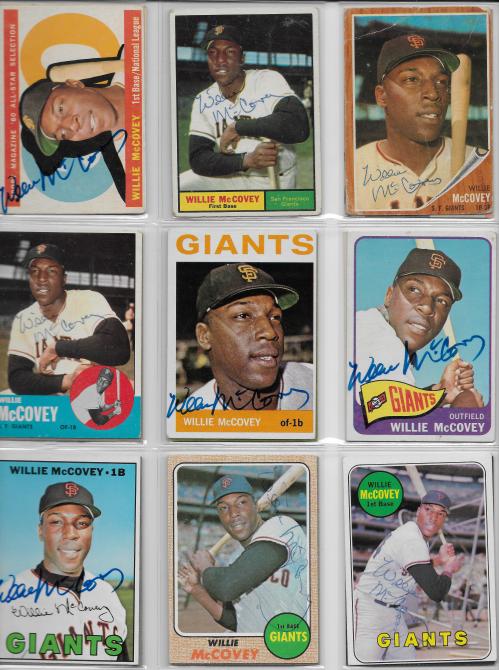
McCovey was always pleasant and would sign one item whenever we saw him.
One time, we left the Ambassador Hotel and followed the Giants’ bus all the way to Dodger Stadium. McCovey sat in the very back of the bus, and we saw his silhouette all the way to the ballpark.
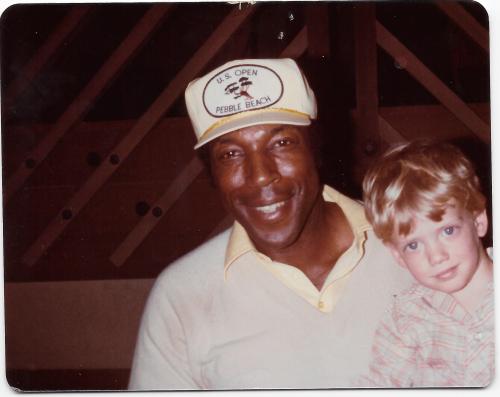
In 1982, McCovey made an appearance at the Old Mill Shopping Center in Mountain View, near our home in Santa Clara, and I took the whole family after church. Each autograph was only $1.00.
I took this picture of my son Ryan with McCovey:
After he retired from the Giants, McCovey held an annual golf tournament at the Olympic Country Club near San Francisco every November. Back in the 1980s, I went up there a few times and had a great time getting autographs. Baseball players and other celebrities (like Huey Lewis) would practice their drives and putts, then go to their golf carts and just sit there waiting to go to the first hole.
Some collectors would wait by a certain hole and wait for the golfers to finish before asking them to sign something, but I went early and got autographs while everyone was still loose … and happy.
When I was a pastor in Silicon Valley in the 1990s, a guy in the church did landscaping for McCovey at his home in Woodside. I asked him if he would ask McCovey if he’d sign a few things for me.
McCovey said no.
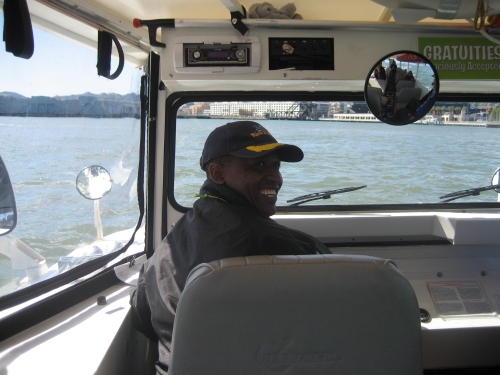
When the Giants built their new ballpark in south San Francisco, they named the cove behind the right field fence “McCovey Cove” in honor of Willie. Many years later, I had the privilege of riding in the cove in a Duck Boat … piloted by my pastor friend Peter Muthui from Kenya.
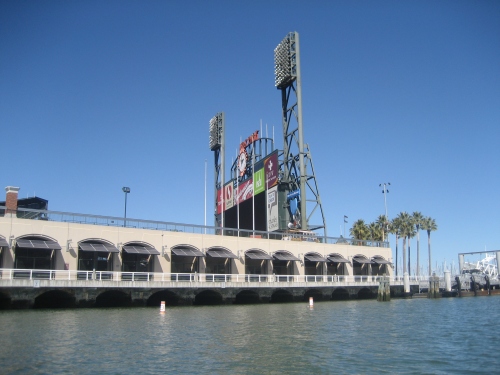
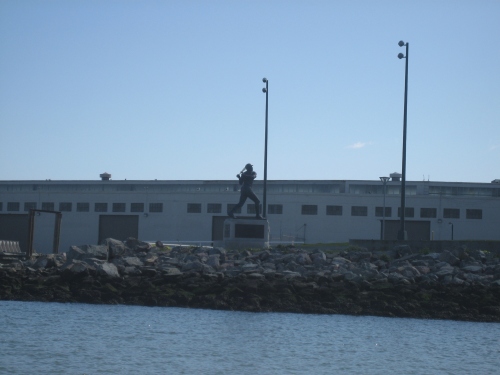
If you look closely at the photo below, you’ll see a statue of McCovey swinging a bat just above the rocks.
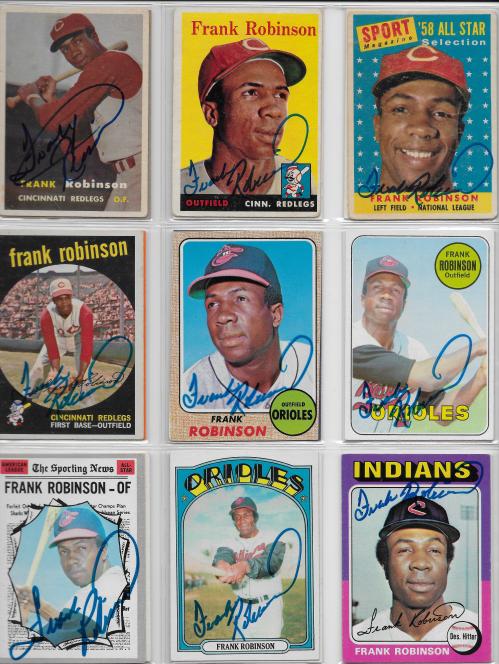
Finally, Frank Robinson.
Frank Robinson was the first player to win the Most Valuable Player Award in both the National League (1961) and American League (1966).
I first got his autograph at the Grand Hotel in 1967. I was by myself, and Frank was okay.
But Frank could be a bit on the mean side. With no one else around, I once asked him to sign his rookie card from 1957 in spring training as he was going from the parking lot into the clubhouse.
I can still hear him let out a yell … but he signed it.
Because he lived in Los Angeles, I saw him a few times at Lakers games in the late 1960s.
Frank was traded to the Dodgers in the early 1970s. One night, he came out to his car and signed for everybody … something I wasn’t used to seeing.
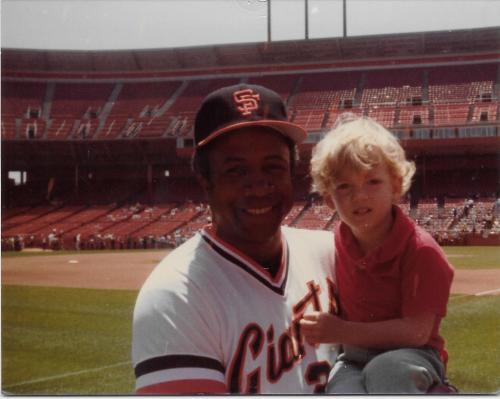
Frank became manager of the Giants in the early 1980s, and I took a photo of him with Ryan at a Picture Day:
Frank did a card show in the Bay Area in the 1990s … along with Ricky Henderson … and each autograph was $4.50 … bargains then and now.
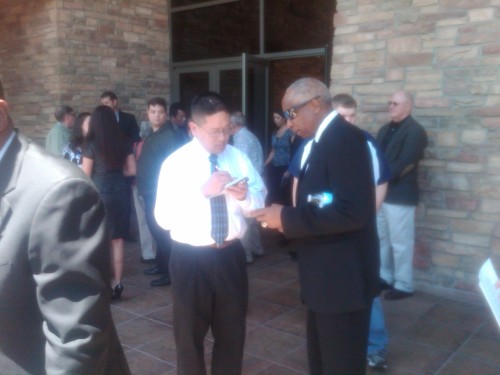
The last time I saw Frank was after Harmon Killebrew’s memorial service at Christ’s Church of the Valley in Peoria, Arizona. Due to the solemnity of the occasion, I wasn’t about to ask him … or anyone else … for a signature, but I did take his photo with my (pathetic) Blackberry.
After the Mays incident, I never violated a player’s privacy again, asking for an autograph only when they were in a public place.
I’ve got a lot more stories to tell … like the time a player invited me to lunch … or the time I drove a Dodger to the stadium the day before the All-Star game … or the time the league’s leading hitter sat down and talked to me for twenty minutes … or the time …

 Restoring Kingdom Builders
When Pastors Choose the Wrong Friends
Posted in Church Conflict, Conflict with Church Antagonists, Conflict with the Pastor, Pastoral Termination, Please Comment!, Uncategorized, tagged pastors and friendships in the church, pastors and their predecessors on May 5, 2017| 2 Comments »
Pastor Henry felt all alone.
Along with his wife and two sons, Henry had just received an invitation to become the next pastor of Grace Church, a thousand miles from his last ministry.
Henry and his wife Mary surveyed the congregation when they initially visited the church but couldn’t seem to find anyone they might want as personal friends.
But one morning during his first week, Henry received a call from Bret, a longtime member who told Henry he’d come by the church at 11:30 to take his new pastor out to lunch.
Exhausted from the move, Henry was glad that someone was taking the initiative to get to know him.
Bret took Henry to an expensive restaurant, telling his pastor all about the community, the church … and the previous pastor.
In fact, Bret told Henry a lot about the previous pastor. Pastor Mark was a good preacher who led the church through a time of unparalleled growth. This information made Henry feel insecure. How could he hope to compare favorably with a predecessor he didn’t know and might never meet?
But Bret didn’t just recite the previous pastor’s virtues. Bret also slammed Pastor Mark’s leadership in many aspects of ministry, and told Henry that Mark was pushed out of office due to his shortcomings.
Henry felt better as he realized that Pastor Mark wasn’t perfect, but had his own issues.
And then Bret told Henry, “You know, I’m so glad you’re here. You’re just what this church needs at this time. And whatever you need, I’ll be glad to help.”
As Bret drove Henry back to the church, the new pastor felt a bond developing with his new friend. “Finally, somebody believes in me” he thought.
Over the next several months, Bret and his wife Hope invited Henry and Mary to their home for dinner. The two couples quickly hit it off and became best friends. They went to movies together, ate in each other’s homes, and saw each other nearly every week.
Six months later, when it came time to suggest names for elders, Henry recommended that Bret be considered. The others on the nominating team remained strangely silent, not saying yes or no. Henry backed off. Two others were selected instead.
For the next several years, the two families got along famously … and everybody at church knew it.
One Tuesday night, Hope called Henry and asked him to come over right away. When Henry arrived, he found Bret in a foul mood. According to Hope, Bret had been drinking and had verbally and physically abused his wife.
Henry did not like what he was hearing.
An hour before the next meeting of the official board, Henry met with Jeff, the board chairman, and asked Jeff what he knew about Bret and Hope.
Jeff was reluctant to say anything. After all, everybody knew that the two families were tight.
But Henry insisted, and Jeff finally said, “Bret has a drinking problem, and he refuses to get help for it. Bret wants to be on the church board, but we can’t let him because, in Paul’s words, he is ‘given to drunkenness,’ ‘violent,’ and ‘quarrelsome.'”
Henry suddenly felt very foolish.
Jeff went on, “Pastor, I don’t know how to say this right, but your relationship with Bret and Hope is causing some people in this church to question your judgment.”
After the board meeting, Henry went home and told Mary what Jeff had said. Mary and Hope had become very close, but Hope had never shared with Mary anything about Bret’s drinking … or any other weaknesses they had.
Several weeks after visiting Bret’s house, Henry started noticing that Bret and Hope were no longer attending services. Henry thought about contacting Bret, but he knew such a conversation would drain him of much-needed energy to run the church.
A couple months later, chairman Jeff called Henry and told him that a campaign was underway to remove Henry from office. When Henry asked Jeff who was behind the campaign, he was told, “Bret and his wife Hope.”
Henry’s heart sank.
As a longtime member, Bret had developed friendships with many people in the church over the years, and he had a good idea who he could influence to join his “throw out the pastor” team.
Henry decided to ask Jeff a question that he had never asked before: “When Pastor Mark was forced to leave this church, who was most responsible for his departure?”
Without hesitation, Jeff answered, “Bret and Hope.”
_______________
Insecure pastors … and there are thousands of them around … often compare themselves to other pastors … especially their predecessors.
A wise pastor quietly gets to know the previous pastor so he can (a) form his own opinions about his personality and ministry; (b) learn about that pastor’s influence and tenure firsthand; and (c) tap into that pastor’s wisdom concerning key junctures in that church’s past.
A foolish pastor rejoices when the previous pastor is denigrated, thinking it makes him look good by comparison.
But the same person who criticizes the previous pastor will eventually criticize the current one.
And the same person who supported the previous pastor will eventually support the current one as well.
Many years ago, I learned the wisdom of Proverbs 13:20: “He who walks with the wise grows wise, but a companion of fools suffers harm.”
Pastors need to choose their church friends carefully, or the friends they latch onto early in their ministry make turn to bite them later on.
_______________
I once met a man (I’ll call him Peter) who had served as the senior pastor of a church I had known my entire life. That church’s first pastor lived two houses down from my house, and I went to school … and later church … with his children.
My uncle, aunt, and cousins had attended that church as well.
Years later, I made many friends in that church.
And eventually, I was called to be on their staff.
While Peter and I were talking, I shared with him some conflicts that occurred during my time in that church … conflicts that became so embedded in that church’s culture that they later affected Peter’s ministry.
I could tell that Peter had an enlightened understanding of what happened to him in that church.
Why don’t more new pastors contact their predecessors and gain that wisdom and understanding up front?
Could it be because of people like Bret and Hope?
Share this:
Read Full Post »