Feeds:
Posts
Comments

Archive for the ‘Please Comment!’ Category

I recently conducted a workshop at the Christian Leadership Training Association Convention in Pasadena, California, on the topic, “Strengthening Your Church’s Immune System.”

DSCN1903

The goal of my workshop was to present ten practical ideas designed to prevent most conflicts in Christian churches.

A severe conflict can damage a church, its leaders, and its people for years.  The trauma of a major conflict wreaks havoc with personal relationships, church budgets, pastoral careers, and spiritual lives.

So long before a church experiences serious conflict, the pastor and church leaders should discern, model, teach, and implement healthy, biblical behaviors for resolving differences.

And the best way to manage and resolve conflicts in churches is to prevent them before they escalate.

For a church to grow today, a pastor must initiate change … which involves taking risks … which provokes anxiety in some people … which leads to complaining … which usually focuses on the pastor … which can lead to antagonism, plots, secret meetings, accusations, demands, threats, church splits, forced resignations, and ultimately, a decimated congregation.

I believe that pastors must implement these strategies over time to protect their churches form internal attacks – as well as the pastoral position – or a major conflict can wipe out a congregation for years.

HOW CAN YOU STRENGTHEN THE IMMUNE SYSTEM OF YOUR CHURCH?

First, identify and communicate why your church exists and where it is going.

Many of the conflicts I experienced in my first ten years of pastoral ministry were related to our church’s direction … or lack thereof.  I had a mental picture of where I wanted those churches to go but I didn’t articulate it clearly and concisely, and consequently, major conflict resulted on two occasions.

Your mission is your church’s overarching purpose, the reason you exist.

Your vision is your church’s preferred future by a certain date; the direction you’re going.

Let me share four thoughts about mission and vision – and I have done what I’m suggesting:

*Utilize a bottom-up approach.  Let the people of your congregation have input into the creation of your mission and vision statements.  Avoid using a top-down approach where the pastor rams through his ideas without congregational buy-in.

Start by asking your congregation four open-ended questions on a handout, such as:

  1. What do you like about our church?
  2. What are our strengths as a congregation?
  3. Where can we improve?
  4. What should our church look like in five years?

Reserve 10-15 minutes during a worship service to do this.  Let people write whatever they want.  Ask them to turn in their surveys anonymously.

Then choose a mission/vision team to compile the responses.  Ask the team to meet, maybe on a Saturday morning.  Share the responses.  Look for patterns.  Create draft statements.

Let the pastor refine the language.  Send the statements back to the mission/vision team for further input.  When the process is complete, the board should officially approve the statements.

*Create compelling statements.  Make them shorter rather than longer.  The trend today is to have mission statements that are ten words or less so they can be remembered.

“Loving Jesus and others” is boring and vague.  “To transform our families and communities for Jesus” is exciting and unifying.  Make them simple but somewhat edgy.

*Announce the statements to the church in final form. Post them everywhere: your lobby, website, bulletin, classrooms.  The pastor must refer to them often … at least once a month.

*Every consequent decision will flow from your mission/vision statements which may relieve as many as 90% of your church’s “problems.”  Those who don’t like the direction – because they wanted to turn your church into Lakewood West or Saddleback North – will be forced to get with the program or leave the church.

Yes, some churches grow without those statements, and some churches that have mission/vision statements never go anywhere.  But people want to know, “What’s the plan?”  Growth is intentional, not accidental.  Without a clear direction, your church will drift.

Second, choose only leaders (pastor/staff/board) who follow and embody Scripture (1 Tim. 3:1-7; Titus 1:5-9).

It’s well-known in evangelical circles that church leaders should be biblically-qualified according to Paul’s lists in the Pastoral Epistles.  But selecting leaders of high character doesn’t prevent a church from experiencing a horrific conflict.  I know all too well.

*It is crucial that every leader embrace the church’s mission and vision statements.  My failure to nail this down was a primary factor in why major conflict surfaced in my last ministry.  I assumed that board members were with me without ever asking them directly.  Board members can smile when their pastor is present and stab him in the back when he’s absent.

*It is essential that prospective leaders are interviewed (maybe by the pastor and board chairman) and that after they take office, receive training (at least quarterly) and undergo periodic evaluations.  (Either every major leader should be evaluated or nobody should be evaluated.)

*The pastor should check with the financial secretary and make sure that any prospective board members are regular, generous givers to the ministry.  The pastor can do this by asking the person who knows the givers and their amounts, “Just let me know if this person is a stingy giver … an average giver … or a generous giver.”  Believe me, you don’t want any stingy givers on your board because they will tend to shoot down budget increases and special projects because they won’t want to give themselves.  You only want regular givers handling church finances.

*It is better to have nobody than the wrong person in leadership.  Why?  Because it can take a long time to get rid of the wrong person … and there is a price to be paid for doing that.

*It is better to have just a few qualified leaders than any non-qualified leaders.  If the church’s governing documents state that you need to have a minimum of seven board members, but you can only find four that are qualified, just go with four.  If you don’t, the other three “fill-ins” will kill you.

Third, ask your leaders to study and summarize the biblical principles for conflict resolution.

I believe that the lead pastor in a church must take the initiative to prevent major conflicts from surfacing.  One way to do that is to hold regular meetings involving every key leader in your church: staff members, board members, ministry team/committee leaders, small group leaders … and to broaden the ownership base by making the group larger rather than smaller.

The meetings can be held monthly or quarterly … maybe after the last service on Sunday morning, which means you’ll have to provide lunch … but it’s essential that they be held.

This article I wrote several weeks ago describes the process of formulating these principles:

Preventing a Major Conflict in Your Church

The aim of such a process is to create a one-page document stating Ten Principles for Resolving Conflict at _________ Church that should be posted in many rooms all over the church.  (Just try and envision the rooms where conflict surfaces, like the church office, the associate pastor’s office, the board room, the kitchen … you get the idea.)

Fourth, create a Conflict Resolution Group inside your church of at least three strong, wise, and healthy individuals.

The reason I advocate a CRG is because when a pastor is attacked, there are usually some board members and/or staff members who are involved in trying to oust the pastor.

And when this happens, they almost always use shortcuts to expedite his departure.

They ignore Scripture … the church’s governing documents … labor law … and common decency because they have their eye on one goal: the pastor’s speedy exit … and they are anxious until “the deed is done.”

*The CRG’s job is to make sure biblical principles and processes are followed whenever a conflict surfaces, not to determine an outcome.  They make sure that the pastor is treated justly and fairly at all times.  They watch over the entire congregation, but engage in special surveillance over the board and staff.

*CRG members should be voted on by the congregation, making them accountable to the whole church.  If the board appoints the CRG, it can just disband the group should the board plan to take action to force out the pastor.  But if the CRG reports to the congregation, the board and staff may think twice about railroading the pastor unfairly.

*Terms should be for 1-3 years.  Consider especially former board members … retired pastors … and people who work in human resources.

*Make provision for them to receive training, such as that offered by Peacemaker Ministries in Colorado Springs.  Their website is http://peacemaker.net

Realize that Peacemaker University at its lower levels centers upon how to resolve conflicts between two individuals.  I have taken their course on coaching people to resolve conflicts.

*The penalty for violating the CRG’s directives is church discipline and possible expulsion.  For example, there might be a statement in the church’s governing documents that if the CRG rules that the board didn’t use the approved process for dealing with the pastor, the board could be suspended or must resign en masse.  The CRG cannot function effectively unless they can recommend discipline to the congregation.

Fifth, update your church’s governing documents (constitution/bylaws) every five years.

As churches change, their governing documents should keep pace.  While I believe that church constitutions and bylaws should be slaves, not masters, whenever a conflict breaks out, the leaders and congregation must abide by the latest version.

*Insure that your governing documents align with your ten principles for resolving conflict. (Covered under the third step above.)

*Make sure you specify the pathway to remove the pastor from office and to remove troublesome board members and staff members as well.

*If a major conflict ever breaks out, some people will become so reactive that they will resort to “the law of the jungle” to win.  If your governing documents are clear, they may think twice.

*If your church is ever sued, and a judge takes the case, the judge will decide for the party that most closely followed the governing documents.

I know this seems like a lot of work, but it can be implemented over time.

In fact, let me go further: if a pastor plans on making changes in his congregation, he should implement as many of these strategies as possible first.

The best time to prepare for war is during a time of peace.

I’ll share the remaining five ways to strengthen your church’s immune system next time.


Read Full Post »

This is my 500th blog article, and for the past few months, I’ve been thinking and praying about how I should mark this milestone.

After much reflection, I’ve decided to distill some of the things I’ve learned about pastoral termination that I haven’t written about before.

After earning a doctorate in church conflict … after writing a book called Church Coup … after providing counsel for scores of pastors and board members … and after writing all those blogs …  let me share with you five hidden realities surrounding pastoral termination today:

First, evangelical Christian churches rarely treat a pastor under fire justly.

When a faction inside a congregation attacks their pastor, they don’t consider treating him fairly … they just want him to meet their demands or resign.

When a staff member sabotages his pastor – personally or professionally – he’s not concerned about justice … he just wants to avoid doing what the pastor wants.

When a governing board prematurely forces their pastor to resign, they will avoid Scripture … ignore their governing documents … and later declare that everything they did was justified.

The standard seems to be “how we feel about the pastor” or “let’s make sure the pastor gets what he deserves” rather than anything related to Scripture or even love.

When a pastor is under fire inside his own church, all the rules tend to get tossed aside.

There should be a rulebook for treating a pastor under attack fairly … but most of the time, there isn’t.

I’ve written nearly 100 pages of such a rulebook, but haven’t been able to finish it.  If you think it’s important, please pray that the Lord will help me to get it done.

Ironically, mainline churches – which tend to be theologically liberal – treat their pastors much more fairly than evangelical churches … which claim to believe and practice divine truth.

By the way, I shouldn’t have to say this, but the goal of discipline/correction in the New Testament isn’t revenge, but restoration (Matthew 18:15-16; Galatians 6:1).  My guess it that at least 80% of the time, the restoration of a “wayward” pastor isn’t even considered by the governing board.

They just want him gone … and will use any weapon in their arsenal to accomplish their goal.

We can do better than this … much better.

Second, pastors who have been attacked in the past have a limited pain threshold.

A friend of mine called me several weeks ago and asked if I would be interested in becoming an interim pastor at a church not far from my home.

I didn’t have to think about it or even pray about it … my answer was a swift “No.”

I know some older pastors who have suffered through an unjust termination, and they love ministry so much that they are open to an interim position.

But I’m not … and maybe it goes back to something I learned from Jay Carty.

Jay Carty played basketball for the Los Angeles Lakers during the 1968-1969 season.  Lakers’ announcer Chick Hearn once nicknamed Carty “Golden Wheels” because he was so slow on the court.

Carty became a popular Christian speaker.  I once sat next to him at a pastors’ meeting (I told him I still had his autograph from that 68-69 season) and he told me this story:

He said that if you put a fly in a jar, the fly will try to fly out by hitting the lid of the jar once.  The fly will try again a second time, but after that, the fly will give up because it doesn’t want to go experience any more pain.

I’m unsure whether that’s how flies really act, but when it comes to church ministry, there’s definitely some truth there.

Back in the mid-1980s, I survived two separate attempts to get rid of me as pastor in the same church.  Both times, my antagonists left instead of me, but I was bruised and bloodied emotionally for months.

Somehow, God enabled me to lead the rebirth of that congregation (I contributed a chapter to Gary McIntosh’s book Make Room For the Boom … or Bust detailing what happened) but it about killed me.  A nationally-known church consultant told me, “It’s a wonder you’re still standing.”

Even though I was exhausted, a pastor friend told me, “I think you have one more church left in you.”

So I became the pastor of a congregation that seemed healthy.  Attendance and giving nearly doubled during my tenure … we built a new worship center … and we became the largest Protestant church in our city … but church leaders eventually turned on me, and even though I chose to resign, some people were pushing me toward the door … hard.

Even when you’re successful as a pastor, there’s a limit as to how much pain you can take before you reluctantly admit, “I can’t do this anymore.”

Three attacks and you’re out.

Third, the Christian community observes a “winner take all” mentality when it comes to pastoral termination.

When a pastor presides over a growing congregation, he will make enemies … on the staff, on the board, among key leaders … and if they pool their complaints, the pastor’s tenure may end swiftly and harshly.

I’m thinking of a megachurch pastor … one of the best Bible teachers I’ve ever heard … who was forced to resign because he tried to make changes to the worship service.  He received approvals through all the proper channels except he didn’t consult the people with old money … who no longer held official positions … and they made his life a living hell until he quit.

In the Christian community, pastors like that gifted megachurch minister are labeled “losers” if they’re forced out even when they have done nothing wrong.

I have a pastor friend who reads this blog who told me that for years, whenever he heard about a pastor who experienced an involuntary exit, my friend would think to himself, “What a loser.”

After it happened to him, he found himself singing a different tune.

However, the pastor who is pushed out of a church is a “loser” in one respect: he loses most of his church friends … his reputation … his income … his position … his house (sometimes) … his career (often) … and occasionally, even his wife … and all those losses together brand him in many people’s eyes as someone to be shunned and abandoned.

Yet it doesn’t matter if the pastor’s antagonists harassed him … lied about him … or misrepresented him … if he’s forced out, he’s the loser … and by default, those who successfully removed him are crowned the winners.

And in the words of the pop group Abba, “The Winner Takes it All.”

In the Christian world, people don’t care about the details of a pastor’s ouster … they only care about outcomes.

There’s only one problem with this shallow thinking:

By this reckoning, Jesus was a loser, too … as were His apostles.

Even though I was pushed out of my last ministry, I have never viewed myself as a “loser,” but I know that some do, and there’s nothing I can do about it.

Except to say that the values of the evangelical community are often more tied to worldly success than biblical faithfulness.

Fourth, those who force out an innocent pastor should be exposed and asked to repent.

Here’s something I will never understand:

If a pastor starts bullying and manipulating people in his church, shouldn’t he be confronted and asked to repent?

Of course … and if he refuses to repent, he’s subject to being removed from office.

By the same token, if a group in a church … even if they’re the governing board … start bullying and manipulating the pastor behind-the-scenes, shouldn’t they be confronted and asked to repent as well?

Yes, they should … but if they’re successful in getting rid of their pastor, nobody will ever ask them to repent.

The governing board won’t.  The staff won’t.  The congregation won’t.  The district won’t.

Even if they know the facts, no single party will approach the pastor’s detractors because the pastor lost and his opponents won.

And in the evangelical world, that’s the end of the matter.  (Remember, according to 1 Corinthians 6:1-8, we’re not supposed to sue one another.)

In fact, if a church is denominational, the district minister will often spin the pastor’s departure and make him look bad … and make those who pushed out the pastor look good … even if the latter group acted wickedly.

I’ve seen this scenario played out scores of times over the years.

This kind of cover up … slander … and lying has nothing to do with biblical righteousness … and everything to do with crass politics.

District ministers in evangelical denominations (many of which are congregational in nature) like to say, “Oh, we can’t intervene in disputes in a local church.  We respect the autonomy of the local church.”

But that bromide is a lie.

Because district ministers do interfere in the lives of local churches (almost always behind closed doors) … and I can tell you story after story where that’s exactly what happened … including my own case.

I have learned over time that 90% of all district ministers handle church conflicts in a political way … not a spiritual way … because they aren’t interested in truth or righteousness … they’re interested in keeping donations flowing from the church to the district office to pay their salary.

And if they side with the pastor … or even hint he’s right and the board is wrong … he’s afraid the church will cut off those funds.

So he either remains silent or aligns himself with the church board … and nobody is asked to even consider their part in their pastor’s departure.

Because after the pastor is gone, the whole conflict can be blamed on him.

Finally, pastors get into trouble when they forget they are persons first, pastors second.

Nine months before I left my last ministry position, I was struggling with whether I could be a pastor anymore.

Instead of being a pastor, I longed to be just a person.

I didn’t want to be Pastor Jim … just Jim.

I would come home from a day at the church office … park my car in the garage … rush inside to eat dinner … and rush back to church for a meeting.

But I didn’t want to go to the meeting … I just wanted to stay home.

I began avoiding tasks I didn’t want to do … and avoiding people I didn’t want to see … and trying to figure out what was wrong with me.

Part of me wanted to tell the church board how I was feeling.  I knew I needed some time away to recover, but when I looked at the composition of the board, I decided I couldn’t risk telling them anything.

That particular group would not have understood.

I reasoned, “If I tell them how I am feeling … because they don’t seem to care for me as a person … they will probably fire me outright or force me to quit.”

And I couldn’t take the chance.

So I decided to tough it out and hope that I’d improve over time … and at times, I behaved uncharacteristically.

People like it when their pastor’s behavior is predictable.  When the pastor becomes unpredictable, some will clamor for him to leave.

I finally went to see a Christian counselor, who diagnosed me with a severe case of burnout … and said I was headed for a breakdown.

Thank God, I didn’t break down … not even when the conflict surfaced two months later … but I came awfully close.

I don’t blame the church board for my condition because I never told them about it … but I do blame them for not saying to me, “Hey, Jim, you don’t seem like yourself.  Are you okay?  Is something wrong?  Can we pray for you?”

There is no doubt that my burnout was the result of being overcommitted to my ministry.  I cared too much … and maybe that was my undoing, but I needed somebody to say, “Hey, it’s okay to back off … we’ll help carry the load.”

I wore the “pastor” hat too often … and longed to be just “Jim” … a normal, anonymous person … instead.

I finally got my wish.

_______________

This is my 500th blog article.  I started writing … with trepidation … in December 2010.

I wasn’t sure if anyone would find … much less read … anything that I wrote.  And because my son warned me that I would attract critics, I braced myself for mean-spirited comments that never came.

Some blog articles have done very well.  Some died the day I wrote them.  In the early days, I wrote three in five days.  Now I only have time for one per week.

From the beginning, my primary passion has been the relationship between pastors and their antagonists in a local church … especially those who pursue the pastor’s termination.

If you’re a subscriber, or an occasional reader, thank you so much for reading what I write.

I try to tell the truth with grace.

When you think about it, let me know if what I write is helpful.

Thanks!


Read Full Post »

Several years ago, I preached a sermon on the topic “Resolving Conflict Biblically” at a church several communities away.

When I was done speaking, a woman in her mid-80s – who had attended a prominent California church for most of her life – told me, “I have never heard a sermon on the subject of conflict in my entire life.”

Now maybe she was ill or away on the Sundays that her pastor spoke about conflict, or maybe all his sermons fused together in her mind.

But I happen to know that her former pastor – one of America’s best-known Bible teachers – experienced a major conflict in his church before he eventually resigned.

The best churches experience major conflicts.  In fact, I still agree with this adage that I heard years ago: “Small churches have small problems, while big churches have big problems.”

Regardless of your church’s size, it’s almost certain that your congregation will experience a severe conflict within the next ten years … and about a 40 percent chance that you’ll suffer through a major conflict within the next five … unless your church is ready when that conflict strikes.

But sadly, most churches aren’t ready for a major conflict.

Maybe they’re in denial, thinking, “We’re such a nice group of Christians that nothing horrendous could happen here.”

Or they’re thinking, “Our constitution and bylaws specify what to do if conflict breaks out, so we’re adequately prepared.”

Or they’re thinking, “Our leaders are such godly individuals, they will handle any conflict expertly” … not realizing that church leaders are often the source of major conflicts.

There isn’t a lot written on how to prevent major conflicts in church life.

That’s why I’m doing a workshop for Christian leaders next week called “Strengthening Your Church’s Immune System.”  I’ll be talking about ten ways that a church’s leaders can prepare for and prevent major conflict from even happening in their congregation.

Let me share with you one of the ten steps I’ll be presenting next week … and it takes a bit of work.

I believe that the lead pastor in a church must take the initiative to prevent major conflicts from surfacing.  He should allow people to share feedback and even disagree about matters without, at the same time, letting them start a bloodbath.

One way to do that is to hold regular meetings involving every key leader in your church: staff members, board members, ministry team/committee leaders, small group leaders … and to find reasons to make the group larger rather than smaller.

So if feasible, I’d invite their spouses as well.

The meetings can be held monthly or quarterly … maybe after the last service on Sunday morning, which means you’ll have to provide lunch … but it’s essential that they be held.

During one of those meetings, here’s what I would do if I were the pastor:

First, I would prepare a 3-4 page document for each person listing every New Testament reference – word for word – on church conflict. 

Maybe throw in some verses from Proverbs on the tongue as well.

Don’t ask people to look the verses up in their Bibles.  It takes too long … people have different versions … and you want all the relevant verses gathered in one place.

So the pastor should do the work for them.  Write out Matthew 18:15-17 … 1 Corinthians 6:1-8 … Titus 3:10-11 … 3 John 9-10 … in chronological order.

Second, I would ask the leaders to divide into groups without their spouses. 

The fewer people in each group, the more each person will have to interact with Scripture themselves … and that’s what you want.  Aim for five people per group.

I would have at least as many groups as there are pages.  For example, if you hand out five pages of verses, make sure you have at least five groups.

If you have 50 leaders present, then make ten groups with five individuals in each group.

Third, I would ask each group to appoint a leader … and for group leaders to ask for volunteers to read the verses.

My last few years as a pastor, I always asked for people to volunteer as readers.  Some people can’t read very well, and others become anxious when asked to do something in a group.  You want people to feel comfortable going through this exercise.

Fourth, after the verses have been read, ask each group to summarize the verses on their page in five principles. 

This should take 15-20 minutes per group.

Then starting with page 1, ask each leader to appoint a spokesperson to present their five principles to the entire group.

Fifth, the pastor should ask someone ahead of time to record each principle word for word on newsprint and hang each sheet on the wall. 

This isn’t busy work … it’s documentation.  In fact, the pastor should store the newsprint somewhere safe in case someone ever challenges the wording of the principles.

Sixth, after all the reports, the pastor should ask the entire group questions like:

*Can we summarize the teaching of Scripture concerning conflict resolution in one sentence?

*Which verses that you studied stand out to you?

*How well do you personally carry out these principles in your own life?

*Why do we have such a hard time dealing with conflict?

*How realistically can we follow the teaching in these verses in 2016?

*How well does our church follow Scripture when it comes to conflict resolution?

Seventh, after that discussion, the pastor should do two things:

*Ask someone to collect all the newsprint sheets and give them to the pastor directly.  The pastor should consider reproducing everything written down word for word on the church website.  This not only shows the leaders that their words are taken seriously, this also shows the congregation that the church takes Scripture seriously when it comes to conflict.

*Then reserve time on the agenda of the next board meeting – or call a special Saturday board meeting – and ask the governing board as well as members of the church staff to summarize the biblical teaching on conflict resolution in ten principles.

(The board and staff should do this because they are ultimately the guardians of both the congregation and the pastor … and because they are sometimes the sources of potential trouble themselves.)

When that’s complete … maybe at the next board meeting … three more things need to happen:

Eighth, the pastor makes sure that those ten principles for resolving conflict are posted in key places all over the church.

This includes the rooms where staff meetings, board meetings, finance team meetings and other key meetings are held.

Ninth, the pastor then schedules a brief series – maybe two sermons – on those ten principles, letting the congregation know, “This is how we handle conflict around here.”

And every year – possibly before the annual meeting – the pastor should preach another brief series on biblical conflict resolution.  Call it internal insurance.

Finally, the pastor schedules time every six months to review the principles with the staff, the board, and the key leaders. 

This doesn’t have to take long, but it has to be done.

Some people might say, “But Jim, if a severe conflict does break out, some people will become so emotional that they will ignore those principles, so aren’t these principles really worthless?”

No, they aren’t worthless.  God gave those principles to us, and He never gives His people anything that isn’t of value!

But even if some people become irrational during conflict, there are others in the congregation who will view matters in a more biblical and rational fashion, and you want the more logical people to deal with the more emotional ones.

Let me give you an example of how these principles can help once they’re posted:

Imagine that you’re in the church library after a Sunday service, and a woman saddles up to you and says, “Listen, a few of us are meeting for lunch today to discuss the latest changes that the pastor is trying to impose on our church.  If you want to join us, we’re meeting at Olive Garden at 1:00 pm.”

Instead of answering her directly, you take her by the hand, waltz her over to the north wall, show her the list of ten principles for resolving conflict biblically, and say to her, “Look at principle number seven.  It says, “If you are upset about a policy, please speak directly with any member of the church board.  [They set policy along with the pastor.]  And if you are upset with the pastor personally, please speak directly with him.”

You then ask this person, “Are you upset with a policy?  Then you need to speak directly with a board member … maybe the one you know the best.  But if you’re upset with the pastor personally, you need to speak with him directly.  Which is it?”

If the person says, “I’m upset with the policy,” then ask the person, “Which board member will you speak with about this issue?”

If the person says, “I’m upset with the pastor,” then ask them, “When will you be speaking with the pastor about this issue?”

If the person says, “Forget it.  I thought you were a friend, but you aren’t,” I’d say to them, “These ten principles summarize how we handle conflict around here.  If you don’t comply, I will report you to the pastor and the church board and tell them what you’re planning to do.  It’s your call.”

The beauty of this approach is that these principles:

*are based on Scripture.

*have been devised by all the key leaders in the church.

*have been ratified by the governing board and staff.

*have been presented to the church through the pulpit.

*have been posted all over the church facility.

*can then be enforced by all of God’s people.

If you follow this plan, I can’t guarantee that you’ll never experience a major conflict in your church.

After all, when some people are intent on committing murder, they can be hard to stop.

But I can guarantee that if you do this, the plotters will know that they’re violating Scripture and the culture of their church … and that will take all the fun out of plots against the pastor … secret meetings … and playing politics.

If you can manage major conflict in your church, that might allow your church to do what Jesus called it to do:

Fulfill His Great Commission in your community.


Read Full Post »

A friend sent me an article yesterday about a well-known megachurch pastor (although he’s not someone I’m familiar with) who was removed from office by the governing board of his church for “ongoing sinful behavior” over “the past few years.”

Here’s the article:

http://www.christianitytoday.com/gleanings/2016/april/darrin-patrick-removed-acts-29-megachurch-journey.html

When I read the article, I was impressed by the way the board handled the situation.

In my experience, whenever a pastor is terminated or forced to resign, the board often handles matters poorly.  The board identifies the pastor as their enemy, exaggerates any charges against him, and either fires him outright or forces him to quit.

But the board mentioned in this article, in my view, seemed to do everything in a biblical and healthy manner.

Let me highlight five things that this board did right:

First, the board spoke with their pastor directly about their concerns.

Don’t all boards do this?

No, they don’t.

Too many times, church boards never tell their pastor what they’re seeing or hearing in his life or ministry that bothers them.  They remain silent, hold a secret meeting without the pastor present, detail all his faults, conclude he has to go, and assign someone to tell him he’s fired … or agree to tell him together at the next board meeting.

Individual board members might tell their spouses how they feel about their pastor … or they might tell certain friends in the church … but they never approach their pastor personally.

But thankfully, this board shared their concerns directly with their pastor from the very beginning, so that when he left, he didn’t feel that the board conspired behind his back or fired him via ambush.

One pastor told me he was fired in an email … without any kind of warning.  Another pastor was fired via certified letter.  Other pastors I know have been told they’re fired right after a Sunday service … again, without ever being told that anything was wrong.

Such tactics speak volumes about the lack of maturity on the board.

Second, the board told the pastor that their goal was his restoration. 

Much of the time, this is the key … but missing … element whenever a church board tries to correct their pastor’s behavior.

Think of Jesus’ words in Matthew 18:15:

“If your brother sins against you, go and show him his fault, just between the two of you.  If he listens to you, you have won your brother over.”

According to Jesus, what is the goal when a fellow believer sins against you?

The overarching goal is to win your brother over … to get him to listen to your concerns, repent of his wrongdoing, and change his behavior.

The goal is not to remove the pastor from office or from the fellowship.  That’s the last step in the process (verse 17), not the first step.

I’ve discovered that when a board begins with the end result … “We need to remove our pastor from office right away” … they will wreak havoc on their pastor, his family, the congregation, and even on the board members themselves.

Because all too often, the board really wants to punish the pastor … and engages in what is really a vendetta.

But when the board begins with a process … “We are going to take our time, work the steps, encourage our pastor’s growth, but monitor his behavior” … there may be some fallout, but God will honor such a board’s motive.

Pastors not only have faults they know about … they also have blind spots.  The best men do … even those pastors whose sermons you revere or whose books have blessed your life.  (And that includes John MacArthur.)

If a pastor believes that he will be treated fairly and graciously by the governing board, he’ll be much more open to admitting his faults and trying to work on them.

But if a pastor believes that the board’s attitude is “one mistake and I’m out,” he’ll become resistant to correction … and too many boards operate like this.

And they’re usually the unspiritual ones.

Third, the board was specific about the behaviors they wanted the pastor to change.

In their letter to the congregation, the board mentioned “historical patterns of sin” and “pastoral misconduct.”  They even named the exact behaviors that concerned them.

And, may I add, they gave the pastor plenty of time to change … a few years.

The pastor didn’t have to guess which behaviors the board didn’t like.

He knew.

In addition, the board let the congregation know that the pastor wasn’t guilty of adultery or financial impropriety.

Whenever a pastor is fired, but the governing board is silent about the grounds for dismissal, people automatically assume that the pastor committed adultery or engaged in fiscal shenanigans.

So even though it may not feel like a blessing, it’s wise for a board to say, “We’re dismissing the pastor because he did this and this and this … but we want you to know that he didn’t do this and this.”

The board did such an effective job that the pastor released a statement admitting that the board was right … he was still plagued by certain sins … and that their deliberations were “miraculous and beyond gracious.”

I wish that every dismissed pastor could say that they were treated that justly.

Fourth, the board kept the process as open as possible.

The board not only involved the pastor in the corrective process, but after the pastor agreed to resign, they also told the congregation why the pastor left and encouraged people to send them feedback, including both questions and comments.

They also put their names and email addresses on the contact page so people could easily converse with them.

This is a far cry from most of the situations that I hear about.

I once heard about a church board that announced that their pastor had been dismissed, and then warned the congregation, “You are not to contact the pastor at all.”

If I was told not to contact the pastor, that’s the very next thing I’d do.

You say, “But Jim, wouldn’t your action be divisive?”

My reply: “Unity should always be based upon truth, and trying to find out the truth isn’t by itself divisive.”

You might counter with, “But if you contacted the pastor after the board told you not to, isn’t that being rebellious against God’s leaders?”

Maybe, but what if they’re trying to cover up their own mistakes?  What if they’re more guilty than the pastor?  How can anyone know unless they do contact the pastor?

I’ve noticed that the more hush-hush the board is about their pastor’s dismissal, the more they’re trying to protect themselves … and the more likely it is that they intend to slander the pastor’s reputation to eliminate any future influence in the congregation.

Finally, the board made sure that the pastor and his family were cared for.

The board did this in two primary ways:

*They gave the pastor a severance package.

*They encouraged the congregation to send encouraging notes to him and his family.

I’m embarrassed to say that there are many church boards that plan to fire their pastor, and at the same time, do all they can to make sure that they don’t offer the pastor any kind of severance.

I’m thinking of one pastor in particular who was forced to resign and was denied severance even though he had no savings, Social Security, or retirement income to fall back on.

Boards offer excuses like:

“We don’t have the money to offer the pastor anything.”

“We have the money but let’s earmark it for other projects.”

“The pastor has behaved so badly that he doesn’t deserve any severance.”

“The pastor’s wife works so we’re off the hook and don’t have to give him anything.”

“Let’s let the church vote on any severance package … and arrange matters so they vote no.”

But as I’ve said many times, the board should offer the pastor severance more than 95% of the time because:

*the pastor’s family needs financial assistance even if the pastor has been a rascal.

*it can take a pastor a year or longer for the pastor to find another ministry.

*a severance package minimizes the chance the pastor will start a new church in the community … and use his recently-former church as his mission field.

*it’s the right thing to do.

I also love the idea that the board encouraged the congregation to write positive notes to the pastor and his family.

This practice can provide healing for the pastor, who is tempted to think, “I must be a horrible person for not being able to keep my pastor-job.”

This practice can also be therapeutic for the congregation because they’ll be forced to see all the good the pastor did during his time at the church … and not just the bad.

Whenever a governing board has to correct a pastor’s conduct, it’s very stressful for everyone concerned … and it’s tempting for board members to say, “Let’s just end the anxiety and fire the guy.”

But when a board operates biblically, their actions might even cause their pastor to agree with their conclusions.

How do you feel about the way this board handled their pastor’s dismissal?

I’d love to hear from you.


Read Full Post »

A few months ago, my daughter Sarah told me, “Dad, I know you like to write about church conflict and pastoral termination, but I like it when you write about something else, too.”

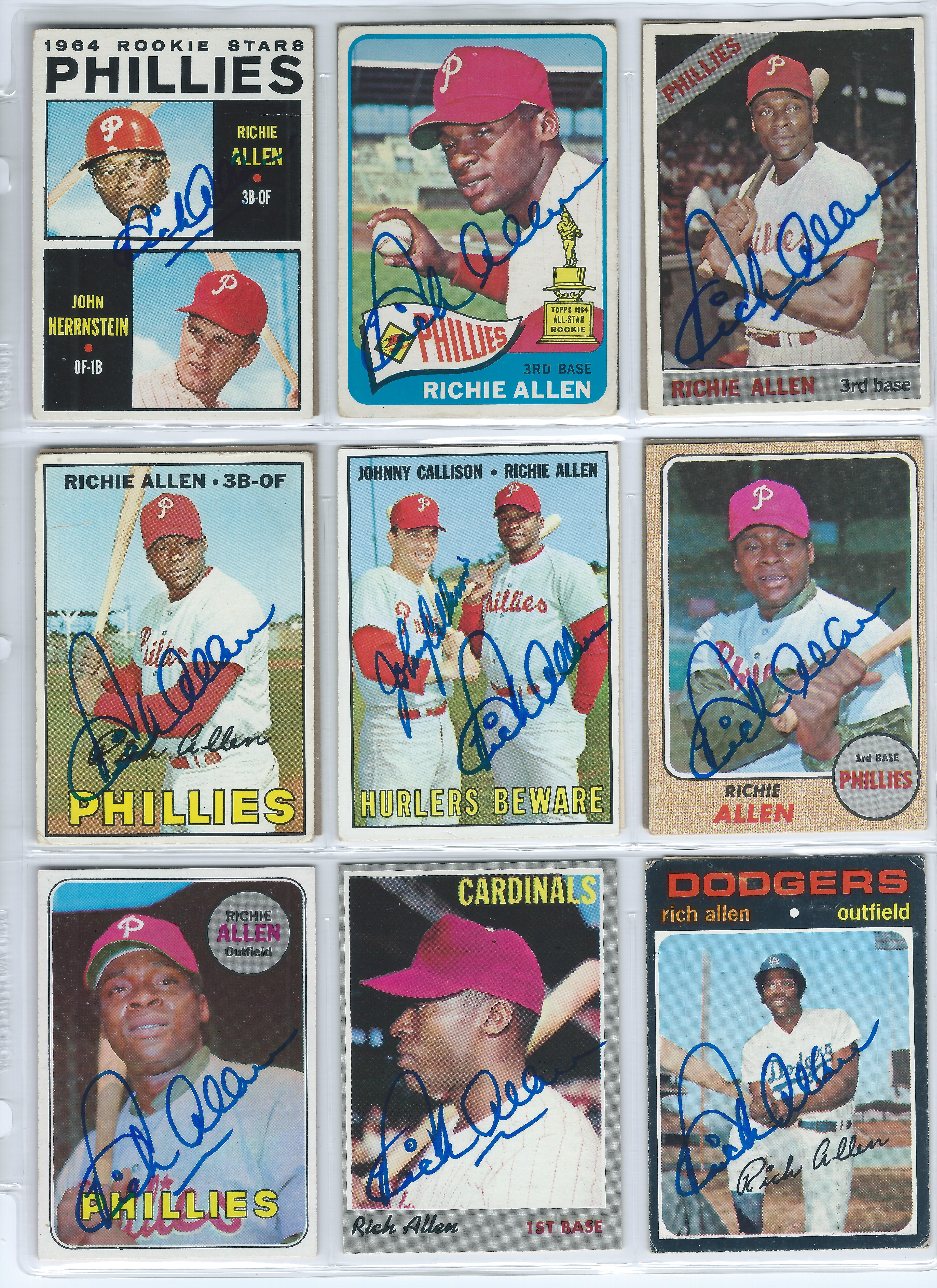
So since it’s almost baseball season, let me write about something else … my long-time hobby of collecting the autographs of major league baseball players … both past and present.

It all started when I was 13 years old.  I grew up in Anaheim, California – two miles from Disneyland.  My friends Kevin and Steve called me one day – two months after my father died – and told me they had gotten the autographs of New York Yankee greats Mickey Mantle and Whitey Ford several hours before.

I asked where they got them, and they replied, “At the Grand Hotel where the Yankees are staying.  We waited for the players to come out for the bus to go to the game (at nearby Anaheim Stadium), and when they did, they signed for us.”

The Grand was about 3 miles from my house.  I HAD to go the very next day … because I was … and am … a HUGE baseball fan.

Since the age of six, I collected baseball cards … seriously.  I still have thousands.  But until that day in 1967, I had only met a handful of ballplayers in person … and had less than 10 signatures.

Many of the kids in my Anaheim neighborhood eventually made their way to the Grand Hotel to wait for the players to come out.  Some went only once.  A handful went many times.

I went more than most.

We never knew who we’d see around the hotel.

One time, actor Jimmy Durante appeared.  He was performing at the adjacent Melodyland Theater – which later became a church – and I got his autograph a couple of times.

Another time, two friends – both named Steve – took the shuttle from the Disneyland Hotel (which went toward the Grand) to get autographs from the Detroit Tigers on Labor Day in 1968 … and sat next to famous actor Fred MacMurray (Double Indemnity/My Three Sons) … who talked with them and gave them his autograph.

Many players were great signers.  They would sign whatever you gave them … sometimes many cards.  Brooks Robinson of the Baltimore Orioles and Harmon Killebrew of the Minnesota Twins were especially nice.

But some were tough, including Elston Howard of the Yankees (he always yelled at you); Ted Williams (who managed the Washington Senators for several seasons and could be very intimidating); Frank Robinson (who has never liked signing); and Mickey Mantle (who stared sideways at every person who asked for his autograph).

Over the years, I was able to obtain the signature of nearly every player I saw at that hotel, including Willie Mays, Juan Marichal, Willie McCovey, Tom Seaver, Nolan Ryan, Gil Hodges, Jackie Robinson, Sandy Koufax, Roberto Clemente, and Joe DiMaggio.

One guy was super-tough, though.

Mike Marshall was a pitcher for the Detroit Tigers in 1968.  He came out of the hotel one day … I was the only collector there … and he stood against a pillar, waiting to take a van to the ballpark.  I asked him to sign a 3×5 card, and he didn’t look at me … didn’t answer me … didn’t respond in any way.

Years later, I learned that Marshall determined from the time he was in the minor leagues that he would not sign autographs for anyone.  I don’t have his signature, and don’t really want it.

But there was another player whose signature was almost impossible to obtain … and I wanted it very much.

His name?  Richie Allen … or as he later asked to be called … Dick Allen.

Richie Allen was both talented and troubled.  He played initially for the Philadelphia Phillies, and he was a superb hitter, but he also marched to his own drummer.  I recently read the autobiography of the late Hall of Fame pitcher Robin Roberts who said that early in Allen’s career, the Phillies were playing a doubleheader, and Allen just didn’t show up for the games.  Roberts found him at home instead.

Today, that would be a MAJOR scandal.

In 1967, the All-Star game was held in Anaheim, and I spent Sunday night, all day Monday, and Tuesday morning at the Grand, where the National League players stayed.  Monday night, just after dark, Richie Allen showed up, and I got his signature in my autograph book: R. Allen.

He signed it on the wrong page.

Allen didn’t seem to like fans, and he certainly didn’t like to sign his name.

Over the next few years, I never saw Allen anywhere, but whenever I spoke with other collectors, nobody else had gotten his signature, either.  He was nearly impossible.

Some of us used to write to players in the mail, and if someone was mean in person (like Elston Howard), they might be cordial in the mail … and Howard was.

But if you wrote to Richie Allen … he didn’t respond.

In 1972, Allen was on the Chicago White Sox, and he had such a great year that he was later named the Most Valuable Player in the American League.

I went to the Grand one day that year hoping to get Allen’s autograph on a 1967 Topps card that had already been signed by former teammate Johnny Callison.

I had read in the newspaper that White Sox manager Chuck Tanner allowed Allen not to take the team bus and to skip most pregame preliminaries, so after the bus left at 5:30, the collectors went home … but I stayed … determined to get Allen’s autograph on my card.

I almost never got autographs in a crowd … like from the stands before a game … and I wouldn’t follow a crowd chasing a player after a game, either.  It was too undignified.

But if someone is a tough signer, but you can catch them by yourself in a solitary place, you have a better chance of getting their autograph than if there’s a crowd waiting.

So about 6:40 pm that night, Allen came out of the hotel, accompanied by another man.  My heart pounding, I walked toward him and said, “Mr. Allen …”

He held out his right hand and waved me off.

That was it.  I had waited 70 minutes after the bus left, only to be dismissed outright.

I quit collecting the following year.  When Roberto Clemente died in 1973, I had 30 autographs of him … but just one of Richie Allen.

After I got married, I picked up the autograph hobby again, even taking some guys from the youth group to spring training games in Palm Springs, where we did very well.  (Going to spring training workouts … before the exhibition season starts … is the single best way to get autographs today … especially if you can have access to the practice fields.)

Years later, my friend John heard that Dick Allen owned horses at Santa Anita racetrack here in Southern California.  He took his items to be signed, went to the track, asked when and where Allen might show up, and waited.

Allen finally came by.  John asked him if he would sign for him, and Allen replied, “No, but I’ll shake your hand.”

John … who had a knack for getting the signatures of even the toughest players … told me later that was it: he figured he would never get Allen’s autograph.

Fast forward ahead many years.

In 1992, I was pastoring a church in Santa Clara, California, in the heart of Silicon Valley.  My collecting days were over, but if somebody asked me if I would ever collect again, I’d always say the same thing: only if Dick Allen comes to town.

How likely was that to happen?

One day, my old neighborhood friends Kevin and Steve – the same ones who had told me about getting Mantle’s autograph 25 years before – came to visit me in Santa Clara.

For some reason, we went to Vallco, a shopping center in Cupertino (near Apple’s headquarters), and there was a baseball card show in the mall.

While looking at a few signed photos, I noticed that one collector had Richie Allen’s signature.  I asked where he got it.

He told me that he had obtained it at a show … maybe back east … and I said something like, “Wow, I wish Allen would come here.  He’s always been the hardest guy for me to get.”

The collector told me, “Well, he’s coming to Santa Clara,” and he handed me a flyer.

Sure enough, in about a month, Richie Allen was scheduled to make an appearance at a card show at the Santa Clara Convention Center … about two miles from my church!

Card shows both hurt and help the autograph hobby.

They hurt it when players sign for money at shows … and then won’t sign for free anywhere else.

They help it when tough players like Richie Allen go to a show, where they are paid to be nice … and to sign whatever you hand them … as long as you pay for it.

My specialty in the hobby was trying to get the signatures of each player on every card I had of them.  (It was much more doable when Topps was the only card company around, and nearly impossible when Fleer, Donruss, Score, Upper Deck, and others started up in the 1980s.)  I didn’t sell any duplicates.  If someone wanted one, I’d make a trade … or give it to them.

I had about 40 different cards of Richie Allen, and at $6.00 a pop, that was going to require $240.00 … but for me, this was a once-in-a-lifetime opportunity.

But I knew how to get the funds.  I went to my local baseball card shop … cashed in some old cards … and walked away with the money I needed to meet Richie Allen … finally.

That Saturday afternoon, I went to the Convention Center, and there weren’t many people there.  Away from Chicago and Philadelphia, Richie Allen wasn’t much of a draw.

There in the back sat Allen, next to former A’s pitcher Steve McCatty … whose signature I had many times.

I bought my tickets, went up to Allen, and asked him to sign my cards … and while he was signing, I told him my story from 1972 … how I had waited for his autograph and he just waved me off.  (Steve McCatty couldn’t believe all the cards I had of Allen.)

Here are some of the cards he signed that day … including the card with Callison in the middle:

Richie Allen Signed Cards 001

Okay, maybe Allen was being nice because he was being paid, but the last item I asked him to sign was his autobiography entitled Crash.

Here’s what he wrote:

Richie Allen Book Signature 001

A while later, my friend John visited me, and when I showed him the Allen signatures, he couldn’t believe it … regardless of how they were obtained.

I gave him a couple of items Allen had signed, and John was ecstatic.  He finally had his man.

Several years ago, the Veterans Committee for the Baseball Hall of Fame voted on whether or not to induct some veteran players, and Richie Allen got the most votes … but fell one vote short.

Maybe someday he’ll go into the Hall … I’m not really sure.

I have sometimes wondered, “Why do I like collecting baseball autographs so much?”

Is it a way of saying, “I met someone famous?”  If so, wouldn’t a photo work just as well?

Is it a way of saying, “I’ve had contact with that person?”

A lot of collectors get autographs on bats, balls, and expensive things … items that will later increase in value.

That was never my intent.  I liked getting signatures on cards, which were relatively inexpensive to purchase and easy to categorize and hand to a player.  The cards were a direct tie-in to my childhood when baseball was my passion.

The great British preacher Charles Spurgeon founded the Metropolitan Tabernacle in London.  Last week, while on holiday, I visited the church with my wife.

DSCN0505

Spurgeon loved to get books that he valued signed by the author, sending them away for their signatures.

Even in Christian circles, when an author comes out with a book, some bookstores … or churches … will host a book signing.

I do know that a creative signature signed with a Sharpie pen on an item of your choosing can look like a work of art … and they make great items to display in your house.

To the left of my desk, I have a bookshelf filled with signed photos of baseball players: Mays, Mantle, McCovey, Aaron, Musial, Snider, and Koufax among them.

Among those greats – all members of the Hall of Fame – is a signed photo of a young man who became a great ballplayer … and who became one tough signature.

Like many things in life, finally meeting him was well worth waiting for.


Read Full Post »

Picture this scenario inside a church:

Pastor Mike has served as senior pastor of Mercy Church for 12 years.  During that time, the church has doubled in size and donations.

By any measure, Mike’s tenure at Mercy has been a success.

But due to the increased flow of guests, Pastor Mike has told the governing board that the church either needs to (a) add a third service, or (b) make additional room in the worship center … which might mean knocking out the side walls and expanding the seating.

For some reason … and Mike doesn’t know why … the board seems resistant to both ideas.  In fact, at the last board meeting, Mike sensed that the attitude of several board members was, “We aren’t going to get behind your suggestions no matter what.  We’re drawing a line.”

It depressed Pastor Mike to think that Mercy wouldn’t want to reach more people for Jesus … but he wondered if there were some church leaders who simply didn’t want to follow his leadership anymore.

Over the next few months, Mike learned that his instincts were correct.  Along with three board members, two staff members had also become resistant to Mike’s leadership.

Then one day, Pastor Mike discovered that those board members and staffers were holding secret meetings.

Mike began to have anxiety attacks … which led to panic attacks … which scared him so much that he began to withdraw from all but essential church meetings and activities.

But now he had given additional ammunition to the Gang of Five.  In their eyes, not only was Mike pushing too hard to reach new people, he was also acting in an aloof manner.

So they moved in for the kill.

At the next meeting of the governing board, the chairman presented Mike with a letter, claiming that he was distancing himself from people … resisting the board’s leadership … and was no longer qualified to be the church’s pastor.

Then followed the coup de grace … Mike was asked for his resignation.

After negotiating a severance package, Mike quit … with nowhere to go.

Over the following year, Mike cut off all contact with 95% of the people from Mercy Church.  It was very painful for him … he didn’t want to do it … but he realized that for his own sanity and wellbeing, he had to.

Taking this step felt counter to all that he believed, but he felt he had no choice.  Mike couldn’t bear to see Facebook stories involving church families getting together … featuring photos of those who pushed him out.

So here are the steps Mike took to stop contact:

*Mike reviewed his friends on Facebook and unfriended everybody from the church except those who had explicitly told/showed him they wanted to stay friends.

*Mike reviewed his contacts on LinkedIn and Twitter and did the same.

*Mike cut off all contact with anyone in Christian ministry who seemed to take the side of his detractors, including denominational leaders, parachurch leaders, and pastor friends.

*Mike tossed all email addresses and phone numbers of anyone and everyone who did not stand with him during his conflict at Mercy.

Do Mike’s actions seem extreme?

Some would say, “Absolutely.  Pastor Mike should be building bridges to repair relationships rather than putting up barricades to end them.”

But in many ways, I am just like Pastor Mike.  When I left my last church ministry nearly 6 1/2 years ago, I had to face some cold-hearted realities, even though they flew in the face of what I believe about Christian unity and relationships.

I had to cut myself off from most of the people in my last church … including ministry friends.

Let me share with you four reasons why I did this:

First, I cut off contact with most church attendees because I was never going to see them again.

The relationship we had was pastor-parishioner.  That was it.

And when I resigned, that relationship was over forever.

I was no longer responsible for their spiritual welfare, and they were no longer responsible for listening to me … supporting me … or praying for me.

May as well acknowledge it and let everybody move on.

I’ve never told this story before, but nearly three months after my departure, I had to return to my previous church to move more than twenty boxes of files I had left behind.

When I walked through the worship center balcony upstairs, I saw the daughter of a woman who had just turned 100 years old below.  This woman had been one of my biggest supporters for years, and I always assumed I would conduct her memorial service.

But it wasn’t to be.  The daughter was present because her mother had just died … and someone else … who didn’t know her … would be conducting the service instead.

No longer marrying or burying people that you love is one of the many prices a forced-out pastor has to pay after he leaves a church … and one he must accept to get better.

I also didn’t want to hear about what was going on in the church … good or bad … and that was the basis of most of my church friendships.

So I had to cut people off.

Second, I cut off contact with some church leaders because they had planned my demise.

It’s painful to face the truth, but when church leaders conspire to get rid of a pastor, they are not just ending their professional relationships with him … they are also ending their personal relationships with him.

By their actions, they are telling their pastor, “We never want to see you or hear from you again.  You are dead to us.”

Why keep in contact with people who either hate you or, at the very least, despise you?  There’s nothing to work out.

One church leader seemed to stand with me in public, but when he sensed the politics were shifting, he changed his stance … trying to play both sides of the fence.

I heard from him the month after I left … but after that, never again.

He followed me on Twitter, but I figured he was monitoring what I saying, so I cut him off … for good.

Although we had many wonderful memories together, our relationship was finished.

Third, I cut off contact with several pastor friends because they were more loyal to my predecessor than to me.

Years ago, I formed a luncheon group composed of four pastor friends from our denomination plus me.  We met every month for lunch … got together every Christmas for dinner … and visited each other’s homes/churches on occasion.

I was especially close to one of the pastors, considering him my best friend … and not just in ministry.

As time went on, two of those friends moved to pastorates in different states.  Both went through forced terminations, and I did my best to be there for both of them.

Years later, when I went through my own forced termination, they both called me months later to find out what happened.

(As I wrote in my book Church Coup, my predecessor … who had brought me to the church initially … played a part in forcing me out of office.)

As I shared my story with my friends, it was obvious that our friendships had changed dramatically.

With one friend, when I shared the part my predecessor played, he said something that indicated that my predecessor had already spoken with him … and that my side didn’t matter to him.

I waited several years, but my pastor friends didn’t lift a finger to help me or stay in contact.

In other words, it was obvious that for whatever reason, our friendship was history.

And so one day, I unfriended them both from Facebook and took them off LinkedIn.

That happened three years ago.  I’m grateful for the many years I enjoyed their friendship … and maybe living in different states had something to do with it … but I can’t imagine resurrecting those relationships.

So regretfully, rather than waiting for them to take my side or give me some encouragement, I cut them off.

Finally, I cut off contact with anyone who needed a long explanation as to why I left my last church.

For a long time after I was forced out, the injustice of it all was all I could talk about.  That obsessive mindset – “God’s people treated me unfairly, and I’d like to tell you about it” – is toxic.

You’re aware that you’re spewing poison, so you limit who you talk to … and for how long … because you don’t want to lose more friends than you already have.

But telling that story repeatedly drains you of the energy you need just to survive.  You’re digging your own emotional grave.

Now I feel the opposite.  I don’t want to talk about what happened … unless it’s for professional purposes.

God gave me a story, so I’ll refer to it in my blogs … while consulting with Christian leaders … and in any workshops I do on church conflict.

But other than that, I’d rather talk about the presidential race … or the 2016 baseball season … or how fun my grandsons are.

Since I left my last ministry, I’ve wondered if anyone involved in ending my ministry … and career … would ever contact me directly and say, “I’m so sorry for the part I played in your leaving.  Can you find it in your heart to forgive me?”

The answer would immediately be, “Of course I will forgive you.  In fact, you may not be aware of this, but I forgave you a long time ago.”

But not one leader or attendee has ever done that.

I don’t want my health and happiness to be dependent upon waiting for people to repent, so I’ve chosen to remain friends with those who:

*love me outside of my last church experience.

*love me in spite of my last church experience.

*love me and believe that I was unfairly treated.

*love me in spite of the fact that I write about every angle of pastoral termination on a regular basis.

I’m a huge Beatles fan and think often of the lyrics to the bridge of their song “We Can Work It Out”:

“Life is very short, and there’s no time for fussing and fighting, my friend

I have always thought that it’s a crime, so I will ask you once again

Try to see it my way, only time will tell if I am right or I am wrong … ”

When I was a pastor, I tried to be friends with everyone in the church.

It was expected of me.

Now that I’m not a pastor, I can choose who my friends are.

And I can choose who they aren’t.

Before I left my last ministry, I assumed I was friends with many people in the church … including staff members, board members, and key leaders.

But if they didn’t want to be friends with me anymore, then I follow Paul’s words in Romans 12:18:

“If it is possible, as far as it depends on you, live at peace with everyone.”

But for those who don’t want to live in peace … I sadly but firmly cut them off … without regret or guilt.

And look forward to complete reconciliation around the throne of God.


Read Full Post »

I am not entirely comfortable with today’s topic: why some people hate their pastor … but some issues grab me and won’t let me go.

Over the past few weeks, I have not been able to mentally censor this nagging question:

Why do some board members/staff members/church members hate their pastor enough to force him to leave?

Let’s admit that this is a real issue in many situations where a pastor is terminated.  Sometimes the driving force in a pastoral termination is the personal hatred someone has for their pastor … especially in smaller church settings.

Why is this so?

First, some people hate their pastor because he doesn’t adopt their viewpoints on church matters.

There are people in every church who think they know how to run the church better than their God-called minister.

Maybe they do … but they haven’t been entrusted by God … or by the congregation … with the same amount of decision-making authority as their pastor.

I don’t understand such people.  It would be far more sensible … and much less divisive … if such a person either (a) chose to wait and see how some of the pastor’s decisions worked out, or (b) left the church quietly and didn’t make a fuss.

But when people go public against their pastor … even if only inside their own social network … they usually don’t back down or they’re afraid of losing face.

Second, some people hate their pastor because they don’t like his ministry style.

I served under five senior pastors as a staff member over nearly 11 years.

One pastor let me run the ministry the way I wanted.  Another pastor gave me a running commentary every week on how I was doing.

One pastor used to come into my office and solicit my opinion on church matters.  Another pastor spent most of our time together talking about himself.

Several pastors were loud and opinionated; a couple were thoughtful and reflective.

Some complimented me on a regular basis; others rarely said anything encouraging or kind.

I always felt that it was my job to adapt to them and their style.  It was not their job to adapt to me and my style.

But some board members … and especially staff members … believe that the pastor needs to adjust his leadership style to them, not the other way around.

And when a pastor doesn’t make this adjustment, some people will secretly hate him.

Third, some people hate their pastor because he once offended them.

In 36 years of church ministry, I can count on two hands the number of people who came to me and said, “Jim, you said or did something that really offended me, and I’d like to see if we can work this out between us.”

Most of the time, I’d hear something like this instead: “Jim, So-and-So is really upset with you.”

But when most people are upset with their pastor, they don’t want him to know … so they don’t tell him directly.

In some respects, I get this.

When a church is smaller, it’s easier for people to speak with their pastor directly.  He’s more accessible … easier to know … and his reactions are more predictable.

As a church grows larger, it becomes more difficult for people to speak with their pastor one-on-one.  The pastor might not be visible after a weekend service … or attempts to speak with him might result in his saying, “Call me at church during the week so we can set up an appointment.”

That’s great … but what if you can’t leave work to do that?

And what if you can … but you chicken out before making that appointment?

But why blame the pastor when he doesn’t know how the offended party feels?

It’s irrational … but sadly, all too common.

______________

Let me share with you some things I’ve never shared – not even in my book Church Coup – about why I ultimately left my last ministry.

*It wasn’t because I committed a major offense, because I didn’t.

*It wasn’t because the church was going down the tubes, because it wasn’t.

*It wasn’t because I wasn’t doing my job, because I was … although I was wearing down toward the end without knowing why.

*It wasn’t because of anything my wife did or didn’t do … even though that was the presenting charge … because she was ultimately exonerated by a 9-person team from inside the church.

No, the real reason I left my last ministry was because two Christian leaders hated me.

One leader was inside the church … and one leader was outside the church.

But why did these leaders hate me?  I certainly did not hate them.

The leader inside the church had his own agenda.  In my view, he wanted to control the money so he could control the ministry.  He never seemed to listen to anything I said, but he wanted me to listen to him, even though I tried but rarely understood his points.  He engineered my departure from within but did not speak with me personally about any of his concerns.

The leader outside the church had an agenda as well.  I’ve protected his reputation for many years, even though he used a scorched earth policy against me.  When the time is right, I may reveal more … not to be vindictive, but to illustrate why some pastors are forced out of their church positions.

How do I know these two men hated me?

*They never told me directly how they felt.

There are many disobeyed commands in Scripture, but Jesus’ words in Matthew 18:15-17 have to be right up near the top.

Jesus is pretty clear: “If your brother sins [and that includes your pastor], go and reprove him in private.  If he listens to you, you have won your brother.”

Whatever I said or did that offended these men, they never loved me enough to sit down and say, “Hey, Jim, there is something between us.  Let’s try and work this out together.”

So I assumed that everything was fine … until I was ambushed and betrayed.

*They both spread their feelings to other Christians.

If I tell you that I’m angry with my pastor, you should say to me, “Why are you telling me this?  Go speak with him at once and work things out.”  If you’re too scared to speak with him directly, then take it to the Lord in prayer and let it go … or find a friend or family member who lives several states away and share your feelings with them.

But keep those feelings out of your church, or you may destroy a lot of lives.  Hatred … even of a Christian leader … can be contagious.

Because if I tell you that I’m enraged at my pastor, you may very well add some petty grievances of your own to my complaint.  If I tell my wife about my anger, she may add her own complaints as well.

Before long, I’m focusing only on how the pastor offended me, my wife, and my friends rather than looking out for the best interests of the church long-term.

If these men had come to me, we could have worked things out.  If I was wrong, I would have admitted my part.  I can be sensitive, but I’m also reasonable.

But they never came to me … but did go to others.

The result?  A firestorm.

*They tried to destroy my reputation.

The wife of the leader from inside the church called a friend of mine in another state to criticize me.

The leader from outside the church called another friend to rag on me for a different matter.

In both cases, the callers were hoping that those they called would be receptive to their harsh criticisms.

In both cases, the callers ended up being more loyal to me than to my critics … and told me who called them and what they said.

Six months after I left my last church, I made an appointment with the district leader of a denomination other than the one I had been in for years.  My hope was that I might be able to do some guest speaking in churches … just to be useful.

When I started telling him my story about what happened in my former church, he had already heard it, and guessed the name of the church before I even mentioned it … as well as the name of a leader who pushed me out.

It shook me up, and I never sent him my resume or a preaching DVD because I assumed … rightly or wrongly … “Everybody in the Christian world must know about my situation, so why proceed any further?”

In some ways, I still feel that way.

*They did all in their power to force me to resign.

I cannot imagine hating a pastor so much that you would do all in your power to force him out of office.

In my book Church Coup, I wrote the following:

“I have a theory about the mentality of those who seek to target a pastor they don’t like.  Because they sense that what they’re doing is wrong, they have to (a) exaggerate any charges to the level of a capital crime; (b) find others who agree with them to alleviate their guilt; (c) justify their actions by convincing themselves it’s for the common good; and (d) work up their hatred so they follow through with their plan.  While this progression sounds like the kind of diabolical rage one might find in politics or war (or the prelude to a murder), the last place we’d expect to find such irrationality is inside a church.”

But in all too many cases, that irrationality thrives.

*They never spoke with me again after I resigned.

One of these two men was one of my best friends for at least ten years.  He contacted me every few months, even when we lived hundreds of miles apart.

But when our conflict was brewing in the fall of 2009, the consultant I hired told me that my “friend” was involved in the conflict.

Three other Christian leaders told me about his involvement afterward.  One of them told me, “You’ve been undermined for years without your knowledge, and it’s amazing that your church has done so well during that time.”

Maybe we’ll reunite in heaven.

_______________

You might be wondering, “Jim, have you forgiven these men who hated you?”

Yes, I believe I have … if we’re talking about unilateral forgiveness.

Two months after I resigned and left my former church, I drove nearly 800 miles back to my former community to pick up some valuables that were being stored at a friend’s house.

That night, I stayed in our old house one last time.  (It was up for sale but still on the market.)

I took a walk around the old neighborhood, sat on a bench in a small park … and looked directly across at the house of the leader inside the church who engineered my departure.

He didn’t know I was there, but I prayed and forgave him.  I even asked God to bless his life and family.

The leader from outside the church had been good to me for years, so in some ways it was easier to forgive him.

But if forgiveness means reconciliation … former enemies coming together again as friends … I don’t envision that ever happening.

I wish both men and their families well.  I don’t pray that God will harm them or strike them dead.

But to this day, I still don’t know why they hated me so much … and I guess I’ll never know.

But while we’re at it, there’s something else I’m wondering:

When the hatred of these two leaders manifested itself … among their wives, their friends, and members of my former church … why didn’t anyone say to them, “You’re angry and even bitter right now, and you need to make things right with Jim, or let things go.”

Maybe someone did say that.

I just wish they had listened.


Read Full Post »

When I listen to the stories of pastors who have undergone a forced termination, I almost always ask them this question:

“What were the charges against you?”

If a pastor committed a major offense like heresy (and I haven’t met one yet who has), sexual immorality, or criminal behavior, then he knows precisely why the governing board removed him from office, and has only himself to blame.

But in more than 95% of the cases, by any objective measure, the pastor isn’t guilty of any major offense.

And much of the time, the pastor is in the dark as to why the board pressured him to resign.

If I was a church board member, and I was concerned about my pastor’s behavior or ministry, I would tell my fellow leaders, “We need to design and follow a fair and just process for dealing with our concerns about the pastor.  Since he isn’t guilty of any impeachable offense, we need to give him the benefit of the doubt and bring him into our deliberations.”

This means following three principles:

First, the pastor needs to know what people – including board members – are saying about him.

Second, the pastor needs to be able to respond to any charges made against him.

Finally, the pastor should be allowed to suggest ways to improve his behavior and ministry.

A minority of church boards follow the above three principles, and when I speak with such a board member, I always commend him for trying to be fair.

But the majority act differently.  Here’s a typical scenario:

Pastor Tim receives a phone call at his home late one night from his friend Nate, who tells him that the church board has met in secret twice over the past month.  Since Pastor Tim is also a board member, and he wasn’t invited to those meetings, he immediately assumes that the board is talking about him.

And Tim’s instincts are correct.

Since nobody on the board has spoken to Tim about any concerns about him, Tim asks himself a series of questions:

*Am I guilty of a major offense?  No.

*Am I aware of anyone who wants to get rid of me?  No.

*Am I aware of anyone who is angry with me?  No.

*Am I aware of any factions that are forming against me?  No.

*Have our attendance and giving slid recently?  Maybe a bit, but I can’t believe I’d be fired for a temporary slump.

Even though Tim is confident before God that he has done nothing to merit dismissal, he doesn’t sleep well that night.

Four days later, Don, the board chairman, asks to meet with Pastor Tim privately for breakfast the next day.  After another sleepless night, Don and Tim meet.

Don begins, “Pastor, a group has formed inside our church that has some serious concerns about the way you do ministry.  The board has listened to their concerns and we believe that for the good of the church, you should resign as pastor effective immediately.”

Pastor Tim cannot believe what he’s hearing.  He’s absolutely stunned by Don’s revelation.

After a long and awkward pause, Tim asks, “What are their concerns about me?”

Don responds, “We’re not at liberty to say, but they’re important enough that we think you should resign.”

Tim then asks, “Who are these people, Don?”

Don responds, “They’re spoken to us confidentially and we told them we wouldn’t reveal their names.”

Tim then says, “Don, that’s not fair!  I need to know who is making charges against me and what those charges are or you’re participating in a kangaroo court.”

But Don doesn’t budge, saying, “Look, Tim, this is in the best interests of everyone involved.”

Ready to blow his top, Tim tells Don, “I don’t agree with you, Don, unless you tell me who is saying what about me.”

But Don won’t reveal a thing to his pastor about the charges.

At this point, let me quote from church conflict expert Speed Leas in his manual Moving Your Church Through Conflict:

“A person being charged or condemned by others should have the right to know what those charges are and [have] an opportunity to respond to them. Denying this opportunity plays into the hands of real or potential manipulators, allows untrue or distorted information to be circulated and establishes a precedent that the way to deal with differences is to talk about rather than to talk with others. I have also found it true that individuals who talk about others out of their presence tend to exaggerate their charges, believing they will not be quoted.”

The process that Leas describes is eminently fair, and yet many church boards violate these principles when they conspire to get rid of their pastor.

Why do church boards do this? Why do they engage in practices toward a man of God that are utterly unjust?

Supposition #1: The board ‘s reasons for getting rid of the pastor are so petty that they’d be embarrassed to reveal them.

A common reason for getting rid of a pastor is that one or two important people just don’t like him.  But that’s not an objective charge … that’s a subjective preference … and few people are going to let their pastor know their feelings.

I have a friend who was dismissed and never given a reason.  All he could do was speculate.  He finally determined that he was fired because he didn’t visit a board member’s child who was in the hospital on an outpatient basis one day.

Supposition #2: Some key people in the church – board members, staff members, or prominent leaders – have threatened to leave the church unless the pastor is sacked. 

Some of these leaders are personal friends of board members or their spouses.  Some are longtime members or large donors.  The board reasons, “It’s easier to get another pastor than it is to replace those who stand against the pastor.”  So they jettison any kind of fair process and shut their mouths.

Supposition #3: Some board members – especially those who run small businesses – decide to treat the pastor the way they would treat one of their employees.

What do many small business owners tell their employees when they let them go?  “You just aren’t working out.”  They speak in vague terms because they feel it isn’t worth it to get into specifics.  That same mentality is directed toward pastors in too many situations … but a pastor isn’t a sales clerk or a custodian.  He’s someone called by God to lead God’s people and preach God’s Word.  Big difference.

Supposition #4: The board doesn’t want to hurt the pastor’s feelings by being specific.

But what could be worse than being summarily and instantly dismissed?  I for one would want to know exactly why I was being elbowed out the door … and I wouldn’t let the board off the hook by letting them resort to platitudes and vague generalities.  If I had a blind spot in my character or behavior, I’d want to know about it so I could work on it … or I could be dismissed from my next position.

Supposition #5: Someone in church leadership – probably on the board – has a vendetta against the pastor.

That person doesn’t want to implement Jesus’ words and confront the pastor as Matthew 18:15-17 specifies, so they bully or manipulate the board to carry out their wishes … and the board passively goes along with them.  This supposition says far more about the board than it does about the pastor.

I believe that many church boards dismiss their pastor prematurely.  They never tell him directly about their concerns so the pastor is never given a chance to make course corrections.  They also fail to bring up issues as they arise.  Speed Leas comments:

“Healthy and fair confrontation should tell the ‘offender’ what is wrong, and prepare the way for negotiation (or collaboration) toward agreement and a better relationship. Confrontation which demands that things be done one way, and does not allow for others to shape the way those things are done, is oppressive and demeaning. There are times when a board or supervisor (the one with authority to direct others) must confront without negotiation or collaboration; but even in these cases the ‘offender’ should have ample opportunity to perform differently before being dismissed from the organization. This is often difficult and done poorly in church situations. Instead of clearly describing to an employee or volunteer what is wanted and seeking to find a way to achieve a mutually satisfactory relationship, too often church leaders avoid confrontation until all hope of improving the working relationship is lost, or they confront and expect immediate change on the part of others without looking at what else in the organization might need to be changed.”

I’m sure there are other reasons why the governing board doesn’t tell the pastor why they’re pushing him out, but these are the ones that come most readily to mind.

If the board refuses to tell the pastor why they’re letting him go, what, if anything, can the pastor do about it?

If I were Pastor Tim, I’d tell Don … at breakfast or later on: “If you want to fire me, go ahead, but realize that you’re going to have to explain your decision to (a) the church staff; (b) other church leaders; (c) the congregation as a whole; (d) members who will contact individual board members; (e) the district minister (assuming the church is part of a denomination); (f) any interim pastor you might hire; and (g) the next pastor.

“And believe me, if you tell any or all of these parties why you’re letting me go, much of what you say will eventually get back to me, and you and the rest of the board will come off as cowards.

“So here is what I propose: I ask that you and one other board member meet with me as soon as possible so you can tell me the real reason why you are letting me go.  If you want to fire me, go ahead, but I will not give you a resignation letter unless you’re honest with me and until we agree on a severance package.”

If the board is intent on flexing its muscles, they might fire Pastor Time outright, but believe me … they are going to have a lot of trouble down the road.

This is just my opinion, but I believe that church boards like having a strong pastor when it comes to theology, and biblical morality, and critiquing the culture, but they want a weak pastor when they want to enforce their will upon him.  They want him to roll over and play dead, and if he doesn’t, they don’t want him around any more.

This is where church boards need to remember that nobody comes to church to watch the board make decisions.  They come primarily because they enjoy the pastor’s ministry.

All the more reason why every church board should treat the pastor fairly and justly.


Read Full Post »

Obey your leaders and submit to their authority.  They keep watch over you as men who must give an account.  Obey them so that their work will be a joy, not a burden, for that would be of no advantage to you.  Hebrews 13:17

I don’t remember anyone in seminary saying anything about this.

And I don’t recall reading about this issue in any ministry books I read before I became a pastor.

And I don’t have a memory of any of the pastors I served under bringing this problem to my attention.

What am I talking about?

Just this: when you become a pastor … whether you’re a solo pastor of a smaller church or the senior/lead pastor of a larger church … you must create and enforce certain rules … both to obey Scripture and to protect your church as an institution.

I’ll never forget the first time I had to do this as a young pastor.

I was called to become the pastor of a church in Silicon Valley at age 27.  The deacons were the governing board, and all four were at least 60 years of age.  (Doesn’t seem all that old anymore!)

One Sunday several months after I was called as pastor, a deacon (I’ll call him Jay) came to church one morning without his wife.  It was obvious by the way Jay spoke that something was seriously wrong with his family.

When I got home, I called Jay’s wife, who told me that she was going to divorce her husband.

Ours was a small congregation, and the news that a prominent couple were splitting up traveled fast.

But more than that: the woman’s decision meant that I had to speak with Jay and ask him to step down from the deacons.

I didn’t want to meet with Jay alone.  He was gruff and possessed a volatile temper, but how could I let him stay on the board?  He was about to become biblically unqualified for his role.

I somehow convinced the other deacons that Jay needed to step down … and thought I had convinced Jay as well.

But my decision had consequences.

Three months later, the deacons told me, “Jay is our friend.  He’s suffered enough.  We want him back on the board.”  Even though I protested, Jay returned.

Over the ensuing years, Jay exploded with anger at me once or twice a year … and I was never sure why.

Several years later, Jay was involved in leading a group of people out of our church.  Was it payback for my decision from years before?

Here are seven things I’ve learned the hard way about the pastor’s role as ecclesiastical enforcer:

First, the role of enforcer is not in the pastor’s job description.

Written job descriptions will say that the pastor “is the leader of the church in all its activities” or that he is responsible for “managing the staff.”

Few job descriptions … if any … ever say, “The pastor is expected to enforce biblical standards and protect the church legally.”

But if the pastor fails at enforcement, he can jeopardize his congregation … or even lose his position … so he has to be an enforcer, even if it makes him cringe.

I never liked being an enforcer, but soon discovered that certain people … especially the governing board … expected it … because they were at work during the week, while I was on the church campus continually.

Second, sometimes enforcing rules falls to the pastor by default.

I once pastored a church where the campus was frequented by skateboarders.

They loved to go up and down a small flight of stairs on the edge of the property with their skateboards.

If I was the only person around, I’d go over and gently ask the guys to find another place to do their skateboarding.

The skateboarders became a chronic problem, never going away for long.  I finally had to bring the issue up to the staff … the only ones on campus in the afternoons … because I needed broader help with enforcement … but I received pushback from the youth staff, who didn’t want to offend the skateboarders.

I didn’t want to offend anybody, either.  I just didn’t want the church to get sued because we didn’t warn the skateboarders to leave.

Why did the others leave enforcement to me?

I will never know.

Third, sometimes the pastor has to enforce rules because certain people will only listen to him.

I once had a youth director who held regular youth meetings in the multipurpose room … but he always left the room a mess.

The following morning, when the next group came to use the room, it was trashed.

The office manager would tell me, “The multipurpose room was once again a disaster after last night.”

She tried talking to the youth guy, but he didn’t listen … and he wouldn’t change.

I finally had to get involved, but I didn’t want to, because it was just one more distraction from the ministry the church called me to do.

But sadly, certain people won’t listen to anybody but the pastor … and if he doesn’t get involved, nothing changes.

Fourth, sometimes the pastor is the only person who is willing to confront someone on a destructive pathway.

I once worked with a married staff member who was spending too much time with a single man.

Her “innocent” encounters with him were becoming more frequent and less indiscreet … negatively impacting both her job and her marriage.

Even though she had many friends … and they knew what she was doing … nobody had the courage to say anything to her.

Things were getting worse, so I lovingly spoke with her about the matter … and she became very upset … assuring me she wasn’t doing anything wrong.

A short while later, with another couple present, I spoke with her again.

Her friends didn’t say a word, while I spoke with her twice.

She quit her position and watched her marriage crumble.  It was painful to watch.

But I had to do it, even though she never spoke to me again after our second meeting.

The pastor can’t be the only sheriff in a church.  He needs some deputies.

Fifth, sometimes the pastor needs to share enforcement duties with other leaders.

One of my mentors used to tell me that whenever I had a difficult decision to make, I should take it to the governing leaders and “hide behind the board.”

Sometimes I would do just that, especially if I was uncertain how much authority I had to address a certain issue.

But if I already had the authority … like with church staff … I usually didn’t tell the board anything.

Maybe this is just my experience, but over 36 years in church ministry, I discovered that most church leaders cannot be counted on to enforce rules and policies, either because they are afraid of losing friends, or because they don’t know how to use their authority.

One time, my wife and I went to a restaurant after church one Sunday, and the youth directors were having a planning meeting there with their adult volunteers.

While that was commendable, I had made it clear to the youth leaders that all adult volunteers were expected to attend the first service, and engage in youth ministry during the second service.  (You can’t have your adult volunteers … who are to be examples to the youth … not attending services.)

Well, the volunteers were skipping the first service and coming just for youth ministry … a definite no-no.

By this time, the youth directors were reporting to a different staff member, but he refused to enforce our policy.

So I had to speak with the staff member, as well as the youth directors … but as I learned later, nothing changed … and then matters became even worse.

This is the kind of stuff in a church that wears a pastor down.  I don’t know how many times I tried to get someone … a board member, a staff member, a lay leader … to help me enforce certain guidelines, only to watch them wilt in the end.

That’s why many pastors stop asking other leaders for help and just enforce matters on their own.

Sixth, the pastor needs to address issues that concern him sooner rather than later.

I once heard Pastor Bill Hybels say that it’s the job of a leader to “intercept entropy.”  That is, when a leader notices that things are going south, he has to go to the right person, describe what he’s seeing, and ask that changes be made.

When I was a young pastor, I would notice that certain things were wrong, but I’d sometimes let things slide.

But the older I got, the more quickly I addressed concerns, because things don’t get better when you fail to address them … they only get worse.

I tried to be gentle yet firm … but it wasn’t always easy for me to do.

Many years ago, I had a three-hour dinner with a nationally-known Christian leader.  He was asking me questions about how I managed the church staff.

He said to me, “Jim, are you a responsible person?”

I said, “Yes, I’m very responsible.”

He replied, “Do you only have to be told to do something once?”

I said, “Yes, if you tell me to do something once, I do it right away.”

He responded, “Well, everyone is not like you.”

That exchange might not seem all that profound, but it opened up my eyes to the fact that some of my attempts at staff enforcement simply weren’t working because I naively assumed that everyone was like me … but they weren’t.

So the one thing I could control was to address issues quickly … as they arose … rather than wait for a “perfect time” that never came.

Finally, every church needs an enforcer other than the pastor.

I have a friend who served many years on the staff of one of America’s largest and most impactful churches.

He told me that the senior pastor … a name people know worldwide … always wore the white hat around the church campus.

People came to view him as their father … their uncle … and their friend.  He was greatly beloved.

But the executive pastor was the one who wore the black hat.  My friend would tell me stories where the executive would tell people to leave the campus and never come back.

If the senior pastor had become involved in enforcement issues, it would have resulted in a lot of bad blood between him and others … so he had somebody else do it instead.

This arrangement works well in a megachurch, and maybe even in a large church … but the smaller the church, the more enforcement duties fall directly on the pastor.

And the more times the pastor engages in enforcement, the more certain people resent him … and want to pay him back for taking them on.

I don’t know what percentage of conflict in a church occurs because a pastor tries to enforce rules/policies, or what percentage occurs because some people resent his interference.

But I do know this: enforcement issues sometimes kept me up all night.

When you pray for your pastor, toss in a prayer every now and then that God will give Him the wisdom to know when to enforce the rules … and when to let somebody else do it.

And if your pastor ever needs to speak with you, please … listen to him and cooperate.

Because, as Hebrews 13:17 tells us, someday he will have to give an account to the Ultimate Enforcer.


Read Full Post »

When a major conflict surfaces in a local church, the pastor usually becomes entangled in the mess … even if he didn’t start it … and even if the conflict doesn’t initially center upon him.

And in too many cases in our day, when the pastor becomes embroiled in a church conflict, those who don’t agree with the pastor’s position seek to force him from office.

Both in my book Church Coup, as well as in this blog, I write a lot about how pastors are negatively impacted by such conflicts.

But pastors aren’t the only casualties.

In fact, the primary casualty resulting from severe conflict may be our message: the Christian gospel.

Paul gives the most complete description of the gospel in 1 Corinthians 15:3-8 when he says that:

*Christ died … and His burial proves He died.

*Christ arose … and His appearances prove He rose.

History tells us that Christ died and rose again.

Faith tells us that Christ died for our sins.

Over in 2 Corinthians 5:18-19, Paul tells us that God “reconciled us to himself through Christ and gave us the ministry of reconciliation: that God was reconciling the world to himself in Christ, not counting men’s sins against them.  And he has committed to us the message of reconciliation.”

Paul tells us twice within the space of two verses that God has given us [believers] the ministry/message of reconciliation.

Paul’s emphasis in these verses is that God took the initiative to turn enemies [unbelievers] into friends [believers] through the sacrifice of Christ on the cross … and God wants us to share this message of reconciliation with the world.

God wants to reconcile us to Him, but He doesn’t want to stop there.

God also wants those who have been reconciled to Him to reconcile with one another.  Jesus told His followers in John 13:34-35:

“A new command I give you: Love one another.  As I have loved you, so you must love one another.  By this all men will know that you are my disciples, if you love one another.”

In His High Priestly Prayer in John 17:21, Jesus made a similar statement to His Father:

“… that all of them may be one, Father, just as you are in me and I am in you.  May they also be in us so that the world may believe that you have sent me.”

Francis Schaeffer, the Christian theologian and philosopher, called Christian unity “the final apologetic.”  The world may be able to argue with our doctrine, but if we love each other authentically, they can’t argue with our community … which is a testimony to the truth of our message.

But the converse is also true: if we don’t love one another … if we backbite and fight and quarrel and separate … then people will not know that we are Christ’s disciples, and the world will not be inclined to believe our message: that the Father sent the Son.

Let me share four ways I have seen the gospel message negated by major church conflict:

First, the bad news of the conflict seems to overwhelm the good news of the gospel.

When a pastor is under attack … when a staff member is engaging in rebellion … when a group threatens to leave the church together … those actions result in negative emotions, and they tend to permeate the entire congregation.

You can feel it when you step onto the campus.

Many years ago, when my wife and I lived in Anaheim, we had the weekend off from our church, so we decided to visit the church behind our apartment complex.

When we entered the worship center, I could sense that something was wrong, even though no one said a word about it.  You could cut the tension with a knife.

The pastor spent the first twenty minutes of the service defensively explaining some changes he wanted to make to the church’s schedule.  Twenty minutes!

Soon afterwards, that pastor resigned … and I never visited that church again … in part because I didn’t want to experience those anxious feelings again.

My guess is that others felt the same way.

Second, people don’t feel like inviting unbelievers from their social network to church during a conflict.

Imagine that you’re ten years old and you’ve invited your best friend to your house one Sunday.

Since your friend lives a few houses down the street, you wait for him in your front yard … but as he approaches, you hear your mother and two siblings verbally fighting with each other in the house.

Do you want your friend to enter your home with all the tension going on?  Probably not … because it’s embarrassing.

In fact, as long as there is the possibility that there’s going to be fighting inside your house, you’re probably not going to invite any friends over at all.

When churches are filled with anxiety and tension, attendees don’t want to invite family, friends, or co-workers over because it’s poor marketing for the truth of the gospel.

Churches don’t grow during times of major conflict … and the gospel message, powerful as it is, falls on rocky ground.

Third, people aren’t attracted to our message during a major conflict.

There is a religious group in our neighborhood that goes door-to-door sharing their message.  My wife and I know some people in this group, and they have tried sharing their faith with us.

But their buildings are tiny … they don’t celebrate Christmas or birthdays … and I can’t point to one thing that I find attractive about their faith.

Why would I want to join their group?

Conversely, many Christian buildings are quite spacious … we do celebrate Christmas and most birthdays … and there are many things that are attractive about our faith.

And yet … who wants to believe our message if it seems to result in people despising each other?

If Christians are going to win people to Christ, we have to embody our message … not only that Christ died for everyone, but also that Jesus wants His people to love one another.

And when the opposite is occurring, people stay away from our churches.

In my last church, my wife always talked about “spreading good rumors.”  For years, the news that come out of our church was positive, inspiring, and uplifting.

But when a major conflict broke out, it was reported to us that someone in city government … speaking about our church … told a friend, “They’re having problems.  You don’t want to go there.”

The power of our message to attract unchurched people was negated by our inability to get along.

Finally, people leave our churches in droves during times of major conflict … and don’t feel like sharing the gospel.

I vividly remember a Sunday during the conflict in my last church when our leaders held two public meetings to discuss some issues that were affecting our spiritual family.

The meeting was hijacked by one person.  He shared a litany of charges against me … most of them untrue … and from that time on, the congregation morphed into something unrecognizable.

After the second meeting, a kind and gentle man came up to me and expressed his sorrow for what I had experienced.

I never saw him again … and he never came back to the church, even though he had attended for many years.

That meeting ended his association with our fellowship forever.

Some tried to stay at the church they called home, but over time, many good people gradually left … some finding a new church home … some not going to church anywhere.

God’s people expect that their church will be a place of love and peace and joy … and when it’s like that, they are open to sharing their faith.

But when their church becomes a place of hatred and war and sadness … people resist sharing their faith because their fellow Christians fail to embody the message of reconciliation.

Yes, I know that disagreements between Christians are normal and can even be healthy in the long run.

But when conflicts spill over boundaries … when people conspire to “take out” their pastor … when God’s people are obsessed with winning at all costs … the greatest casualty may not be the pastor’s job … or the well-being of the staff and official board … or a slide in church donations and attendance.

The greatest casualty of all may be the negative impact on the gospel: that God in Christ came to reconcile sinners to Himself … and that when God’s people love each other, we provide a powerful message to a fractured world.

The question that we should ask when we’re engaged in a major church conflict … but rarely do … is this one:

How will the gospel be impacted by this conflict?


Read Full Post »

« Newer Posts - Older Posts »