Feeds:
Posts
Comments

The single greatest human indicator of a pastor’s success in a church is his relationship with the governing board.

A pastor can be a visionary … and a great Bible teacher … and an insightful counselor … and a superb administrator … but if he does not work well with the board, his ministry will go nowhere.

For most of my ministry life, the boards I served with let me know they were there to support my vision for the church … although they reserved the right to tell me when I was suffering from temporary insanity.

But if a pastor wants to take a church in one direction, and the board wants to go in a different direction, the eventual aftermath will be heartbreaking for everybody involved.

This is why the selection process for church leaders is so crucial.

How should the process be managed?

*The selection process should begin months before leaders are approved.  If you wait to the last minute to select leaders, you will pay for it by securing people who are available but not necessarily competent.

*Nominations can come from the congregation, a nominating team, the board itself, or the pastor.  However it’s done, you can’t allow yourself to be pressured by lobbying.  I’ve found that the best people are initially reluctant to serve and that some who appear eager just want power.

*There needs to be some kind of vetting process for each nominee, including a criminal background check.  Some churches require the written approval of a supervisor at work and/or people in the community (consistent with 1 Timothy 3:7) as well.

*I don’t know how far to push this, but the pastor needs to find out the giving levels of all prospective board candidates in general terms (not specific amounts), especially if the board oversees church finances.  You cannot allow someone on the board who does not give generously to the church.  Board members need to set a financial example and can’t be managing tens of thousands of dollars when they haven’t invested in their own local ministry.

Besides, giving is always an indicator of a person’s spiritual temperature.

I once read that about half of all pastors know how much the people in their church give every week, and that half do not.  (Some pastors come into the office on Monday and the giving records from the weekend are already on their computer.)  While I was one of those pastors who never wanted to know (and never did know) how much people gave, I would make one exception: the pastor has to know whether any prospective board member is already a generous giver … or that person should be dropped from consideration.  (This suggestion came to me from a former district minister.)

*Before board members are officially approved, the pastor and/or chairman should sit down with each candidate and let them know what is expected of them in writing … maybe asking them to sign a document to that effect.

*I believe that if a church votes on/ratifies its board members, the percentage necessary for election should be greater than a simple majority.  In fact, I believe it should be the same percentage that a senior pastor candidate has to receive (usually 75%).

When I was still a teenager, I was selected to count the votes for elders and deacons at my church two years in a row.  Out of 95 votes cast the first year, one man had 20 votes against him.  The second year, one man had 11 votes against him.  Since a simple majority was all that was required for election, both men were put into office … and both men later crashed and burned morally.  I always felt that the people who voted against those men knew something they weren’t sharing.

However, my former church in Phoenix never votes on elders.  The board nominates three men every year, and their brief biographies are placed in the program.  Then the men are introduced in each worship service, and the congregation is encouraged to write down how they feel about the nominees.  If you think they should be elders, or you have reservations, you can write those down … and I assume someone follows up those responses.  (The basis for this process is Titus 1:5 where Paul tells Titus to appoint – not elect – elders in every city.)

*I do not believe that a staff member … with the possible exception of an executive pastor … should sit on a church board.  If the pastor supervises the staff, as in most churches … and the board supervises the pastor … how can a staff member be put in the position of supervising the pastor?  When the staff member is having problems with the pastor, the staffer will inevitably share his concerns with a board member, who may very well take the staffer’s side against the pastor … a classic recipe for a major conflict.

This scenario blurs the lines of accountability.  Who supervises whom?

I’ve tried it both ways, and believe that allowing a staff member to sit on the church board eventually results in one of two scenarios: either the staff member aligns himself with the board and pushes out the pastor, or the pastor aligns himself with the board and pushes out the staff member.

If you know of cases where this works well, please let me know.

*There needs to be some kind of an installation service for new board members … maybe with former board members laying hands on them and praying for their ministry.

*The board needs to find a way to report to the church on a regular basis about what they’re doing, whether orally or in writing.  A board that resists accountability will claim that everything is confidential, which is often an excuse for cloaking things in secrecy.

Whenever I placed a priority on the selection of governing leaders, the ministry went forward at a steady pace.

But whenever I neglected to select leaders carefully, the board, the church, and their pastor paid a heavy price.

Your thoughts?

True or false:

It is possible for a pastor to oversee the selection of a church’s governing leaders according to biblical qualifications and yet experience conflict with those same leaders later on.

It’s oh so true.

Why?  Because insuring that a church’s governing leaders are spiritual is only half the selection battle.  A pastor … and a church … need to ask themselves one additional question before allowing anyone to join a church board:

How supportive are those prospective leaders of the pastor and his vision for their church?

My first suggestion for selecting governing leaders is to choose people whose lives reflect the biblical qualifications.

My second suggestion is to narrow the focus even more and to choose people who will completely support their pastor and his vision for their church.

This assumes that the church has a direction and that the pastor has communicated it to the congregation consistently.  Hopefully, many people were instrumental in contributing to that vision … but once it’s in place, the pastor cannot in good conscience surrender it or negotiate it away.  He has to stand by it … even if others wish to change it.

Here are some lessons I’ve learned along this line:

First, be willing to ignore the minimum number of governing leaders called for in the church’s governing documents.  For example, if church bylaws state that the board must have a minimum of four leaders … but only two individuals are biblically-qualified and fully support the pastor and his vision … then go with just two board members for a while.

As I can personally attest, putting the wrong people on a board just to hit that minimum number can lead to disaster.

I cannot emphasize this point enough.

Sometimes I hear about churches that have a board of thirty or forty people.  In my view, that’s a recipe for insanity.

How can all those people meet at the same time?  How can everyone have their say in a meeting?

And how can those leaders ever agree on anything?

Remember: Jesus only selected twelve disciples.

It’s far better to have an odd number of governing leaders … like five or seven … so the board can make decisions without getting stuck with tie votes.

Personally, I prefer having five leaders than seven.  The fewer, the better.  You can get more done … and more quickly.

For 21 months, I attended one of America’s top megachurches.  More than 15,000 people attended that church every weekend.

Do you know how many governing leaders they had?

Nine.

You don’t select governing leaders so they can represent all the groups in the church (men, women, youth, singles, children, pioneers, newcomers, and so on).

You select governing leaders to make decisions that advance the pastor’s vision for the church.

Nearly all the problems I’ve had with board members over the years occurred because we clashed on church direction.

Second, secure an agreement from each governing leader that they will share any concerns they have with their pastor directly and swiftly.  If necessary, put such an agreement in writing … and discuss it several times a year.

Many governing leaders lack the courage to speak directly with their pastor when they disagree with him.  So they share their concerns with other governing leaders in hopes of gaining allies.  This is often the point at which church division begins.  The pastor’s detractors then go underground … meeting secretly without him, making decisions behind his back, and then imposing those decisions on him at board meetings … and this kind of decision-making makes governing leaders feel powerful.

However, unless the pastor is guilty of heresy, immorality, criminal behavior, or some other major offense, the governing leaders have violated the trust that should exist between them and their pastor.  When matters get to this point, the leaders feel they have to come up with some charges to justify their clandestine meetings … and this is when all hell breaks loose in a church.

The leaders eventually accuse the pastor of major offenses … but the pastor doesn’t know anything about them because the governing leaders lacked the courage or confidence to share them with the pastor as the “offenses” arose.  The pastor then tries to defend himself, but the leaders have gone too far to back down … and often demand the pastor’s resignation.

And then it’s all hush-hushed … not because the pastor did anything wrong … but so the congregation doesn’t find out how poorly the board handled matters.

1,300 pastors are forcibly terminated from their positions every month in America.  If board members would share their personal or policy concerns directly with their pastor, we could probably cut the number of terminations in half.

I once had the privilege of visiting one of America’s great churches.  While wandering around, I spotted a framed document on the wall.  It was signed by the pastor, staff members, and over 100 church leaders … and it specified the direction the church was going to take in the future.

I was impressed!

And that direction cannot be carried out unless the leaders support their pastor’s leadership.

Finally, identify and wait for premium leaders.

I once heard one of America’s leading pastors say that he had identified a man in his church to become a governing leader.  However, this man’s work took him overseas for many months.

But it didn’t matter to this pastor.  He saved a spot on the board so that when the man returned from the Far East, he immediately became a governing leader.

Rather than put an unqualified rookie on the board and hope that he worked out, this veteran pastor saved a place for a great leader instead.

If you fill up a board with unqualified or non-supportive individuals, there may be no room for qualified, supportive people later on … and the good leaders won’t want to serve with the not-so-good leaders.

I’ve never forgotten this adage I learned years ago:

It’s better to have no one than the wrong person.

Boy, is that ever true!

Marry the wrong person, and it may cost you for the rest of your life.

Ask the wrong person to become a governing leader in a church, and everyone may end up paying for it: the board, the pastor, the staff, lay leaders, and the entire congregation.

The stories I could tell …

Any stories or feedback you’d like to share?


A pastor friend recently asked if I would post something about how to select a church’s governing leaders.  Whether they’re called elders, overseers, deacons, the church council, or the board of directors, what’s the best way to choose such leaders?

While I don’t consider myself an expert in this area … like most pastors, I’ve made some mistakes in selecting leaders … let me offer three suggestions (each post this week will cover one suggestion):

First, choose people whose lives reflect the biblical qualifications.  Paul instructed both Timothy (1 Timothy 3:1-13) and Titus (Titus 1:5-9) to look for certain character and behavioral qualities in church leaders.  Some thoughts:

*Scripture isn’t dealing with a person’s history but with their lifestyle.  When Paul lists “not given to drunkenness,” is he saying that if a person got drunk once, that person should never be a church leader?  When he says “not a lover of money,” is Paul referring to someone’s overall life pattern or elimininating someone from consideration because they did love money for a time?

There are obviously some one-time incidents that would eliminate a person from consideration (murder comes to mind), but we must also leave room for the grace of God.

I once knew a man who was divorced early in life.  He was the most well-respected man in our entire church – he preached, did counseling, taught an adult class, shared his faith freely – but some people refused to let him become a governing leader because he was divorced (as a believer) soon after his first marriage.  They believed he violated the qualification of being “the husband of but one wife” (1 Timothy 3:2).  However, he married a fine Christian woman after his divorce and they had an exemplary marriage for several decades.  Did he meet the biblical qualification?  I believe he did.  Others would disagree.

*Scripture encourages us to look for people who can manage their own lives.  Someone once asked about former Yankee baseball manager Billy Martin, “How can he manage a team of 25 men when he can’t manage his own life?”

In looking for spiritual leaders, we need to look for people who can manage their money, their temper, their alcohol, and their tongue.  If they can manage themselves, then we want to know if they can manage their family (1 Timothy 3:4-5).  If they can manage both themselves and their family, they stand the best chance of managing their church.

*Scripture encourages us to look for people whose lives have been consistent over time.  In 1 Timothy 3:10, Paul says of deacons (and the same principle applies to elders/overseers), “They must first be tested; and then if there is nothing against them, let them serve as deacons.”

In general, I only asked someone to serve as a governing leader if I had been able to observe their life for at least two years.  That made their behavior predictable … though not necessarily perfect.  A church’s governing leaders are sometimes under stress … maybe they have to deal with a wayward staff member, or declining offerings, or a case of sexual immorality … and you’d like to know ahead of time how they’re going to handle tough situations.

This is why I wanted all potential governing leaders to serve in a leadership position somewhere in the church before I considered them for the governing board.  If they hadn’t served as a leader first … and then they became a governing leader … how could I predict their behavior on the board?  I couldn’t.

Sadly, some people are exemplary believers in non-leadership positions … but they become tyrants when they become leaders.  The only way I know to minimize this risk is to make sure everyone serves as a non-board leader before they’re ever considered to become a governing leader.

*Scripture encourages us to know something about the spouses of leaders as well.  Bible scholars are divided as to whether 1 Timothy 3:11 refers to deaconesses or deacon’s wives.  Let’s assume for the moment that Paul is discussing the wife of a governing leader (whatever applies to deacons also applies to overseers/elders).

The wives of leaders need to be “worthy of respect, not malicious talkers, but temperate, and trustworthy in everything.”

It is possible for a man to be perfectly suited to become a governing leader … but to be disqualified because of his wife.  The problem?  She can’t keep a secret.

I’ve had governing leaders tell me, “I never tell my wife a thing about what’s going on in the church.”  However, I had one leader tell me, “I tell my wife everything that’s going on in the church” … and I’ve served with leaders whom I suspected told their wives plenty if not everything.

I do not believe that everything discussed by a church board should remain confidential.  That’s ridiculous.  The governing leaders make all kinds of decisions, and most of them can/will be shared openly with the congregation.  I believe that a church with transparency is far healthier than a church full of secrets … especially concerning issues and policies.

But when governing leaders meet, they also discuss people in the church … by name … and those discussions need to be kept confidential.  As a pastor, I was willing to discuss anything and everything at the church except what was going on in the lives of individuals … unless it was already public knowledge.

In other words, we need to be open about the institution of the church but be protective of the individuals in that same church.

Any thoughts about what I’ve written?

This article is the second half of the answer to the question, “What happens to clergy killers?”  In other words, when a group attacks and consequently “takes out” a pastor, how do the people of the average church respond to such an attack on their minister?

The answer might surprise you.  Here’s part two from my upcoming book:

In some situations, mature Christians hang around to see if church leaders will correct the instigators. But if nothing happens after a while, these believers may leave the church permanently, especially if they see the perpetrators serving in visible positions. During such conflicts, a church is going to lose somebody. Isn’t it better to lose divisive people than mature believers?  Anderson comments, “The result is that the church keeps the dissenters and loses the happy, healthy people to other churches. Most healthy Christians have a time limit and a tolerance level for unchristian and unhealthy attitudes and behaviors.”[i]

I had a conversation recently with a Christian man.  We were discussing what should be done (if anything) to churchgoers who join forces to push out their pastor.  This man believes that a church should remain passive toward perpetrators because God will eventually punish them.  He told me about an associate pastor who engineered the ouster of his senior pastor.  The associate later contracted cancer and his wife died a horrible death.  Christians don’t need to address the perpetrators, he said, because “God’ll get ‘em.”

It is true that God may get them.  The law of sowing and reaping still applies in this life (Galatians 6:7) and God promises to repay us all according to our deeds in the next life (2 Corinthians 5:10).  There are cases in the New Testament where God executed swift punishment against professing believers like Ananias and Sapphira (Acts 5:1-11) and staunch unbelievers like King Herod (Acts 12:19-23). Most pastors can tell stories about the eventual demise of attendees turned into attackers.  For example, a man who led an attack on one of my pastors died of a heart attack the day he was moving out-of-state.  While God may not “take out” every perpetrator, how are twenty-first century believers to interpret all the biblical admonitions to confront divisive individuals in a local church?  Have God’s words now become irrelevant?

When I was a rookie church staff member, I witnessed an event that I have never forgotten.  A few hours before a Sunday evening service, the elders met to discuss what to do about three church leaders who were involved in sexual immorality.  I watched as the door to the pastor’s study swung open and various elders piled into cars to drive to the homes of those leaders and confront them. The serious looks on the leaders’ faces told a story – they didn’t sign up for this – but to their credit, they did it.  Eventually, one offending leader made a public apology (without naming his sin) but all three families affected chose to leave the church.

Where is the courage today that those elders displayed?


        [i] Leith Anderson, Leadership That Works: Hope and Direction for Church and Parachurch Leaders in Today’s Complex World (Minneapolis: Bethany House Publishers, 1999), 31.

It’s been a while since I’ve presented an excerpt to my upcoming book, which should be published in September or October.  The book is a real-life story about a group of people who joined forces to force a pastor to resign … using any and all means at their disposal.

The last chapter of the book presents FAQs on this kind of conflict.  In most churches, there are churchgoers who know which perpetrators have launched an attack on their pastor … but to keep their friendship, they usually remain silent.

I’ll divide this question into two parts.  Here’s the first part:

What usually happens to the perpetrators?

Realistically?  Nothing.  Biblically, however, perpetrators must be corrected before they strike again. This can be done by staff members, the governing board, or deputized members.  However, if a transitional/interim pastor is hired after the pastor’s departure, he may have to oversee this thankless task.  (Some transitional pastors are trained to deal with powerbrokers and request absolute authority before being hired.)  Unrepentant individuals who target their pastor sense they are immune from correction and feel free to use the same template with the next pastor.  However, in such situations:

Peace mongering is common. With tranquility and stability reigning as premium values, congregational leaders adapt to their most recalcitrant and immature people, allowing them to use threats and tantrums as levers of influence. Malcontents’ complaints never seem to cease. Unwilling to confront the constant critic, leaders set the table for the unhappy souls to have a movable feast of anxiety.  By appeasing rather than opposing, leaders give control to reactive forces.  Feed them once and leaders can be sure they will be back for more.[i]

As far as I know, no one took action against any non-board perpetrators in our situation.  My counsel to any successor is, “Watch your back.  They know the template.”  Trull and Carter note:

Generally speaking, an incoming minister does not need to fear those who speak well of the predecessor. Those who loved, appreciated, respected, and supported the former minister will likely do the same with the new minister.  The church member of whom the minister should be wary is the one who speaks ill of the previous minister. Those who criticize, find fault with, and express disappointment in the former minister will probably react to the new minister in the same way over time.[ii]

I have to confess, this really bothers me.  For decades, pastors have been told that whenever there’s a major conflict in a church they’re leading, they need to resign to keep the church intact. But why should the pastor leave while those who initiated the conflict are permitted to stay?  I suppose it’s easier to remove one person than many.  And spiritually-speaking, the shepherd lays down his life for the sheep, just as Jesus did (John 10:14-15).  But why don’t God’s people band together and ask the perpetrators to leave as well?  If the pastor can find another church, they can find another church – and it’s much easier for them than for him. I saw the highlights of a basketball game in which both players involved in a fight were instantly removed from the game.  Why doesn’t this happen in churches?  Aren’t we rewarding people for their divisiveness without expecting them to change?

If I was a layman and my pastor was pushed out by non-board antagonists, I’d approach a board member and say, “If you confront those who perpetrated this conflict, I will stay in this church.  But if you don’t deal with them, I will leave and find a church where they take Scripture seriously. And if anybody asks why I left, I will feel obligated to tell them.” While this may sound harsh, how can church leaders take no action against those who have driven out their minister?  Steinke writes:

In congregations, boundary violators too often are given a long rope because others refuse to confront the trespassers. When boundaries are inappropriately crossed and people are harmed, no one wants to name the violation.  It’s as if the disturbance of the group’s serenity is a greater offense than the viral-like behavior.  Boundary violators go unattended and suffer no consequences . . . . The lack of attention only enables the repetition of the invasive behavior.[iii]

Your thoughts?


        [i] Steinke, Congregational Leadership in Anxious Times, 102.

        [ii] Trull and Carter, Ministerial Ethics, 129.

        [iii] Steinke, Congregational Leadership in Anxious Times, 85.

Why I Love London

During the Summer Olympics this year, I’ll be interested not only in the competition, but also in the city where it’s being held … because London is my favorite place in the entire world.

It’s crowded … and inexpensive hotel rooms are small … and the food isn’t all that great … and the weather can change on a dime … and Tube riders can be rude … and you’re under constant surveillance … but I’d rather be in London than anywhere else.

Why?

First, evangelical Christianity came to America through London.

The trappings of London are still Christian, even if the British people are Christian in name only these days.  But much of our spiritual heritage came from the Continent through London and then on to America.

For that reason, London feels like the closest thing to Christian National Park.

Charles Spurgeon, the Prince of Preachers, preached at the Metropolitan Tabernacle in London.

dscn0494

John Wesley, the founder of Methodism, preached at what is now known as the Wesley Chapel.

John Wesley Statue in front of Wesley Chapel

Charles Wesley, John’s brother, is also buried in London.  (I haven’t yet found his gravesite.)  He wrote hundreds of hymns, including “And Can it Be That I Should Gain?”, “Christ the Lord is Risen Today,” “Hark! the Herald Angels Sing,” and “O for a Thousand Tongues to Sing.”

Isaac Watts, one of the world’s greatest hymnwriters (he wrote “At the Cross” and “When I Survey the Wondrous Cross” among others) is buried in Bunhill Fields (the non-Conformist, non-Church of England cemetery in The City, London’s financial district).

Tomb of Isaac Watts, Bunhill Fields

John Bunyan, author of Pilgrim’s Progress, is buried in Bunhill Fields as well.

Tomb of John Bunyan, Bunhill Fields

John Stott, my favorite Christian author, pastored All Souls Church on Regent Street for many years.

All Souls Church, Langham Place

And Martyn Lloyd-Jones, a master preacher and the pastor of Westminster Chapel near Buckingham Palace, preached there for decades.

Nicky Gumbel, creator of The Alpha Course, still serves as pastor of Holy Trinity Brompton in Knightsbridge.  Even though the church meets in an old Anglican church building, they offer a contemporary service that’s unforgettable.

Holy Trinity Brompton, London

And Handel wrote The Messiah at this house (now a museum).

Handel House and Museum

And then there are all the famous churches:

*Westminster Abbey

Westminster Abbey

*St. Paul’s Cathedral

St. Paul’s Cathedral

*St. Bride’s Church (the tower became the pattern for wedding cakes)

St. Bride’s Church

And so many more …

Second, London is the place where the British resisted the Nazis during World War 2.

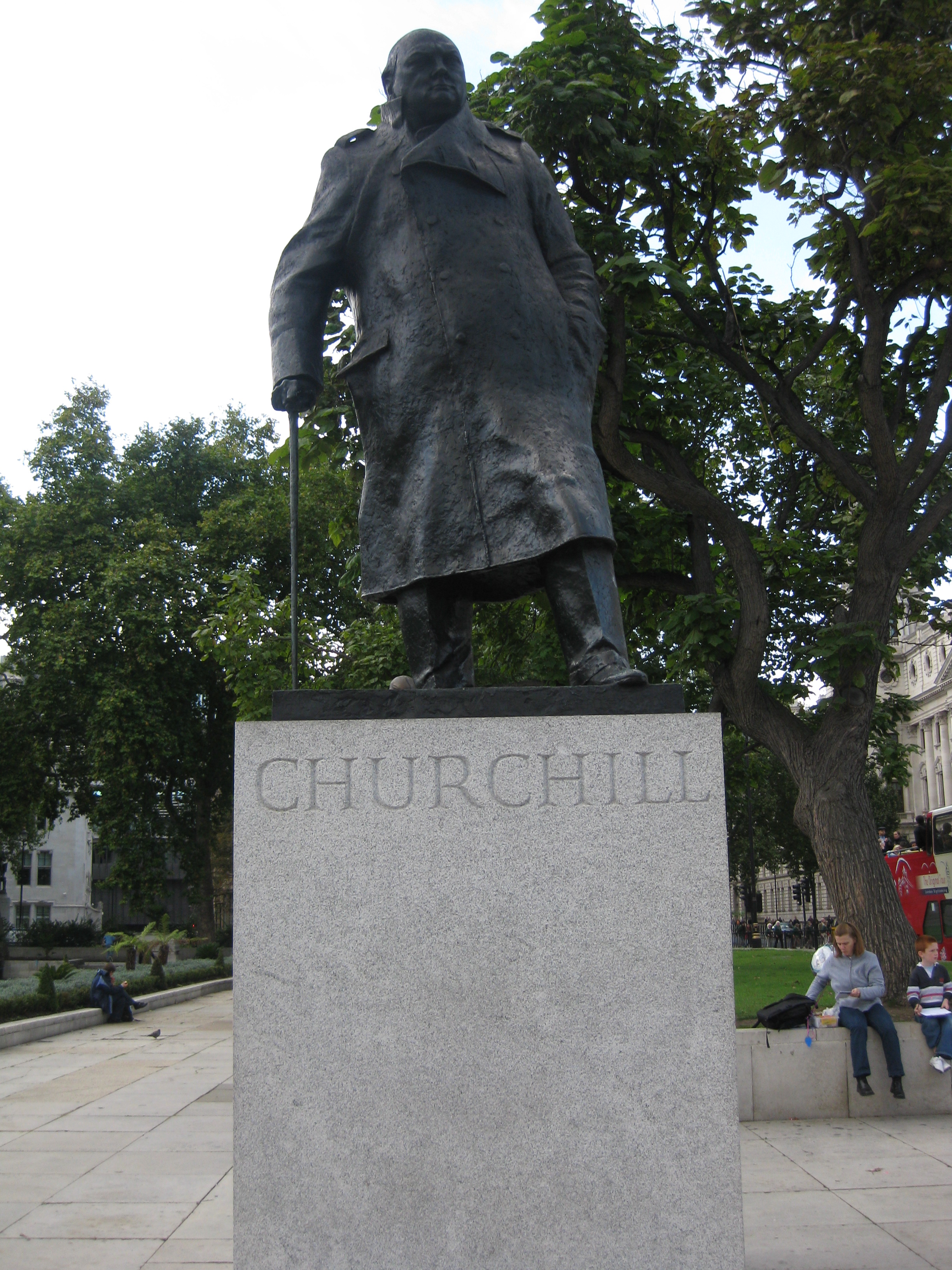
Winston Churchill is my all-time favorite political hero.  Without Churchill, Americans might be pledging allegiance to Hitler rather than the American flag.

Statue of Winston Churchill

You can visit Churchill’s underground War Rooms in London and take photos of everything down there.  I’ve explored the war nerve center twice and find it thrilling to be able to stroll through the rooms where Western Civilization was saved.

Cabinet War Rooms

Even walking down Whitehall (the center of British government) toward Trafalgar Square is exciting.

Whitehall, Center of British Government

Third, you’ll find Beatles’ history everywhere in London.

The place most tourists make a beeline for is Abbey Road.  It’s in a residential neighborhood and doesn’t feel all that special … until you try and stop traffic by walking across the zebra crossing.  (For non-fans of the Fab Four, one of the most famous record album covers in history is when the Beatles were photographed walking across the street together for their last album, Abbey Road.)

Abbey Road Zebra Crossing

But London has many more Beatles’ sights, even though they may not look all that spectacular today:

*Trident Studios, where they recorded “Hey Jude”

Former Trident Studio Building

*Paul McCartney’s London home … just a five-minute stroll from Abbey Road Studios

Paul McCartney’s House, London

*3 Savile Row, where the band played their final concert on the rooftop

3 Savile Row

Finally, I love the general atmosphere of London.

I love the Tube (most of the time) …

Tube Train

and the variety of plays (many relatively inexpensive) …

Theatres in Central London

and the train stations (Charing Cross, King’s Cross, St. Pancras, Victoria Station, Waterloo Station, among others) …

St. Pancras Station

and Greenwich, where official time is kept …

Greenwich Park from Royal Observatory

and the Tower Bridge …

Tower Bridge

and anything to do with Sherlock Holmes …

Sherlock Holmes Pub

and the cultural treasures of The British Library (where they display the Magna Carta, ancient Bibles, scores from Beethoven, manuscripts from Jane Austen and Lewis Carroll, and handwritten Beatles’ lyrics, all in the same room.)

The British Library

I guess the reason I love London so much is that as a kid, it seemed so far away … like I could never, ever go there.  And yet so many of the people and things I loved are found there.  I thank God that He has allowed me to visit the city many times … and I hope to be able to visit many more times in the future.

And every time I watch Sherlock or Spooks, I get to go there again.

So I’ll be watching the Olympics not just for the athletes, but to see places where I’ve spent a happy morning or a leisurely afternoon.

And dreaming about the day when I can go back … even though I do London very inexpensively.  (Burger King and KFC cheap.)

The great Samuel Johnson, compiler of the English dictionary, once said, “When a man is tired of London, he is tired of life.”

This is one man who will never tire of London.

This past week, I was quickly reviewing the terms that people type into their search engines to find my blog.

I have no idea who these people are … I’m just given an updated list of search terms all day long.

Because I found some of them amusing, I thought I’d share them with you.  These are just from the past 30 days:

One person entered, “What is the bible way to replace a pastor of a church that dies?”

Short answer: If the church dies, they don’t need a pastor.

Someone else wrote, “I don’t floss dentist yelled.”

Was the person who entered that phrase a dentist or a patient?  (Floss next time.)

Another person entered, “Suggested baptist hymns to sing at a pastor’s termination.”

Seriously, if a pastor is forced to leave a church, who feels like singing?  (Maybe the way to tell who pushed him out is to listen carefully for who is singing.)

I do have one recommendation, though, if the pastor wants to sing a solo: “My Jesus, I Love Thee.”  Why?  Because the first verse goes like this: “My Jesus, I love Thee/ I know Thou art mine/ For Thee, all the follies/ Of sin, I RESIGN.”

Someone else entered, “When a husband says that you are being too nice to a neighbor.”

I have absolutely no idea how that person ended up at my blog!  I don’t do marriage counseling online.

Another person found me by writing, “Pastors are the problem.”

Not politicians?  Not drug dealers?  Not terrorists?  Pastors are the problem?

They should have told us that in seminary.

Who entered this term?  “Seminary classes on forced termination of ministers.”

Is that class designed for helping pastors avoid termination … or for helping antagonists produce termination?

Hmm.

Someone else entered, “Church conflict over soundboard.”

Whatever this conflict is really about, don’t turn on the sound while people are arguing!

On the other hand, what a great introduction for a sermon!

One person was very bold, entering, “pastor i don’t like you.”

I don’t think that was aimed at me … but someone sure is ticked at their pastor.  Maybe it’s time to find another church.

Here’s a doozy: “How to control a control freak wife.”

That one needs no comment.

And this one?  “what can the church do when their pastor dive the flock?”

Did they mean “divide the flock” or “dive into the flock?”

If some pastors did the latter, they could hurt an awful lot of people.

This one I don’t understand: “gay marriage lord stands forever.”

Is someone the “gay marriage lord?”  If so, who would that be?  Maybe that person is behind all the gay marriage in our country!  Let’s find out who it is!

I don’t get this one either: “how many pastors are freak?”

If I had to hazard a guess, I’d say, “23,000,” but what do I know?  That would probably make a great PhD dissertation.

This one makes more sense: “what to do when wife want to leave church.”

You leave!  When wife want to do anything, you do it!

Let me conclude this little exercise by sharing two terms where one followed the other:

“freaks at church”

“Jim Meyer Christian teacher”

That about wraps it up!

Toppling Statues

Early yesterday morning, I listened to an account of a man’s legacy being uprooted.

I got up around 4:30 am, pushed back my recliner, closed my eyes, and listened to ESPN on television.

The president of Penn State University had ordered the removal of a popular statue of former coach Joe Paterno from its familiar location.  To hide what workmen were doing, the entire area around the statue was covered up.

When the 7-foot high, 900-pound statue was removed, it was transported to an undisclosed location.

When an adult abuses the vulernable children placed in his care, you can’t explain it or excuse it.  It’s wrong, and the perpetrator needs to be isolated from society so he cannot harm children again.  Former assistant coach Jerry Sandusky has been found guilty of heinous crimes and is now wallowing in prison.  He will never come out alive.

God have mercy on his soul.

Apparently Joe Paterno and a few others at Penn State knew about Sandusky’s behavior and covered it up.  What they did was horrible and permitted Sandusky to harm still more children.  If true, there is no excuse for such behavior.

Soon after Sandusky’s arrest, Joe Paterno died.  He has met his Maker and is living for eternity in one of two destinations.  I do not pretend to know where that is.

I was never a fan of the Nittany Lions because they ran the football too much for my liking.  I always preferred to watch teams with a wide open passing attack.  But Coach Paterno seemed to be a good man, well respected if not idolized by players and fans alike.

After the President of Penn State called for the hauling down of Paterno’s statue yesterday, the President of the National Collegiate Athletic Association – Mark Emmert – today imposed strict penalties on the university itself for permitting the abuse to occur.

One of those penalties was the vacating of 112 football victories from 1998 – the reporting of the first abuse incident involving Sandusky – through Paterno’s coaching career in 2011.

Paterno had stood alone as the winningest football coach in NCAA history.  But by wiping out 13 years’ worth of victories, he’s now Number 12 all-time.

I don’t pretend to know everything that President Emmert of the NCAA knows about the Penn State situation.  Maybe the school does deserve their $60 million fine.  Maybe they don’t deserve to go to any bowl games over the next few years.

But should much of Joe Paterno’s record as a college football coach be wiped out?

The coach wasn’t found guilty of illegal recruiting, or betting on games, or stealing opponents’ playbooks … all offenses that would have affected the outcome of games on the field.

Besides, the coach didn’t win those games by himself.  Hundreds of players went to Penn State.  They invested time to learn and practice plays.  They learned teamwork and perseverance.  They sacrificed their bodies for their coach, team, and school.

But now, the NCAA is telling those students that all they did on the field counted for nothing.  Students and their parents and all Penn State fans are being penalized, too … all innocent victims of bad decisions made by others.

In my view, the NCAA is being vindictive.  Joe Paterno is dead and gone.  Although guilty of permitting horrible crimes, the school profited from his football program for years … but now much of that is being erased from the record.

Who benefits by vacating the victories?  Nobody.  Who is harmed?  Tens of thousands of people.

I believe that President Emmert is justified in prescribing severe sanctions against the school … but vacating victories?  How did what happened off the field transfer to football on the field?

I do not worship football, or Coach Paterno, or Penn State … and evidently a lot of people do.  Maybe that culture contributed to the toleration of unspeakable actions … and that should not be tolerated.

But since our society believes that the punishment should fit the crime, I don’t see how vacating victories is connected to the crimes committed.

I welcome your thoughts on this difficult matter.

Here’s a great article on the Paterno statue and his legacy: http://sports.yahoo.com/news/ncaaf–cemetery-gates-protect-joe-paterno-from-dealing-with-the-consequences-of-his-inaction.html

Three of the greatest artists of all time in popular music have professed belief in Jesus Christ:

*Johnny Cash, considered by many to be the greatest artist in the history of country music … and who wanted to quit music and become an evangelist until Billy Graham talked him out of it.

*Bob Dylan, almost universally lauded as the greatest songwriter of the past half-century – if not the entire twentieth century – whose conversion to Christ in the late 70s shocked the music establishment who viewed him as their prophet and poet.

*Bono and The Edge from U2 – members of one of the greatest bands of all-time – who are known for turning the last portion of their concerts almost into a worship service.

Each of the above artists regularly incorporates Scripture and Christian ideas into their music.

Keep that in mind as we look at 5 more secular songs you can sing … or hear someone else sing … in church:

Number 5: “Magnificent” by U2

U2 writes their songs almost like parables … and they have admitted as much.  If you’re a believer, you get what they’re singing about … if you’re an unbeliever, you can just enjoy a song on its own merits.  Since Jesus taught this way, it’s a perfectly legitimate way to present truth … but there are always Christians who demand that a truly “spiritual” song include explicit references … and even praises … to Jesus Christ.

But should that be the rule when you’re trying to create art?

How about “Magnificent?”

The second verse goes like this (and Bono raises his hands heavenward at this point):

I was born, I was born

To sing to you

I didn’t have a choice

To lift you up

And sing whatever song you wanted me to

I give you back my voice

From the womb

My first cry

It was a joyful noise

Sounds like a psalm to me … and Bono loves the Psalms so much (he wrote an introduction to a collection of Psalms in England in the late 90s) that U2 even did a song in 1983 called “40” which is based on Psalm 40.

But in “Magnificent,” Bono gets both romantic and theological:

Justified

Til we die

You and I

Will magnify

The Magnificent

The video of the song is itself magnificent:

http://video.search.yahoo.com/video/play?p=u2%20magnificent&tnr=21&vid=4848722374819980&turl=http%3A%2F%2Fts1.mm.bing.net%2Fvideos%2Fthumbnail.aspx%3Fq%3D4848722374819980%26id%3D5ecd467794d80c1930f2eb2b7c9289af%26bid%3DLvqf9JKZbAOcgA%26bn%3DThumb%26url%3Dhttp%253a%252f%252fwww.youtube.com%252fwatch%253fv%253dYi52HjJbwVQ&rurl=http%3A%2F%2Fwww.youtube.com%2Fwatch%3Fv%3DYi52HjJbwVQ&sigr=11an18dt2&newfp=1&tit=U2+-+Magnificent

When U2 were launching their last album, No Line on the Horizon, they played some songs on the balcony of the BBC building in downtown London … with continual views of All Souls Church across a little street … the church where John Stott was rector for years:

http://video.search.yahoo.com/video/play?p=u2%20magnificent%20bbc&tnr=21&vid=4870064047980609&turl=http%3A%2F%2Fts2.mm.bing.net%2Fvideos%2Fthumbnail.aspx%3Fq%3D4870064047980609%26id%3Df1d5d519940e0b57f3d77c1c26b820be%26bid%3DdncOSq%252fgf90Vlw%26bn%3DThumb%26url%3Dhttp%253a%252f%252fwww.youtube.com%252fwatch%253fv%253dkHPvrC0eDss&rurl=http%3A%2F%2Fwww.youtube.com%2Fwatch%3Fv%3DkHPvrC0eDss&sigr=11ahcc389&newfp=1&tit=U2+-+Magnificent+-+live+rooftop+gig+at+BBC+-+%5BHD+-+High+Quality%5D

Number 4: “Viva la Vida” (Long Live Life in Spanish) by Coldplay

Coldplay’s lead singer, Chris Martin, grew up in a strict Christian home in England, but there is no indication that he has chosen to follow Christ into adulthood.

And yet Martin and his band hit gold with this 2008 song, which captured the Grammy award for Song of the Year in 2009.  Lyrics aside, it’s my favorite tune out of all ten “secular” songs.  On a recent trip, after hearing the song once, my wife asked if we could play it again.  It’s a song I’ve never tired of hearing.

The song is a mini morality tale.  The narrator was once a king … someone in authority … but has since been deposed and sings:

I used to rule the world

Seas would rise when I gave the word

Now in the morning I sleep alone

Sweep the streets I used to own

With an infectious string background, the narrator continues:

One minute I held the key

Next the walls were closed on me

And I discovered that my castles stand

Upon pillars of salt and pillars of sand

Remind anyone of Jesus’ words about the rich man at the end of the Sermon on the Mount?

The song refers to “Jerusalem bells” and “my missionaries in a foreign field” … the latter phrase being one that someone raised in a Christian church would know.

Then at the end of the song:

Revolutionaries wait

For my head on a silver plate

Just a puppet on a lonely string

Oh who would ever want to be king?

For a Christian, the saddest phrase of all occurs when Martin sings:

For some reason I can’t explain

I know Saint Peter won’t call my name …

What did the king do to merit banishment?  The song doesn’t say, but it’s obvious he fell from grace … an illustration of the biblical idea that “God opposes the proud, but gives grace to the humble” (1 Peter 5:5).

Our church in Arizona not only played this song during their pre-service music, they also did it as a performance song in their services one weekend.

There are two videos for the song: one that’s a bit edgy, another that’s more conventional.  Here’s the conventional video:

http://video.search.yahoo.com/video/play?p=viva%20la%20vida&tnr=21&vid=4679311676014760&turl=http%3A%2F%2Fts1.mm.bing.net%2Fvideos%2Fthumbnail.aspx%3Fq%3D4679311676014760%26id%3D328d95281bbd59832ac78eb6d72da347%26bid%3DmJOXDdQMNVMIVw%26bn%3DThumb%26url%3Dhttp%253a%252f%252fwww.youtube.com%252fwatch%253fv%253dezi1J8f8ecA&rurl=http%3A%2F%2Fwww.youtube.com%2Fwatch%3Fv%3Dezi1J8f8ecA&sigr=11a6snagk&newfp=1&tit=Viva+La+Vida+Anton+Corbijn+video

Number 3: “When He Returns” by Bob Dylan

When I went online to try and find a performance of Dylan singing this song, I discovered dozens of cover versions, many of them by Christian artists.  This song obviously resonates with many people.

Dylan’s classic album Slow Train Coming ends with this song … with Bob singing and playing the piano alone.  It makes the song that much more powerful.

After Slow Train came out, I preached on the second coming of Christ at my church, and after the message, I wanted someone to sing the song live … but I didn’t know who could do it justice.  Next best option: to play Dylan doing the song while projecting the words, but Christians weren’t used to that kind of thing back then.

So I read the words to the song to the congregation … and they still hold up to this day.  For example:

Surrender your crown, on this blood-stained ground

Take off your mask

He sees your deeds, He knows your needs

Even before you ask

How long can you falsify and deny what is real?

How long can you hate yourself for the weakness you conceal?

Not exactly hand-clapping, toe-tapping lyrics … but they make you think.  The song ends this way:

Of every earthly plan

That be known to man

He is unconcerned

He’s got plans of His own

To set up His throne

When He returns

The lyrics are powerful on their own, but when you consider who’s singing them …. wow!

Since nobody does Bob like Bob, check out this video … has to be from around 1980:

http://video.search.yahoo.com/video/play;_ylt=A2KLqII4nghQoBQA0Kv7w8QF;_ylu=X3oDMTBrc3VyamVwBHNlYwNzcgRzbGsDdmlkBHZ0aWQD?p=godtube+bob+dylan+when+he+returns&vid=6288DC98DFB07DDD792D6288DC98DFB07DDD792D&l=5%3A38&turl=http%3A%2F%2Fts2.mm.bing.net%2Fvideos%2Fthumbnail.aspx%3Fq%3D4913670861684989%26id%3D75ba4f033e18132eb51bd551a9de484e%26bid%3DLXndfbDfmNyIYg%26bn%3DLargeThumb%26url%3Dhttp%253a%252f%252fwww.godtube.com%252fwatch%252f%253fv%253dWW7P7NNX&rurl=http%3A%2F%2Fwww.godtube.com%2Fwatch%2F%3Fv%3DWW7P7NNX&tit=when+he+returns+-+Today%26%2339%3Bs+Christian+Videos&c=1&sigr=118ll8dtq&

Number 2: “Bring Him Home” from Les Miserables

When I was a kid, I heard scattered warnings that Christians shouldn’t attend plays in the theatre.  Before movies, I suppose decadent ideas were first introduced to the public through plays.

I’ve seen maybe 15 shows in my lifetime, but most of them have made me a better person (although considerably poorer financially).

But the best one of all is Les Miserables.

If you haven’t seen it, the musical is at once inspiring … and sad … and bawdy … and intensely spiritual.

And the most spiritual song in the musical is “Bring Him Home.”

Jean Valjean … a former criminal who seeks redemption while being chased by a relentless policeman (The Fugitive TV series and film were both based on Les Miserables) … sings this song about a young man named Marius toward the end of the show.

God on high

Hear my prayer

In my need

You have always been there

I can’t hear this song without thinking of both my children … my son Ryan because the song expresses how I feel about him … and my daughter Sarah because she knows every word of Les Miserables by heart.

And every time I hear this song … I am moved to tears … primarily because of Jean Valjean’s last 12 words:

If I die

Let me die

Let him live

Bring him home

The song is a prayer … a prayer for safety for a young man who has been standing for what’s right … and a prayer for an old man who is willing to sacrifice his life so the young man can live.

See if you can hold back tears while watching this video of Alfie Boe singing “Bring Him Home”:

http://video.search.yahoo.com/video/play?p=les%20miserables%20bring%20him%20home&tnr=21&vid=4991572973191328&turl=http%3A%2F%2Fts1.mm.bing.net%2Fvideos%2Fthumbnail.aspx%3Fq%3D4991572973191328%26id%3Ddec1445ebacce4afacacb04c4b40a7d1%26bid%3DY6dmx87lSF8v8g%26bn%3DThumb%26url%3Dhttp%253a%252f%252fwww.youtube.com%252fwatch%253fv%253dUaI9BPKhExk&rurl=http%3A%2F%2Fwww.youtube.com%2Fwatch%3Fv%3DUaI9BPKhExk&sigr=11a04cgm0&newfp=1&tit=Bring+him+home+-+Alfie+Boe+%5BLes+Mis%C3%A9rables+in+concert%2C+the+25th+…

And if you’d like to see a sterling performance, watch the Valjean Quartet … 4 vocalists who have played the part of Jean Valjean on the stage … sing this song together (Sarah loves Colm Wilkinson the most … the first vocalist) at the 25th anniversary of the musical:

http://video.search.yahoo.com/video/play?p=les%20miserable%20bring%20him%20home&tnr=21&vid=5023102315003949&turl=http%3A%2F%2Fts2.mm.bing.net%2Fvideos%2Fthumbnail.aspx%3Fq%3D5023102315003949%26id%3D8d94db7e2f51a0a212e6f73440837547%26bid%3DyX4%252bTW93AfrLGA%26bn%3DThumb%26url%3Dhttp%253a%252f%252fwww.youtube.com%252fwatch%253fv%253ds-0MS72uHSQ&rurl=http%3A%2F%2Fwww.youtube.com%2Fwatch%3Fv%3Ds-0MS72uHSQ&sigr=11arq1pg2&newfp=1&tit=Bring+Him+Home+-+Valjean+Quartet+%5BLes+Mis%C3%A9rables+in+concert%2C+the

Number 1: “Yahweh” by U2

U2 is one of the greatest rock bands of all time … certainly in the Top 10, and arguably in the Top 5.

But would John Lennon, Mick Jagger, Roger Daltrey, or Robert Plant ever sing these lyrics?

Take these hands

Teach them what to carry

Take these hands

Don’t make a fist

Take this mouth

So quick to criticize

Take this mouth

Give it a kiss

And then the chorus:

Yahweh, Yahweh

Always pain before a child is born

Yahweh, Yahweh

Still I’m waiting for the dawn

How to Dismantle an Atomic Bomb is, in my opinion, U2’s most spiritually-oriented album … so much so that I used to give copies of it away.  “Yahweh” ends the album with a heartfelt prayer … the modern-day equivalent of the hymn “Take My Life, and Let it Be.”

The song ends this way:

Take this city

A city should be shining on a hill

Take this city

If it be Your will

What no man can own

No man can take

Take this heart, take this heart

Take this heart

And make it break

“Yahweh” isn’t necessarily my favorite song from this list … I’m partial to “Walk On” and “Viva La Vida” … but I believe it’s the song that could most easily be done in a church service.

Here’s a moving video of Bono and the Boys ending a concert with a slowed-down (hymnlike) version of the song:

http://video.search.yahoo.com/video/play?p=u2%20yahweh&tnr=21&vid=4821432146853965&turl=http%3A%2F%2Fts2.mm.bing.net%2Fvideos%2Fthumbnail.aspx%3Fq%3D4821432146853965%26id%3Dbcdfeba53d4a80db14bad403ad490c12%26bid%3DBxQx%252b8Dwtq6ijA%26bn%3DThumb%26url%3Dhttp%253a%252f%252fwww.youtube.com%252fwatch%253fv%253dGkEQS5SJZPU&rurl=http%3A%2F%2Fwww.youtube.com%2Fwatch%3Fv%3DGkEQS5SJZPU&sigr=11adl4aqm&newfp=1&tit=U2+Yahweh+Live+From+Chicago

So that’s my list.  What’s yours?

Check out our website at www.restoringkingdombuilders.org  You’ll find Jim’s story, recommended resources on conflict, and a forum where you can ask questions about conflict situations in your church.

There are moments involving popular music that will remain with me for all time:

*Hearing “Born to be Wild” outside my summer school geometry class

*Hearing the world premiere of “Hey Jude” on the radio

*Hearing “Bad Moon Rising” and “Get Together” while playing flashlight tag on a hot summer evening

*The day the music really died … the day The Beatles broke up

*The day I heard … but couldn’t believe … that Bob Dylan had become a follower of Jesus … subsequently proved by his ground-breaking album “Slow Train Coming”

*The day I bought U2’s album “All That You Can’t Leave Behind” … and played it over … and over … and over

*Ditto for “Achtung Baby,” still U2’s edgiest – and best – album

Many Christians make a sharp division between secular and spiritual music.

To them, if it’s secular, it’s bad … and if it’s spiritual, it’s good.

But I think a song is good whether it’s secular or spiritual … and some “spiritual” songs are duds.  (I won’t name any … they might be your favorites.)

I realize that some Christians may not like some of these songs … because an artist hasn’t led a completely clean life … or doesn’t have a clear Christian testimony … or doesn’t attend church regularly.

But I think the songs … and their lyrics … stand up under scrutiny … and it just so happens that secular artists (some of whom are believers, some of whom aren’t) first introduced these songs to us.

I’d like to share ten secular songs you can sing or hear sung in church … five in this article, and five in the next:

Number 10: “May the Road Rise” by Roger McGuinn

McGuinn was the lead guitar player in the Byrds … manipulating his Rickenbacker 12-string guitar to get that “chiming” sound that many of us love so much.

During Bob Dylan’s Rolling Thunder Revue tour, McGuinn became a follower of Jesus.  His mission in life is to preserve folk music, and to that end, he sings and records one folk song every month, which he gives away for free on his website.  Many of the songs he produces are old spirituals like “Wayfaring Stranger” and “He’s Got the Whole Word in His Hands.”

“May the Road Rise” is based on an old Irish blessing.  It’s written by both Roger McGuinn and his wife Camilla.  The lyrics tell the story of a couple who enjoys nature, but upon further reflection, also describes a couple’s relationship.

The wife ends up singing this chorus to her husband:

May the road rise to meet you

May the wind be at your back

May the sun shine warm upon your land

May the rain fall soft upon your face

Until we meet again

And may God hold you in the palm of his hand

Here’s the album version: http://video.search.yahoo.com/video/play?p=roger%20mcguinn%20may%20the%20road%20rise&tnr=21&vid=4535249882382424&turl=http%3A%2F%2Fts1.mm.bing.net%2Fvideos%2Fthumbnail.aspx%3Fq%3D4535249882382424%26id%3Dfb9d53fbfb040598512c6f9adc4e5de5%26bid%3DMPAUNyIiwUKzdA%26bn%3DThumb%26url%3Dhttp%253a%252f%252fwww.youtube.com%252fwatch%253fv%253d5bzCZdB3dT4&rurl=http%3A%2F%2Fwww.youtube.com%2Fwatch%3Fv%3D5bzCZdB3dT4&sigr=11a2fj141&newfp=1&tit=Roger+McGuinn+-+May+The+Road+Rise+Up+To+Meet+You.wmv

And here’s a live version:

http://video.search.yahoo.com/video/play?p=roger%20mcguinn%20may%20the%20road%20rise&tnr=21&vid=4909367311925301&turl=http%3A%2F%2Fts2.mm.bing.net%2Fvideos%2Fthumbnail.aspx%3Fq%3D4909367311925301%26id%3D6b8545d6a9d9698b963c094330b1c115%26bid%3D7a3StV2SL7yk3g%26bn%3DThumb%26url%3Dhttp%253a%252f%252fwww.youtube.com%252fwatch%253fv%253dwEFo3JJ-fEk&rurl=http%3A%2F%2Fwww.youtube.com%2Fwatch%3Fv%3DwEFo3JJ-fEk&sigr=11aegp3ge&newfp=1&tit=Roger+McGuinn+-+May+the+Road+Rise+to+Meet+You

Number 9: “When Will I Ever Learn to Live in God” by Van Morrison

Van the Man has embraced all kinds of styles in his half-century musical career: rock, pop, folk, jazz, gospel … and a lot of music that remains uncategorized.

He’s also embraced various spiritual paths as well … but at the time this song was released (1989) he seemed to be firmly in the Christian camp … so much so that Phil Keaggy – the great Christian guitarist and vocalist – covered it on his best album, “Crimson and Blue.”

Who writes lyrics like these?

You brought it to my attention that everything was made in God

Down through centuries of great writings and paintings

Everything lives in God

Seen through architecture of great cathedrals

Down through the history of time

Is and was in the beginning

And evermore shall ever be

Nobody sings or writes like Van.  He’s one of the greatest of all time.  If you only know him from “Brown-Eyed Girl” or “Moondance” or “Domino,” you’re missing out.  For me, his best stuff started 22 years ago with “Avalon Sunset” and “Hymns to the Silence” (where Van does a cover of “Be Thou My Vision”) and my favorite Van record, “Magic Time” from 2005.

The chorus:

When will I ever learn

To live in God

When will I ever learn

He gives me everything

I need and more

When will I ever learn

Here’s a live version, although the video isn’t that clear:

http://www.youtube.com/watch?v=19DPp290OEg

Number 8: “Forever Young” by Bob Dylan

Dylan wrote this song of blessing to one or more of his children … maybe Jakob.  If you have a son … or a daughter even … you can’t help but shed a tear when Dylan sings:

May you grow up to be righteous

May you grow up to be true

May you always know the truth

And see the lights surrounding you

May you always be courageous

Stand upright and be strong

And may you stay

Forever young

Bob isn’t everyone’s cup of tea … because of his singing … but in the opinion of people within the music industry, he’s the world’s greatest songwriter of the past half century.  Check out this clip from the David Letterman Show back in the mid-90s:

http://video.search.yahoo.com/video/play;_ylt=A2KLqIIURP9P2AEA.FH7w8QF;_ylu=X3oDMTBrc3VyamVwBHNlYwNzcgRzbGsDdmlkBHZ0aWQD?p=bob+dylan+forever+young&vid=ABE07D246FD052C1A129ABE07D246FD052C1A129&l=5%3A21&turl=http%3A%2F%2Fts4.mm.bing.net%2Fvideos%2Fthumbnail.aspx%3Fq%3D4642190270005259%26id%3Dc1c571d8d76fc0566cfec795ce370b0c%26bid%3DKaHBUtBvJH3gqw%26bn%3DLargeThumb%26url%3Dhttp%253a%252f%252fwww.dailymotion.com%252fvideo%252fxpoaxo_bob-dylan-forever-young_music&rurl=http%3A%2F%2Fwww.dailymotion.com%2Fvideo%2Fxpoaxo_bob-dylan-forever-young_music&tit=Bob+Dylan+-+Forever+Young&c=15&sigr=1255p6tln&

Number 7: “Walk On” by U2 (Heroes version)

U2 opened the Grammy Awards in 2002 with this song … and then proceeded to win the Grammy for best record.  Bono and The Edge wrote the song for pro-democracy Burmese prisoner Aung San Suu Kyi, who was under house arrest in Burma for years until recently released.

This version of the song was performed ten days after 9/11 and broadcast all over the world.  Bono and the Boys could have chosen any song to sing … but they chose this one.  The snippet of their song “Peace on Earth” at the beginning is awesome … as is the chorus that includes Bono’s shouts indicating his view of life after death.

While the song is definitely a political anthem (the album was banned in Burma), it also has spiritual overtones (as most of U2’s songs do), reminding us that:

You’re packing a suitcase

For a place none of us has been

A place that has to be believed

To be seen

Not to sound morbid, but I want this song played at my memorial service someday, especially because of these lyrics:

All that you fashion, all that you make

All that you build, all that you break

All that you measure, all that you feel

All this you can leave behind

Here’s the Tribute to Heroes version:

http://video.search.yahoo.com/video/play;_ylt=A2KLqIAnpetPljkAPGD7w8QF;_ylu=X3oDMTBrc3VyamVwBHNlYwNzcgRzbGsDdmlkBHZ0aWQD?p=u2+walk+on+heroes&vid=6E681ED83FD0AE0B547A6E681ED83FD0AE0B547A&l=&turl=http%3A%2F%2Fts3.mm.bing.net%2Fvideos%2Fthumbnail.aspx%3Fq%3D5044194870231098%26id%3Dd1ea4bc9f58bdac1cf9010fdffd36309%26bid%3DelQLrtA%252f2B5obg%26bn%3DLargeThumb%26url%3Dhttp%253a%252f%252fwww.youtube.com%252fwatch%253fv%253d2Fv-j5iBgKU&rurl=http%3A%2F%2Fwww.youtube.com%2Fwatch%3Fv%3D2Fv-j5iBgKU&tit=U2+-+Peace+On+Earth%2FWalk+On+%28from+%26quot%3BAmerica%3A+A+Tribute+to+Heroes%26quot%3B%29&c=4&sigr=11ag0luga&

Number 6: “Show Me the Way” by Styx

I never became a fan of the long-haired bands of the 70s or 80s … including Styx.  But this song by them is incredibly well-written and sung.

When I first heard these lines over the radio in 1990, my eyes welled up with tears:

All the heroes and legends

I knew as a child

Have fallen to idols of clay

And I feel this empty place inside

So afraid, that I’ve lost my faith

Dennis DeYoung, the group’s lead singer, is a devout Catholic.  He wrote this song for his son Matthew about the struggle to keep faith “in a world so filled with hatred.”  The chorus:

Show me the way,

Show me the way,

Take me tonight to the river

And wash all my illusions away

And please show me the way

The song is probably the best “seeker prayer” I’ve ever heard.  Dennis DeYoung has an incredibly powerful and expressive voice.

The song ends with this memorable line: “Every night, I say a prayer, in the hopes that there’s a heaven.”

Here’s a live version of the song, which I like better than the video:

http://video.search.yahoo.com/video/play;_ylt=A0S00Mz5Nv9PIiYA7V_7w8QF;_ylu=X3oDMTBrc3VyamVwBHNlYwNzcgRzbGsDdmlkBHZ0aWQD?p=show+me+the+way+styx&vid=57FCC9DA7A03482B822057FCC9DA7A03482B8220&l=5%3A55&turl=http%3A%2F%2Fts3.mm.bing.net%2Fvideos%2Fthumbnail.aspx%3Fq%3D4859691695866138%26id%3D9cd0a6cd09b03f4f688b95f64a680b83%26bid%3DIIIrSAN62sn8Vw%26bn%3DLargeThumb%26url%3Dhttp%253a%252f%252fwww.youtube.com%252fwatch%253fv%253dKOgGJK9r_1M&rurl=http%3A%2F%2Fwww.youtube.com%2Fwatch%3Fv%3DKOgGJK9r_1M&tit=Styx+-+Show+Me+The+Way+%281996+John+Panazzo+Tribute%29&c=15&sigr=11aqfq42c&

There are many songs one could choose in this category.  In fact, I made a huge list on iTunes that I whittled down to 10.

You undoubtedly have some nominees of your own.

Before I reveal my top 5 next time, which songs do you think work here?