Feeds:
Posts
Comments

Archive for the ‘Please Comment!’ Category

In the fall of 2009, my wife and I went on a missions trip to Moldova with three other people.  After spending several days in London to recuperate and see some sights, Kim and I traveled north to Wales, Keswick, Edinburgh, and York before returning home.

trip-to-the-uk-1-oct-2009-061trip-to-the-uk-1-oct-2009-319  trip-to-the-uk-1-oct-2009-512 trip-to-the-uk-1-oct-2009-532

Whenever I look at photos from that trip, this little voice tells me, “The whole time you were away, the church board back home was plotting to end your ministry.”

As I’ve recounted in my book Church Coup, the official board met with me on October 24, 2009 and announced a decision designed to end my tenure at the church I had served effectively and faithfully for 10 1/2 years.

Talk about an “October surprise!”

Forty-three days later, I resigned, and preached my final sermon a week later.

I’ve been through many tough times in ministry, and managed to overcome each situation with God’s help.

But not this time … because the spirit in the church had changed.

When I refer to such a “spirit,” I’m talking about an atmosphere … a climate … a mood that I could feel … though others may not have sensed it.

In fact, one way of looking at that fifty-day conflict is to identify the spirits that drove some to push out their pastor.

As I’ve listened to the stories of many pastors and church leaders since my departure, I’ve learned that these spirits are usually present before a pastor is forced to resign … as well as during any extended conflict.

As I see it, there are at least seven spirits that drive a church coup:

First, there’s the spirit of resistance.

For years, we were the largest Protestant church in our city of 75,000 people … by far … excellent numbers in a city with only three decent Protestant churches at the time.

But an underground resistance movement… fueled by someone outside the church … slowly expanded and reached a crescendo by the fall of 2009.

Most of my time as pastor, both my leadership and preaching were well-received … but near the end of my tenure, things had changed.

Resistance is the feeling a pastor senses that certain leaders and members are no longer following his leadership.

I first started detecting resistance when we started a building program around 2002.  I let the congregation have input on both the architect’s drawings as well as our fundraising plan.

And every vote involving the building was unanimous.

We lost about eight percent of our people during that time, and two individuals in the inner circle tried to sabotage the project.

As a leader, I never forced my ideas on people.  I made proposals, stated my case, asked for input, addressed objections, called for an official decision, and then moved forward.

If various individuals didn’t like my proposals, they had many opportunities to voice their displeasure in public.

But they didn’t … they went underground instead.

By the time 2009 rolled around, I could feel the resistance, especially when I preached.  To quote Phil Collins, there was “something in the air.”

No matter what I did – perform a wedding, conduct a funeral, propose a change – there always seemed to be pushback.

Especially from the church board.

No matter how hard I tried, I could not please them.  They never told me I was doing a good job.  They never tried to encourage me.  I always felt like I was on trial.

And their resistance started wearing me down.

Second, there’s the spirit of bitterness.

Regardless of church size, it only takes seven to ten people to force a pastor out.  If that minority is determined to oust the pastor … and are willing to use the law of the jungle … they often succeed.

Some people were angry with me because I took positions contrary to theirs on matters like baptism … women in ministry … outreach events … worship style … you name it.

A handful shared their disagreements with me and we worked things out.  Most told everyone but me about their anger and pulled others into their web.

For example, as our new worship center neared completion, I created seven principles for the way we were going to run our worship services.  I went to the church board and gained unanimous approval for those principles.

But a woman on the worship team disagreed vehemently.  She began complaining about me to anyone who would listen, to the point that the board chairman had to intervene.

I invited her into my office, listened to her concerns, explained my position, thought we had an understanding, and assumed that was the end of it.

Until she started complaining again.

A few months later … having caused much division … she and her family left the church.  It hurt.  I thought we were friends.

I’m unsure if she ever forgave me.   And when people feel and express bitterness toward their pastor, that bitterness spreads, and eventually wears a pastor down … and can tear a church apart.

And all too often, the bitterness morphs into a vendetta.

Third, there’s the spirit of hypocrisy.

A hypocrite is a play-actor … someone who acts one way in public but another way in private.

While hypocrites act in a spiritual manner outwardly, they are completely different people inside.

Pastors can sense those individuals and families who aren’t behind them.  You try and move toward them, and love on them, but sometimes, it just doesn’t work.

There was a couple in that church who had been there since the church started.  No matter what, I just couldn’t seem to connect with them.

Let’s call them Bo and Jo.

I ministered to them when there were deaths in their family.  I intentionally sought them out for conversation after services.  They were cordial but rarely warm.

I knew they were good friends with my predecessor but tried to ignore that connection.  After all, what could I do about it?

Eight days after the conflict started, the entire church board resigned, and a week later, we held two already-scheduled congregational meetings designed to announce the board’s departure.

After 24 years of leading healthy congregational meetings, all hell broke loose that Sunday.  A few members became unglued and publicly sided with the board.

After the second meeting, Bo came up to me and said, “I’m praying for you, brother.”  I looked at him and said, “Are you, Bo?”  (I knew he stood against me.)

A friend later told me that Jo was crying in the ladies room because she was afraid that I wasn’t going to be kicked out as pastor.

Before I resigned, I was informed that Bo and Jo played a crucial role in forcing me out.

Jesus knew who the hypocrites around Him were and called them out.  I sensed who some were but never knew what to do except keep them out of leadership.

If you don’t want me as your pastor, there’s a simple solution: leave the church.

But people like Bo and Jo don’t want to leave.  They want their pastor to leave instead … even if he isn’t guilty of any major offense … because in their minds, it’s their church, not his church.

And, of course, they know best.

And because hypocrites are experts at playing a part, pastors may not know who they are, so they can’t proactively work things out with them.

Fourth, there’s the spirit of cowardice.

When it comes to interpersonal squabbles at church, most Christians are cowards.

If they’re personally offended by someone, they don’t approach the person who hurt them as Jesus instructed in Matthew 18:15 … they complain to their network instead.

This is especially true when it comes to pastors.

Whenever someone had the courage to tell me directly they were upset about something, I always thanked them for speaking with me personally … but it rarely happened … not because I’m scary, but because people find it uncomfortable to confront their pastor.

But sometimes, what people are thinking and feeling about their pastor is based on inaccurate information … and God’s people may not want to hear the truth.

Last year, I heard about a church where someone accused the pastor of stealing a small amount of money.  Instead of speaking with the pastor privately, this individual reported the pastor to the authorities, and then told many others in the church about his accusation.

As the charges bounced around the congregation, some felt emboldened, and added their own personal gripes about the pastor to the mix.

The pastor was driven from office even though the evidence clearly showed he had done nothing wrong.

His career was destroyed over a lie.

Christians become cowards when:

*board members are upset with the pastor but never tell him how they feel.

*members allow false accusations about their pastor to spread.

*everybody is afraid to confront the ringleaders who initially attacked the pastor.

*people who know the truth won’t share it for fear of being vilified.

If God’s people would just grant their pastors the protections Scripture offers them in Deuteronomy 19:15-21, Matthew 18:15-17, and 1 Timothy 5:19-21, we could put an end to the epidemic of pastoral terminations once and for all.

But that will require a spirit of courage that is sadly lacking in most congregations… and it requires working hard to disintegrate the groupthink that grips so many.

Fifth, there’s the spirit of gullibility.

Many years ago, I began an Easter service by announcing that the President of the United States had suddenly resigned.

After hearing gasps all over the room, I exclaimed, “April Fool!”

If I tried that today, someone would check out the news on their smart phone before I ever got to “April Fool.”

But churchgoers who often check out the facts regarding the news rarely check out negative information they hear about their pastor.

If I was a regular churchgoer and I heard a serious rumor about my pastor, I would want to know:

*the original source of the rumor.

*who is spreading the rumor.

*who they’ve been talking with.

*how solid their information is.

*the views of different staff and board members.

If I believe the first thing I hear, then I’m really gullible.  And if I pass on that information without verifying it, I could well be passing on a lie … and destroying both my pastor and my church.

But wise, mature, discerning Christians check out the veracity of what they hear before they do anything else.

Yet in all too many churches, people hear negative information about their pastor … instantly believe it … spread the story to others … and then can’t revise the narrative because it will make them look bad … so they continue to perpetuate half-truths and outright lies.

During our conflict, after board members resigned, they and their wives jumped on their phones and called as many people as possible.  (A friend from out-of-state told us who called her and what was said.  Why call her?)

When I was telling my story to my ministry mentor several years ago – a former pastor and denominational president – this is the point at which he said, “Jim, I am so sorry.”

It’s one thing for people who hate their pastor to spread vicious rumors about him.  It’s another thing for good Christian people to believe them … especially when the pastor has a decade-long track record of integrity.

What hurts more than anything is that most people never bothered to pick up the phone to hear my side of the story.

The week before I resigned, Satan attacked my family in a horrible way.  Few people know the story.  I’ll spare you the details.

During the attack, I received a phone call from a newly-elected board member who told me about the latest charge against me.  He told me the source of the rumor … where that person heard it from … and exactly what they were saying.

Because he called, I was able to snuff out the rumor with facts, which I’m sure he passed on to the other new members.

I could have snuffed out all the rumors if people had just contacted me … and I still can … but by this time, nobody cares.

Don’t the conquerors write the history?

Sixth, there’s the spirit of blindness.

By blindness, I mean that a pastor’s attackers believe they see his faults clearly.

They just can’t see their own.

Let’s modify Jesus’ words in Matthew 7:3-5 a bit:

“Why do you look at the speck of sawdust in your pastor’s eye and pay no attention to the plank in your own eye?  How can you say to your pastor, ‘Let me take the speck out of your eye,’ when all the time there is a plank in your own eye?  You hypocrite, first take the plank out of your own eye, and then you will see clearly to remove the speck from your pastor’s eye.”

Paul’s words in Galatians 6:1 (with one modification) are also appropriate here:

Brothers, if your pastor is caught in a sin, you who are spiritual should restore him gently.  But watch yourself, or you also may be tempted.

God’s Word does not say that you are to watch your pastor’s life and then tell others about every little thing he may have done or said wrong.

No, Scripture says that before you deal with those caught in sin, you should first “watch yourself” to make sure you have a humble, loving approach so you can restore the wayward person.

And if you don’t first “watch yourself,” you aren’t qualified to address anyone’s sin.

Whenever a pastor is pushed out of a church, there are usually a few narcissists and sociopaths involved.  People who have these personality disorders never admit they do anything wrong at home … at work … or on the road.

They bring that same mentality to church, and when they sense their pastor is vulnerable, they move in for the kill … and never feel badly about the part they play.

What’s amazing to me is that many churches allow such spiritually blind people to be their leaders.

Finally, there’s the spirit of destruction.

There is a spirit behind these seven spirits … and it’s not the Holy Spirit of God.

As Ephesians 2:2 specifies, it’s “the spirit who is now at work in those who are disobedient” … Satan.

As I say quite often, Satan has invaded a church when two factors are present: deception and destruction.

Or we might say … deception leading to destruction.

Jesus said in John 8:44 that Satan is “a liar and the father of lies” and “a murderer from the beginning” … and He was addressing His comments to spiritual leaders.

When a pastor has done something wrong, those in a church controlled by the Holy Spirit will gently and lovingly confront him with the goal of restoring him spiritually and even vocationally.

But under similar circumstances, those influenced by Satan will harshly and hatefully condemn him with the goal of destroying him both personally and professionally.

Instead of identifying Satan’s work in their own lives, such people gleefully detect satanic influence in their pastor.

As Neil Young sang, “I don’t feel like Satan, but I am to them.”

My wife and I could not only sense Satan’s influence during the conflict … we could taste and feel it.

It’s something you never forget.

After the church board resigned, I hired a church consultant … with the assistance of five well-respected congregational leaders.

After interviewing some leaders, and witnessing two horrendous congregational meetings, the consultant wrote a report where he exonerated my wife and me and faulted others.

Then a nine-person team from the church looked into the charges against us and publicly announced that we were not guilty of wrongdoing.

But one year later, the tables had turned, and friends sadly informed me that my reputation inside the church had been decimated.

The verdicts of the consultant and nine-person team no longer mattered.  My opponents had to win.  I had to be destroyed.

The hit job on me was so complete that after I left the church, not one person – including family, friends, or colleagues – felt that I should ever pastor again.

After 36 years, my church ministry career was over.

_______________

Several months after I resigned and moved to another state, I had a conversation with a church consultant from the Midwest.  I kept asking him, “Why did these people … who claimed to be Christians … act the way they did?”  Because I could never act that way toward anyone else, I couldn’t get my head around it.

The consultant told me, “Jim, the opposition to your ministry was probably there for years, but you didn’t see it because people covered it up well.  When you were attacked, their true feelings came spilling out.”

_______________

I’m going to end this article by quoting Galatians 5:19-23:

The acts of the sinful nature are obvious: sexual immorality, impurity and debauchery; idolatry and witchcraft; hated, discord, jealousy, fits of rage, selfish ambition, dissensions, factions and envy; drunkenness, orgies, and the like.  I warn you, as I did before, that those who live like this will not inherit the kingdom of God. 

But the fruit of the Spirit is love, joy, peace, patience, kindness, goodness, faithfulness, gentleness, and self-control.

Which terms best represent those that try and force out their pastor?

Hint: it’s not the second group.

Read Full Post »

While cleaning out some boxes kept in storage yesterday, I ran across a photo taken of me at an event from my last church … and I instantly felt a twinge of pain inside.

Then I started to feel sadness behind my eyes … like I wanted to cry but couldn’t.  That feeling lasted for about half an hour.

I’ve had these feelings for years now, and I don’t like them.  They come upon me at unexpected times, especially when I focus too much on the conflict that propelled me out of church ministry seven years ago.

Even though I’ve written extensively about pastoral termination and church conflict over the past six years – having written nearly 525 articles – I haven’t written much about the feelings that a pastor has after he’s been forced out of office.

While I can’t speak for every pastor who goes through this horrendous experience, maybe it would be helpful to describe what’s healthy … and unhealthy … after a pastor undergoes termination.

So offering up my own experiences as a model, let me share five emotions that I experienced in the aftermath of my departure from ministry in 2009:

First, I was shocked by the viciousness some people demonstrated to get rid of me. 

Some people I served as pastor did everything in their power to destroy my position as pastor as well as my reputation.

And I mean destroy.

There is no way to sugarcoat what they did or said.  These professing Christians intended harm toward me, their pastor.

It was revenge … and personal.

Only I didn’t know then … and don’t know today … what I did or didn’t do to illicit such hatred from them.

That shock lasts a long time.  In many ways, I’m still not over it.

I never preached with a hateful tone nor a hateful manner, so those feelings did not originate with me.  They either came from an internal or external source.  My guess is that they came from someone outside the church who fanned the flames of anger inside the church.

The attitude of these people was not, “We disagree with your views on several subjects,” nor, “We think you’ve lost effectiveness and should go.”

No, their attitude was, “We hate you, Jim, and we want you to leave and never come back.”

These were people who professed to love Jesus, His Word, and His people … so how could they demonstrate such rage against their pastor who had served them faithfully for 10 1/2 years?

I have no idea.

When I was nineteen years old, I became a youth pastor.  One night, after finding out that two of my former Sunday School teachers were involved in sexual immorality, my pastor told me, “Jim, don’t ever be shocked by what Christians do.”

Over the years, I’ve tried not to be.

But sometimes, I still am.  Sometimes, the whole conflict invades my soul without warning, and I shake my head and say to myself, “I could never, ever treat a pastor the way I was treated.”

If I’m shocked at anything today, it’s that not even one person responsible for pushing me out has ever apologized for their actions.

Second, I engaged in a lot of self-reproach.

I have this really unhealthy habit of believing bad things people say about me while ignoring the good things.

It’s not so much a self-esteem issue as it is blaming myself for not being perfect.

So when the church board attacked me privately … and their allies attacked me publicly … I figured that I must be who they said I am: a horrible person and pastor.

Nearly every charge made against me was a partial or complete falsehood, and I knew that at the time, but I still blamed myself for not being everything they wanted in a pastor.

Whenever someone severely criticized me, I used to tell myself, “How arrogant of me to think that I can please all 400 adults in this church.  I can’t, and nobody else can, either.”

That’s a healthy way to view criticism.  But when your critics all align together, and pool their complaints, and fire them off into the ether, it’s natural to think, “They must be right.  I must be a colossal bozo.”

That’s why going to counseling was so important for both me and my wife.  We needed an outside, objective, different perspective.

We saw two counselors: one who practiced a few miles from that church, and another who practiced in another state.

Both told me the same thing: the way you were treated was wrong, and your critics failed to demonstrate any love or redemption, the tip-off that your opponents were not very spiritual.

Let me quote from Dennis Murray in his book Healing For Pastors & People Following a Sheep Attack:

“The attack on you is not information about you.  It is information about the handful of ringleaders who organized the battle…. Healing begins by recognizing that you did the right thing.  You were blessed with an incredible ‘manure detector’ that allowed you to see exactly what was happening.  You have been blessed with a perceptive intelligence that allows you to distinguish truth from lies.  Your intuition is highly developed and you were able to separate fact from fiction.”

Although I still don’t know why my attackers hated me so much, I no longer blame myself for the conflict, and realize that while I made mistakes in ministry, nothing I did justified the way I was treated.

Third, I experienced a normal amount of depression.

Dr. Archibald Hart is the best teacher I’ve ever had.  He taught “The Pastor’s Personal Life” class in Fuller Seminary’s Doctor of Ministry program.  (And he told me that he would put my book Church Coup on his reading list.)

Dr. Hart believes that whenever you’re depressed, you need to find the core loss, and only then will you start to recover.

My wife and I lost so much after my resignation: my position, my income, my reputation, our house (it was underwater and was sold in a short sale), our church family, our credit rating, and worst of all, most of our friends.

That’s a formula for depression.

When my wife and I attended a Wellness Retreat sponsored by The Ministering to Minister’s Foundation the month after our departure, Dr. Charles Chandler and his colleagues stressed the importance of both going to counseling and taking antidepressants to aid in recovery.

Fortunately, my wife and I were both already doing those things.

After we left our last ministry, we moved to another state 750 miles away.  For months, I could either explode in anger or break into tears at the drop of a hat.  I spent weeks just walking around the neighborhood where we lived, wondering how I could ever pastor a church again.

My core loss?  In my view, I had lost my identity as a person … and in a very real sense, was lost both vocationally and personally.

Which means that to go forward, I would have to reinvent myself vocationally.

Here’s what I’ve learned about depression after a forced departure:

*Whenever I returned to the community where my previous church was located, I would become increasingly anxious and afraid.  I can no longer get anywhere near it.  It’s poison to my soul.

*Whenever I took a trip out-of-state, my depression lifted, probably because I felt safe.

*Whenever I’ve talked about my situation in public – like in a workshop for Christian leaders – I feel fine.

*Whenever I write a blog, I rarely feel sad because I’m trying to help others by engaging in something redemptive.

*When I wrote my book Church Coup, and had to look at documents that were created during the conflict, I could feel my intestines tie into knots.  If it’s a difficult book to read, imagine how painful it was to write.  (This is probably why there are very few books written by pastors about their own forced terminations.)

*When I became an interim pastor three years after leaving my last ministry, I felt great most of the time … except when I was drawn into several conflicts.

I’ve been asked if I’m willing to do any more interim work, but right now, the answer is “no.”  Whenever I even imagine myself serving at a church, the pressure behind my eyes builds again, and I start feeling a large degree of anxiety.

For me, healing involves working, and being involved in ministry … just not church ministry.

Fourth, I am completely open about every aspect of the conflict.

Years ago, I determined that I would be a pastor who would express his humanity and describe his feelings if it would be redemptive.  I grew up with pastors who never let us know who they were or what they felt strongly about, and I didn’t want to be like them.

So when the Lord allowed me to go through a 50-day conflict of which I was the focus, I resolved that I was going to make things redemptive by sharing what happened to me so that I could help others.

Many pastors have who been pushed out of their churches don’t want to talk about what happened to them with anyone.  They keep it all inside … for whatever reason.

Maybe they don’t want to relive it.  Maybe they don’t want to dwell on the past.  Maybe they figure they can’t change what happened.

Or maybe it’s all just too painful.

My ministry mentors are leaders like Archibald Hart, Bill Hybels, and Stephen Brown … men who are authentic and transparent about their feelings and failures.

So if someone wants to talk about our conflict, I’m glad to engage.  If someone wants to steer away from the topic, I’ll follow their lead.

Several months ago, I learned that someone who had supported my ministry during the entire time I was at my last church turned against me after I left … and she surely wasn’t the only one.

It hurt me for a moment, but then I figured, “Why should this bother me?  I can’t straighten out everybody.  Besides, the next time we’ll see each other is in heaven, so she can only hurt me if I let her.”

But I felt that sadness behind the eyes again, and had to wait for it to subside.

To write my book, I had to engage in hours of personal ruminating as well as many interpersonal conversations.  My hope was that by writing a complete account of what happened … with commentary from conflict experts … I could put the entire situation behind me.

Writing the book did help a great deal.  I don’t have to revisit any major events mentally because I’ve already recorded them.

I would say this: being open about what happened to me probably wrecked any chance I have of returning to church ministry someday, but it’s made me much more empathetic and effective in helping pastors who have undergone this horrendous experience.

And I think that’s a great trade-off.

Finally, I have felt a strong sense of isolation.

I love Sherlock Holmes, whether it’s Doyle’s original stories, the episodes filmed for Masterpiece Theatre in the 1980s, or Benedict Cumberbatch’s current take on Holmes.

Holmes was a consulting detective which means that people who wanted help with a problem had to seek Holmes out directly.  They came to him … he didn’t go to them.

When I was a pastor, people emailed and called me for help during the week. They made appointments for my counsel.  They sought me before and after services.  As an introvert, I loved it when people came to me for help.

I was a somebody at church.

But when you’re no longer a pastor, you suddenly feel like a nobody at every church you visit.  And God help you if you tell the pastor that you’re an ex-pastor who would like to use his spiritual gifts to make a difference.  Most of the time, you will be perceived as a threat and shunned just for saying that much.

The Christian community simply does not know what to do with its former pastors.

My wife and I live in a desert community.  We have many business clients but no real friends in the area.  We are not only each other’s best friends … we are each other’s only friends.

We do have some family around: 60 miles away … 75 miles away … 330 miles away … and 490 miles away.

And we do have some good friends we see several times a year.

But it’s not the same as when you have church friends that you see several times a week because they live in your community.  We’ve tried going that route, but so far, it hasn’t worked.

In case you’re wondering, I love my life right now.  The Lord retired me early, and I enjoy working with my wife, seeing our grandsons, watching sports, and going to concerts and ballgames.

It hasn’t been an easy road, but I wouldn’t trade it for anything.

This Monday marks seven years since the beginning of the conflict that pushed me out of church ministry.  As I do every year, I’ll be writing a special blog about that experience and including some things I’ve never shared before.

If I can help you or a loved one who has undergone a church attack, please let me know.  Either leave a comment on this blog or write me at jim@restoringkingdombuilders.org

Sometimes reaching out to someone who understands is the best way to start your recovery.

Read Full Post »

Over my 25 years as a pastor, I worked with various church boards, and many board chairmen.

Up until my last several years in ministry, I got along with all of them, and considered each one a personal friend.

The first chairman I served with was 74 years old.  I was only 27.   We used to drive up Interstate 880 to Oakland from Silicon Valley together and watch the Oakland A’s play.

Another chairman met me at 6:00 am on Tuesday mornings for prayer.  He lived right behind the church and could tell when I was working because he could see my car in the parking lot.

A third chairman helped spearhead a radical change: selling our church property so we could start a new church with a new name in a new location … with a new mission.

The above gentleman have all gone home to be with the Lord.

Still another chairman helped guide my last church through fundraising and the construction of a new worship center … and always had my back, for which I will always be grateful.

But I’d like to tell you about someone who was, in my mind, the ideal board chairman.  His name?

Russ Jones.

Padres-Royals Game in Peoria 2-29-2008 097

Russ and his wife AJ came to our church in Santa Clara in the spring of 1993.

At the time, we were meeting in a warehouse with a concrete floor.  The sound from the stage during the Sunday service was bouncing all over the room.

Russ and his wife kept coming back to the church, and they eventually donated funds for the warehouse to be carpeted.

Through a series of events, Russ became an elder, and then chairman of the board.

Here’s why he did such a great job:

*Russ spent time getting to know me.  He knew what I liked and didn’t like.  He knew how to talk my language so that I listened and heeded his advice.  We became a team.

*Russ had an extensive business background and wasn’t intimidated by the company that managed the warehouse (which I was).  Because a contractor had cheated us financially before Russ’ arrival, we had some rough days financially as a congregation, yet Russ handled all financial discussions with a calm and confident demeanor, which freed me to focus on ministry.

*Russ also knew how to correct me when necessary.  One time, when ministry stresses were getting to me, I didn’t handle myself well in a board meeting.  Russ took me out to breakfast, told me how I was coming across, suggested how to handle things in the future, and gave me a letter to reiterate his concerns (which I still have).  He never ran me down to others or plotted behind my back.  He was always up front and honest with me.

*Russ let me know that he was there to serve me and the agenda God had given me.  He considered me to be the professional.  While this didn’t mean that he always agreed with my ideas, he always respected me, and I could sense that respect.  Russ didn’t meet with the board in secret to create and institute his own agenda: he always tried to carry out mine.

In fact, five years ago, he wrote a blog article about the role of the board chairman in relation to the pastor at my request:

Support Your Local Pastor!

Russ also had some personal qualities that I found endearing:

*He was a big kidder.  I come from a family where some of the men – including my father – enjoyed verbal sparring, and I enjoyed joking with Russ immensely.

*He was outgoing and friendly.  He could talk with anybody about anything … and frequently did.  To this day, everybody in my family loves Russ.

*He was a big sports fan, and especially loved the Los Angeles Dodgers and UCLA Bruins.  When the Giants or 49ers lost, boy, did I hear about it!  (Russ took me to my first NFL game.  The 49ers beat New England 21-3, so you know it was a long time ago.)

*He was totally trustworthy.  Several times, I found myself in dilemmas, and after talking with Russ, I knew what to do.  When the board in my last church made some drastic decisions, I consulted with Russ, who told me exactly what they were doing … and he was right.

*He was incredibly generous.  When I left the church in Santa Clara in early 1998, I joined the staff of a church in Arizona, but had to raise 1/3 of my salary.  I appealed to family and friends for those funds, and Russ and his wife donated the largest monthly amount.

Russ and AJ moved to Arizona soon after I moved back to California, but we still saw each other a lot.  They eventually moved to Wickenburg, Arizona, living on the edge of town closest to California.

Trip to Arizona Mar. 3-6, 2009 106

When we could, we’d go to a spring training game together, whether in Scottsdale to watch the Giants …

IMG_0053

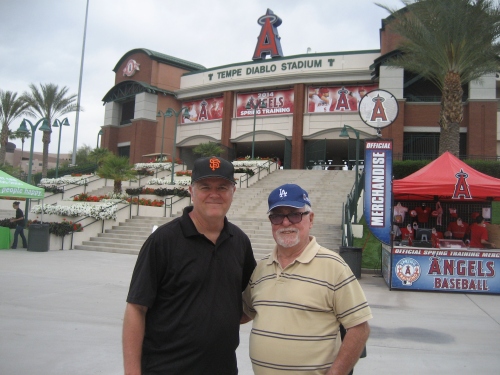
… or to Tempe to watch the Angels and Giants.

img_0055

When I turned 60 nearly three years ago, Russ and AJ made the long drive from Wickenburg to a Fuddrucker’s in Orange County which touched me deeply.

img_7723

And like me, Russ enjoyed obtaining signatures from former baseball players, like Bobby Richardson, former second baseman of the New York Yankees from the late 1950s and early 1960s:

bobby-richardson-in-prescott-jan-31-2012-014

Over the course of my ministry, I’ve discovered that many churchgoers try and befriend their pastor while they’re attending a particular church, but drop him like a hot potato when either he or they leave.

Russ wasn’t like that.  The friendship that we developed transcended the typical pastor-parishioner relationship.

When we both lived in Arizona a few years ago, we frequently had breakfast together … and I didn’t want those times to end.

To me, Russ was a father figure, a mentor, and a ministry partner.

But most of all, Russ was my friend.

After a stroke and a series of illnesses, God took Russ home several weeks ago.  Fortunately, I was able to see him one final time last spring when he was staying at a rehab center in Surprise, Arizona.

Even though he wasn’t as sharp or as quick as usual, he was still the same Russ … and he still loved his Lord.

I will be speaking at his memorial service this weekend in Wickenburg, and I’ve already shared with you what I’ll be saying.

Russ, thanks for being my friend.  I miss you, but know that I will see you one day when we reunite around the throne of God.

And when that day comes, we won’t have to talk about politics – or straightening out the world – any more.

img_0079


Read Full Post »

I have very few heroes anymore.  For example:

*As a kid, I looked up to a certain baseball player … later found out he had an affair with a famous actress while he was playing … and that after he retired, he became a drug addict.

*I looked up to a well-known pastor for many years for his authenticity, biblical insight, and writing skills.  When I had a chance to meet him, I jumped at the chance.  Several years ago, I found out he had an affair, that his wife divorced him, and that the news never hit the wider Christian public.

*I remember when a singer whose music I enjoyed was arrested for drunk driving.  Later in his autobiography, this man … who wrote and sang tender love songs … confessed that he once took a chainsaw to his wife’s bed during an argument.

I could talk for hours about people I once put on a pedestal who embarrassed themselves or disappointed their followers by violating common decency or their own moral standards.

Let’s say that over the years, I’ve had 100 different heroes.  At this point in my life, it’s probably down to less than ten (Nolan Ryan and Sandy Koufax from baseball; Archibald Hart, D. Martyn Lloyd-Jones, and John Stott from the Christian community).

I don’t expect perfection from someone I admire, but I do want them to exemplify virtues like authenticity, modesty, and wisdom.

And next week, one of my few remaining heroes will retire after 67 years of doing the same thing.

His name?

Vin Scully … voice of the Los Angeles Dodgers … and generally considered to be the greatest sports announcer of all time.

My first memory of hearing Vin Scully on the radio was as a six-year-old boy in Anaheim, California.  Our family had an old black radio in the kitchen, and Scully was announcing the Phillies-Dodgers 1960 home opener.  (Frank Sullivan was the starting pitcher for the Phillies.  Don’t ask me how I know that.)

The following month, my dad took me to the Los Angeles Coliseum where the Dodgers played their first four years.  I remember how green the grass was … how vast the outfield was … and that Vin Scully’s voice seemed to be everywhere because the LA crowd brought their transistor radios (they were fairly new at the time) to the game.

Vin Scully was a big part of my childhood.  The Dodgers only televised nine games a year (all from San Francisco), so to follow the team, you had to listen to the radio.  I often fell asleep listening to Scully talk baseball on 50,000 watt KFI, AM 640.

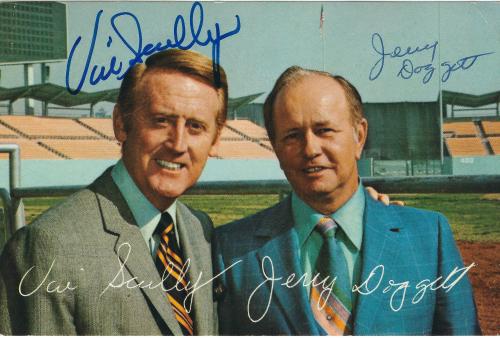
Scully broadcast the first three innings … Jerry Doggett took the next three … and Scully then handled the final three.  Unlike most announcers, he didn’t interact with his partner … he wanted to call the action himself.

vin-scully-jerry-doggett-signed-photo-001

I heard Scully broadcast portions of all four of Sandy Koufax’ no-hitters.  When Koufax threw his last one on a Thursday night in September 1965 against the Chicago Cubs, my brother John and I listened to the whole game on the radio, even though we were supposed to be asleep.  When Koufax struck out Harvey Kuenn for the final out, he cried out, “A perfect game!”  My brother and I jumped for joy in the darkness.

Scully’s call of the final inning of that game is a classic.  It’s here on YouTube if you’ve never heard it:

I listened to Vin Scully call Dodger games for 22 years until my family moved to Silicon Valley in 1981.  Sometimes we could pick up Dodger broadcasts from Santa Clara, but it became difficult to follow the Dodgers 400 miles away, and when our son Ryan started following baseball, it was natural for us to follow the Dodgers’ arch rivals, the San Francisco Giants, because we could attend their games and watch them on television.

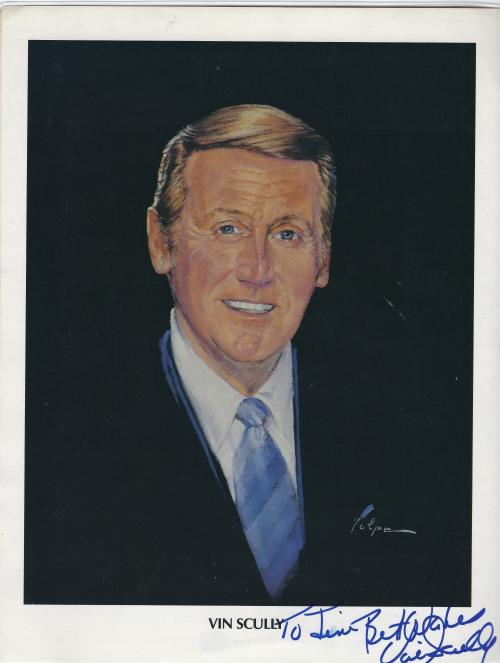
On my day off, I used to drive up to San Francisco and visit the hotels of the teams that were playing the Giants, and the Dodgers always stayed at the Hilton.  There was a long hallway from the lobby to the elevators, and everybody on the team had to walk by the few of us who were waiting for signatures.  On one occasion, Vin Scully signed this portrait by Nick Volpe for me:

vin-scully-signed-portrait-001

This Sunday, Scully will be doing his final home broadcast for the Dodgers, and the team has devoted the entire weekend to honoring him.

vin-scully-1

On Sunday, October 2, Vin Scully will broadcast his last game from San Francisco, and both the Dodgers and Giants will carry his broadcast in the third inning … an unparalleled tribute.

While watching the Giant-Dodger games from Dodger Stadium this past week, I listened to Scully all three nights, and even at his advanced age, he is head and shoulders above any announcer I’ve ever heard … and I’ve heard some great ones.

Why is Scully so good?

First, he is a master teacher.  If you don’t know much about baseball, he’ll inform you.  If you don’t know much about the players, he’ll enlighten you.  (He does a brief biography of every player who comes to bat from the visiting team.)  If you don’t know much about baseball rules, he will explain them.  While his trade is baseball, he always puts the game in perspective.  I’ve learned a lot about life by listening to him as well.

Second, he is an incredible storyteller.  Scully has not only read deeply about baseball history, he’s been a fan himself since the 1930s, and has either seen or known most of the greats personally.  I love to hear and tell stories myself, and Scully has been an influence on my love for baseball and anecdotes since my childhood days.

Third, he is always fair.  When the Dodgers aren’t playing well, he’ll say so.  When the opposing team is messing up, he’ll point it out without berating them.  The Giants have been having a terrible problem over the past few weeks with their relief pitching, and when they blew another game in the ninth inning to the Dodgers several nights ago, Scully expressed genuine empathy for Giants’ manager Bruce Bochy.

Fourth, he isn’t afraid to mention God.  Most sports announcers avoid the “G” word, but Scully talks about God and “the good Lord” all the time.  He’s a practicing Roman Catholic, but his acknowledgement of the reality of God is refreshing in our politically correct world.  You’ve heard the phrase, “If you want to make God laugh, tell Him your plans?”  The first time I heard that was from the lips of Vin Scully.

Finally, he is a humble and modest man.  Scully knows how much he means to Dodger fans … and even Southern California … but it’s never gone to his head.  He made the Baseball Hall of Fame as a broadcaster in the early 1980s, but he seems to be the same person in every venue.  The few times I’ve asked him for his signature, he’s always complied.

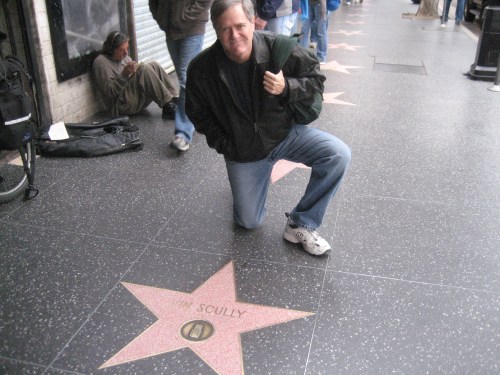
Eight years ago, my wife and I visited the famed Walk of Fame on Hollywood Boulevard, and whose star did we run across?  That’s right …

trip-to-hollywood-escondido-dec-28-2007-jan-4-2008-059

I didn’t want my picture taken with most of the stars … but this one, I did.

Scully is so good that I love listening to him even while I’m rooting against the Dodgers.

Here is Scully’s final letter to his beloved fans.  It’s the classiest letter I’ve ever read … just like the man.

vin-scully-final-letter-sept-23-2016

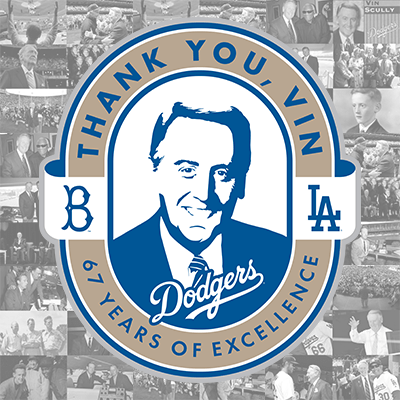
Along with the Los Angeles area … all of Southern California … all of baseball … and much of the country … I want to echo the sentiments of this Facebook page logo:

vin-scully-2

Read Full Post »

I just dropped a final payment and a sharply-worded letter in the mailbox to my former cable company (let’s call them Corrupt Cable) a few minutes ago.

Last April, Corrupt bought out my previous cable company (which I was very happy with) and immediately began alienating their new customers.

The bills were higher than they had been.  When I called customer service – which I did every month – the reps would tell me I owed one amount, but the subsequent bill would be larger.

When my bill in July was double what the customer rep said that I owed in June, I immediately cancelled (I was on a month-to-month contract) and contacted another company, which came the next day and exceeded my expectations with their professional attitude and performance.

I called Corrupt’s customer service again, asked how much my final bill was, and sent in that amount.  But Corrupt later billed me twice the amount the rep said I owed.

That was it for me.  I sent Corrupt management a strongly-worded two page letter along with a check for the amount the rep said I owed.  Corrupt countered with a letter threatening my credit if I didn’t pay them the remaining balance immediately.

I have never written the word “Corrupt!” on a check before, but I just did.

Now here’s the deal: I don’t want to hurt Corrupt’s CEO or force him from office.  I don’t want to destroy the company or its shareholders.

I just don’t want to think about them or talk about them anymore.  I am done with the Corrupt Cable Company forever.

But in many churches, when someone becomes upset with the pastor, they want to hurt him.  They want to target him.  They want to force him from office.

And they want revenge.

It’s my contention that many pastoral terminations are really the result of one or more church leaders seeking retribution against their shepherd.

More and more, I’m hearing stories of pastors and staff members who are forced out of their positions, and when they’re done sharing, I say to them, “You know what this sounds like to me?  Revenge.”

Let me share with you a composite of situations I’ve heard about firsthand.

Tom (who is now in his early 60s) has been the lead pastor of New Life Church for fifteen years.  The church has grown steadily and has a weekend attendance of 1100 people.  Tom and the board hired an associate pastor named Joe five years ago, and the first several years went well, but over the past two years, Joe has made Tom’s life a living hell.

Joe (who is in his mid-40s) is surrounded by family and friends who think that he’s a better leader and preacher than Tom and that he’s more culturally relevant.  Joe’s wife has been especially vocal in this area.

Some members of Joe’s group (which numbers about thirty) have started to make snide comments about the church and its leadership on social media.  Though they don’t mention Pastor Tom by name, it’s obvious they’re aiming their barbs at him.

By contrast, when Pastor Joe does anything in public, he’s praised on Facebook and Twitter by the FOJ Brigade.

At this point, the ideal solution is for the official board to intervene and tell Joe that (a) he still works for Pastor Tom; (b) he needs to tell his supporters to knock off their social media campaign; (c) if Joe has any concerns, he should discuss them with Tom first; and (d) any deviations from their instructions will result in Joe’s dismissal.

But because most church boards are afraid of conflict, and because some board members like Joe more than Tom, this solution isn’t likely to be implemented.

If Pastor Tom does nothing, he’s going to be driven from his position within a short while, because Joe’s followers are starting to smell blood.

But if Tom goes to the board and enacts too heavy-handed an approach, some board members will turn on him and back Joe instead.

So Tom decides that he will talk to Joe in private first.  Tom will tell Joe what he’s seeing with his attitude and ask Joe what he plans to do about it.

Tom’s plan doesn’t work and, in fact, upsets Joe greatly.  Ten minutes after their meeting, Joe is texting and calling his group, telling them, “How dare the pastor talk to me like that!”

Tom comes out of their meeting dazed and confused, while Joe calls a couple of board members that he senses are sympathetic and negatively exaggerates both Tom’s tone and words.

The verdict?  Pastor Tom can’t get along with the staff (even though he gets along with everybody but Joe) and he can’t get along with important people (like Joe’s followers).

So Tom has to go.

I wrote the following paragraph in my book Church Coup:

“I have a theory about the mentality of those who seek to target a pastor they don’t like. Because they sense that what they’re doing is wrong, they have to (a) exaggerate any charges to the level of a capital crime; (b) find others who agree with them to alleviate their guilt; (c) justify their actions by convincing themselves it’s for the common good; and (d) work up their hatred so they follow through with their plan. While this progression sounds like the kind of diabolical rage one might find in politics or war (or the prelude to a murder), the last place we’d expect to find such irrationality is inside a church.”

Over the next three months, Joe’s revenge against Tom manifests itself in five ways:

*Joe lets scores of people know – both directly and through his minions – that Tom should no longer be the pastor at New Life.  Joe details Tom’s inadequacies for anyone who will listen, including veiled swipes at his age.  As news spreads through the church underground, people add their own grievances against Pastor Tom to Joe’s list.  Some people start saying that if Tom doesn’t leave, they will.

*The church board absorbs Joe’s complaints against Tom and calls a special meeting to deal with the conflict.  Since nobody on the board has a clue how to handle matters, the easy way out is to dismiss Tom, even though he isn’t guilty of any major offense.  Because the board lacks any impeachable offense, they decide to justify their actions by “gunnysacking” Tom – listing as many faults and petty offenses against him as they can create in a single meeting.  They come up with seventeen reasons why Tom must leave but make a pact they won’t tell Tom anything.

*Keeping Joe informed at every turn, the board then ambushes Pastor Tom at their next regular meeting and informs him that he has a choice of resigning (with a small severance package) or being fired (without a severance package).  When Pastor Tom asks for the charges against him to be read, the board declines.  When Tom pleads for them to let him defend himself, they refuse.  The charges against Tom are merely a smokescreen for personal hatred.  When Tom becomes upset, they add that to their list.

*Pastor Tom resigns and receives a three-month severance package.  However, he’s told he must (a) clear out his office (and all his books) in two days; (b) turn in his keys immediately afterward; (c) never set foot on the church campus again; (d) not discuss his dismissal with anyone or his severance will be curtailed; (e) cut off all contact with everyone at the church.

*After Tom’s resignation is read to the congregation, Joe and his minions want to make sure that Tom’s supporters (at least 95% of the congregation) won’t cause any future trouble, so they spread rumors that (a) he was having an affair; (b) he was using drugs; and (c) he had trouble in previous churches that never came to light.  Several of Joe’s supporters also call the local district office and exaggerate the charges against him to make sure that no church in the denomination ever hires him again.  The district minister complies.

Some quick observations:

First, this whole situation was handled politically, not spiritually.

When revenge is involved, church politics rule.  It’s all about maximizing power … counting noses … denying the pastor due process … and checkmating him personally and professionally.  It may not look or sound like revenge, but it is.  Where’s the Bible in all this?

Second, the church board wimped out.

Had I been on New Life’s board, I would have recommended that Pastor Joe be confronted for challenging Pastor Tom’s authority.  If he wouldn’t repent, I would recommend his dismissal instead.  Tom didn’t do anything wrong; Joe did.  And it’s far easier to get a new associate than a new lead pastor.  But the board went with the squeaky wheel rather than any semblance of fairness or righteousness.

Third, the church lacked a predetermined process for handling complaints against the pastor.

Every church needs such a process.  It automatically kicks in whenever dirt starts being thrown at the pastor.  Because church boards often operate politically, I believe that another group in the church needs to monitor this process: a CRG (Conflict Resolution Group).  It’s not their job to make decisions about a pastor’s future.  It’s their job to make sure that the board and the church treat the pastor fairly: according to Scripture, the church’s governing documents, and the law.  And if the CRG’s directives aren’t followed, the entire board should be asked to resign rather than the lead pastor.

Fourth, treating Pastor Tom badly will come back and bite the church … hard.

Yes, people will leave the church, even if they never find out the details surrounding Tom’s departure.  But more than this: unless Pastor Joe and the complying board members repent, do you really believe that God is going to bless New Life Church in the future?  If so, you and I worship a different God.

Finally, God seeks redemption for His leaders, not revenge.

Allow me a personal word.  When I left my last church ministry nearly seven years ago, the entire church board resigned because they initiated a coup that failed.  They wrote and signed a resignation letter that was cruel and demeaning and intended to provide me with the maximum amount of pain.  (I have read it only three times.)  They obviously were upset with me about some issues, but they never sat down and talked with me about them.  Instead, they concocted a plan designed to checkmate me at every turn, and when their plan backfired, they left enraged.

There was never any attempt at restoration or redemption.  It was all about retribution and revenge.

Several weeks ago, I found out that two couples from my former church who had been friends for forty years severed their friendship over the way I was treated.  One couple bought into the gunnysacking charges the board made against me, while the other couple – which never heard from me directly – defended me to the hilt based on the pettiness of the charges themselves.  While this new information made me sad, I thought to myself, “This is what happens when people seek revenge against their pastor.”

When church leaders hear complaints about their pastor, they have two options:

First, they can lovingly bring the charges to their pastor’s attention, let him face his accusers, ask him for explanations, and remain open to his staying.  That’s redemptive.

Second, they can angrily spread charges behind the pastor’s back, refuse to let him face his accusers, insure that he’s not permitted any kind of defense, and remain determined to get rid of him.  That’s revenge.

We all know these verses, but they’re a good reminder during such times:

“Do not repay anyone evil for evil…. Do not take revenge, my friends, but leave room for God’s wrath, for it is written, ‘It is mine to avenge; I will repay,’ says the Lord…. Do not be overcome by evil, but overcome evil with good” (Romans 12:17,19,21).

What are your thoughts on what I have written?


Read Full Post »

During my last pastorate, a senior couple – who were both very supportive of my ministry – lived in a local retirement home.  The man eventually died, and his wife asked me to conduct his memorial service at the retirement home so the seniors wouldn’t have to leave the premises.

I had agreed on a time for the service with the widow, but then we spoke a second time on the phone, and she wanted to change the time.  On the day of the service, I became confused about when I was supposed to be there, and showed up 30 minutes late … to a packed room of anxious seniors.  Fortunately, the widow was an incredibly gracious person, and she smoothed things over for me, but my mistake could have been disastrous had she been vengeful.

Dr. Leith Anderson (one of my professors in the Doctor of Ministry program at Fuller Seminary), in his book Leadership That Works, discusses the concept of “parish poker.”  Although Anderson isn’t a gambler (and neither am I), he states that at the beginning of every poker game, each player is given a certain number of chips.

In the same way, Anderson claims, a pastor is given 50 to 100 chips when he comes to a new church.  After that, he either gains or loses chips depending upon that church’s unique value system.  Anderson cites a few examples:

*Preach a good sermon (+2 chips)

*Preach a bad sermon (-8 chips)

*Visit sick person in the hospital (+7 chips)

*Sick person dies (was expected to recover) (-10 chips)

*Sick person recovers (was expected to die) (+40 chips)

*Bring cookies to monthly board meeting (+1/2 chip)

*Lose temper and shout at board meeting (-25 chips)

In his book, Anderson tells the story of a new pastor who was called to a conservative mid-western church.  He came a few weeks early to settle in, and on the Saturday before his initial Sunday, the pastor gave away the pulpit to another congregation … without asking permission.  According to Anderson, that decision cost the pastor 2,000 chips, which means he’d have to preach 1,000 good sermons just to get back to zero … which would take 20 years!

That pastor was done before he even started.

Here is why “parish poker” or “the pastor point system” matters: because as a pastor’s total points nosedive, he’s increasingly likely to be terminated.

There are two ways to be terminated using the point system:

First, you lose a massive number of points at once.  Examples:

*Tell your church that everyone will be saved (-5000 points)

*Have an affair with a board member’s wife (-5000 points)

*Embezzle funds from the children’s ministry (-5000 points)

*Hack into the associate pastor’s computer (-5000 points)

Second, you stop gaining points but steadily lose points over time … eventually plunging toward zero.  Although this isn’t easy to do, some pastors have mastered the art.

To switch the analogy to banking, they are great at making withdrawals … and poor at making deposits.

Based upon the 36 years that I served in 9 different churches, let me add some events/incidents that involved me as pastor:

Failure to use the Scofield Reference Bible (-3o points)               

Visiting seniors at home to shoot the breeze (+20 points)

Letting youth attend Christian rock concerts (-100 points)

Holding a missionary conference (+25 points)

Discovering your son peed on the church lawn at the conference (-25 points)

Having a band during Sunday worship (-200 points)

Baptizing a new convert (+10 points)

A longtime family leaves the church (-40 points)

Conducting a funeral for a longtime member (+35 points)

Confronting a staff member about misbehavior (-75 points)

Earning a doctoral degree (+5 points)

Failing to say hi to someone one Sunday (-15 points)

Raising almost a million dollars one year (+80 points)

Falling behind the church budget the next year (-300 points)

Let me make five observations about this point system, especially as it relates to pastoral termination:

First, as I did this exercise, it was simple coming up with minus points, but challenging to come up with plus points. 

Maybe I forgot all the good that I did … or maybe it’s just easier to remember the criticisms than the compliments.

When a pastor first comes to a church, it seems like he can do no wrong.  But a few years later, it can feel like he can’t do anything right.

I don’t think a pastor can do much to acquire a lot of points at once, even if he wins the mayor to Christ.  You build your points slowly.

But if you mess up, you can lose a lot of points quickly … and it’s usually not what you did or didn’t do, but who you offended that matters.

Second, value systems vary – sometimes wildly – depending upon the church or the person. 

In my first pastorate, I was expected to visit all the seniors in their homes at least quarterly … just to talk.  But in my last three pastorates, nobody expected me to visit anybody in their home.

In my second pastorate, the head of the deacons as well as the head of the deaconesses (they were married to each other) both left the church because I wouldn’t forbid our young people from attending Christian rock concerts, which were still in their infancy.  In the churches I served subsequently, that was never an issue with anyone.

If a young pastor grew up in a church, and only knows one way to do ministry, he may have a hard time in his first or second pastorate if he tries to impose the value system of his home church onto his new one.  The point system in every church is different, and it takes a while to learn what’s commendable and what’s condemnable.

In fact, one of the wisest things a new pastor can do is to get to know those who know the history of the church, and to discover what will get you applauded … or assaulted.

In my second church as a youth pastor, an entire family opposed my ministry because the previous youth pastor – whom I knew – had painted the youth room orange without permission.  Since we both had gone to Biola, this family assumed I would operate as he did.

Third, a pastor needs to accumulate a lot of points up front to survive his inevitable mistakes. 

My father-in-law, my first and best ministry mentor, told me that when I first became a pastor, I should (a) work very hard my first year and develop a reputation as someone industrious, and (b) choose a Bible book with a positive message to preach from.  (He suggested Philippians.)  In other words, he was telling me, “Slowly acquire lots of points … and don’t do anything to lose points.”

Then the wife of one of the deacons announced she was divorcing him, and no matter what I did, I was going to lose points … and I did … but not that many.

I know there are people on both sides of this issue, but I really believe that a new pastor has to take his time and get to know people before he starts making changes at the church.  He needs to amass hundreds of points before he begins to say and do things that are guaranteed to lose scores of demerits.

Fourth, double the minus points when you’re dealing with a church bully.

If the pastor hurts Bill, and Bill is a kind and quiet man, the pastor will only lose a few points.

But if the pastor hurts Joe, and he’s loud and opinionated, Joe will tell his network what the pastor did … act like a victim … try and turn others against him … and the pastor will lose many points quickly.

In one church, I suggested going to lunch with a bully, but he didn’t want to know me because he wanted to keep me at arm’s length as a scapegoat.  Whenever I was around him, I kept our conversations brief because I didn’t want to give him any ammunition he could use against me.  I probably acquired a few minus points from him by doing that, but that was better than losing scores of points by opposing him outright.

Most people in a church will give a pastor the benefit of the doubt if they witness or hear about something that concerns him.  But a church bully won’t cut the pastor any slack.

Finally, a pastor may never know when he’s lost enough points to be terminated.

This is because the scorekeeping is never public.  Points reside in the head of a church bully … the wagging tongues of a faction … or secret meetings of the official board.

Pastors inherently know that if they are guilty of heresy, sexual immorality, or felonious conduct, their days in a church are numbered.

And pastors often know who the scorekeepers are in a particular church, but pastors usually don’t know the point system the scorekeepers are using.

A pastor might think, “Okay, I didn’t say hi to Jane … that’s probably only a loss of 3 points.”  But if you offend Jane, she might debit you 100 points.

This is why pastors are shocked when the board suddenly asks for their resignation.  By the pastor’s reckoning, he’s up 2,472 points.  By their reckoning, he’s 2,472 down.

Obviously, a pastor can take this point system to ridiculous lengths.  You can’t have a positive, influential ministry if you’re walking around mentally adding and subtracting points all day.

Ultimately, a pastor has to try and please the Lord, and let the point system go.  We aren’t saved by our good works … we are saved by God’s grace.

But sadly, pastors are employed by good works … a point system … and over time, they can lose so many points that they’re toast.

What are your thoughts about the pastor point system?


Read Full Post »

The Swedish pop group ABBA had a career that roughly paralleled the seven-and-a-half years that I was a youth pastor.

I was never crazy about their outfits … didn’t know the two female vocalists were each married to a different male vocalist … and wasn’t aware of their history or histrionics.

But regardless, songs like “Knowing Me, Knowing You,” “Take a Chance on Me,” “Super Trouper” and even “Mamma Mia” are superb songs.

And for me, music isn’t about an artist’s lifestyle or love life.  It’s about the songs … and if a song is great, I don’t care who sings it.

In times past, some Christians have divided music into sacred music (songs to and about God) and secular music (songs about life and/or love, but not God).

I suppose I once thought that way, but as I’ve gotten older, I find that I only recognize two categories of music: good music and bad music.

A non-Christian can write and perform a good song, while a Christian can write and perform a bad song.  It’s not about the faith of the artist … it’s about the song itself.

And when an artist compiles a collection of great songs, they’ve put out a classic album.

Two weeks ago, I presented five secular albums that I think many Christians would like:

Ten Secular Albums for Christians

Among secular artists, here are five more albums that I believe Christians can enjoy:

Mary Black: Babes in the Wood

Mary Black is one of the foremost female vocalists that Ireland has produced over the past thirty or so years … and maybe the very best.  She’s not a songwriter, but an interpreter of songs.

I first was exposed to her music when I was searching online for songs by The Corrs and someone had mistakenly labeled “Song for Ireland” by The Corrs … but Mary Black was the one who sang it.

If you love Ireland or Irish music, and you aren’t familiar with this song, I encourage you to find it and listen to it.  It’s incredible!

There is a spiritual sense to some of her music, especially on this album, where the first two songs – “Still Believing” and “Bright Blue Rose,” set the tone.  The latter song ends with these lyrics:

One bright blue rose outlives all those

Two thousand years and still it goes

To ponder His death and His life eternally

I bought all of Mary’s albums used from Amazon, and some came very cheaply.  Then I discovered that if you buy music from her website, she will sign what you buy for free if you ask.  I bought two items and ended up with three signatures!

As I’m getting older, I’m looking for artists who are talented but sing about things that I can relate to, and Mary Black’s music fits the bill.  I encourage you to check out her music!

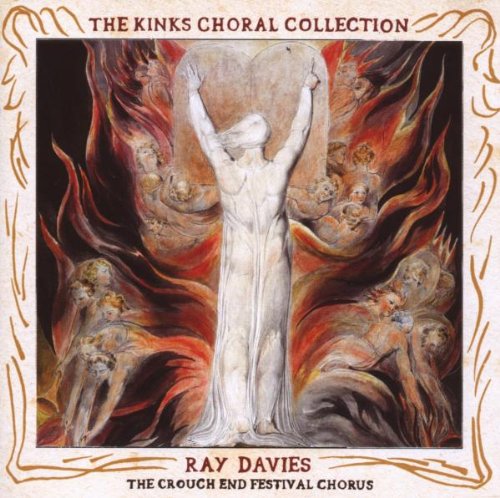
Ray Davies: The Kinks Choral Collection

The Kinks are the most British of all British Invasion groups.  I was never a big fan, but sometime last year, I read a review of The Kinks Anthology: 1964-1971 in, of all places, World magazine (an evangelical Christian print/online magazine).

I started poking around some of The Kinks’ music online, and found myself thoroughly enjoying much of it.  Ray Davies – chief songwriter and vocalist – writes witty observations about life.  Sometimes the music is on the raunchy side (remember “Lola?”), but most of the time, The Kinks’ songs provide insight and perspective on everyday life experiences.

The Kinks Choral Collection consists of many of the band’s most famous songs.  Ray Davies does all the lead vocals, but this time, he’s backed by The Crouch End Festival Chorus … and most of the time, it works.

The album contains songs like “Celluloid Heroes,” which is my favorite Kinks’ song, and one I played for my mother-in-law a few years back.  (She loved it.)  It also includes “Waterloo Sunset,” named the 42nd greatest song of all time by Rolling Stone, as well as “You Really Got Me” and new song “Postcard from London,” a nostalgic look back at the City on The Thames featuring a duet with Chrissie Hynde.

Roughly half the songs come from one of the best albums you’ve never heard: The Village Green Preservation Society, an album that came out on the same November day in 1968 as The Beatles’ White Album.  Rated 5 stars by The All Music Guide, Davies and company look back at the England of their childhood with sympathetic portraits of fascinating people.

Although he doesn’t claim to be a Christian, a lot of songs on this album sound like hymns, such as “Village Green,” which contains this lyric:

I miss the Village Green

And all the simple people

I miss the Village Green

The church, the clock, the steeple

I miss the morning dew

Fresh air and Sunday School

The Kinks aren’t for everybody, but almost anyone can listen to and enjoy this album.  It’s a lot of fun.

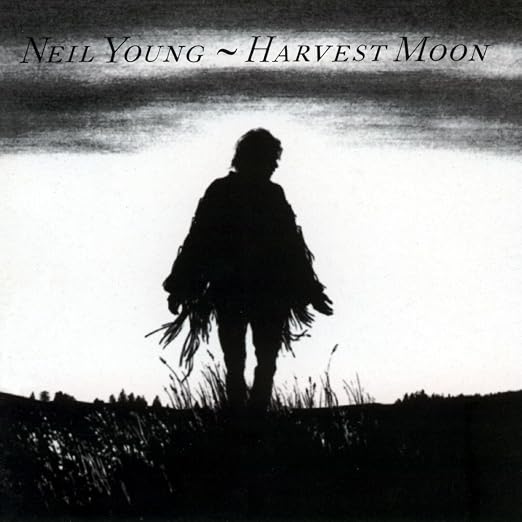
Neil Young: Comes a Time; Harvest Moon; Prairie Wind; Silver and Gold

Harvest Moon

Neil Young can rock out as hard as anybody, which is why many people consider him to be the godfather of grunge.

But out of all the music I own, nobody does slow, thoughtful, and simple acoustic music better than Neil Young … so much so that I have an entire playlist devoted to his acoustic songs.

I’m sure the critics can distinguish between these albums – done nearly thirty years apart – but for me, the songs all blend together, which is why I didn’t choose one album above the others.

Memorable songs include “Four Strong Winds” (a song by Canadians Ian and Sylvia from the mid-1960s), “One of These Days,” “Buffalo Springfield Again,” and surprisingly, “When God Made Me,” which again, sounds like a hymn.  Some of the best songs from these albums were done on the DVD “Heart of Gold” which is a top-notch concert from the Ryman Auditorium in Nashville.

Neil Young is intentionally unpredictable, which is part of his charm, but if you want some great background music while you’re working or driving, any or all of these albums will work.

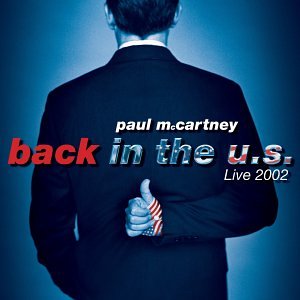
Paul McCartney: Back in the U.S. Live 2002

Back in early 2002, Paul McCartney announced that he was going out on tour … his first one in many years … and opening night was just ten minutes from my house.

I thought it unlikely that I could buy tickets, especially because they were going on sale Sunday at 10 am, and you had to call the ticket outlet on the phone … and, of course, I had something else to do during that time.

But my wife got sick and had to stay home from church, and she called at precisely the right time, because when I came home from church, she had purchased three tickets to the concert.  When the show started, I broke into tears because I never dreamed I’d be able to see Paul McCartney in concert.

Paul McCartney is my favorite singer for many reasons, but one is that I can actually sing along to most of his songs.  I’ve now seen him in concert three times and he puts on a phenomenal show.

This album, in my view, has his best selection of live songs, including the song he wrote after 9/11 called “Freedom,” which begins this way:

This is my right

A right given by God

To live a free life

To live in freedom

I remember when many adults and most Christians hated The Beatles, and now everybody seems to love them.  Whatever one thinks about their beliefs or lifestyles or influence, their songs will live on long after the last two remaining Beatles are gone.

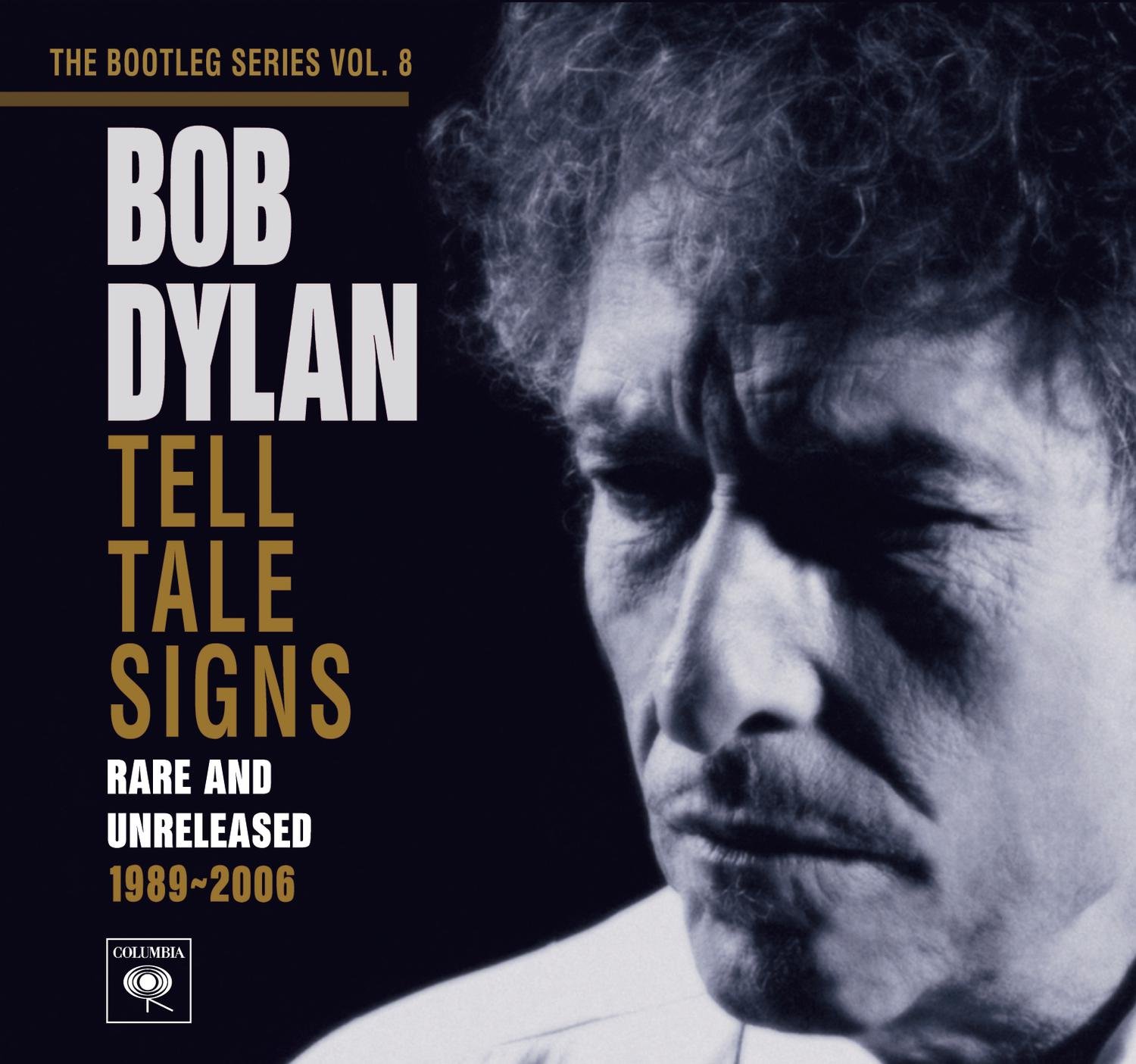
Bob Dylan: Tell Tale Signs: Rare and Unreleased 1989-2006

In my view, Bob Dylan is the greatest songwriter of the twentieth century.  He broke all the rules for songwriting in the mid-1960s and is incredibly prolific.  I have more albums by him than by any other artist.

One of my best friends is a pastor and quotes Dylan often in his sermons, and every time he does, I smile because my friend first introduced me to Dylan nearly 50 years ago.

I know, I know … some people can’t stand Dylan’s voice … but nobody sings Dylan like Dylan, and it doesn’t take that long to become accustomed to his style.

Dylan hasn’t officially put out a lot of his best stuff, so Columbia started the Bootleg series in 1998 to clean up the sound from many of his unreleased or live recordings … and to put some bootleggers out of business.

When this album came out in 2008, I listened to it repeatedly.  It has alternate versions of already released songs like “Mississippi” and “Dignity” as well as a smattering of never released songs.

The best song on the album is the last one, the incomparable “Cross the Green Mountain,” a song about the Civil War sang by one of its participants.  It’s one of the most powerful, raw, and brooding songs I’ve ever heard, and you’ll never forget it if you hear it, either.  Just a masterpiece.

I could include many additional albums, but these readily came to mind … and if you noticed, I tend to prefer artists who are roughly my age because we’ve had similar life experiences.

Thanks for letting me indulge my passion for music!

More about pastors and conflict next time.


Read Full Post »

When a pastor is forced out of his position – either by the official board or by a church faction – he is often blindsided.

If it’s the board, they demand that he resign immediately, or else be fired.

If it’s a faction, they lack the authority to terminate him unilaterally, so they make demands – like threatening to leave the church or withhold their giving – unless the pastor quits.

When a pastor is ambushed, it feels like a form of betrayal, and it usually is.  Many pastors have shared with me how devastated they were when they were surprised by leaders they trusted.

But in retrospect, there are usually warning signs of trouble ahead that the pastor missed, either because he didn’t want to see them or because his mind was focused instead on ministry objectives.

Let me share with you seven warning signs that a pastor is in trouble … and these come from my own experience:

First, the pastor stops hearing that he’s doing a good job.

Early in my ministry in my last church, people told me all the time what a great job I was doing.  I remember one man who lobbied to get on the church board just so he could raise my salary.  At times, the praise was almost embarrassing.

But toward the end of my tenure in that church, I heard almost nothing positive about my ministry.  For weeks, nobody told me that they appreciated any of my sermons, which was unprecedented in my ministry there.

The lack of positive comments negatively affected my morale.  Although I was trying to serve God … not just people … I liked knowing that I was effective, and when I didn’t hear anything, I wondered if I should continue.

Second, the pastor notices heightened attempts to control his ministry.

In my last ministry, I worked in collaboration with the church board for about 90% of my tenure.  I didn’t tell the board what to do, and they didn’t tell me what to do.  We had a great working relationship.  They trusted me … I trusted them … and that’s how it had always been over my entire 36-year ministry career.

But over my last year, the board stopped trusting me, and I stopped trusting them.  They starting micromanaging the money and, by extension, the ministry, and began making unilateral decisions outside of meetings and imposing them on me inside of meetings.

I’m sure that in their minds, they were just taking their responsibilities seriously, but they weren’t collaborating with me in any meaningful way, which I resented.  It’s like I wasn’t even there.

When the board starts micromanaging the pastor’s time … or his expenses … or the church calendar … or a budget that’s already been approved … the board is trying to control the pastor … and this may mean that the ultimate control weapon – the pastor’s ouster – may be just around the corner.

Third, the pastor discovers that people who haven’t been friends are becoming friends.

This was something that my wife noticed more than me.  She told me that board members who barely knew each other at the beginning of the year were now hanging out together socially and using affectionate terms like “bro.”

I knew the source of some of these friendships – a Bible study for men that met at the church on Monday evenings.

That same night, I always met with our programming team – the group that planned the worship services.  On occasion, I’d walk upstairs and ask one of the men in the study if he could participate in a future service.

Looking back, many of the men who conspired to take me out were in that Bible study.  I am not saying they used their time to plot my demise.  I am saying that the study helped them form a bond that made it easier for them to run me out.

Fourth, the pastor experiences more external opposition than ever before.

I remember performing a wedding for a couple outside the church at a seaside resort and investing 32 hours of my time in that endeavor.  Yet for the first time in my ministry career, I didn’t receive an honorarium … and I am positive the DJ, wedding hostess, resort, and caterer were not financially stiffed.

I also conducted a memorial service for an elderly man in our church who had died.  I met with his daughter and told her I’d be doing the same kind of service I had done years before for her mother, and she approved.  But ten days after the service, the daughter’s husband called and reamed me out for preaching the gospel in my own church and demanded that I apologize to him for doing so … which, of course, I didn’t do.

I remember asking myself, “What is in the air right now?  It’s open season on me.”  It’s like people weren’t praying for me anymore and that Satan was able to attack me directly.

Fifth, the pastor experiences more internal opposition than ever before.

There was a lady in our church I had known for years, and she asked if her son could be married in our worship center.

Even though our worship center was just a few years old, I had only conducted two weddings there, and they were both on the small side.

If someone was going to be married inside our worship center, I wanted to make sure that the couple were both Christians and that the wedding would be performed by an evangelical minister.

This lady told me that her son was a Christian, and that a pastor from out-of-town would be conducting the ceremony.

Since this was to be our first large-scale wedding in the worship center, I consulted with the associate pastor on this matter.  Since I was going away on vacation, I asked him to verify that the couple were both Christians and that the pastor was an evangelical and, if everything checked out, to contact the future groom’s mother with our approval.

When I returned from my trip, the associate unilaterally cancelled the wedding without verifying anything.

The lady from our church … who was normally a very calm and pleasant individual … wrote me a blistering email of condemnation (evidently wedding invitations were being printed) … and I took the hit without ever revealing the decision by the associate pastor.

Knowing her contacts inside the church, I’m sure that my name was dragged through the mud for weeks.

Sixth, the pastor notices staff members becoming resistant and rebellious.

I was a staff member in five different churches, and I know how much it meant when the pastor trusted me to do my job and wasn’t always trying to micromanage me.

So that’s how I tried to treat members of the church staff … and at one time, we had as many as ten in my last church.

I inherited four staff members from my predecessor … I kept them all on … and I eventually had trouble with three of them.

I met with them regularly as individuals.  We had a weekly staff meeting.  I was always available for consultation or support.

But the word began to circulate among the staff, “If you’re having any trouble with Jim, just talk to the church’s founding pastor.”

And when those staff members did, they become resistant and rebellious.

We only fired one of them, but several others should have been fired because their actions declared, “I don’t have to listen to you anymore.”

Near the end, I was talking one day with a staff member who became angry and started accusing me of “coddling people” who weren’t Christians.  It was totally unlike him … but I found out later that he was in contact with my predecessor … someone he had never met when he was hired.

When staff members and board members plot against the pastor, he doesn’t want to believe it … but it’s often a sure sign that both groups want more power … and that the pastor must go if they’re to gain it.

Finally, the pastor senses that church leaders no longer support the church’s mission.

I believe strongly in Jesus’ Great Commission to “make disciples of all the nations.”  His charter for us isn’t to increase attendance … add people to the membership rolls … get people to join a denomination … or steal sheep from other churches.

Jesus’ charter is for His people to bring people to Christ … to baptize them … and to teach them from His Word … and that means learning how to share Christ with unbelievers and to bring them to your church.

Regardless of what they say, God’s people almost always want their church to be a place where their needs and the needs of their family are met … and yet the only way to win many unbelievers to Christ is to put their needs ahead of the needs of church members.

I had worked hard over the years to help our church become outreach-oriented – and the church board had always complied – but the last board I worked with didn’t support that mission … and I could give countless examples.

When the mission becomes about “us” rather than “those without Christ,” the pastor’s effectiveness will be limited … and he may be through.

I’ve listed seven signs that a pastor is in trouble, and I could have listed many more.

What signs have you seen?


Read Full Post »

I grew up in a fundamentalist subculture … both at home and at church … and it affected the way I viewed popular culture.

I didn’t see my first film in a movie theater until I was 19 years old, and even then, it was a Billy Graham film.

While we were allowed to watch Shirley Temple movies on television, the children of the fundamentalist pastor two houses down weren’t even allowed to watch those!

Even though I’ve always loved music, I didn’t listen to the radio on a regular basis until I was 14.  The year happened to be 1968 … a great, great year for music!

I’ve never forgotten how I felt when I heard those first few songs on the radio: “Jennifer Juniper” by Donovan; “Love is All Around” by The Troggs; “A Beautiful Morning” by the Rascals; “Lady Madonna” by The Beatles; and “Everything That Touches You” by The Association, to name just a few.

And when I went to Hume Lake Christian Camp for the first time that summer, somebody smuggled in a radio, and all week long, we heard songs like “Indian Lake” by The Cowsills; “Tuesday Afternoon” by The Moody Blues; “MacArthur Park” by Richard Harris; “Sky Pilot” by The Animals (a song about a military chaplain in Vietnam); and “This Guy’s in Love with You” by Herb Alpert.

But when we went back to church, we heard that all music on the radio was subversive, unchristian, and even evil, even though there wasn’t any contemporary Christian music at the time (unless it was sanitized folk).

Most Christian kids didn’t pay any attention to the warnings, although I started the habit of listening carefully to every song lyric and avoiding those songs which had lyrics that made me uncomfortable for spiritual or moral reasons.

Over the years, I have acquired a fair amount of vinyl albums (all gone now, including one signed by Johnny Cash) … cassettes (stuck in storage) … CDs (my wife bought my first one in 1991) … and mp3s.

I listen to all kinds of music: classical (especially Bach) … gospel (especially Johnny Cash but including George Beverly Shea) … Contemporary Christian (I love Delirious, Phil Keaggy, Twila Paris, Carolyn Arends and Kim Hill) … and yes, even secular music.

These are my guidelines for selecting secular music:

*I want the artists I hear to have lived reasonably good lives.  Most secular artists have failed morally at times … sometimes very publicly … but some have also done a lot of good (like U2).  Many of my favorite artists, like Bono and Justin Hayward (from the Moody Blues), have been married for decades.

*I want the music I hear to be 90% safe.  Most secular artists slip in songs or phrases that don’t reflect my values, but one objectionable song on a 15-song CD isn’t going to ruin the other 14 songs for me.  I just delete those songs on iTunes.  I evaluate an artist as a whole, not just based on one or two songs.

*I want to hear music that makes me think, gives me a different perspective, or makes me a better believer.  For example, I believe I’m a better person for having listened to U2 and Bob Dylan over the years.  Both have heightened my social conscience.

*I want to see my favorite artists in concert and to feel good about being there.  Over the past several years, I’ve seen Paul McCartney, U2, Bob Dylan, Gordon Lightfoot, Justin Hayward, and next month, I’m going to see ELO at The Hollywood Bowl (and sit on benches at the very back).  I’m always amused by the fact that although some Christians only listen to Christian music, the Christian artists they listen to hear and appreciate many secular artists!  (For example, did you know that MercyMe did a cover of Tom Petty’s song “I Won’t Back Down?”)

If you’re interested in any of these albums or artists, I suggest you listen to their songs on iTunes or Amazon before you buy anything.

Having said all that, these are five very good secular albums that I think are safe for Christians … and in no particular order:

Someday by Susanna Hoffs

Susanna Hoffs is the former/sometimes lead vocalist of The Bangles, an all-girl band from the 1980s that played music rooted in the 1960s.  This CD came out four years ago when I was in New Hampshire, and I listened to it practically every day for weeks.  The ten songs on this album are relatively brief, but they have great melodies, wonderful arrangements, heartfelt lyrics … and hearken back to the Sixties.  I have never tired of this album.

Hymns to the Silence by Van Morrison

Hymns to the Silence

Many people only know Van Morrison for his song “Brown-Eyed Girl” from 1967, but he has an incredibly rich catalogue of beautiful, complex music dating back more than 50 years.  I bought this album in 1991 after a glowing review in Time that contained a quote from Bruce Springsteen that said that Van’s music was “way too spiritual.”  This double album – only $9.99 on Amazon or iTunes – contains “Just a Closer Walk with Thee,” “Be Thou My Vision,” and a song called “By His Grace,” as well as Van-rants like “I’m Not Feeling It Anymore” and “Why Must I Always Explain.”

Although he’s dabbled in various faiths at times, there’s a Christian undercurrent in much of his music (especially in songs like “Whenever God Shines His Light”) and even Phil Keaggy covered Van’s song “When Will I Ever Learn to Live in God.”  If you like this album, try Down the Road and Magic Time as well.  I took my wife to a Van concert more than twenty years ago, and his booming voice filled the auditorium.  Van definitely marches to his own drummer, but when he’s good, he puts out some of the most beautiful music you will ever hear.

Home by The Corrs

The Corrs are a sibling-only band from Ireland.  They write their own songs and sing and play on their albums, and usually have a Celtic/pop sound all their own.  This CD … their last for ten years until last November’s White Light … is a collection of traditional Irish tunes with both traditional and contemporary arrangements.  The Corrs are better known in Europe and the rest of the world than in the United States … although I hear their songs in public places all the time … possibly because they aren’t wild or vulgar and have a sense of decency about them.  (I once stayed after a Phil Keaggy concert at a church and the roadies played their album Talk On Corners while cleaning up.)  This is one of the albums I play whenever I need to relax because it’s so soothing.

Spirits of the Western Sky by Justin Hayward

Spirits Of The Western Sky

I like haunting music, and Justin Hayward has mastered the genre.  His compositions like “Nights in White Satin” and “New Horizons” still send shivers up my spine.  My wife and I recently saw him in concert and his voice still holds up fifty years after he began with The Moody Blues.  While The Moodies tour America every year, they don’t plan on putting out any more albums, but thankfully, Justin Hayward put this terrific one out early in 2013.

Many years ago, I read that the Moodies’ bass player/vocalist John Lodge is a Christian, and I recently stumbled upon a ten-year-old interview where journalist Paul Du Noyer asked Justin Hayward, “And where has this search brought Justin Hayward in 2006?”  Hayward replied, “I would have to say Christianity.  I came from a family with a very strong faith, I moved away through all sorts of Eastern religions, through meditation, the Tibetan Book of the Dead, anything else.  It was reading C.S. Lewis, books like Mere Christianity, that helped me to define what I really felt and finally decide.  So I came full circle.”

Justin Hayward doesn’t make any overtly Christian statements in his music, and if he did, his career would be marginalized and his audience might dwindle significantly.  I do love the Moodies’ Christmas album December – even though it’s 13 years old – because it’s held up very well over time, but again, there are no overtly Christian statements in the songs.  But this album is full of great music – mostly featuring acoustic guitars – and you just might like it.

How to Dismantle An Atomic Bomb by U2

I once read a journalist who claimed that U2 was too secular for Christians and too Christian for secularists.  U2 writes and sings their songs in parables: if you’re a Christian, you get it, but if you’re not, you can enjoy the music anyway.

Although I love much of their music … “One” and “I Still Haven’t Found What I’m Looking For” are two of my all-time favorite songs … U2 occasionally disappoints me lyrically … but not on this CD.

When this album came out in 2004 – and it won a host of Grammy awards, including Album of the Year – I bought a bunch of them and gave them away.  But although U2 can compose and sing a prayer like “Yahweh” … the song that ends the album … they can also indict Christian churches on a song like “Crumbs From Your Table” and wonder what’s beyond this life in “One Step Closer.”

Although Bono and other members of the band are Christians, their songs are difficult to do in church because they often question faith rather than affirm it.  Bono loves the Psalms and wishes that Christian writers today would compose more authentic lyrics … as do I … but it’s hard to sing the lyrics to “Vertigo” on a Sunday morning, even though the songs ends with, “Your love is teaching me how to kneel.”

My favorite lyric on this album is from the hard-rocking song “Love and Peace or Else” where Bono sings, “As you enter this life, I pray you depart, with a wrinkled face, and a brand new heart.”  Christian references abound on this album, but it’s not packaged like the typical CCM stuff.

U2 toured behind this album in 2005, and several weeks before my birthday, my wife asked me what I wanted, and I told her, “I just want to see U2 in concert.”  Fortunately, they were playing ten minutes from our house, and she went online and bought tickets.  We sat behind the band … off to the side … and the large letters on the back of Bono’s jacket spelled out SINNER … a reminder that even when the audience is wildly applauding the singer, he knows who he really is.

I will recommend five more albums next time … and would love to hear about your favorites as well!


Read Full Post »

Over my 36-year career in church ministry, I wish I had done certain things differently.  For example:

*I wish I knew more about sermon preparation in my early twenties.  Many of my initial sermons were well-delivered but said little.

*I wish I hadn’t permitted certain individuals to come onto the church board.  While biblical qualifications are important, following your church’s mission and vision are also crucial.

*I wish I had taken more time to network with various Christian leaders.  While I know some important individuals in the Christian community, I don’t know nearly enough.

*I wish I had never become involved with a denomination.  Going to district meetings and playing political games distracted me from serving the churches that called me.

But these regrets are all miniscule compared to the one decision I wish I had never made: becoming the pastor of my first church in Sunnyvale, California.

_______________

By the time I was ready to graduate from seminary, I had already served as a youth/associate pastor in three different churches over a six-and-a-half year period.

But as I prepared for my final year of seminary, I was weary of youth work.  Our son Ryan was born at the beginning of that final year, and I didn’t want to leave my wife or son for even a day … much less a week.

I graduated from Talbot Seminary in June 1980 with a Master of Divinity degree, majoring in Systematic Theology.

And a couple of months later, I had to go to Jr. High camp as a counselor for a week and stay in teepees … and I hated every minute.

When I dropped off campers at the church late one Saturday afternoon, my pastor was there, and he asked me how camp went.  When I told him how I felt, he said, “Jim, we need to get you ordained and get you a church.”

Several months later – on November 11, 1980 – I passed my ordination council and was officially ordained the following Sunday … and I was all of 27 years old.

I could have stayed at my church indefinitely … the ministry was going very well … but all I wanted to do was preach … and those Jr. High kids weren’t exactly great listeners.

How could I find a suitable church?

A former Talbot classmate pastored his own church in Solvang, California, and I wanted to find out how he did it, so I invited him to breakfast.

My colleague told me that he had been offered two other churches before he settled in Solvang … and he wished he had taken the first church.

So that was his counsel to me: take the first church that you’re offered.

It proved to be disastrous advice.

_______________

The church I was serving was in a denomination, and someone told me that I needed to speak with the new district minister of our district … so I did.

I turned in my ministerial profile on April 1, 1981, and six weeks later, I received a call from the board chairman of a church in Sunnyvale, California.

The chairman asked me to speak the following Sunday, so my wife and I flew to San Jose … I met with the deacons … I preached the next day … we met nearly everyone at church … and we flew home.

During this time, I consulted with the district minister from Northern California, who encouraged me to take the church.

The chairman called me immediately and asked me to return and candidate the following Sunday.  I went alone … was offered the call … and quickly accepted.

How I wish I could take back that decision!

_______________

Here is what I didn’t know at the time:

*The church was composed of refugees who didn’t get along in any other church.  I have never met such a group of complainers and whiners in all my life.

*The average age of the congregation was sixty … and with that age came a rigid fundamentalist mindset that ultimately drove me bananas.

*Those older people expected me to visit them in their homes for at least an hour every few months … and that is not my strength!

*The church was located in the multipurpose room of an elementary school … and you couldn’t find it even with a map.

*The church was five years old when I came … and I was their fourth pastor.  (The board had fired the previous pastor after just one year.)

*The board looked through 14 resumes before they contacted me.  Everyone else had wisely turned them down.

*The board claimed that they wanted to reach young couples, but when young couples visited … and later stayed … they weren’t welcomed.

*While the people claimed they wanted the church to grow, their real desire was to be in a church small enough that they could control its every move.

We sang “Victory in Jesus” practically every week … a guy who played the musical saw came to the church uninvited and was always asked to play … we averaged 30 people when I first came, 45 two years later … and when we started to attract young couples, the older people complained about their dress … their kids … and their music.

When Billy Graham came to San Jose in 1981, I went for counselor training at Menlo Park Presbyterian Church … and was trained by Robert Boyd Munger, author of the little booklet, My Heart, Christ’s Home.

I thought, “Maybe by partnering with the Crusade, we’ll be given some leads on people who make decisions for Christ.”

When the follow-up cards were passed out after the Crusade, the largest church in San Jose was given 600 cards … and our church received one … and that person lived far, far away.

We weren’t a real church … we were just playing church.

_______________

I once thought that if you were a great Bible teacher, you could go to any congregation – regardless of demographics and size – and make it grow.

But what I learned instead is that sharp pastors quickly size up such churches and turn them down early in the search process.

About eighteen months into my tenure in Sunnyvale, the chairman of the deacons brought a doctrinal issue to my attention that he perceived as an internal threat.

I researched the issue … held a three-hour meeting with the church board … and we all agreed on a plan of action.

When I began implementing that plan, those involved with the false doctrine threatened to leave the church … the entire board backed down … and then asked me to apologize … which I refused to do.

Due to my conflict with the board, I contacted my district minister … who thought I was such a good preacher that he praised me in a district newsletter … explained the situation to him … and told him I was open to moving to another church.

Since it was relatively easy for me to move to Sunnyvale the first time, I figured it wouldn’t take all that long to move somewhere else.

And that’s when I learned these realities:

*If you’re 29 years old, nobody is going to take you seriously as a candidate … even if you’ve had nearly ten years of church ministry experience already.

My district minister arranged for a “pulpit swap” one Sunday to showcase me to his own congregation in San Jose.  Their interim spoke at my church in Sunnyvale.  The chairman of the pulpit committee loved me … as did many others … but one search team member was away, and he felt I was too young, so that was that.

*If you’re in a small church, you can only make a lateral move statistically.  That is, if you’re in a church that averages 45 people per Sunday, only churches that average around 45 or fewer are going to take you seriously.

*If you didn’t attend the denominational seminary – and I didn’t – that’s going to hurt you with an awful lot of search teams … and it killed my chances for most denominational churches.

*Years later, I was told that I was suspect because I had graduated from Talbot.

*How you perform in your first church can determine the rest of your pastoral career.

_______________

After two years, the city of Sunnyvale announced plans to bulldoze down the school to make way for condos, so we had to find another place to worship.

A sister church five miles away in Santa Clara invited our congregation to merge with them.  Our church would gain a building, and their church would gain a pastor … me.

I didn’t know anything about church mergers at the time, so I did some research … and learned that merger math is usually 1+1 = 1.

In other words, if you put a church of 80 with a church of 50, you’ll eventually end up with a church of 80 … or 50.

I didn’t want to pastor that merged church, so I tried to find somewhere else to go … but I couldn’t find anyplace suitable … and only agreed to their offer to make me pastor at the last minute.

The next seven years were my worst years in ministry.  Almost everyone from my first church left in anger.  They wanted to be in charge of decision making, but now had to share control with leaders from the other church … and I was caught in the middle.

I found myself constantly discouraged, frustrated, and depressed … so depressed that I had to seek professional counseling.

After four months of counseling – seeing him twice a week – my counselor … who had two doctoral degrees … told me, “Your problem is your church.  Get out of it.”

I tried, but I couldn’t.  I spoke with search teams from New York, Michigan, and Washington, but I couldn’t find a suitable place to go.

Nearly ten years later, that first church was still holding me back.

_______________

My family suffered tremendously during those years.

My wife worked in a Christian bookstore … then in day care … and made peanuts.

I recall receiving a raise after my first year but not receiving a raise for the next six years.

I drove a 1963 Chevy Nova that I bought for $200 from my grandmother.  It lacked air conditioning, heat, and a functioning radio … and the springs that came through the driver’s seat kept catching on my pants.

One Christmas, I had to borrow money from my credit union just to buy presents.

Our medical insurance was with the denomination, and it was awful … going up 47% in one year.

We couldn’t afford to buy a house in Silicon Valley because they were far too expensive.  Shacks sold for $400,000.

I wish I could do it all over again.

_______________

What would I have done differently?

Many years ago, when I was reading books for my Doctor of Ministry degree, I stumbled upon counsel from church guru Lyle Schaller.

Schaller said that a young person in ministry should try and become the associate pastor in a larger church.  He said that if you can do that, and stay two years, you can then apply for and be considered as the senior pastor of a church of comparable size.

Let’s say you become an associate for a church of 1200 people, and you stay two years.  You can then apply to be the pastor of churches of 1200 people or less because you’re already familiar with the mindset of a larger church.

Before I went to Sunnyvale and became labeled as a small church pastor who couldn’t make his churches grow, I wish that I had become an associate in a larger congregation instead … or at least aimed higher than I did.

It’s my greatest ministry regret.

_______________

Yes, I know that God is sovereign, and that all things work together for good, and that God allowed me to go through all of those experiences for some reason.

I’m sure that someday, He will tell me why.

I believe Paul’s words in 1 Corinthians 12:18: “But in fact God has arranged the parts of the body, every one of them, just as he wanted them to be.”

Many great pastors started out in small situations, where you can experiment and fail without doing too much damage.

But if you’re in a tough situation for too long … and you can’t make it go … you can easily be labeled by people who don’t know you and have never visited your church.

As I look back upon my life, my biggest regret is that I chose to become the pastor of a tiny, dysfunctional, crabby group of people for my first ministry assignment.

Even Peter and John couldn’t have made that church go.

What’s your biggest ministry regret?

_______________

My wife and I had a great discussion about this blog post after she read it a few hours ago.

She asked me, “So did we waste out lives going to Sunnyvale?”

No, we didn’t … but I wish I had known at a younger age how the evangelical “church system” works.

I could have made wiser decisions … cared for my family better … and accomplished much, much more for Christ’s kingdom.

Yes, God can use our mistakes to further His purposes, but I still wish I could have that one do-over in my career.

Frank Sinatra sang, “Regrets, I’ve had a few, but then again, too few to mention.”

I’ve had a few regrets, this being the main one.

I hope it’s all right that I mentioned it.


Read Full Post »

« Newer Posts - Older Posts »