Feeds:
Posts
Comments

Trip to Maine Oct. 1, 2012 170

New Hampshire is known as The Granite State.  Its motto – found on car license plates – is “Live Free or Die.”

My wife and I chose to “live free” while we were there, and we didn’t regret a single moment.

Here are five more reasons why I love New Hampshire:

Number 5: I love the beauty of the state.  The most famous part of New Hampshire is the White Mountains, and we had the privilege of driving through them one autumn day.  The White Mountains do not disappoint!

Trip to White Mountains Oct. 8, 2012 010

Trip to White Mountains Oct. 8, 2012 035

We wanted to drive up Mount Washington, but it was closed.  Then we wanted to take a train ride up the mountain, but it cost $62 a person, so we passed … but we did manage to snap a photo of a lost tourist …

Trip to White Mountains 2 Oct. 8, 2012 166

Number 4: I loved driving the back roads, even though I consistently got lost.  One day, Interstate 93 backed up on my way to church, and I decided to take the nearest exit and head south, figuring I’d hit the church eventually.  While I made virtually no progress and needed assistance to find my way, I loved the remoteness of so many of the houses and the feel of the woods.


Trip to Pelham Church Oct. 27-28, 2012 218

Jim's Conflict Workship 2 Pelham Nov. 10, 2012 074

Number 3: I loved learning about New Hampshire culture.  For example:

*The Boston Red Sox, New England Patriots, and Boston Celtics are not my favorite teams … especially the Celtics … but it was fascinating hearing how the teams were covered and listening to New Englanders rhapsodize about their favorite players.
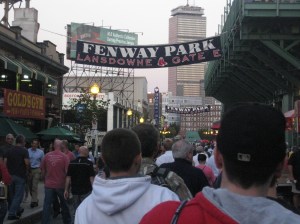

Fenway Park 2 Sept. 13, 2012 048

Celtics-76ers Game Nov. 9, 2012 043

*The state does not have any sales tax or income tax.  This meant that when we went to Walmart, everything we purchased was tax-free!  Gotta love that … especially if you’re from California, where the sales tax rate is now 7.75% and climbing.

*All kinds of wild animals roam free, including turkeys which loved to hang around the church.

Number 2: I loved the weather … so much.  While hot weather drains me, colder weather exhilirates me.  During our last few weeks in New Hampshire, the temperature was in the 40s and 30s, occasionally dipping down into the 20s … and I couldn’t get enough of it … especially when I saw that the temperature was in the 90s and 100s back home.
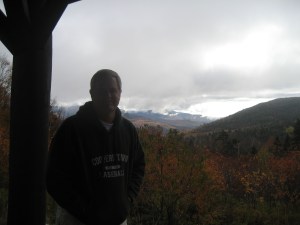
Trip to White Mountains Oct. 8, 2012 023

Some friends told me that the snow gets old real fast, and I believe them.  This is what the road looked like driving back to Manchester from Stowe, Vermont, one November day:

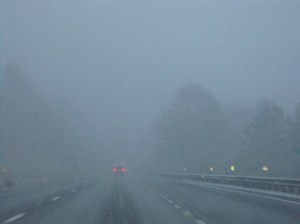
Trip to Stowe Nov. 24, 2012 348

Trip to Stowe Nov. 24, 2012 354

But I still loved the weather in New Hampshire!

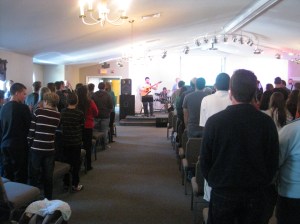
Number 1: I loved the people of Crossroads Church in Pelham.  They were so genuine … and generous … and classy … and kind to my wife and me.

Crossroads Church Sept. 12, 2012 001

Pelham Church Nov. 4, 2012 005

I was invited to become a traditional interim pastor for the church while they sought a candidate to become senior pastor.  The first night that I preached, the church had a reception for us after the service, including a large gift basket filled with goodies.  People talked to us long into the night until I was advised to return to Manchester because a storm was coming.


Trip to New England Sept. 2012 480

Jim's Conflict Workship 2 Pelham Nov. 10, 2012 010

My time there was short-lived because the church selected a candidate during my third week there, but Kim and I were the recipients of so much love that it was easy to love the people in return.

*We were given tickets to a Red Sox-Yankees game and a Celtics-76ers game.
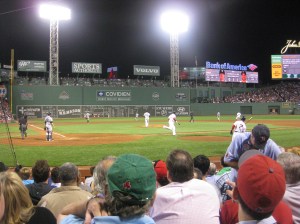
Fenway Park 2 Sept. 13, 2012 090

Celtics-76ers Game Nov. 9, 2012 114

*We were invited to attend a Chris Tomlin concert in Lowell, Massachusetts with people from the church.

Chris Tomlin Concert Oct. 26, 2012 020

*We were invited to lunches … and dinners … and after-church get-togethers … and even a meal on Thanksgiving.

*And Kim went on several excursions with women from the church, including this trip to Gloucester, Massachusetts:

Trip to Gloucester Oct. 24, 2012 320

Kim and I both agree: we spent three of the best months of our lives in New Hampshire.

So thank you, people of Crossroads Church, for making it all possible.

We will never, ever forget you and your fascinating state!
Thank You, New Hampshire!

My wife and I recently returned from a temporary job assignment in New Hampshire.

I didn’t know much about the state when I accepted the assignment.  I’d only been to New Hampshire once in my life, and that was to stop in Manchester for lunch many years ago on a trip with my son.

It’s hard to gauge a state when you’ve only spent a few hours there.  But if you’ve lived there a few months, you at least know it better than the average tourist would.

After living in New Hampshire, I must say … I love New Hampshire!

In fact, let me share with you ten things I loved about New Hampshire … and New England as well:

Number 10: I loved the relaxed feel.  New Hampshire has three main cities: Concord, Manchester, and Nashua.  I visited all of them, but never found the traffic to be oppressive … like it is here in Southern California … except for a shopping trip to Costco one Saturday in Nashua.

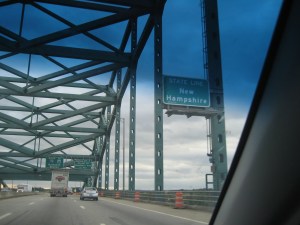
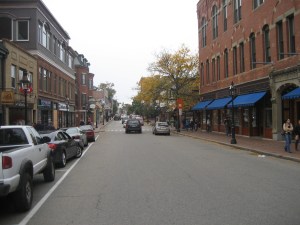
Here’s a photo of downtown Portsmouth … right on the border before entering Maine …

Trip to Portsmouth, NH Oct. 7, 2012 026

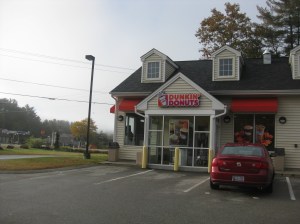
Number 9: I loved Dunkin’ Donuts.  One night, my wife and I were lost in Connecticut, and I looked at the map and saw I would have to drive toward New Haven on a single lane highway.  After many miles of traveling in the dark, my wife and I wanted something warm to drink, so I was hoping we’d come to a Dunkin’ Donuts.  When we saw light ahead, I told my wife, “I’ll bet there’s a Dunkin’ Donuts there” … and I was right.

In New England, where there’s light, there’s Dunkin’ Donuts.

Trip to White Mountains 2 Oct. 8, 2012 014

Number 8: I loved being surrounded by trees.  There were two Target stores in our area, and whenever we’d drive to either one, I’d get out of the car, turn around … and see trees everywhere!  For someone who tends toward depression due to the brownness of the desert, the perpetual green of New Hampshire continually lifted my spirits.

Trip to White Mountains 2 Oct. 8, 2012 007

Number 7: I loved visiting graveyards.  Before you conclude that I’m morbid and twisted, please understand that one of my small hobbies is visiting the graves of famous people.  In California, you can visit the graves of Richard Nixon and Ronald Reagan … but you have to pay to enter their presidential libraries.  But in New England, you can visit the graves of former presidents for free … and there’s nobody around when you do.

Grave of Franklin Pierce, 14th President of the US, in Concord, NH

Grave of Franklin Pierce, 14th President of the US, in Concord, NH

Here’s the famous Sleepy Hollow Cemetery in Concord, Massachusetts:

Trip to Concord, MA September 23, 2012 040

And here’s Mount Auburn in Cambridge, Massachusetts … the first landscaped cemetery in the United States … which dates all the way back to 1831:

Trip to Cambridge, MA 2 Nov. 23, 2012 002

Number 6: I loved the fall foliage.  We arrived in Manchester in early September, so we were privileged to watch the trees turn colors over the next few weeks.  Driving to and from church – 27 miles each way – was fun because of all the colors we’d see along the roads.

Here are some trees in upstate New Hampshire:

Trip to White Mountains 2 Oct. 8, 2012 039

Trip to White Mountains 2 Oct. 8, 2012 053

I’ll finish this Top Ten List next time.  Watch for it!

Driving Across the USA

My wife and I drove 3,500 miles across America last week – from New Hampshire to Southern California – and the states we traveled through left some distinct impressions upon me.

We drove through all or parts of New Hampshire, Massachusetts, Connecticut, New York, Pennsylvania, West Virginia, Ohio, Kentucky, Indiana, Illinois, Missouri, Oklahoma, Texas, New Mexico, Arizona, and California.

We were blessed to have good weather most of the way … an anomaly for the first part of December!

Here are some random thoughts on our trip:

*Best roads: New Hampshire (good road surfaces, wide lines, often light traffic)

Trip to Pelham Church Oct. 27-28, 2012 109

*Worst roads: Oklahoma (especially in Oklahoma City, where the lines on the interstate disappear unexpectedly)

*Best interstate: I-40 in New Mexico

Trip Across USA Nov. 26-Dec. 1, 2012 841

*Worst interstate: I-95 in Connecticut … hands down (I almost had to be committed)

*Best large city for driving: Cincinnati (has a large ring around the city)

*Worst city for driving: Hartford, CT (like riding on Space Mountain at times)

Trip Across USA 2 Nov. 26-Dec. 1, 2012 026

*Best road stops: Missouri (gas stations, stores, and places to eat everywhere)

*Worst road stops: Oklahoma (virtually nothing from Tulsa to Oklahoma City, a total of 106 miles … but there is this exit)

Trip Across USA Nov. 26-Dec. 1, 2012 836

*Best tourist spot: Gettysburg, PA (visiting the battlefields by car is free and totally absorbing)

Trip Across USA Nov. 26-Dec. 1, 2012 226

*Worst tourist spot: Ohio (there is nothing to see but farmland from West Virginia to Cincinnati)

Trip Across USA Nov. 26-Dec. 1, 2012 472

*Best driving: from Cincinnati to St. Louis (great roads, little traffic)

Trip Across USA Nov. 26-Dec. 1, 2012 522

*Scariest driving: following Highway 30 west from Chambersburg, PA toward Pittsburgh … went through four mountain passes in the Allegheny Mountains in total darkness … large trucks were advised not to take that route

A few other thoughts:

*Las Vegas award: Amarillo, Texas (lit up like a Christmas tree at night with steakhouses everywhere)

*Creepy award: Gallup, New Mexico (felt so uneasy there that after considering three places to eat, we left and ate in Arizona instead)

*Grand Prix award: Pittsburgh, PA (I wanted to stop and see the Pirates’ ballpark … would have died just trying to get off the freeway)

Trip Across USA Nov. 26-Dec. 1, 2012 408

*Maybe I could live there award: Cincinnati, OH (where my cousin and her family lives); Springfield, MO (30 miles from Branson)

*Waste of space award: Oklahoma (No sites, no facilities, no scenery … just Oral Roberts University in Tulsa)

Trip Across USA Nov. 26-Dec. 1, 2012 834

*Uh oh award: realizing our hotel reservation was in Breezewood, PA … just after we got on the Pennsylvania Turnpike (16 miles to the next town, then 16 miles back … and no way of turning around)

Trip Across USA Nov. 26-Dec. 1, 2012 348

*Best motel award: Days Inn in Tucumcari, NM (spacious, clean, well-equipped room)

*If I had one wish while driving: that I wouldn’t have to deal with any 16-wheelers!

*Best music along the route: Johnny Cash’s American Recordings albums

*Favorite place to eat: Cracker Barrel in Sullivan, MO (or anywhere else, for that matter)

*Coolest tunnel: through the Allegheny Mountains in Pennsylvania

Trip Across USA Nov. 26-Dec. 1, 2012 358

*Best view: from the Gateway Arch in St. Louis, MO

Trip Across USA Nov. 26-Dec. 1, 2012 655

Most moving sight: visiting the Soldiers’ National Cemetery in Gettysburg, PA, at dusk … and stumbling upon the spot where Lincoln delivered his Gettysburg Address

Trip Across USA Nov. 26-Dec. 1, 2012 336

There were a lot of sights I wanted to see but didn’t … like the Basketball Hall of Fame in Springfield, MA, and the Rock’n’Roll Hall of Fame in Cleveland … but I’m grateful that we were able to take the trip … and that our 1998 Honda Accord did great …. loaded with stuff … and with more than 250,000 miles on it.

Four days after returning home, it still feels like I’m on the road … and I can sing with Johnny Cash:

I’ve been everywhere, man

I’ve been everywhere, man

Across the deserts bare, man

I’ve breathed the mountain air, man

Of travel I’ve had my share, man

I’ve been everywhere

Remember the movie classic Miracle on 34th Street?My wife and I tried to replicate those Christmasy feelings at a recent visit to Macy’s Department Store … home of the original Miracle.

Macy’s is the largest department store in the world and is located on 34th Street … between Sixth and Seventh Avenues … in New York City.

The two of us took the store’s old escalators to each floor … getting out quickly, looking around, and then ascending higher … before finally stopping at the eighth floor.

When we got there, we happened upon a poster for the original movie:

Not only that, but we couldn’t help noticing a prominent announcement:

November 23 is today … the day I’m posting this article.

However, as it turns out, Santa and his elves evidently require dry runs, because we were informed that if we wanted to, we could visit Santa right then and there!

We’ve just heard the news: we can visit Santa!

So off we went … through a maze of creatures from the North Pole!

The anticipation was building!

We saw singing snowmen …

Was the choir singing about Frosty?

… and penguin toboggan runs …

Looks like fun!

… and little towns decorated for Christmas …

Silver bells … it’s Christmastime in the city …

… and North Pole-like atmospherics …

Official, Santa-authorized train tracks

… and dancing bears …

Joyful about the coming of Christmas

… and thousands of colored Christmas lights …

The proverbial dear in the headlights

… and even an unexpected visit from an elf!

Where’s the real ELF?

In fact, the whole experience had religious overtones, because we were told, in bright red letters, just to …

Macy’s Christmas theme this year

And then, the Moment of Moments was upon us.  After the crew in front of us left, we could actually have a minute of the Great Man’s time!

Wowie Kazowie! It’s Santa himself!

My wife and I both sat down … her on Santa’s left hand, me on his right.

Santa asked my wife what she wanted for Christmas, and she replied, “A job.”

He asked me the same question … and I gave the same answer.

Santa had a lot of integrity, because he told us both candidly that he could not fulfil our requests.

Then we were asked to smile, and all three of us did … but I can’t post that photo, because the lowest price for that picture was $19.99.

As we made our way to the picture-buying counter, I glanced to my left … and noticed that some people were leaving their encounter with another Santa.

I realize that for many people all over the globe, Santa is the symbol for Christmas … especially to children … so I promise not to bash him unmercifully.

But it struck me that night that we were being sold a bill of goods.

Some quick thoughts:

While there are many Santas … even at Macy’s … there is only one God.

While Santa is completely human … and thus confined to one place at one time … God is spirit … and is everywhere at once.

While Santa pops out around Thanksgiving … and then mysteriously disappears after December 25 … God is available to us every day of the year.

While Santa can only fulfil material requests … for things like dolls, balls, and iPods … God can fulfil any request … for healing … or salvation … or jobs.

While Santa only grants visitors a moment of his time … God lets us linger in His presence as long as we want.

While Santa increasingly offers his services for cash … God’s services remain free of charge.

While children like to think that Santa can do almost anything … make toys at a rapid rate … read our thoughts and motives … fly through the air in a sleigh … descend and ascend through narrow chimneys … visit every child in the world in one night … and stay perpetually ancient and fat … adults know that Santa has his limits.

But God has no limits.  He is omnipotent, omniscient, and omnipresent.

With God, there can be a miracle in every heart … in every home … and on every street … all year long.

And the real miracle came not in the form of a jolly old man in a red suit, but in the form of a child born in Bethlehem.

Let’s make that news the focus of our celebration this Christmas season!

Stump the Pastor

I had a totally unique experience yesterday.

About 25 college students – who were taking a world religions class – visited the church I’ve been serving as an interim pastor.

The students drove themselves from the school to the church.  I shook hands with each one and introduced myself to them.

They all came upstairs and entered the worship center and sat down.

Their professor stood up and briefly oriented the class to the worship center, noting that the church:

*didn’t have stained-glass windows.

*didn’t have pews.

*had a pulpit in the middle of the stage.

*had a baptistry.  (Some students quickly walked up to it and looked inside … nothing.)

The professor then turned the class over to me, and for the next hour, I answered as many questions as I could.

What do secular college students want to know about an evangelical Protestant church?

They wanted to know:

*why there are so many different Protestant denominations.

*who is baptized and how a baptism is performed.

*whether Protestant ministers are allowed to marry.

*the role of women in a Protestant church.

*how many sacraments Protestants have.

*what the definition of “Protestant” is.

*what kind of music Protestants have in their services.

*what kind of sermons a pastor gives.

*whether or not we pressed our kids to attend church.

*whether pastors are paid or not.

*who owns the property and how it’s paid for.

*how pastors are hired.  (Are they sent by a denomination or selected by a local church?)

There were no questions about:

*how a person gets saved.

*social issues like abortion or gay marriage.

*theological issues like the deity of Christ or His resurrection or the afterlife.

*the Bible itself.

*the role of Baptists during the Crusades.

The group was well-behaved, attentive, and inquisitive.

Nobody seemed hostile.

One kid on the front row had a Catholic background, and he asked me questions rapid-fire.  I couldn’t tell if he sincerely wanted to hear my answers or if he wanted me to know how much he knew about Catholics.

This was a great experience for me.  It enabled me to hear how college students view Protestant churches.

And it also showed me how little the students really know about what goes on inside the four walls of a Protestant church.

One young woman in the front row referenced a Christian rock group and helped some of the students understand what happens during a typical worship service.  She became a valued ally 2/3 of the way through our time together.

It’s good for a pastor or an evangelist to visit a college class.  It’s far better for the class to visit local houses of worship.  (If a picture is worth a thousand words, just one visit to a house of worship must be the equivalent of reading 100 pages about that same religious group in a book.)

Maybe a local church could identify colleges within driving distance of their campus and invite professors (especially those who teach world religions) to visit the church campus with their students and ask questions of the pastor and staff.

What do you think?


Pastors Who Overfunction

I’ve done a lot of stupid things in church ministry.

But what I’m about to tell you was one of the stupidest.

Many years ago, in my second pastorate, I became discontented with the level of giftedness in our Sunday morning service.

We started the service with announcements.  (It was the trend back then.)

Then we had a few hymns.

Then we had a time where people in the congregation could share testimonies … followed by another hymn.

Then I preached … followed by a final hymn.

I didn’t like the way the guy who made announcements made them … so I made them instead.

And we didn’t have anyone decent to lead singing … so I led singing instead.

And I was already leading the testimony time … and saying the prayers … and preaching.

It’s a wonder I didn’t play the organ and piano, run sound, take the offering, and watch the kids in the nursery.

Because of personal anxiety, I started doing more and more things myself.

There’s a word for the way I behaved: overfunctioning.

When someone overfunctions, they assume an unhealthy responsibility for the behavior of others.

And pastors, if they’re not careful, can become classic overfunctioners.

Let me share with you four reasons why pastors should not overfunction:

First, overfunctioners deny the giftedness of the body of Christ.

Jesus had every spiritual gift, didn’t He?  He had the gift of leadership … and miracles … and teaching … and faith … and prophecy … and healing … and giving.

He could have been a one-man show.  Instead, He chose 12 disciples to be with Him, and to send them out to preach, and to have authority to drive out demons (Mark 3:13-15).

Jesus could have overfunctioned, but He never did.  He set the pace, but He let His disciples share His ministry … and learn from Him along the way.

Paul didn’t overfunction, either.  He served with Barnabas and Silas and Timothy and Titus and Priscilla and Aquila and Epaphroditus.

While Jesus could have done ministry better than any of the Twelve, He chose to share ministry with them anyway … and when He returned to heaven, they took over.

Even if a pastor can do various ministries better than anyone in a church, it will only grow to a certain level.

A pastor has to recruit, train, and release people to do ministry … and trust that they can do ministry better than he can.

Second, overfunctioners play Holy Spirit in people’s lives.

Years ago, I talked to my board chairman about how frustrated I was with the slow spiritual growth in the lives of some churchgoers.

I’ll never forget what he told me: “Jim, you’ve got to let the Holy Spirit work in their lives.”

I was trying to hurry up people’s spiritual growth so they would attend and serve and give more consistently … but I was trying to do it in the flesh rather than letting God do the work.

When we’re trying to straighten everybody out … when we’re trying to acclerate the pace at which people grow … when we’re doing it for our benefit, not theirs … then we’re overfunctioning and playing Holy Spirit in people’s lives.

And there is no vacancy in the Trinity.

Let’s let God be God.  He has no limits.

And let’s let us be us.  We are very limited indeed.

Third, overfunctioners fail to let people wrestle with their own problems. 

This shows up most in the pastor’s study when he does counseling.

Many pastors go into ministry because they want to rescue people from their maladies.

So when they listen to someone’s problem in a counseling setting, they want to “fix” them right away.

They recommend a book, but give a copy to the counselee rather than letting them buy it themselves.

They open and close the session with prayer, rather than letting the counselee pray at all.

They tell the counselee five ways to deal with their issue rather than letting them make their own discoveries.

Paul writes in Galatians 6:5, “For each of you should carry your own load.”  The word “load” has the idea of a backpack, something that each of us can carry on our own.

Yet back in verse 2, Paul writes, “Carry each other’s burdens, and in this way you will fulfill the law of Christ.”  The term “burdens” has the idea of a load so heavy (think of a piano) that you can only carry the load with the help of others.

Pastors need to help people carry the pianos in their lives while letting people carry their own backpacks.

Finally, overfunctioners eventually run out of steam.

If a pastor tries to be the body of Christ … and he tries to play Holy Spirit in people’s lives … and he fails to let people wrestle with their own problems … then he’s going to collapse emotionally … and he won’t be able to help others for a long time.

Pastors need to know their limits … but in the church, we applaud pastors who work insane hours.

I have a theory about workaholic pastors.  Because they’re not convinced of their giftedness – after all, it seems like other pastors lead and teach and administrate better – they try and outwork others so they can feel good about themselves.

In my second pastorate, I arrived at church at 6 am every Tuesday for a men’s prayer meeting.  We had board meetings on Tuesday nights, and I would stay through and work a 15 or 16 hour day.

One of the board members lived behind the church.  One time, he called me at my office and said, “I see your car in the parking lot.  Go home to your wife and kids.”

That was some of the best advice I ever received.

Because if I just use the spiritual gifts God gave me … then I free others up to use the gifts God gave them.

And if I stop playing Holy Spirit in people’s lives … then maybe they can let the real Holy Spirit take control.

And if I let people wrestle with their own problems … then maybe they’ll solve them when I’m not around.

And if I empower others in the church to carry out their ministries … without my help … then maybe I can spend most nights at home with my family.

When pastors overfunction in a church … the body of Christ underfunctions.

And God never intended for a pastor to be the entire body.

Remember your first job?

I worked for a butcher’s shop for $1.00 an hour … then washed dishes for three days at a restaurant (quitting because the hours were too late) … then washed vehicles for a few days … then worked for McDonald’s for two long years.

At 19, I was hired by the elders of my church to work with high school and college students for the summer.  At that end of that period, I was hired to work with those same students permanently.

I was a youth pastor in three churches … and later a teaching pastor and an associate pastor.

The sum total of my staff assignments was 10 1/2 years.

And I served another 25 years as a solo or senior pastor.

So I have a pretty good idea what it’s like to be a staff member as well as the lead pastor in a church.

As a youth pastor, I tried to do whatever my pastor asked me to do.

I didn’t pull any passive-aggressive stuff … agreeing to carry out the pastor’s wishes while later refusing to do so.

I wanted to please my pastor … and keep my job.

But as I’ve learned over the years, not all staff members have that attitude … which is why pastors and staffers clash far more than most churchgoers know.

In my previous article, I told the story of a youth pastor (let’s call him Frank) who wasn’t coming into his office at church to work.  Even though his pastor (let’s call him Rick) told him that he needed to clear time off with him first, Pastor Frank chose to ignore Pastor Rick’s directive.

After the pastor tried to clarify matters with Frank, Frank called a board member (let’s call him Joe) who had two kids in the youth group.  Frank told Joe that Pastor Rick had unfairly singled him out for correction and that he was so upset about Rick’s action that he was thinking about leaving the church.

Joe assured Frank that his kids loved him and that he would make sure Frank’s job was safe.

At the next board meeting, during his monthly report, the pastor informed the board of the latest incident with Frank.  Most board members asked a few questions but left staff management in his experienced hands.

But after the meeting, Joe called Frank to tell him that “the pastor is out to get you” and “my family won’t let that happen.”

Because Frank sensed total support from Joe, he felt he had cart blanche to act any way he wanted, even if he resisted the pastor’s supervision.

When Pastor Rick met with Frank every week, Rick could sense that Frank was no longer cooperative.  Rick didn’t know what was happening.

In actuality, the pastor had been “triangled” by the youth pastor.  Because Rick and Frank weren’t getting along, Frank sought out a third party to assume responsibility for their relationship … and Joe played his part just as Frank hoped.

So instead of the pastor supervising the youth pastor … with the board member as the pastor’s ally … now it’s the board member linking arms with the youth pastor against the pastor.

And now, my friends, you have the makings of a classic showdown.

Frank gradually pulls away from Rick altogether, missing staff meetings and avoiding conversations with the pastor.  Rick notices the change but doesn’t know what to do because he can sense not all board members are behind him.

After several months of this cold war, Rick schedules an appointment with Frank for lunch on Wednesday.

When the pastor arrives at the restaurant, he’s greeted by the youth pastor … and two board members, including Joe.

The pastor is now in a serious double bind.

On the one hand, he needs to regain control of his relationship with the youth pastor, even if he has to fire him.

But on the other hand, if Rick does dismiss Frank, those two board members … and their families … and other board members … and their families … and other students … and their families and friends … may all leave the church together.

They will claim that Pastor Rick mistreated Frank.

They might even insinuate that the pastor is mistreating other staff members.

They may even consider taking action against the pastor rather than let the youth pastor leave.

This is going to be a very difficult situation to resolve.

How can this showdown be resolved in a way that honors the Lord, respects all parties involved, and preserves church unity?

I’d love to hear your thoughts!

What keeps you awake at night?

When I was a pastor, more often than not, I couldn’t sleep because of church staff members.

Why not?

Because dealing with staff is fraught with danger … real and imagined.

When a pastor hires a staff member, he looks for three primary qualifications: character, competency, and chemistry.

The pastor wants staff members to have character … to lead godly lives and be morally upright.

The pastor wants staff members to have competency … to do their job so well that he rarely has to address any concerns.

The pastor wants staff members to have chemistry … to get along well with him and the other staff.

If a staffer is falling short in any of these three areas, the pastor has to sit down and speak with him or her about his concerns as soon as possible.

And this is where the double bind for him occurs.

Let me offer up an example.

Suppose a board member tells the pastor that the youth pastor left the church campus a half hour early that Sunday morning.  The board member asks the pastor (a) if he knew about this, and (b) if the youth pastor had asked the pastor for permission to leave early.

If the pastor gave the youth pastor permission to leave early, he needs to make that clear to the board member.

If the pastor didn’t give the youth pastor permission to leave early, he needs to find out what’s going on.

Should the pastor call the youth pastor immediately or wait until they’re together on Monday morning?

Let’s say the pastor waits until the next day.  He gets hit with a lot of work when he enters the office and can’t walk down the hall to see the youth pastor until 11:30 that morning.

When he does, he finds the youth pastor is gone … and according to the office manager, won’t be back until Wednesday.

Now the pastor is really upset because the youth pastor reports to him … and the pastor did not give the youth pastor permission to cut out early on Monday or miss the staff meeting on Tuesday.

Should the pastor call the youth pastor immediately or wait until Wednesday?

The pastor decides to call the youth pastor … who doesn’t answer the phone.  The pastor tries again later in the day, but still … no answer.

The next day at the staff meeting, two staff members ask the pastor point-blank where the youth pastor is.  The pastor says he doesn’t know.

After the meeting, the pastor calls the youth pastor again … but nobody answers.

That night, the pastor can’t sleep.  See why?

When the youth pastor finally comes in the next morning, the pastor immediately walks down the hall to speak with him.

The pastor sits down and asks the youth pastor how he’s doing.

The pastor asks about his family and how his ministry went on Sunday.

Finally, the pastor mentions in a matter-of-fact way that (a) the youth pastor was seen leaving early on Sunday, (b) left early on Monday, and (c) didn’t come in at all on Tuesday.

The pastor asks the youth pastor – in a gentle but firm tone – what’s going on.

The youth pastor offers some lame excuses for missing work.  The pastor suspects he’s lying.

They speak awkwardly for a few minutes, and then the pastor – as staff supervisor – tells the youth pastor:

“If you are going to leave church early on a Sunday, you need to ask me first.  If you are going to leave early on a workday, you need to clear that with me first.  If you are going to take a day off during the week, you need to receive my permission first.  Do you understand what I’m saying?”

The youth pastor stammers, “Well, I tried calling you, but I couldn’t get ahold of you … so I thought I’d just take the time off and get back to you later.”

When the pastor leaves the youth pastor’s office, he wonders what’s going on.

Is the youth pastor having marital problems?  Could he be addicted to alcohol or drugs?  Could he be working a second job?  Or is he just stressed out and needs to step away from work for a few days?

Here’s one double bind: some board members and staffers are watching how the pastor handles this situation.  If he does nothing, they will conclude the pastor is spineless.

But if the pastor is too hard on the youth pastor, then the youth pastor and his wife … and eventually their friends and many of the youth and possibly their parents … will be upset with the pastor for picking on someone they know and love.

The pastor is thinking, “I’d really like to help the youth pastor if he’s having a problem, but he’s not being honest with me, so all I have to go on is his behavior, which isn’t acceptable.  I need to keep an eye on him from now on.”

The youth pastor is thinking, “Who does the pastor think he is?  I go on camping trips and retreats with the kids without asking for overtime.  I answer their emails and phone calls at all hours.  If I want to take some time off, I’m entitled to it … and I’ve been here long enough that I don’t need to ask for permission.”

If things don’t change, there’s going to be a showdown … and soon.

What happens then?

I’ll deal with that in my next article.

Grrrrr.

I am sick of this election season, sick of the political process, and most of all, sick of politicians.

All of them … even the ones I might vote for.

The political season is way too long.  (How about if it starts in June before the November election?)

There’s too much dirty money involved.

And the electoral college is, in my judgment, a joke.  (Reason: the presidential candidates only visit certain select states, never setting foot in North Dakota or Utah or Alaska … while visiting California and Illinois and New York to hold fundraisers so they can spend more cash in a small percentage of battleground states.  Living in California, my vote never counts anymore … but with a national, winner-take-all race, every vote would count … and national candidates would be forced to visit more of this great land than they do now.)

Let me briefly tell you why I’m angrier than ever about politics in 2012:

First, candidates use moral terms like “right” and “wrong” and “good” and “bad” in their speaking and ads.

Of course, they are right and good … and their opponents are wrong and bad.

Give me a break.

If a politician has an economic plan, for example, how do we know it’s right or good?

And how do we know his opponent’s plan is wrong or bad?

Maybe the opposite is actually true.

Can we declare a moratorium on using words describing moral judgments for subjective processes?

It’s like saying, “If the coach goes for a field goal in this situation, it’s wrong.”

No, it’s not … but to state that there is only one position when there are other options is itself wrong.

Second, candidates misrepresent their opponent’s positions.

My wife and I watched all three presidential debates … although the third one was largely preempted in our household by a baseball game.

Every minute or two, I spoke to the TV and said, like a broken record:

“That’s not true … that’s not true … that’s not true.”

It’s one thing to go out on the stump and lie about your opponent’s position … but to do it on national television right in front of him?

What kind of sick, twisted people do we have running for office?

Maybe we should give politicians personality tests and throw out everybody who has narcissistic, anti-social (sociopathy), and paranoid personality disorders.

Of course, that might narrow the field down to … zero.

I agree with the pundit who said that every time a candidate lies, a bell should go off in the background.

Or maybe at the end of a debate, fact checkers could say, “The incumbent misstated facts 37 times, while the challenger misstated facts 24 times … and we’re posting our results on such-and-such a website.”

We have to do something to stop this blatant misrepresentation of another person’s positions.

Third, they claim to speak for us … and for me.

The phrase I detest most starts with a politician claiming to speak for “the American people.”

“The American people don’t want to go down that road.”

But maybe I do.

“The American people know my opponent’s plan won’t work.”

But maybe it’s better than your plan.

Whenever a politician says, “The American people …” the next thing he says will be a lie.

Why?  Because the phrase implies that everybody agrees with the politician … but not all of us do.

It would be more accurate to say, “The majority of the American people want this” … but accuracy and political-speak are oxymorons … with the emphasis on morons.

Please, stop telling me that I am supposed to believe what you want me to believe.  When you do that, you’re manipulating, not motivating.

And I refuse to be manipulated.

Fourth, most politicians treat Americans like children rather than adults.

If a political candidate shot his opponent on national television, the shooter’s spinmeisters would quickly appear to say:

“The gun wasn’t loaded.”

“The bullets from that kind of gun won’t kill a person.”

“He’s just faking … he’s not really dead.”

“71% of the American people agreed with what just happened.”

“This won’t hurt our guy in the polls.”

This is why I like Frank Luntz’ focus groups so much.  Rather than hearing what a politician’s supporters think after a debate, I’d rather they hear what we think instead.

And the commercials … with the spooky voice-overs … the distorted photos of one’s opponent … the implication that the opponent is 100% evil … the leaps in logic … and testimonials from people you don’t know or care to know … insult our intelligence.

How stupid do they think we are?

Finally, crowds applaud nearly everything their candidate says.

If I can, I’d like to attend two political rallies that will take place near my apartment in the next few days before the election.

President Obama will be speaking in Concord, New Hampshire on Sunday … just a 15-minute drive from our place.

Mitt Romney will be holding a rally in downtown Manchester on Monday night … less than 10 minutes from our place.

If I attended one or both rallies, I might hear something like this:

“My plan will produce 234 million new jobs over the next 800 years!”

And people would mindlessly cheer.

“My opponent’s plan will send our country into a massive depression that will result in a hostile takeover of our country by an alliance of Greenland and Iceland.”

And people would still cheer.

Can’t people think?  Do they just feel?

It’s like those teenage girls who hear a song and instantly start dancing to it … even though the lyrics promote all manner of evil.

If only all Americans started listening to the lyrics of their politician’s speeches instead of the tunes …

This is just a sampling of the anger I’ve been feeling since for many months.

Feel free to join in … without naming names.

What has made you angry this political season?

With Hurricane Sandy beating upon the Eastern seaboard … and headed north toward my position in New England … let me share with you a few provocative quotations from my soon-to-be-published book on church conflict (called Church Coup) before the power goes out.

While these quotations have been wrested from their context, they are designed to make all of us think.

Here’s the first one from Lloyd Rediger on page 53 of his book Clergy Killers:

“Because the church as a whole has succumbed to the business model of operation . . . the pastor has become an employee, and parishioners the stockholders/customers.  The pastor is hired to manage the small business we used to call a congregation. This means his primary task is to keep the stockholders happy; the secondary task is to produce and market an attractive product. When this mindset infects the church, the church is no longer a mission but has become a business . . . the introduction of a business mindset is producing dissonance in the church continually.  For though businesses advocate mission and discipline, the budget is necessarily the bottom line.  This is the reverse of how a healthy congregation functions.”

Here’s a second quotation from Guy Greenfield on page 56 of his book The Wounded Minister:

“Administration is a necessary part of directing a church’s life, but administration must always be a means and never an end. When deacons and other lay leaders see themselves primarily as administrators, then control is likely to be more important than ministry. When deacons emphasize that they are a ‘board’ (not a biblical concept), or when elders call themselves ‘ruling elders,’ watch out.  Control will become the primary issue.”

Here’s a third quotation from page 53 of Peter Steinke’s book Congregational Leadership in Anxious Times:

“When we are flooded with anxiety, we can neither hear what is said without distortion nor respond with clarity. Bruce McEwen, a neuroendocrinologist, comments that stress limits our repertoire of responses. Fixated on what is endangering us, we forfeit our imaginative capacities. We act with a small and sometimes unproductive repertoire of behaviors.  With fewer alternatives, we act foolishly . . . . Our mind is set in imaginative gridlock, we obsess about the threat, and our chances of changing our thinking are almost nonexistent.”

Finally, here’s a quote from page 116 of Speed Leas’ book Leadership and Conflict:

“Confidentiality just increases the amount of fear in the system.  If we believe that we cannot share what is going on in a meeting or in a conflict, the secretive aura enhances rather than diminishes assessments of just how dangerous this situation is.  The more that is shared, the more that is talked about, the less threatening the experience . . . . I can’t say enough about the problems of confidentiality in organizational settings. In my experience the norms of confidentiality are serious barriers to managing conflict.  Secrets inhibit rather than open up communication, secrets raise fear, secrets keep out people who might be able to help, secrets presume that truth will enslave rather than set one free, secrets are often lies that keep the accused from confronting them because he or she supposedly doesn’t know the ‘charges.’”

If you’d like to interact with one of the quotations above, feel free to leave a comment.  As for me, I’ve got to batten down the hatches.  Sandy’s coming, and she’s pretty upset.